













Around 5.3% of United States veterans are diagnosed with rheumatoid arthritis (RA), which is notably higher than the general, non-veteran population. Like with other conditions, the Department of Veterans Affairs (VA) evaluates RA depending on symptom severity. If you are experiencing symptoms, you may receive a rating anywhere from 20% to 100%. That being said, it all depends on your service connection and how much the condition impacts your life.
So, is rheumatoid arthritis a VA disability? In short, yes. But the answer is much deeper than that. Here is what you need to know to get access to the support you need.
How the VA Rates Rheumatoid Arthritis
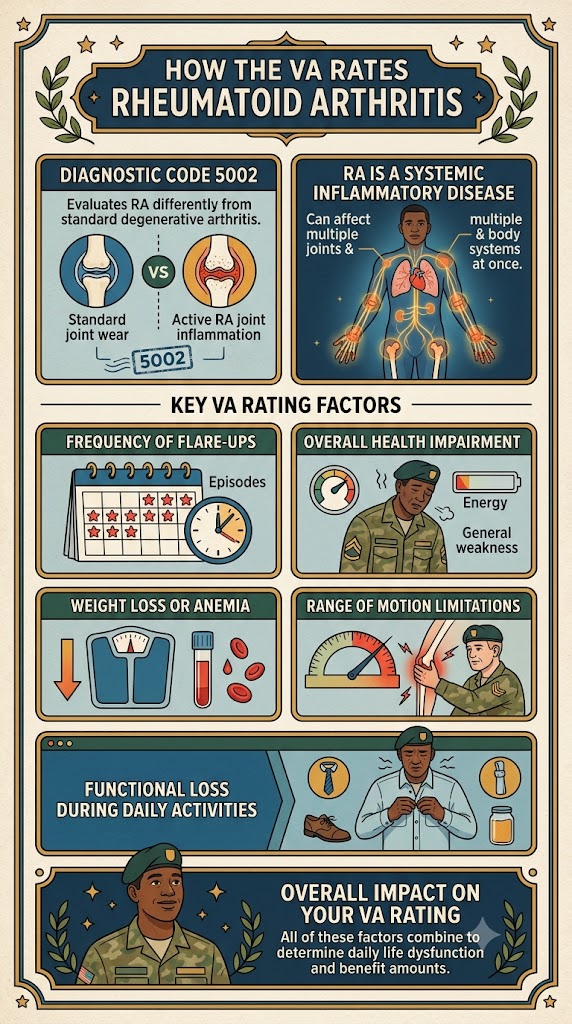
The VA evaluates rheumatoid arthritis under Diagnostic Code 5002, which differs from standard degenerative arthritis ratings. Unlike osteoarthritis, rheumatoid arthritis is considered a systemic inflammatory disease, meaning it can affect multiple joints and body systems at once.
The VA considers frequency of flare-ups, overall health impairment, weight loss or anemia, range of motion limitations, and functional loss during daily activities. All of these things can have an impact on your daily life, and therefore, your overall VA rating.
Active vs Chronic Rheumatoid Arthritis Ratings
One of the most important distinctions in a VA disability rheumatoid arthritis claim is whether the disease is considered active or chronic.
Active Rheumatoid Arthritis
The VA rates active disease based on how often severe flare-ups occur and how much they affect health.Common symptoms include:
- Severe fatigue
- Joint swelling
- Fever or malaise
- Systemic inflammation
Chronic Residuals
When the disease is no longer considered “active,” the VA may instead rate the condition based on:
- Limited motion in affected joints
- Painful movement
- Joint deformity or weakness
Under VA rating chronic vs active arthritis rules, veterans can sometimes receive separate ratings for individual joints if chronic damage remains after active disease subsides.
VA Disability Percentages for Rheumatoid Arthritis
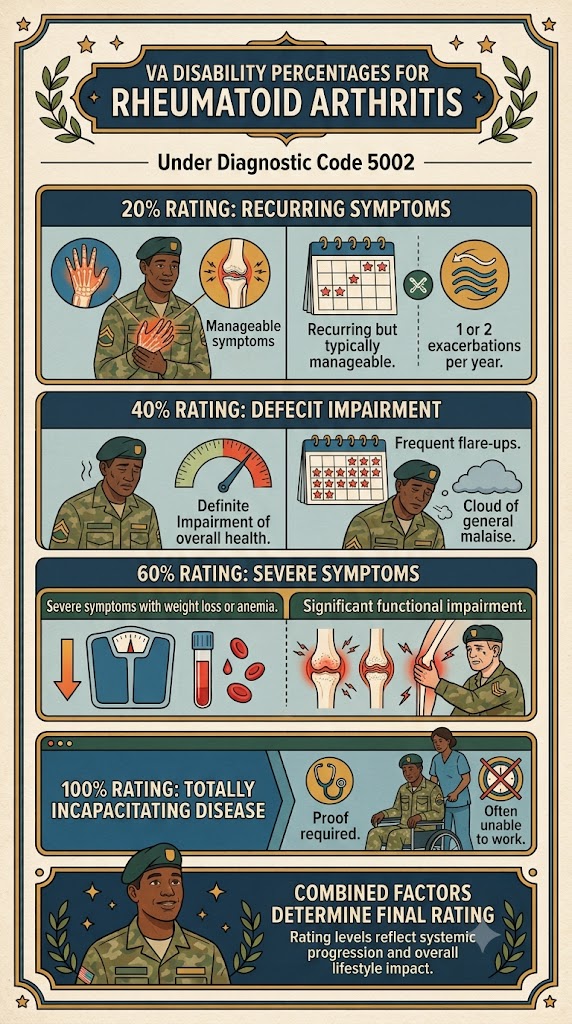
As mentioned above, the VA rating for arthritis under Diagnostic Code 5002 ranges from 20% to 100%. A 20% rating will likely include one or two exacerbations per year, and typically, your symptoms are manageable, but they are recurring.
If you receive a 40% rating, you are likely seeing frequent flare-ups, and there is a definite impairment of overall health. A 60% rating will involve severe symptoms with weight loss or anemia, and significant functional impairment.
Lastly, to receive a 100% rating for RA, you have to prove that it is a totally incapacitating disease. There must be severe systemic involvement affecting daily functioning. Veterans with advanced disease often qualify for higher compensation due to the inability to work or severe mobility limitations.
Evidence Needed for a Strong Arthritis Claim
Strong medical evidence is essential for VA arthritis compensation claims. Some of the most helpful evidence includes:
- Rheumatologist evaluations
- Bloodwork confirming autoimmune activity
- Imaging showing joint damage
- Treatment history and medications
- Documentation of flare-ups and mobility issues
The VA also looks closely at how the condition affects walking or standing, employment, daily tasks, and self-care. It’s important to keep a detailed record of flare-ups and functional loss. This information could make a huge difference when filing your claim.
How to Increase Your VA Rating for Rheumatoid Arthritis
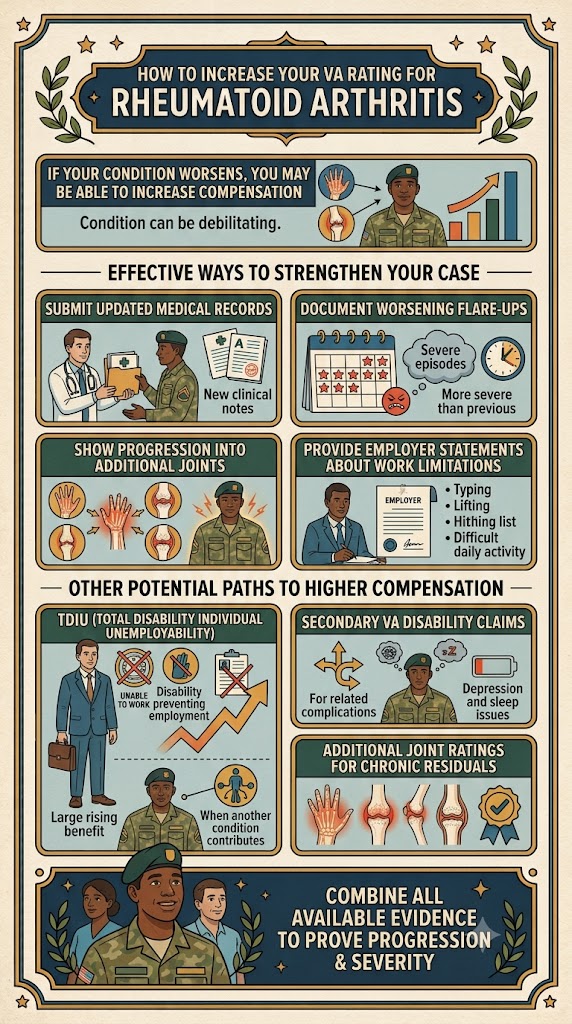
Anyone dealing with RA can tell you that it can be debilitating. If your condition worsens, you may be able to increase your arthritis VA rating compensation.
Effective ways to strengthen your case include:
- Submitting updated medical records
- Documenting worsening flare-ups
- Showing progression into additional joints
- Providing employer statements about work limitations
You may also qualify for TDIU if arthritis prevents employment. Secondary ratings for depression, sleep issues, or other complications could also be accessible to you. And there is a chance you may qualify for additional joint ratings for chronic residuals. Some veterans also pursue secondary VA disability claims for arthritis when another service-connected condition contributed to joint damage or inflammation.
Looking at How an RA VA Disability Rating Could Work
Consider this scenario: Monica, a former Army medic, developed rheumatoid arthritis several years after active duty. Initially rated at 20%, her condition worsened with constant flare-ups, fatigue, and swelling in multiple joints. After submitting updated rheumatology records and evidence of severe work limitations, the VA increased her rating to 60%, significantly increasing her monthly compensation. Keeping track of the condition and continuing to document everything made all the difference for Monica, and it could for you, too.
FAQs About the VA & Rheumatoid Arthritis
When you are living with daily pain that is associated with RA, you might feel hopeless. However, you can get assistance through the VA. Here are some of the most frequently asked questions (FAQs) about navigating the system with this condition.
- Is rheumatoid arthritis considered a VA disability? Yes. The VA recognizes rheumatoid arthritis as a compensable disability when it is service-connected.
- What is the VA rating for rheumatoid arthritis? Ratings range from 20% to 100% depending on severity and whether the disease is active.
- How does the VA rate active rheumatoid arthritis? The VA evaluates flare-ups, systemic symptoms, and overall health impairment.
- Can rheumatoid arthritis receive separate joint ratings? Yes. Chronic residual joint damage may be rated separately.
- What evidence helps support a rheumatoid arthritis claim? Rheumatology records, lab tests, imaging, and documentation of flare-ups are especially important.
- Can rheumatoid arthritis qualify for TDIU? Yes. Veterans unable to maintain employment due to rheumatoid arthritis may qualify for unemployability benefits.
- Can arthritis be secondary to another service-connected condition? Yes. Some veterans qualify for arthritis secondary VA disability claims depending on medical evidence.
Tamila’s Take
Rheumatoid arthritis is one of those conditions people often underestimate until they see how exhausting and painful it can be on a daily basis. Some veterans wake up every morning already hurting before their feet even touch the floor, then spend the rest of the day trying to push through swelling, stiffness, fatigue, and flare-ups that make simple tasks feel overwhelming. What makes RA especially difficult is that the symptoms can fluctuate, so veterans sometimes feel pressured to “prove” they’re struggling even when the disease is actively damaging their joints and overall health behind the scenes. Many veterans also carry guilt about slowing down or needing accommodations because military culture teaches people to keep moving, no matter how much pain they’re in. Veterans dealing with rheumatoid arthritis deserve recognition for how much this disease can affect mobility, independence, employment, and quality of life, and they should never feel ashamed for pursuing the support they’ve earned.
Living With Rheumatoid Arthritis Shouldn’t Mean Fighting Alone
Rheumatoid arthritis can affect far more than just the joints, impacting a veteran’s mobility, energy levels, ability to work, and overall quality of life. Because RA is a systemic autoimmune disease, symptoms can worsen over time and create serious long-term complications that interfere with daily living. The VA does recognize rheumatoid arthritis as a compensable disability, but building a strong claim often requires detailed medical evidence, documentation of flare-ups, and proof of how the condition affects everyday functioning. Veterans should know that worsening symptoms, additional joint involvement, and secondary conditions may all increase eligibility for higher compensation or even TDIU benefits. If you are living with rheumatoid arthritis connected to your military service, visit AllVeteran.com today to begin a free medical evidence screening and learn more about the benefits and support that may be available to you.
 AllVeteran.com Advisors
With expertise spanning local, state, and federal benefit programs, our team is dedicated to guiding individuals towards the perfect program tailored to their unique circumstances.