














Disability determination is more than just paperwork. It’s the critical process that decides who qualifies for essential financial assistance, medical support, and social services. For many applicants, it represents the difference between stability and overwhelming hardship. Yet, the system is far from simple. It involves multiple evaluations, strict eligibility requirements, and layers of documentation that can easily confuse or discourage even the most prepared individuals. Understanding how the process works is the first step in navigating it with confidence and ensuring that those who truly need help are able to access it. Here is everything you need to know about this process and how to handle a pending claim.
Understanding the Disability Determination Process
The disability determination team begins by initially reviewing the application to ensure it is filled out correctly and that the claimant has included sufficient documentation of their disability.
The five-step process begins immediately. Here is what it entails:
- Review of the application
- Validation of documentation
- Physical or psychological evaluation,
- Determination of potential to perform
- Final decision about the benefit amount
While each step has specific requirements and implications, a delay or pending status at Step 4 can be challenging and stressful. This step is essential, as it assesses the individual’s capacity and resilience, meaning how they are impacted by their disability and to what extent it restricts their potential to carry out work activities.
Deep Dive into Step 4: Determination of Potential
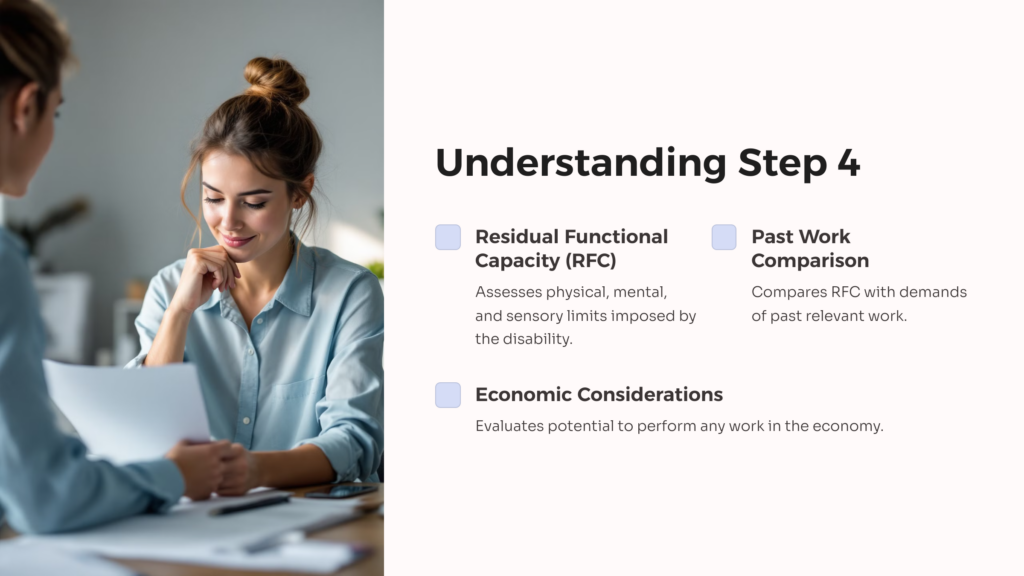
Step 4 in the disability determination process pertains to the determination of an individual’s capacity to perform past work or any other work in the economy. In this step, the analysis focuses on the claimant’s Residual Functional Capacity (RFC), considering the physical, mental, and sensory limits imposed by the disability. These functional parameters will then be compared with the demands of their past relevant work.
Progressing from Step 3 to Step 4, the claimant may encounter a status identified as “pending.” This status signifies that the determination process at this step is not yet complete and specific outstanding issues must be resolved before proceeding.
Reasons for a Pending Step 4 Status
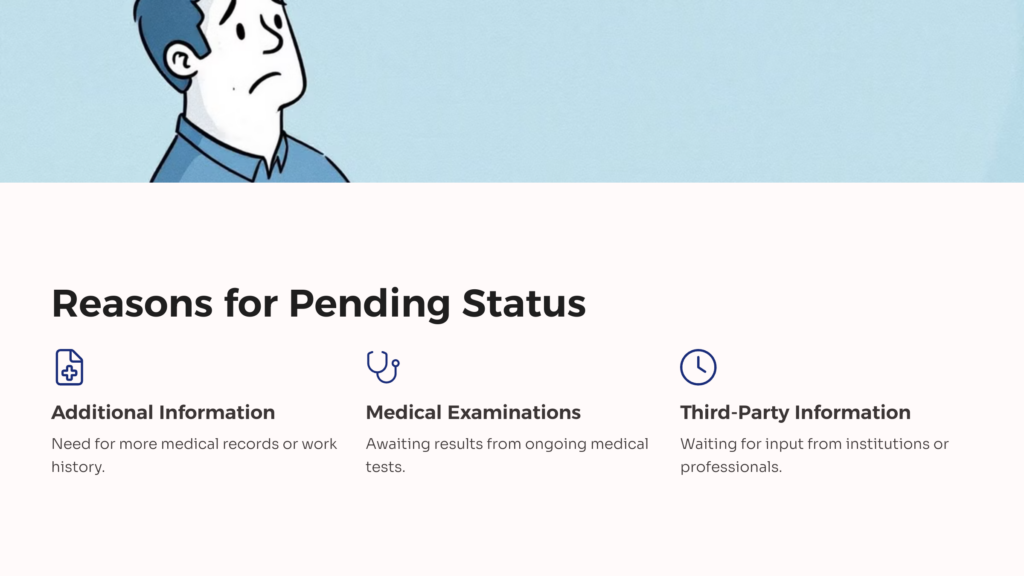
The reasons why a Step 4 determination might be pending are numerous. These could include the need for additional information or medical records, awaiting results from medical examinations, or the necessity for further background or work history. This delay could also be because the Social Security Administration is awaiting information from third-party institutions or professionals who are assisting in the disability determination service.
A disability determination pending status, especially at Step 4, could lead to uncertainties and anxiety for disability applicants. It implies the claimant’s disability benefits are in a state of limbo, not denied but not yet approved. While this status is normal in the process, understanding why it occurs can provide some peace of mind.
Impact of a Pending Status on Disability Benefits
A pending Step 4 status in the disability determination affects the speed at which disability benefits are decided and potentially disbursed. The longer the status remains pending, the longer the claimant may have to wait for eligibility approval and subsequent benefits.
Moreover, this pending status could affect potential payouts, as benefit calculation will depend on how soon the Social Security disability claim gets approved. An extended delay might influence the final decision and the ultimate benefit amount, which can cause undue stress for disability claimants who are counting on these funds.
How to Handle a Pending Step 4 Disability Determination
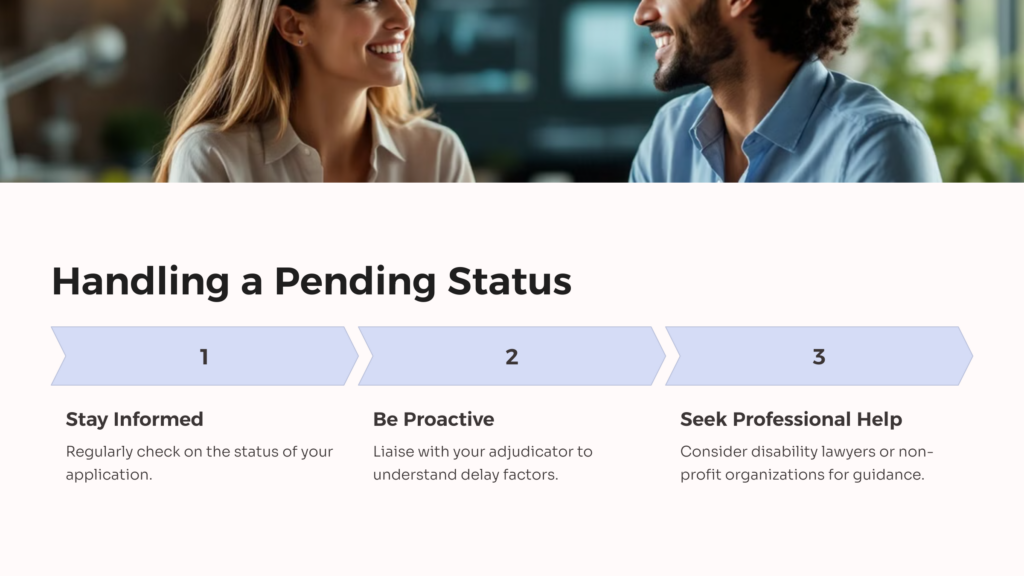
If you’re waiting on a Step 4 disability determination, there are a few smart moves you can make. The biggest thing is to stay informed and take a proactive approach. It helps to check in with your adjudicator regularly so you know where things stand and what might be slowing the process down.
Professional advice or resources are a good idea when the process becomes too complex to navigate independently. A disability lawyer who specializes in disability law can provide insight and help expedite the process. Various non-profit organizations also offer support services and guidance to individuals dealing with disability claims and appeals.
Successfully Navigating Step 4 Pending Status
The disability determination process is complex, and every stage plays a critical role in the final outcome. Step 4 is especially important, as it focuses on whether an individual can continue working despite their condition. A pending decision at this stage often brings uncertainty, frustration, and stress for claimants. However, staying proactive, informed, and seeking professional guidance can make the journey more manageable and improve the chances of a favorable resolution.
At Allveteran.com, we’re here to help you secure the benefits you’ve earned. Start today with our free medical evidence screening.
 AllVeteran.com Advisors
With expertise spanning local, state, and federal benefit programs, our team is dedicated to guiding individuals towards the perfect program tailored to their unique circumstances.