












The PACT Act is a major expansion of benefits from the Department of Veterans Affairs (VA). It helps cover veterans who were exposed to toxic substances during military service, adding new presumptive conditions tied to burn pits, Agent Orange, and other hazardous exposures. Ultimately, this is meant to make it easier for veterans to qualify for compensation and healthcare. What makes it different than the previous process is huge. Now, eligible veterans won’t need to prove a direct connection between certain illnesses and service if they meet the qualifying service requirements.
So, how does the new VA disability law expand benefits and make access to benefits easier for veterans? Here is a breakdown of what you need to know.
What Is the PACT Act?
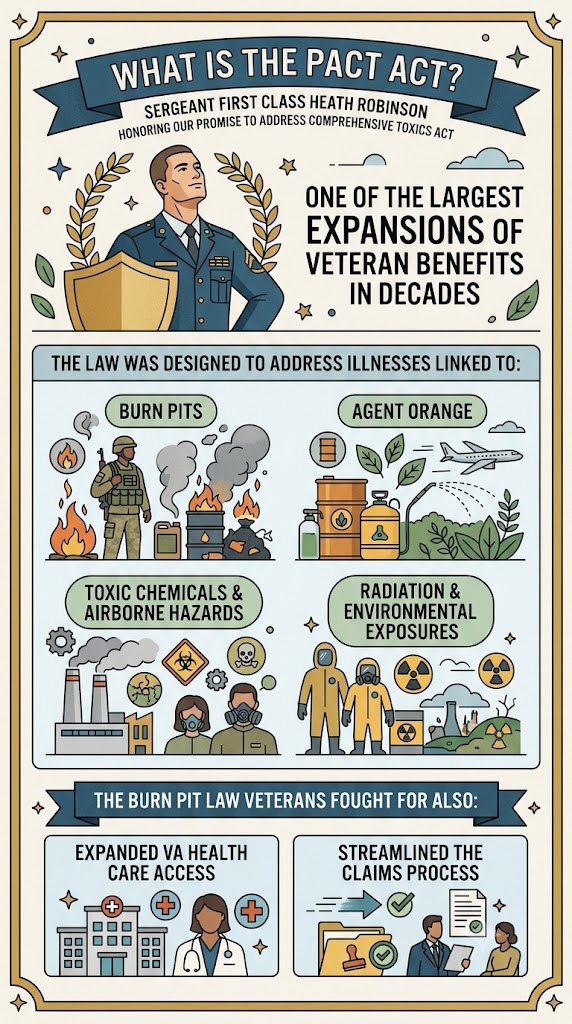
The PACT Act VA program, officially called the Sergeant First Class Heath Robinson Honoring Our Promise to Address Comprehensive Toxics Act, is one of the largest expansions of veteran benefits in decades.
The law was designed to address illnesses linked to:
- Burn pits
- Agent Orange
- Toxic chemicals and airborne hazards
- Radiation and environmental exposures
The burn pit law veterans fought for also expanded VA health care access and streamlined the claims process for many toxic exposure cases.
Conditions Presumed Under the PACT Act
One of the biggest changes under the PACT Act is the expansion of the presumptive conditions under the PACT Act. A presumptive condition means the VA automatically assumes the illness is connected to service if the veteran meets service requirements.
Some of the most common burn pit presumptive conditions include:
- Asthma
- Chronic bronchitis
- Sinusitis
- Rhinitis
- Certain respiratory cancers
Agent Orange Expansion PACT Act Conditions
The law also expanded presumptive coverage for veterans exposed to Agent Orange in additional locations. Conditions include:
- Hypertension
- Monoclonal gammopathy of undetermined significance (MGUS)
- Certain cancers and neurological disorders
With the recognition of these presumptive conditions, veterans will receive dramatically increased access to toxic exposure VA benefits.
Who Qualifies for PACT Act Benefits
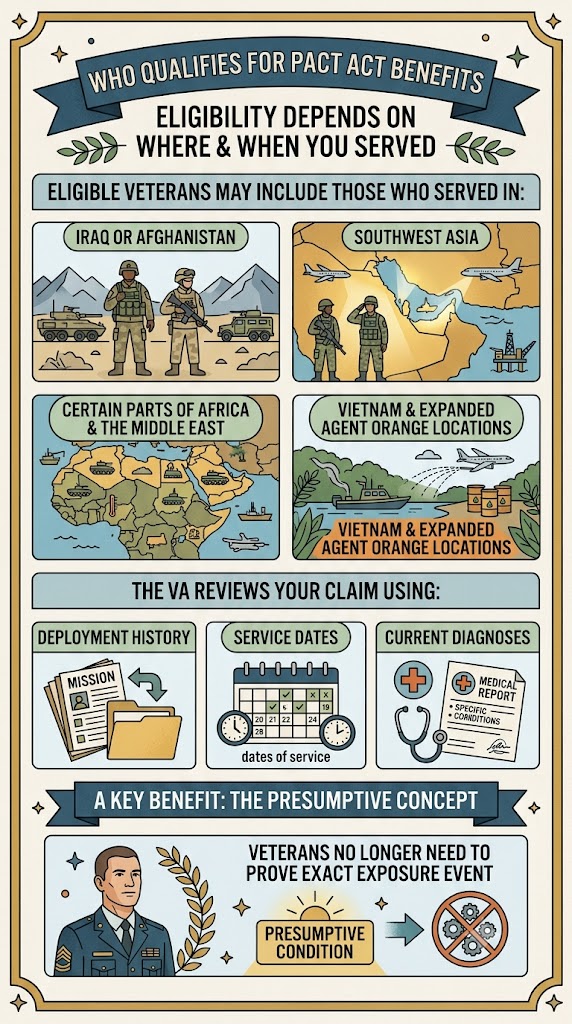
PACT Act eligibility depends on where and when a veteran served. Eligible veterans may include those who served in Iraq or Afghanistan, Southwest Asia, certain parts of Africa and the Middle East, as well as Vietnam and expanded Agent Orange locations.
The VA reviews deployment history, service dates, and current diagnoses. In many cases, veterans no longer need to prove the exact exposure event if their condition is listed as presumptive.
How to File a Claim Under the PACT Act
The PACT Act claims process is similar to standard VA disability claims but often simpler due to presumptive rules. First and foremost, gather all of your service records and medical documentation. You’ll still need it to submit your claim successfully. Then, submit a claim through VA.gov or VA Form 21-526EZ.
After that, the VA may schedule a Compensation and Pension (C&P) exam. Make sure you attend this exam. It could make all the difference in your claim. If needed, you’ll then be asked to submit additional evidence. Even presumptive claims benefit from strong medical documentation.
Under this law, veterans already enrolled in VA health care may also qualify for expanded treatment options. So, it is important to submit your claim the right way, as it could open up a lot of options for you.
How the PACT Act Impacts Existing VA Claims
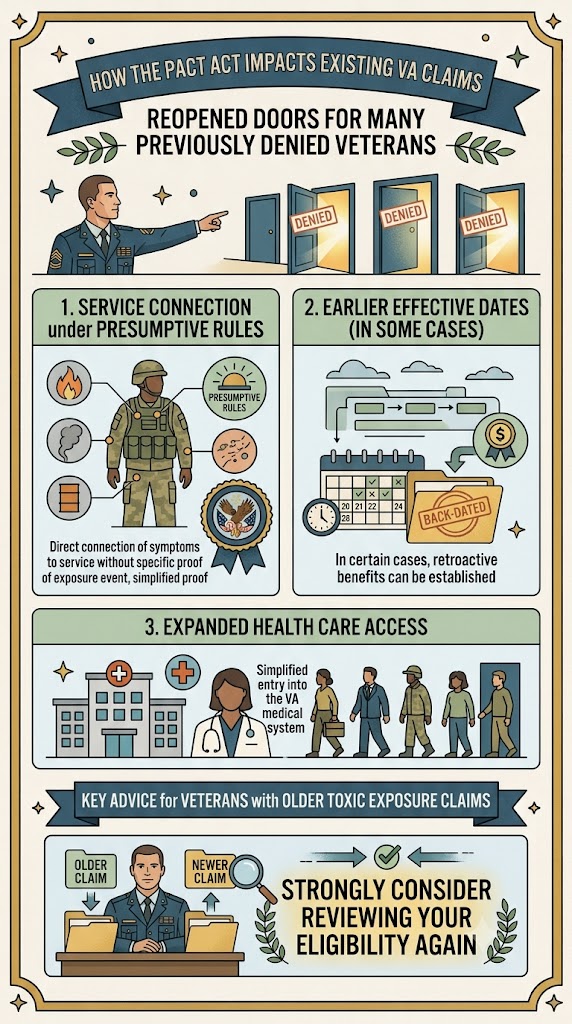
The PACT Act has reopened doors for many veterans whose claims were previously denied. If your claim was denied before the law changed, you may now qualify for:
- Service connection under presumptive rules
- Earlier effective dates in some cases
- Expanded health care access
Veterans with older VA toxic exposure claims should strongly consider reviewing their eligibility again.
How the PACT Act Could Affect You
Consider this scenario. Michael, an Army veteran who served in Iraq, developed chronic sinusitis and breathing problems years after deployment. His original VA claim was denied because he couldn’t prove direct exposure to burn pits. After the PACT Act added sinusitis as a presumptive condition, he reapplied and was approved for disability compensation and VA health care. This could be the reality for many veterans now that the law has changed. It could really make getting the benefits you deserve so much easier for veterans with eligible conditions.
FAQs About PACT Act Compensation
Knowing everything you can about the PACT Act will help you better navigate the system. Here are some of the most frequently asked questions (FAQs) about the law.
- What is the PACT Act? It is a law that expands VA benefits and health care for veterans exposed to toxic substances during service.
- What conditions are covered under the PACT Act? The law covers many respiratory illnesses, cancers, and conditions tied to burn pits and Agent Orange exposure.
- Do I still need to prove exposure under the PACT Act? Often no. Presumptive conditions simplify the process for qualifying veterans.
- Who qualifies for PACT Act benefits? Eligibility depends on service location, dates, and diagnosed conditions.
- Can I reopen an old denied claim under the PACT Act? Yes. Many veterans are now eligible for benefits after previous denials.
- Does the PACT Act only cover burn pits? No. It also expands Agent Orange coverage and addresses other toxic exposures.
- How long does a PACT Act claim take? Processing times vary, but presumptive claims are often faster than traditional claims.
Tamila’s Take
For a long time, it was difficult for many veterans to “prove” toxic exposure. Most of the time, everyone in their unit already knew it had happened and saw it happen every single day. Veterans who spent months around burn pits, chemicals, smoke, and hazardous air were being told there wasn’t enough evidence connecting their illnesses to service, even while they were dealing with chronic breathing problems, cancers, and debilitating health conditions. That’s why the PACT Act matters so much. It finally acknowledges what many veterans and families have been saying for years about the long-term damage caused by toxic exposure.
One of the most emotional parts of this law is seeing veterans who were previously denied finally receive recognition, healthcare, and compensation after feeling ignored for so long. Veterans should know that if they were denied in the past, that denial may not be the end of the story anymore, and it’s absolutely worth revisiting their eligibility under these new rules.
A New Opportunity for Veterans Exposed to Toxic Conditions
The PACT Act represents one of the most important changes to VA disability benefits in decades because it recognizes the real and lasting impact toxic exposure has had on countless veterans. For many veterans, this law could mean easier access to healthcare, monthly compensation, and long-overdue acknowledgment that their illnesses may be connected to military service. Even veterans who were denied years ago may now qualify under the expanded presumptive conditions, making it critical to review old claims and explore new eligibility opportunities. Navigating the VA system can still feel overwhelming, but veterans do not have to go through the process alone. If you believe your condition may be connected to burn pits, Agent Orange, or other toxic exposures, visit AllVeteran.com today to begin a free medical evidence screening and learn more about the benefits you may have earned through your service.
 AllVeteran.com Advisors
With expertise spanning local, state, and federal benefit programs, our team is dedicated to guiding individuals towards the perfect program tailored to their unique circumstances.