














A combat veteran is a service member who has faced the realities of war firsthand, serving in zones of active conflict where life-threatening encounters with enemy forces were part of daily duty. Unlike other veterans whose roles may have been vital but non-combat, combat veterans are defined by their direct involvement in battles, whether on the ground, in the air, or at sea. This distinction carries profound weight, as their experiences often leave lasting effects on both physical health and mental well-being. Recognizing the unique challenges of combat veterans is essential to understanding the sacrifices they’ve made and the support they deserve long after leaving the battlefield.
Criteria for Combat Veteran Status
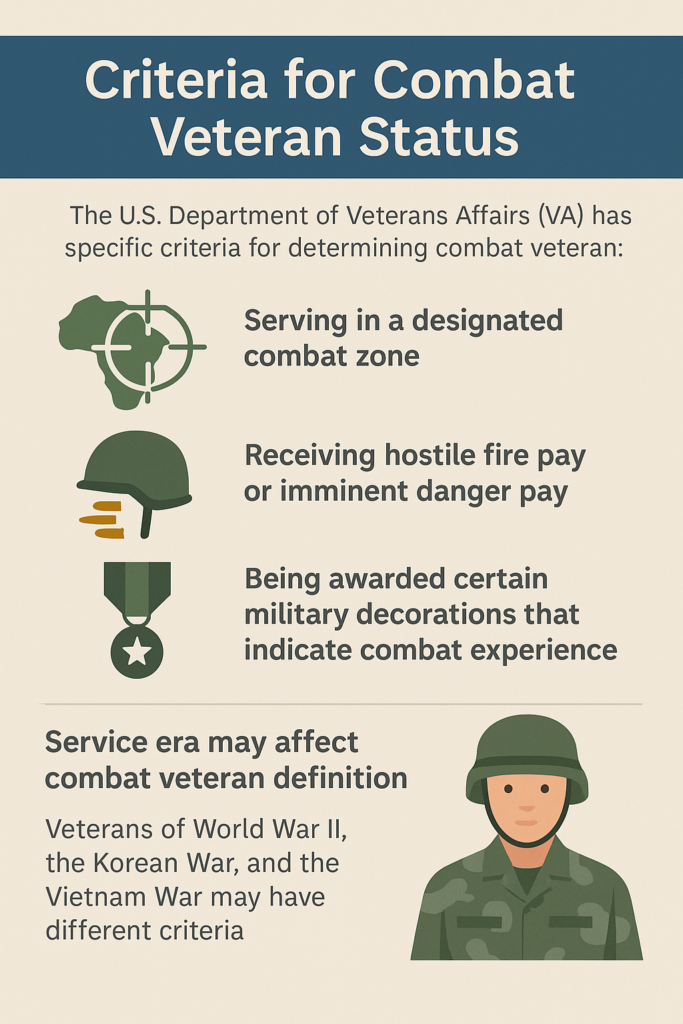
The definition of a combat veteran can vary depending on the context and the organization providing the designation. Generally, to be considered a combat vet, a service member must have served in a combat zone and been exposed to hostile fire or other life-threatening situations.
The U.S. Department of Veterans Affairs (VA) has specific criteria for determining combat veteran status:
- Serving in a designated combat zone
- Receiving hostile fire pay or imminent danger pay
- Being awarded certain military decorations that indicate combat experience
A designated combat zone is officially designated by the Department of Defense and can change based on current conflicts and military operations. Service in these areas typically qualifies a veteran for combat status, even if they did not directly engage in firefights or another combat operation.
It’s worth noting that the definition of a combat veteran may also be influenced by the era of service. For example, veterans of World War II, the Korean War, and the Vietnam War may have different criteria compared to those who served in more recent conflicts like the Gulf War or the War on Terror.
The Impact of Combat Experience
The experience of combat can have profound and lasting effects on military veterans. These impacts can manifest in various ways, affecting both physical and mental health, as well as social and professional aspects of life.
One of the most significant challenges faced by many combat veterans is Post Traumatic Stress Disorder (PTSD). PTSD is a mental health condition resulting from experiencing or witnessing traumatic events. Symptoms can include flashbacks, nightmares, severe anxiety, and uncontrollable thoughts about the event. For combat veterans, the intense and often life-threatening situations they faced during service can lead to PTSD, affecting their daily lives and relationships.
Physical injuries are another common consequence of combat experience. These can range from minor wounds to severe, life-altering injuries such as amputations or traumatic brain injuries. Many combat veterans live with chronic pain or disabilities as a result of their service.
The transition back to civilian life can be particularly challenging for combat veterans. The skills and experiences gained in combat may not directly translate to civilian jobs, and the adjustment to a non-military lifestyle can be difficult. Some veterans struggle with feelings of isolation or a lack of purpose after leaving the structured environment of military service.
Recognition and Benefits for Combat Veterans
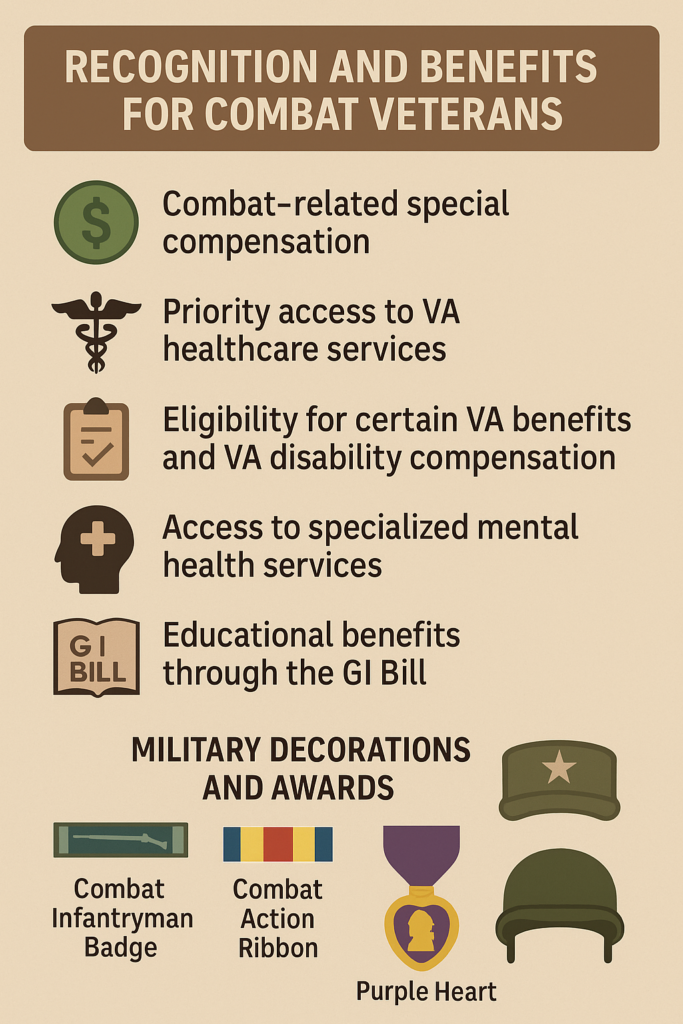
Combat veterans are often eligible for specific recognition and veterans benefits in acknowledgment of their service and sacrifices. These can include:
- Combat related special compensation
- Priority access to VA healthcare services
- Eligibility for certain VA benefits and VA disability compensation
- Access to specialized mental health services
- Educational benefits through the GI Bill
The U.S. government and various organizations have established programs to support combat veterans in their transition to civilian life. These programs may offer job training, educational opportunities, housing assistance, and mental health support tailored to the unique needs of those who have experienced combat.
There are also several different military decorations and awards for recognition of combat veterans. Medals such as the Combat Infantryman Badge, Combat Action Ribbon, or Purple Heart are specifically awarded to those who have engaged in combat or been wounded in action.
Challenges Faced by Combat Veterans
Mental health issues are among the most prevalent challenges faced by combat veterans. In addition to Post Traumatic Stress Disorder, combat veterans may struggle with depression, anxiety, and substance abuse. The psychological impact of combat can be profound and long-lasting, affecting relationships, work performance, and overall quality of life.
Physical health problems can stick around long after service has ended. Chronic pain, disabilities, and the long-term effects of injuries sustained in combat can require ongoing medical care and may limit a veteran’s ability to work or engage in activities they once enjoyed.
Coming back into society can be difficult for many combat veterans. The intense bonds formed with fellow service members during combat can be hard to replicate in civilian life, leading to feelings of isolation or disconnection. Some veterans may struggle to relate to friends and family who haven’t shared similar experiences.
Employment challenges are also common. While military service provides valuable skills and experiences, translating these to civilian job markets can be challenging. Some employers may not fully understand or appreciate the unique qualifications of combat veterans.
Support Systems for Combat Veterans
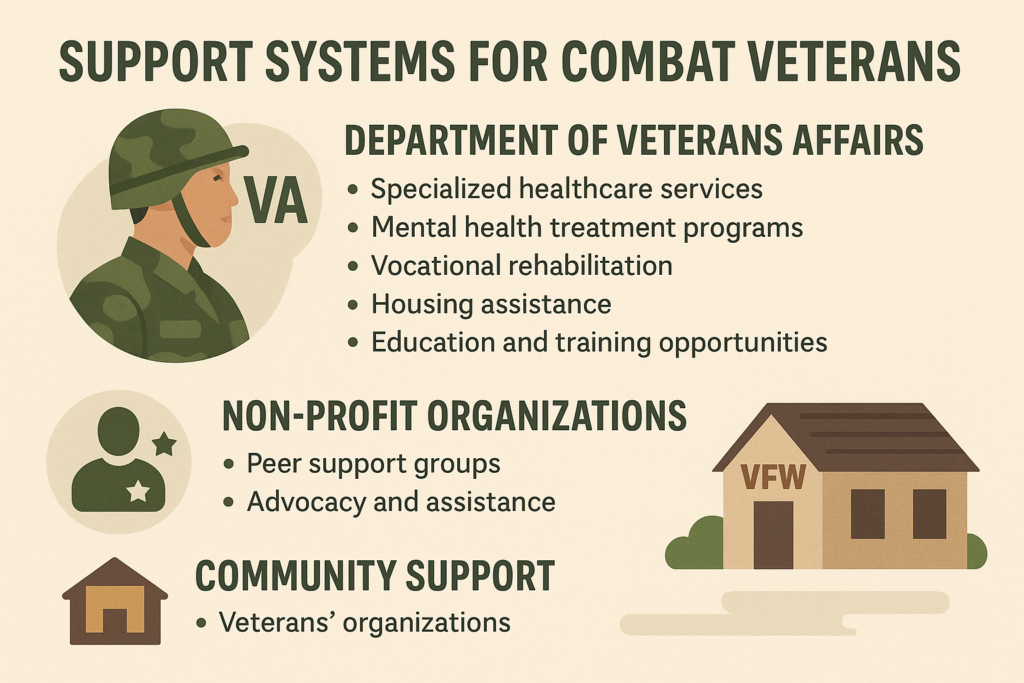
Recognizing the unique challenges faced by combat veterans, several support systems have been established to assist in their transition and ongoing well-being. These support systems range from government programs to non-profit organizations and community initiatives.
The Department of Veterans Affairs offers a wide range of VA benefits and other services specifically tailored to help combat veterans. These include:
- Specialized healthcare services
- Mental health treatment programs
- Vocational rehabilitation
- Housing assistance
- Education and training opportunities
Vet Centers, operated by the VA, provide community-based counseling centers that offer a range of social and psychological services to combat veterans and their families. These centers focus on helping veterans readjust to civilian life and cope with the aftermath of combat experiences.
Non-profit organizations play a crucial role in supporting combat veterans. Groups like the Wounded Warrior Project, Disabled American Veterans, and the Iraq and Afghanistan Veterans of America offer various programs and services, including peer support groups, job placement assistance, and advocacy for veterans’ rights and benefits.
Community support is also vital for combat veterans. Local veterans’ organizations, such as Veterans of Foreign Wars (VFW) posts, provide spaces for veterans to connect with others who share similar experiences. These communities offer a sense of belonging and understanding for combat veterans.
Getting the Support You Need After Combat
Supporting combat veterans goes beyond expressing gratitude. It is a responsibility to provide the care, resources, and opportunities they need to thrive after enduring the harsh realities of war. By truly understanding what it means to be a combat veteran and taking action to support them, we honor their service in a way that carries lasting impact. At Allveteran.com, our mission is to connect veterans with the tools that can make a real difference. Begin today by taking our free medical evidence screening to discover your disability rating and take the next step toward the benefits you’ve earned.
 AllVeteran.com Advisors
With expertise spanning local, state, and federal benefit programs, our team is dedicated to guiding individuals towards the perfect program tailored to their unique circumstances.