












Many U.S. military veterans living overseas often ask whether they can still receive disability benefits from the Department of Veterans Affairs (VA). The answer is yes. VA disability compensation is available no matter where you live, providing tax-free payments to veterans whose disabilities stem from injuries or illnesses incurred or aggravated during service. While residing abroad doesn’t affect your eligibility, it can make the application and management process more complex than it is stateside. Navigating different time zones, documentation requirements, and communication channels with the VA can present unique challenges. Understanding how to access and maintain your benefits from outside the United States is key to ensuring you receive the full support your service has earned. Here is what you need to know.
Eligibility for VA Disability Benefits Overseas
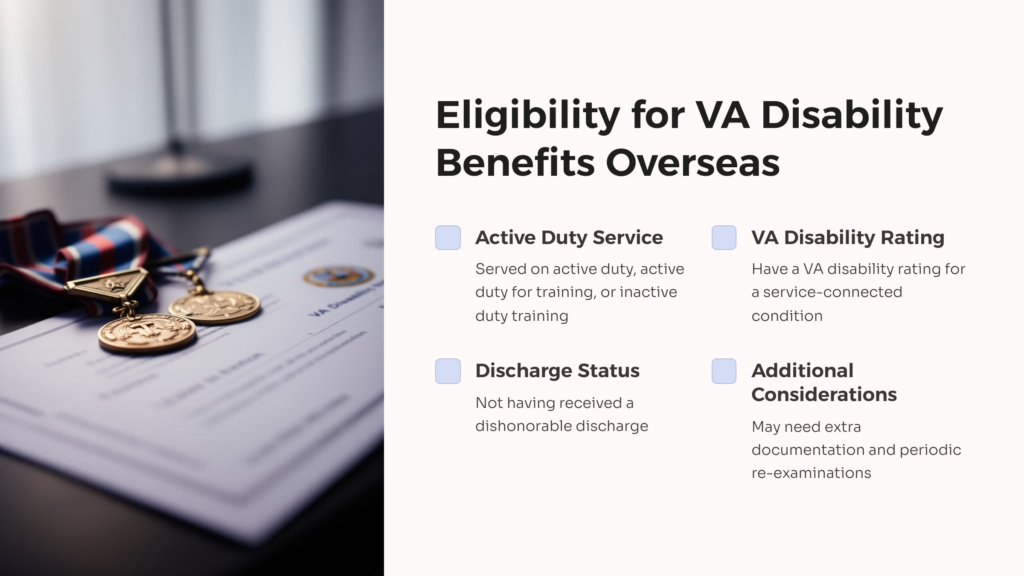
To be eligible for VA disability benefits while living overseas, veterans must meet the same basic requirements as those living in the United States. These include:
- Having served on active duty, active duty for training, or inactive duty training
- Having a VA disability rating for a service-connected condition
- Not having received a dishonorable discharge
Your eligibility doesn’t change simply because you’ve moved to another country. The VA recognizes that many veterans choose to live abroad for various reasons, and they’ve put systems in place to support these veterans.
However, there are some additional considerations for overseas veterans. For example, you may need to provide extra documentation to prove your identity and current residence. The VA might also require you to undergo periodic re-examinations regarding your disability rating in order to continue receiving benefits, which can be more challenging to arrange when living outside the U.S.
Applying for VA Disability Benefits from Abroad
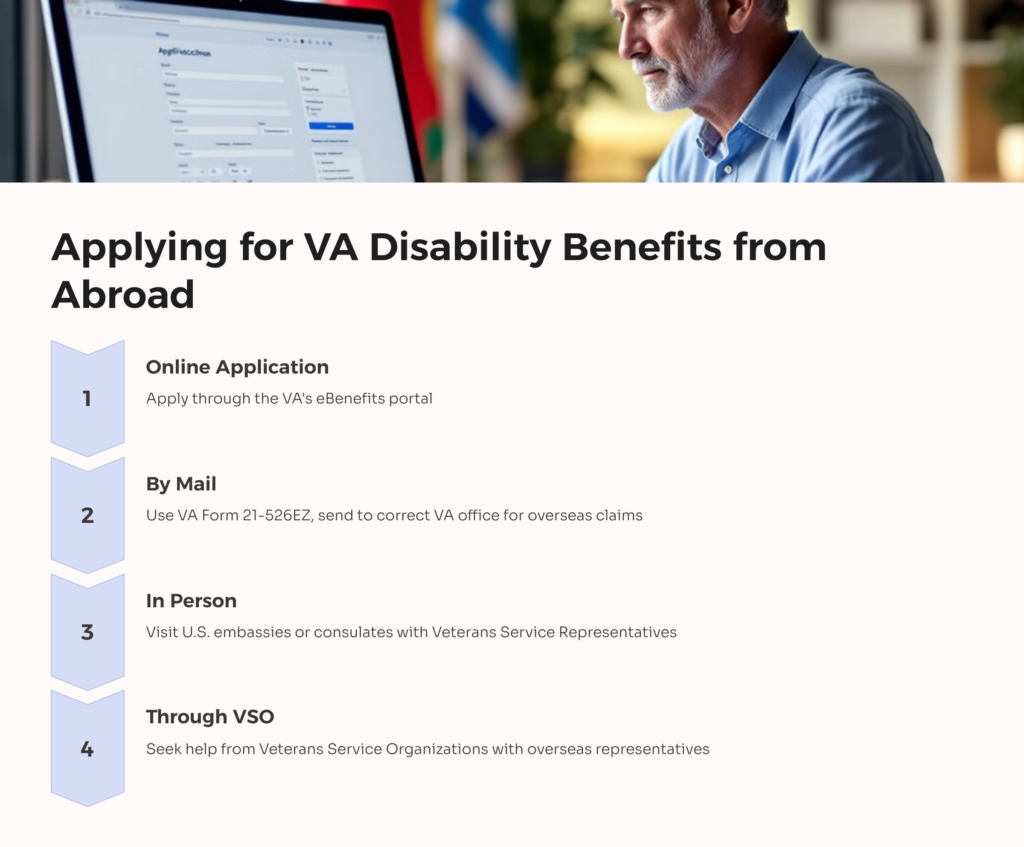
The process of applying for VA disability benefits from overseas is similar to applying from within the United States, but there are some key differences to be aware of:
- Online Application: Veterans can apply online through the VA’s eBenefits portal. This is often the easiest method for those living abroad.
- By Mail: If you prefer, you can still apply by mail using VA Form 21-526EZ. Be sure to send it to the correct VA office that handles overseas claims.
- In Person: Some U.S. embassies and consulates have Veterans Service Representatives who can assist with the application process.
- Through a Veterans Service Organization (VSO): Many VSOs have representatives who can help with overseas applications.
When applying, make sure to provide all necessary documentation, including medical records and proof of your overseas residence. It’s also important to keep copies of all submitted documents for your records.
Managing Your VA Benefits Overseas
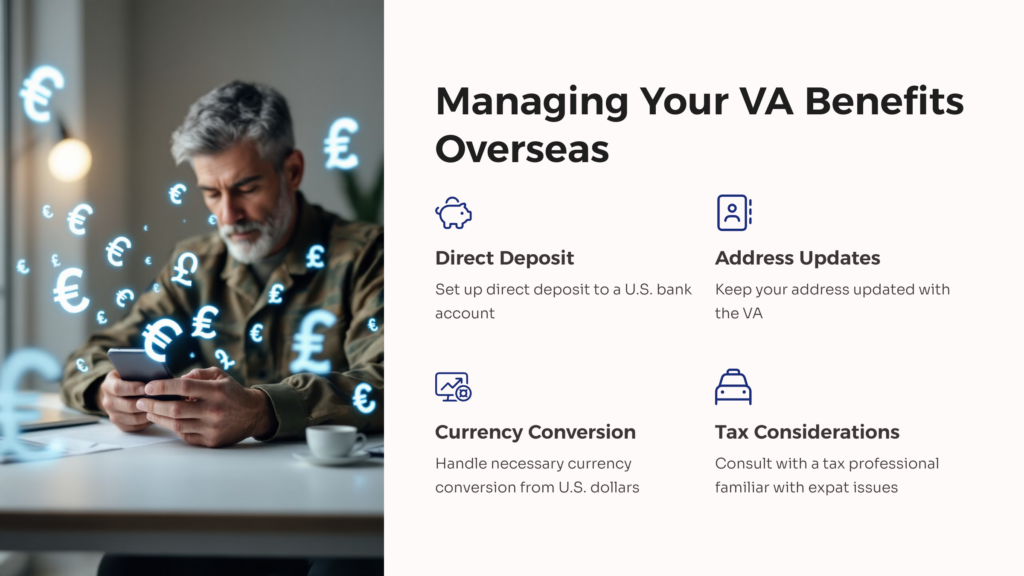
Once you’ve been approved for VA disability compensation benefits, managing them from overseas requires some additional steps:
- Direct Deposit: Set up direct deposit to a U.S. bank account. The VA doesn’t typically deposit funds directly into foreign bank accounts.
- Address Updates: Keep your address updated with the VA. You can do this through the eBenefits portal or by contacting the VA directly.
- Currency Conversion: Be aware that disability compensation benefits are paid in U.S. dollars. You’ll need to handle any necessary currency conversion.
- Tax Considerations: While VA disability benefits are tax-free in the U.S., you may need to report them in your country of residence. Consult with a tax professional familiar with expat issues.
- Re-examinations: Be prepared to attend periodic re-examinations to maintain your VA compensation benefits. These may be conducted at U.S. military facilities or approved foreign medical providers.
Challenges and Solutions for Overseas Veterans
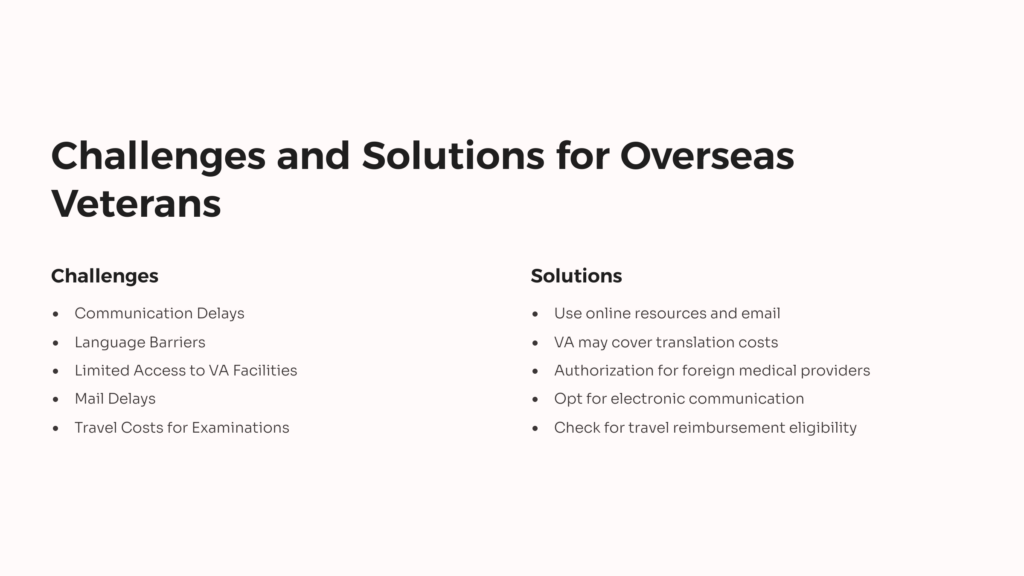
Living abroad while receiving VA disability benefits can present unique challenges. Here are some common issues and potential solutions:
- Communication Delays: Time zone differences can make it difficult to contact the VA. Use online resources and email when possible, and be prepared to make calls during U.S. business hours if necessary.
- Language Barriers: If you’re in a non-English speaking country, medical documentation may need to be translated. The VA may cover translation costs in some cases.
- Limited Access to VA Facilities: You may not have easy access to hospitals or clinics with VA health care providers. In some cases, the VA may authorize receiving health care from foreign medical providers.
- Mail Delays: Important documents can take longer to reach you. Opt for electronic communication when possible and allow extra time for mailed correspondence.
- Travel Costs for Examinations: If you need to travel for VA-required examinations, you may be eligible for travel reimbursement. Check with the VA about your options.
Resources for Veterans Living Overseas
Several resources are available to help veterans navigate the process of obtaining and managing VA benefits while living abroad:
- Foreign Medical Program (FMP): This program helps veterans get health care for service-connected disabilities while living or traveling abroad.
- Veterans of Foreign Wars (VFW): The VFW has service officers who can assist with claims, even for veterans living overseas.
- American Legion: This organization also provides support for veterans living abroad.
- U.S. Embassies and Consulates: Many have staff who can assist veterans with various issues, including disability benefits.
- VA’s Foreign Benefits Unit: This specialized unit handles claims and inquiries from veterans living outside the U.S.
Remember to utilize these resources when you need assistance. They can provide valuable guidance and support throughout the process of obtaining and managing your VA disability benefits overseas.
Maintaining Your Benefits While Abroad
To ensure you continue receiving your VA disability benefits while living overseas, it’s important to:
- Stay in touch with the VA: Respond promptly to any requests for information or re-examination notices.
- Keep your contact information current: Update your address, phone number, and email with the VA whenever they change.
- Report any changes in your disability status: If your condition improves or worsens, notify the VA promptly.
- Comply with all VA requirements: This includes attending scheduled re-examinations and providing requested documentation.
- Be aware of any restrictions: Some countries may have agreements with the U.S. that affect how benefits are administered. Check with the VA or your local U.S. embassy for details.
By staying proactive and informed, you can help ensure a smooth experience with your VA disability benefits, regardless of where in the world you choose to live.
Getting Deserved Benefits Overseas
Receiving VA disability benefits while living overseas isn’t just possible; it’s a right you’ve earned through your service. Although the process may involve extra steps compared to living in the U.S., with preparation and clear communication, you can navigate it successfully. The VA and numerous veterans’ organizations remain valuable resources, ready to assist no matter how far from home you are. Stay informed, stay proactive, and don’t hesitate to seek help when you need it. At AllVeteran.com, we’re here to guide you. Explore our blog for detailed insights and take our free medical evidence screening today to ensure you’re getting the benefits and support you deserve.
 AllVeteran.com Advisors
With expertise spanning local, state, and federal benefit programs, our team is dedicated to guiding individuals towards the perfect program tailored to their unique circumstances.