












Quick Answer
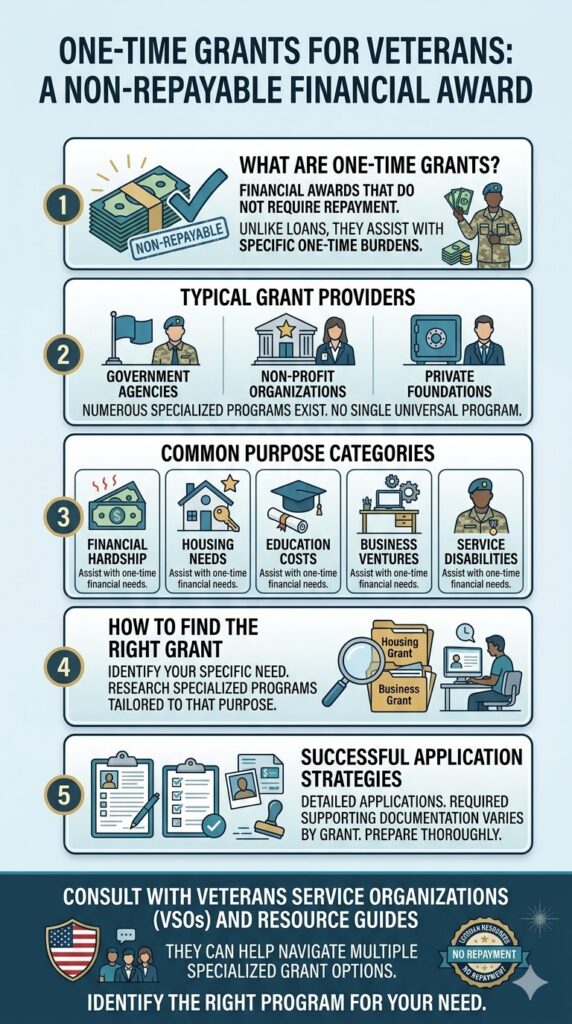
One-time grants for veterans are non-repayable financial awards provided by various organizations, including government agencies, non-profits, and private foundations, to support specific needs. Unlike loans, these grants do not require repayment. They are typically awarded based on specific eligibility criteria, often related to service-connected disabilities, financial hardship, housing needs, education, or business ventures. While there isn’t a single universal ‘one-time grant’ program, numerous specialized grants exist to assist veterans with a range of one-time or short-term financial burdens. Identifying the right grant involves understanding your specific need and researching programs tailored to that purpose, often requiring detailed applications and supporting documentation.
Why This Update
One-time grants can be hard to track down because programs change frequently. We updated this guide so you have the most current options and know exactly where to apply.
Author’s Take
I’ve worked with too many veterans who didn’t realize grant money was available to them until it was almost too late to apply. The biggest mistake I see is assuming you don’t qualify, or waiting for someone to tell you about these programs instead of seeking them out yourself. My advice: start with your local VA office or a Veterans Service Organization, and don’t be afraid to ask what’s available in your state, too. You served this country, and these grants exist because that service matters.
Understanding ‘One-Time Grants’ for Veterans
One-time grants are non-repayable funds designed to address specific, often immediate, financial needs. Unlike ongoing benefits like monthly disability compensation, these grants are typically disbursed once or for a limited duration for a defined purpose. Understanding this distinction helps you set realistic expectations about what diverse financial assistance programs may be available. For a broader understanding of various aid, you can also understand how SNAP benefits work.
There is no single federal ‘one-time grant’ program that covers all veterans for all purposes. Instead, assistance comes from diverse sources, each with its own focus and eligibility requirements. Common grant categories include housing adaptations for veterans with service-connected disabilities, emergency financial aid during crises, education expenses not covered by the GI Bill, and small business support for veterans who own businesses.
Key Sources of Veteran Grant Funding
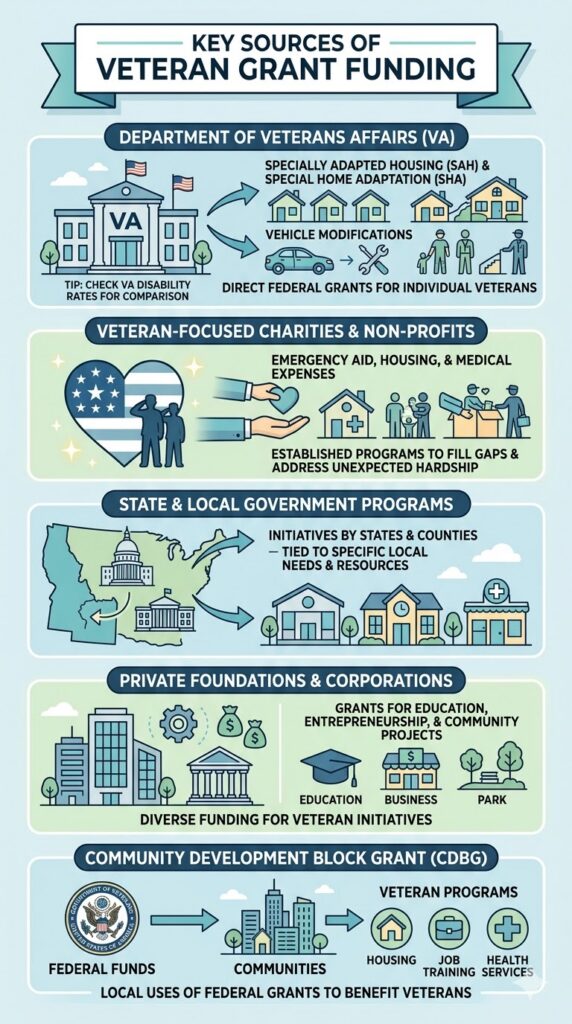
The Department of Veterans Affairs (VA) offers specific grants, primarily for adaptive housing through the Specially Adapted Housing (SAH) and Special Home Adaptation (SHA) programs, as well as vehicle modifications for veterans with disabilities. These are among the most well-known federal grant options available directly to individual veterans. To see how these compare to other forms of assistance, you may want to check the current VA disability compensation rates.
Organizations that support veterans provide a substantial portion of grant funding. Numerous veteran-focused charities offer grants for emergency aid, housing, medical expenses, and other critical needs. Organizations like USA Cares and Operation First Response have established programs specifically to fill gaps when veterans face unexpected financial hardships.
State and local programs represent another important funding source. Many states and counties have their own grant initiatives for veterans, often tied to specific local needs or resources. Private foundations, including those established by corporations, sometimes offer grants for veteran education, entrepreneurship, or specific community projects. Additionally, the Community Development Block Grant (CDBG) program allows federal funds to be used for eligible public service activities that can benefit veterans, including housing, job training, and health services.
Common Purposes for Veteran One-Time Grants
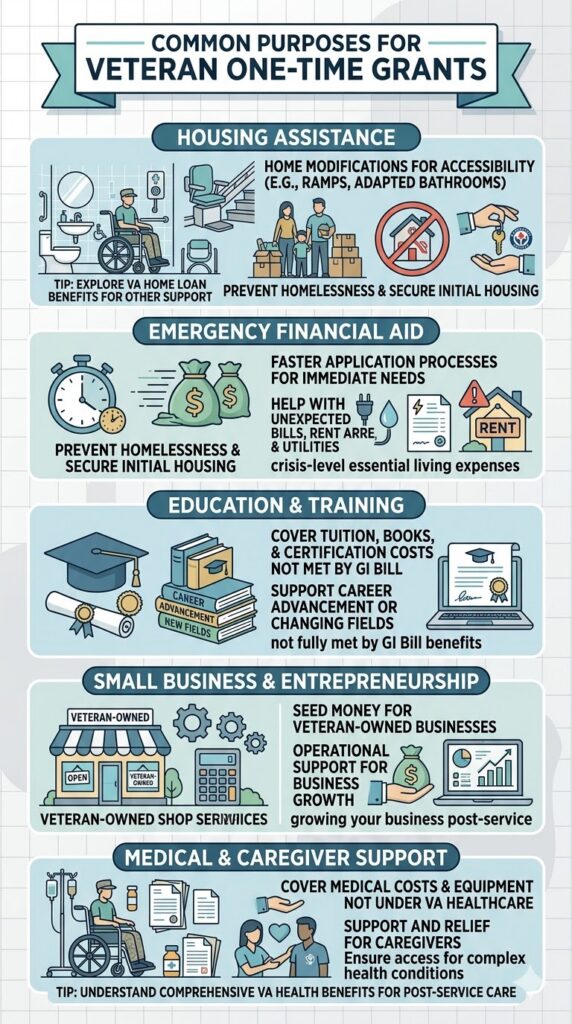
Housing assistance represents one of the most significant grant categories. The VA offers grants for home modifications to support accessibility needs, while organizations like USA Cares provide housing assistance grants to help prevent homelessness or secure initial housing. For other housing support options, veterans can also explore various VA home loan benefits.
Emergency financial aid grants provide funds for unexpected bills, utilities, rent arrears, or essential living expenses during times of crisis. These grants often have faster application processes because they address immediate needs. Education and training grants help cover tuition, books, or certification costs not fully met by GI Bill benefits, supporting veterans seeking to advance their careers or change fields.
Small business and entrepreneurship grants offer seed money or operational support for veteran-owned businesses. Medical and caregiver support grants may assist with medical costs, equipment, or caregiver relief not covered by VA healthcare, particularly important for veterans experiencing complex health conditions. Beyond specific grants, it’s also crucial to understand how to access comprehensive VA health benefits available after service.
Eligibility Requirements and Application Process
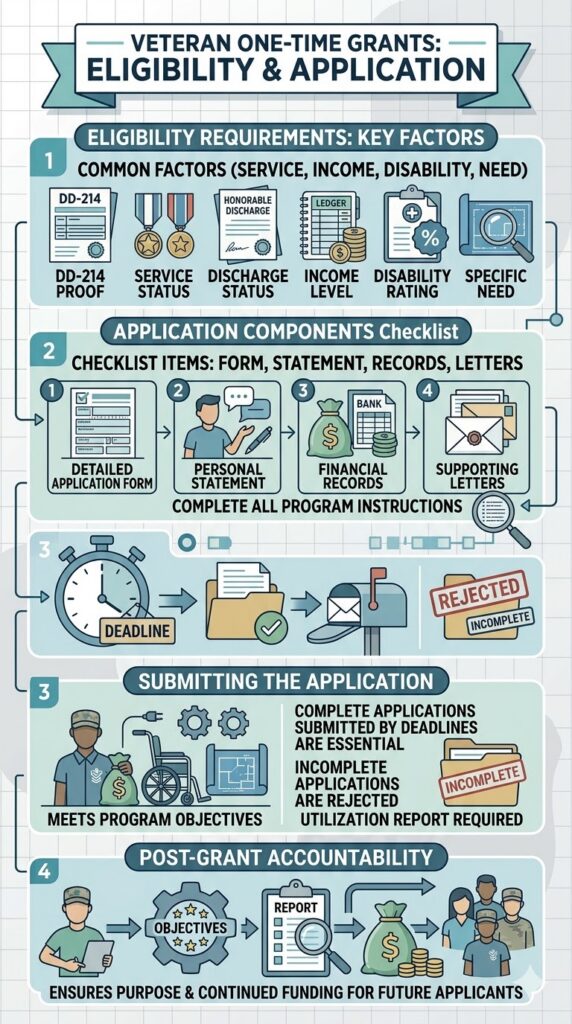
Eligibility varies significantly by grant program. Common factors include service status, discharge status, income level, disability rating, and the specific need being addressed. Most grants require proof of veteran status through your DD-214 and often documentation of the financial need or project for which funds are requested.
The application process typically involves submitting a detailed application form, personal statements, financial records, and supporting letters. Each program has its own requirements, so reading instructions carefully is essential. Deadlines are common for many grants, and incomplete applications are frequently rejected, underscoring the need for careful, complete submission.
Some grants may require you to meet specific program objectives or report on how funds were utilized. This accountability ensures that grant money serves its intended purpose and helps organizations continue funding future applicants.
Tips for Finding and Successfully Applying for Grants
Start by clearly defining your specific financial need before searching, as grants are highly targeted. A general request for “financial help” is less likely to succeed than a specific request for “emergency home repair” or “adaptive equipment.” This clarity helps you identify the most relevant programs.
Use online grant databases, veteran service organizations (VSOs), and state veteran affairs departments for research. These resources maintain current information about available programs and can often connect you directly with application assistance. Thoroughly review all eligibility criteria before applying to avoid spending time on programs that don’t match your needs.
Gather all required documentation in advance, including military records, financial statements, and medical evidence if applicable. Having these materials organized before you start the application saves time and reduces stress. Consider seeking assistance from a VSO representative or a grant writing resource to help navigate complex applications, especially for substantial grant funding.
Example Scenario
If you’ve recently experienced a sudden home repair emergency that left you unable to afford a critical expense, you might feel overwhelmed navigating financial options. One veteran discovered that by clearly describing their urgent, specific need and submitting documentation of the repair and their financial situation, they could apply for a targeted emergency relief grant from an organization that supports veterans. This allowed them to cover the unexpected cost without incurring debt, offering important financial stability.
Frequently Asked Questions
What is the difference between a grant and a loan for veterans?
Grants are non-repayable funds, meaning you do not have to pay them back. Loans, on the other hand, are borrowed funds that must be repaid, usually with interest, over a set period.
Can I receive multiple one-time grants from different organizations?
Yes, it is possible to receive multiple grants from different organizations, provided you meet each program’s individual eligibility criteria. However, some grants may have clauses that prevent you from receiving similar assistance for the same purpose.
Are veteran grants considered taxable income?
Generally, grants for general welfare or specific disability-related needs (like housing for veterans with disabilities) are not considered taxable income. However, grants for education or business purposes might be taxable in part or in full. It’s best to consult a tax professional or the grant provider for specific guidance.
How long does it take to get a one-time veteran grant?
The processing time for grants varies widely depending on the type of grant and application requirements. Some emergency grants might be processed in a few days or weeks, while larger grants or government programs could take several months.
Do all veterans qualify for one-time grants?
No, not all veterans qualify for every grant. Each grant program has specific eligibility requirements related to service record, disability status, income level, geographic location, or the specific purpose the grant serves.
Where can I find reputable information about veteran grants?
Reputable sources include the Department of Veterans Affairs (VA.gov), state veteran affairs departments, established veteran service organizations (VSOs) like the DAV or VFW, and well-known organizations focused on veteran support.
 AllVeteran.com Advisors
With expertise spanning local, state, and federal benefit programs, our team is dedicated to guiding individuals towards the perfect program tailored to their unique circumstances.