













Veterans who have served our country often face unique mental health challenges as a result of their service. In fact, one in three veterans experiences at least some symptoms of depression. The Department of Veterans Affairs (VA) uses a specific VA disability rating chart to assess and compensate veterans for mental health conditions related to their military service. This VA rating system is crucial for determining the level of VA disability benefits a veteran may receive. Understanding the VA mental health rating charts and how they might impact you is crucial.
Why This Update
The VA may be changing how mental health disabilities are rated. As of May, 2026, the process has not changed.
Tamila’s Take
I’ve worked with a lot of veterans, and here’s what I always tell them: your VA mental health rating isn’t about the label, it’s about how your condition impacts your ability to function every single day. The VA looks at things like your ability to work, maintain relationships, and handle daily responsibilities when assigning a rating, not just your diagnosis. If you don’t clearly explain how your worst days affect your life, you risk being underrated. That’s why being honest and specific during your C&P exam matters more than most people realize.
The other big thing I stress is this: your first rating is not final, and you have more control than you think. If your symptoms get worse or weren’t fully captured the first time, you can (and should) file for an increase with stronger documentation. The VA bases decisions on the severity and real-world impact of your symptoms, not just one appointment. Keep records, get statements, and don’t be afraid to advocate for yourself. You earned these benefits, and making sure your rating reflects your reality is part of protecting your financial future.
The Basics of VA Disability Ratings
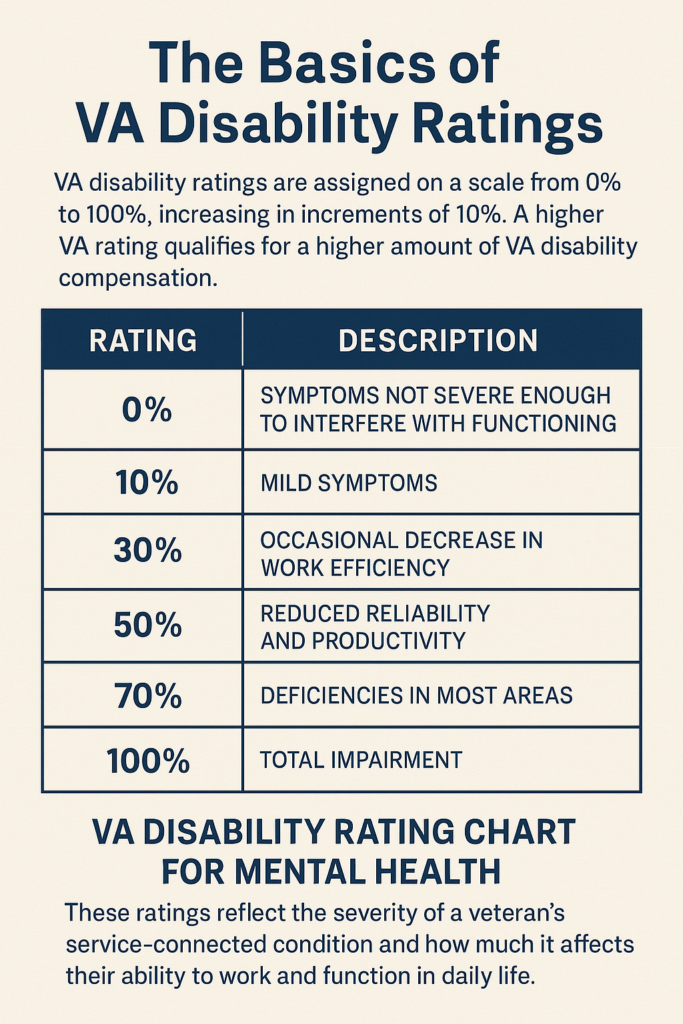
VA disability ratings are assigned on a scale from 0% to 100%, increasing in increments of 10%. A higher VA rating qualifies for a higher amount of VA disability compensation. These ratings reflect the severity of a veteran’s service-connected condition and how much it affects their ability to work and function in daily life. For mental health conditions, the VA uses a specific set of criteria outlined in the Code of Federal Regulations.
Common Mental Health Conditions Covered
The VA recognizes and rates a wide range of mental health conditions that can be service-connected. Some of the most common include:
- Post Traumatic Stress Disorder (PTSD)
- Depression
- Substance Use Disorders (SUDs)
- Anxiety disorders
- Bipolar disorder
- Schizophrenia
A mental disorder can significantly impact a veteran’s quality of life and ability to function in society. The VA’s rating system aims to address the unique challenges posed by each condition while providing a standardized framework for assessment and awarding VA disability compensation.
Breaking Down the VA Mental Health Rating Chart
The VA mental health rating chart is divided into several categories, each corresponding to a different level of disability. Here’s a simplified breakdown of the ratings:
- 0%: A mental condition has been diagnosed, but symptoms are not severe enough to cause impairment or interfere with work or social functioning.
- 10% – 30%: Mild to moderate symptoms that may cause occasional decreases in work efficiency or intermittent periods of inability to perform tasks.
- 50% – 70%: Reduced reliability and productivity due to symptoms such as difficulty in understanding complex commands, impaired judgment, or difficulty in establishing and maintaining effective relationships.
- 100%: Total occupational and social impairment due to severe symptoms such as persistent delusions or hallucinations, grossly inappropriate behavior, or persistent danger of hurting self or others.
It’s important to note that these are general guidelines, and the VA will consider each case individually based on the specific symptoms and the impact of the mental illness on the veteran’s life.
Key Factors in Mental Health Ratings
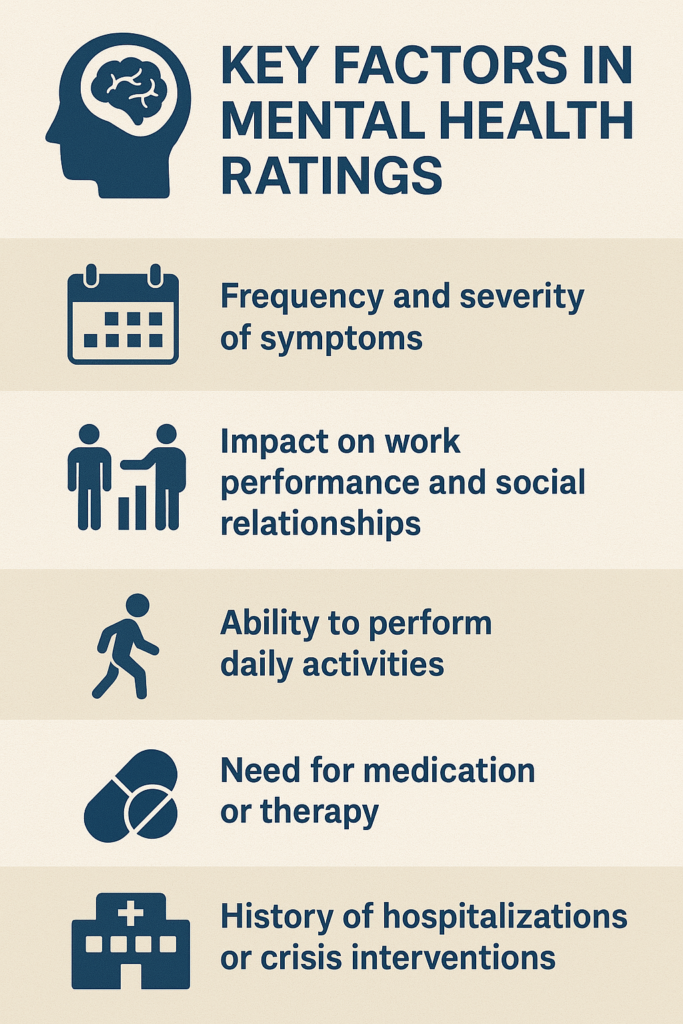
When assessing a veteran’s mental health condition, VA raters consider several key factors:
- Frequency and severity of symptoms
- Impact on work performance and social relationships
- Ability to perform daily activities
- Need for medication or therapy
- History of hospitalizations or crisis interventions
These factors help paint a comprehensive picture of how the mental illness affects the veteran’s overall functioning and quality of life.
The Rating Process: What Veterans Need to Know
To receive a VA mental health disability rating, veterans typically need to go through the following steps:
- File a disability claim with the VA for the mental health condition
- Provide medical evidence, including diagnoses and treatment records
- Attend a Compensation and Pension (C&P) exam with a VA-approved healthcare provider
- Wait for the VA to review the evidence and assign a rating
It’s crucial for veterans to be honest and thorough during the VA claim process. Providing detailed information about how the condition affects daily life can help ensure an accurate rating.
Common Challenges in Mental Health Ratings
Many veterans face challenges when seeking appropriate ratings for their mental health conditions. Some common issues include:
- Difficulty in quantifying mental health symptoms
- Variability in how symptoms manifest over time
- Stigma associated with mental health conditions
- Lack of understanding about the rating criteria
Veterans who feel their rating doesn’t accurately reflect their mental disorder have the right to appeal the decision. Seeking help from a Veterans Service Organization (VSO) or an experienced attorney can be beneficial in navigating the appeals process.
The Impact of Mental Health Ratings on Benefits
A veteran’s mental health rating can significantly impact the benefits they receive. Higher ratings generally correspond to increased monthly compensation. Additionally, veterans with high ratings may be eligible for additional benefits such as:
- Individual Unemployability (IU) if unable to maintain substantially gainful employment
- Special Monthly Compensation (SMC) for severe disabilities
- Healthcare priority at VA medical facilities
- Vocational rehabilitation services
Understanding these potential benefits can help veterans make informed decisions about their care and support options.
Strategies for Documenting Mental Health Symptoms
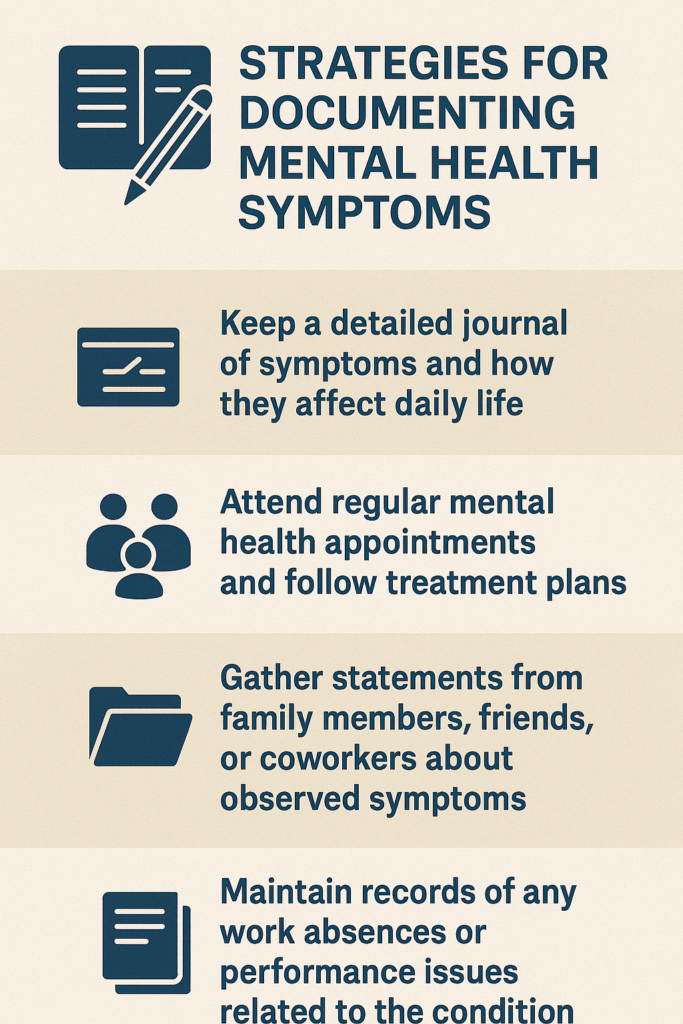
Proper documentation is key to receiving an accurate mental health rating. Veterans should consider the following strategies:
- Keep a detailed journal of symptoms and how they affect daily life
- Attend regular mental health appointments and follow treatment plans
- Gather statements from family members, friends, or coworkers about observed symptoms
- Maintain records of any work absences or performance issues related to the condition
These records can provide valuable evidence when filing a disability claim or appealing a rating decision.
Resources for Veterans Seeking Mental Health Support
Veterans struggling with mental health issues have access to numerous resources:
- VA Mental Health Services: Offers a range of treatment options and support programs
- Veterans Crisis Line: Provides 24/7 confidential crisis intervention
- Vet Centers: Offers counseling and readjustment services
- VA Mobile Apps: Provides tools for self-help and symptom management
Utilizing these resources can not only improve a veteran’s quality of life but also provide additional documentation for rating purposes.
The Future of VA Mental Health Ratings
The proposed changes to the VA ratings for mental health conditions aim to create a more objective evaluation process for mental disorders. The new system will replace vague and subjective language with a domain-based model that focuses on measurable symptoms across these five key areas.
Each domain is scored from 0 (none) to 4 (total impairment). This change is largely positive: veterans who can hold jobs but struggle significantly in personal or social areas can now qualify for a higher rating, including 100%, which was difficult under the old occupational-focused criteria.
Additionally, the 0% VA rating for mental health conditions will be eliminated, ensuring every diagnosed and service-connected mental health condition receives a minimum rating of 10%.
As of May, 2026, these changes have not taken place yet.
A Veteran Navigating the VA Mental Health Rating System
James is a 42-year-old Army veteran who served two tours overseas. After returning home, he began experiencing symptoms of Post Traumatic Stress Disorder, including nightmares, anxiety in crowded places, and difficulty maintaining relationships. At first, he brushed it off as something he could manage on his own, but over time, his symptoms started affecting his job performance and daily life. Eventually, his spouse encouraged him to seek help through the VA.
After reviewing his case, the VA assigned James a 50% disability rating, which reflected reduced reliability at work and difficulty maintaining relationships. This rating placed him in the middle of the VA scale, which ranges from 0% to 100% depending on symptom severity and functional impairment. While the compensation helped, James still struggled to keep a steady job due to worsening symptoms.
With this additional evidence, he filed for a rating increase. The VA later raised his rating to 70%, recognizing more severe impairment in most areas of life, including work, family relationships, and mood. This allowed him to receive compensation at the 100% rate, even though his official rating remained 70%. With financial stability and continued treatment through VA mental health services, James began focusing on recovery and rebuilding his daily routine.
Understanding VA Mental Health Rating Charts is Essential
Understanding VA mental health rating charts is essential for veterans seeking the support and compensation they deserve. While the system can be complex, being informed and proactive can make a significant difference in the outcome of a claim.
Remember, mental health is a crucial aspect of overall well-being, and seeking help is a sign of strength, not weakness.
 AllVeteran.com Advisors
With expertise spanning local, state, and federal benefit programs, our team is dedicated to guiding individuals towards the perfect program tailored to their unique circumstances.