













Filing for VA disability benefits can feel confusing, slow, and frustrating. But not all claims are created equal. Some conditions are more likely to get approved—if you know how to document and present them correctly. Some disability claims are easier to get than others, and understanding which VA claims have higher approval rates can help you focus your efforts. Veterans can also choose to claim online, making the process more convenient and often resulting in faster processing.
Let’s walk through the top 10 easy VA disability claims based on high approval rates, clear service connections, and proven success. We’ll also cover the steps you need to take to avoid delays and denials, and how to improve your chances for claims to get approved. Plus, you’ll learn how successful claims can lead to VA disability compensation, providing important benefits for veterans.
Why This Update
VA processes can change, and certain disabilities are becoming easier to win a claim with. We want to make sure our information is updated to reflect reality.
Tamila’s Take
Anyone who has walked through the VA claims process can tell you that nothing about it felt easy. Articles that make statements about “easy” claims seem untrustworthy. When you are going to file for what you are owed, don’t just go for what’s simple. Search for the truth and provide the VA with a full picture. You deserve that level of support.
Introduction to VA Disability Claims

Navigating the world of VA disability claims is a crucial step for veterans seeking support after their military service. The Department of Veterans Affairs (VA) offers disability compensation to eligible veterans who have sustained injuries or developed illnesses as a result of their service. To qualify for these benefits, veterans must not have received a dishonorable discharge. These VA disability benefits can make a significant difference in a veteran’s quality of life, providing financial support and access to essential resources. A disability rating of 10% or more grants access to additional benefits beyond monthly payments, including VA healthcare, vocational rehabilitation, and housing benefits.
Understanding the VA disability claims process is key to ensuring you receive the disability compensation you deserve. The process involves submitting a claim to the VA, providing evidence of your service-connected disabilities, and working through the necessary steps to establish eligibility. By learning about the most common conditions that are approved for disability benefits and how to properly document your claim, you can improve your chances of a successful outcome.
Whether you’re just starting your claim or looking to maximize your benefits, knowing the basics of VA disability, the types of disabilities covered, and the importance of thorough documentation will help you navigate the system with confidence. Remember, these benefits are designed to support disabled veterans who have sacrificed for their country—make sure you take full advantage of the compensation and services available to you.
What Makes a VA Disability Claim “Easy”?
“Easy” doesn’t mean the condition isn’t serious. It means:
- The condition is commonly linked to military service
- There’s strong medical evidence
- The VA has clear guidelines for how it’s rated
- Some claims have strict requirements, but meeting them can make approval easier
- In some cases, the VA automatically assumes service connection, especially for certain presumptive conditions
When it comes to approval rates, most veterans receive benefits for common VA disability claims such as hearing loss, tinnitus, and PTSD. These common VA disability claims are more likely to be approved because they are well-documented and have established rating criteria.
Presumptive disability and presumptive condition status can make some claims easier to get approved, since the VA may automatically consider them service-connected for eligible veterans.
The VA initially denies between six and seven out of every ten VA disability claims, highlighting the importance of submitting a well-documented and thorough application.
What Every Claim Must Include
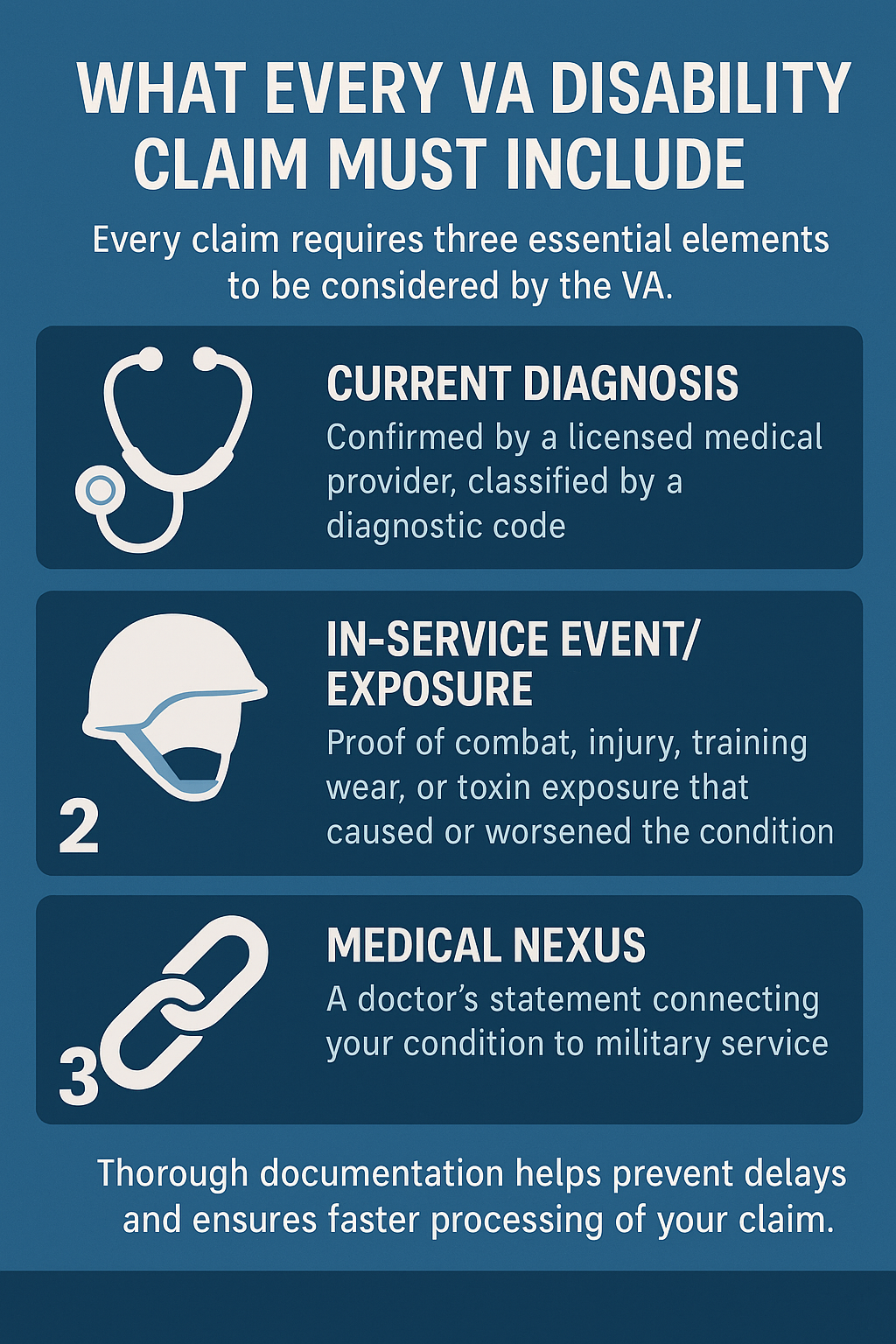
To make your claim process as “easy” as possible, you’ll need to have several things to ensure things go smoothly. No matter what condition you’re claiming, the VA requires these three elements. Providing more evidence can help prevent delays and avoid requests for additional information from the VA.
Thorough documentation can help keep processing timelines shorter and reduce the risk of unnecessary delays.
1. Current Diagnosis
You need a diagnosis from a licensed medical provider confirming you have the condition today. Each condition recognized by the VA is assigned a specific diagnostic code, which is used to classify and rate the disability for benefits purposes.
2. In-Service Event or Exposure
There must be evidence that something happened during your active duty service that caused or worsened the condition. Traumatic events, such as those experienced during combat or other significant stressors, are examples of in-service events that can lead to service-connected disabilities. This could be combat, injury, training wear and tear, or exposure to toxins.
3. Medical Nexus
A connection between your diagnosis and your service. If the link isn’t obvious or presumptive, a nexus letter from a doctor can explain how your military experience caused your condition. Establishing this medical nexus is essential for the VA to recognize your condition as a service-connected disability.
Top 10 Easy VA Disability Claims
1. Tinnitus
Tinnitus is the most common VA claim. Tinnitus causes ringing, buzzing, or humming in the ears, often from exposure to loud noise such as gunfire, aircraft, or machinery. Recurrent tinnitus involves persistent or repeated episodes, which can affect one or both ears, and the sounds experienced are not caused by any external source. Tinnitus is often linked to exposure to loud noise, aging, and certain medications. The VA rates Tinnitus recurrent under Diagnostic Code 6260 at 10%.
- VA rating: Always 10%
- Why it’s easy: There is no definitive test for tinnitus, so it’s diagnosed based on your description of symptoms and documented noise exposure.
- Evidence: Noise history, exposure to loud noises, audiology reports, personal statements
2. Hearing Loss
Exposure to loud noises is common in nearly every branch of the military and can lead to hearing loss (commonly referred to as noise-induced hearing loss).
- VA rating: 0% to 100% depending on test results
- Why it’s easy: Audiogram and speech discrimination tests provide measurable results
- Evidence: Audiology test results and documented exposure
3. Knee Conditions
Years of running, jumping, rucking, and training take a toll. Knee injuries are well-documented and easily tested.
- VA rating: 0% to 30%. Veterans receive ratings based on the degree of knee flexion and decreased range of motion. The VA considers joint pain and limitation of motion when assigning disability ratings for knee conditions.
- Why it’s easy: Clear diagnostic tests and range-of-motion measurements, especially of knee flexion and decreased range, make approval easier.
- Evidence: X-rays, MRIs, goniometer test results
4. Back and Neck Pain
From carrying gear to vehicle accidents, back and neck problems are frequent, with conditions like lumbosacral or cervical strain, degenerative disc disease, and degenerative arthritis being common examples. These issues often affect the musculoskeletal system.
- VA rating: 0% to 100% depending on range of motion and symptoms
- Why it’s easy: Spinal injuries are common, and specific diagnoses such as herniated discs and spinal stenosis are well-documented with imaging and motion tests. Symptoms like reduced mobility can significantly impact daily life. Muscle weakness is another common symptom associated with these conditions, especially when nerve damage is present.
- Evidence: MRIs, range-of-motion tests, service injury documentation
5. Post-Traumatic Stress Disorder (PTSD)
Mental health conditions in veterans, such as PTSD, depression, and anxiety, are often linked to the psychological impact of trauma during military service. They are well-recognized by the VA and have structured evaluation guidelines.
- VA rating: 0% to 100% based on symptom severity and occupational/social impairment
- Why it’s easy: The VA recognizes PTSD as a mental health condition and a service-connected condition when tied to trauma
- Evidence: Diagnosis, service stressor event, personal statement, nexus letter; PTSD claims have high approval rates due to established diagnostic criteria and clear documentation
6. Migraines
Often connected to PTSD, TBI, or neck injuries, migraines often present with symptoms such as visual disturbances, intense headaches, nausea, vomiting, and sensitivity to light and sound. They can severely affect work, daily life, and social function.
- VA rating: 0% to 50%, depending on the frequency and severity
- Why it’s easy: Well-documented migraine episodes and medical treatment strengthen the claim
- Evidence: Migraine diary, treatment records, nexus letter
7. Sciatica
Sciatica is typically a secondary condition tied to back problems. Sciatica involves the sciatic nerve, which is the largest nerve in the body, and causes shooting pain, numbness, or muscle weakness in the legs. Loss of active movement in the affected muscles can indicate more severe nerve damage and may be a sign of complete paralysis.
- VA rating: 10% to 80% based on severity; ratings can be higher in cases of complete paralysis of the sciatic nerve
- Why it’s easy: Nerve tests and back injury documentation make the connection clear
- Evidence: MRI, nerve conduction studies, and back pain documentation
8. Shoulder or Arm Limitations
Heavy lifting, carrying, repetitive tasks, or physical injuries often damage shoulders and arms. A limited range of motion in the shoulder or arm is a key factor in determining the VA disability rating.
- VA rating: 0% to 40%, depending on range-of-motion limits and whether it’s your dominant arm
- Why it’s easy: Range-of-motion tests make symptoms quantifiable
- Evidence: Physical exam, range testing, service injury reports
9. Ankle Injuries
Falls, jumps, and combat conditions cause frequent ankle injuries—especially for airborne or infantry.
- VA rating: 10% to 20% depending on severity
- Why it’s easy: Documented injuries with limited motion are easy to validate
- Evidence: Imaging studies, ROM testing, service incident notes
10. Scars
Service-related surgeries, burns, or trauma can leave scars that limit function or cause pain. The VA rates scars based on factors such as size, location, pain, instability, and how much the scar affects movement or daily activities.
- VA rating: 0% to 80% depending on size, location, and impact
- Why it’s easy: Scars are visible and often well-documented in medical records
- Evidence: Photos, exam notes, surgical records
Presumptive Conditions: The Simplest Route
Presumptive conditions are the true “easy VA disability claims” because the VA already assumes they’re related to your service. For a presumptive condition, you just need a diagnosis and qualifying service history. If you have a qualifying condition and served in a qualifying location during the relevant timeframe, the VA automatically assumes your illness is service-connected, making the claims process much easier. Exposure to burn pits is now recognized as a presumptive condition for certain respiratory illnesses and cancers, further simplifying the process for affected veterans.
Examples of Presumptive Groups
There are a few examples of presumptive groups, which might get you an “easy” VA disability claim. Here are some examples:
- Agent Orange Exposure (Vietnam, Korean DMZ): Diabetes, ischemic heart disease, prostate cancer, Parkinson’s
- PACT Act Burn Pit Exposure (Afghanistan, Iraq, SW Asia): Asthma, sinusitis, lung cancer, respiratory illness
- Camp Lejeune Water Contamination: Bladder cancer, Parkinson’s, adult leukemia, liver disease, kidney disease
You don’t have to prove service connection for these. The VA already accepts the link.
How to Strengthen Any Claim
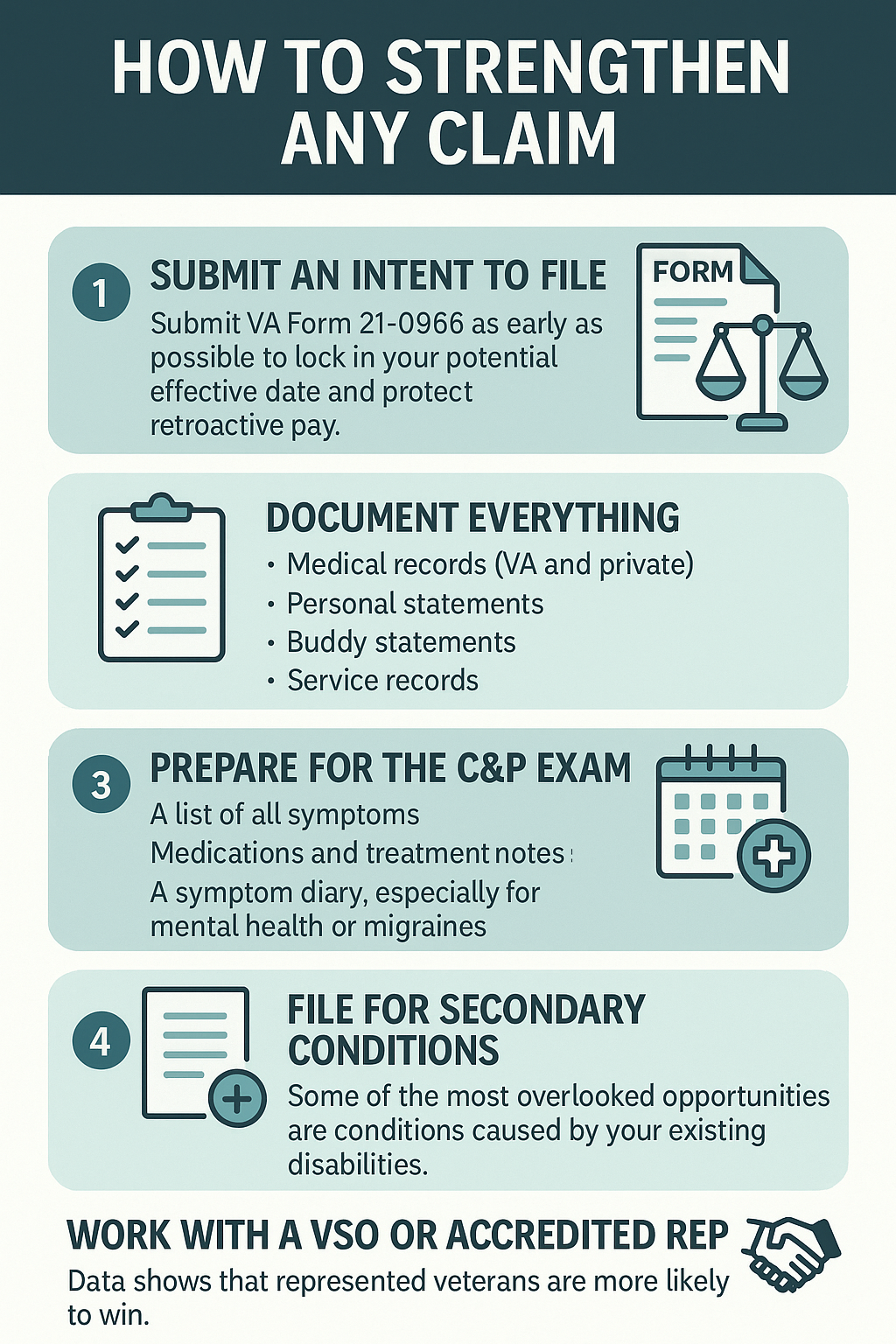
1. Submit an Intent to File
Submit VA Form 21-0966 as early as possible to lock in your potential effective date and protect retroactive pay.
2. Document Everything
Gather the following to strengthen your claim:
- Medical records (VA and private)
- Personal statements describing symptoms, daily impact, and how the condition affects your ability to perform everyday activities
- Buddy statements from fellow veterans
- Service records proving injuries, deployments, or exposures
3. Prepare for the C&P Exam
The Compensation & Pension exam is key. Be honest and describe your worst days—not your best ones. Don’t minimize symptoms. You should also bring:
- A list of all symptoms
- Medications and treatment notes
- A symptom diary, especially for mental health or migraines
4. File for Secondary Conditions
Some of the most overlooked opportunities are conditions caused by your existing disabilities. Here are some examples of secondary conditions:
- PTSD → sleep disorders, sleep apnea, erectile dysfunction, or high blood pressure
- Back pain → sciatica
- Tinnitus → insomnia or anxiety
- Depression → erectile dysfunction or sleep apnea
5. Work with a VSO or Accredited Rep
Veterans Service Organizations (like DAV, VFW, or American Legion) help free of charge. Accredited attorneys can also support appeals or complex cases. Working with a VA-accredited attorney can increase the chances of approval from the outset, ensuring your claim is as strong as possible.
The Role of a VA Disability Lawyer
A VA disability attorney can assist you at every stage of your claim, from gathering crucial evidence and medical records to preparing your case and representing you at VA hearings. They know how to present your claim in the strongest possible way, ensuring that all necessary documentation is included and that your service connection is clearly established. If your claim is denied or you receive a lower disability rating than expected, a VA disability lawyer can guide you through the appeals process and fight for the compensation you deserve.
Working with a VA disability attorney means you have an advocate who understands the system and is dedicated to helping veterans succeed. If you’re feeling overwhelmed by the claims process or unsure about your next steps, seeking legal representation can provide peace of mind and improve your chances of a favorable outcome.
Common Mistakes to Avoid
Filing a claim for VA disability benefits can be challenging, and even small mistakes can lead to delays or denials. One of the most common errors veterans make is not providing enough evidence to support their claim. It’s essential to gather all relevant medical records, service records, and supporting documents that clearly show the connection between your disability and your military service.
Missing deadlines, failing to respond to VA requests, or submitting the wrong forms can also jeopardize your claim. To avoid these pitfalls, consider working with a VA disability lawyer who can help you organize your evidence, understand the requirements, and ensure your claim is as strong as possible. Taking the time to prepare your VA disability claim carefully increases your chances of receiving the VA disability compensation you deserve.
Managing Appeals and Denials
If your VA disability claim is denied, don’t lose hope—many veterans successfully appeal and receive the VA benefits they’re entitled to.
The appeals process can be complex and time consuming, often requiring patience and persistence, but understanding your options is the first step toward a positive outcome. Start by reviewing the VA’s decision letter to identify the reasons for denial, then gather any additional evidence that may strengthen your case.
A VA disability lawyer can be an invaluable resource during the appeals process. They can help you address the VA’s concerns, collect new medical evidence, and present your case effectively. Whether you’re filing a supplemental claim, requesting a higher-level review, or appealing to the Board of Veterans’ Appeals, having expert guidance can make the process less overwhelming.
Remember, the VA disability claims process allows for multiple levels of appeal, so persistence is key. By staying organized, meeting deadlines, and seeking professional support when needed, you can improve your chances of overturning a denial and securing the disability benefits you deserve.
Resources for Veterans
Veterans don’t have to navigate the VA disability claims process alone. There are numerous resources available to help you understand your options, gather evidence, and advocate for your rights. Veterans service organizations (VSOs) such as the DAV, VFW, and American Legion offer free assistance with disability claims, helping you prepare paperwork and represent your interests.
In addition to VSOs, working with a VA-accredited attorney can provide specialized legal support, especially for complex cases or appeals. The VA also offers online tools, guides, and hotlines to answer questions and help you track your claim’s progress.
By taking advantage of these resources, you can ensure your VA disability benefits claim is as strong as possible. Don’t hesitate to reach out for help—these organizations and professionals are dedicated to supporting veterans and helping you receive the compensation and benefits you’ve earned through your service.
What to Expect
When veterans file an initial claim for VA disability benefits, the average processing time usually falls between 100 and 150 days. While this can feel like a long wait, it’s important to remember that this stage is where the VA reviews medical evidence, service records, and the overall impact of the condition on the veteran’s daily life. Patience during this period is key, as providing thorough and accurate documentation can help avoid unnecessary delays.
For those filing under the PACT Act, results have been especially encouraging, with approval rates around 74% thanks to presumptive conditions and clearer guidelines. This means veterans impacted by toxic exposures or related illnesses have a greater chance of receiving the compensation and care they deserve without as many barriers.
Get the Benefits You’ve Earned
You earned these benefits. Don’t let confusion or paperwork keep you from receiving what’s yours. Take the time to document your condition, file the right forms, and seek help when needed. Your claim doesn’t need to be perfect—it needs to be honest, well-supported, and thorough.
Start today with an Intent to File. Gather your records. And if you’re unsure, reach out to someone who’s done this before. The VA system isn’t always easy—but it’s navigable. And with the right information, you can succeed.
At Allveteran.com, we seek to help veterans connect with resources that may make all the difference. To find out your disability rating, take our free medical evidence screening today!
 AllVeteran.com Advisors
With expertise spanning local, state, and federal benefit programs, our team is dedicated to guiding individuals towards the perfect program tailored to their unique circumstances.