












The VA Burn Pit Registry is a program created by the Department of Veterans Affairs (VA) to help provide VA disability benefits to veterans and service members who may have experienced toxic exposure during military service. These hazards often come from open-air burn pits used to dispose of waste in deployment areas. The registry allows veterans to document their military exposures and related health concerns. Here is what you need to know about the VA Burn Pit Registry and how it might impact you.
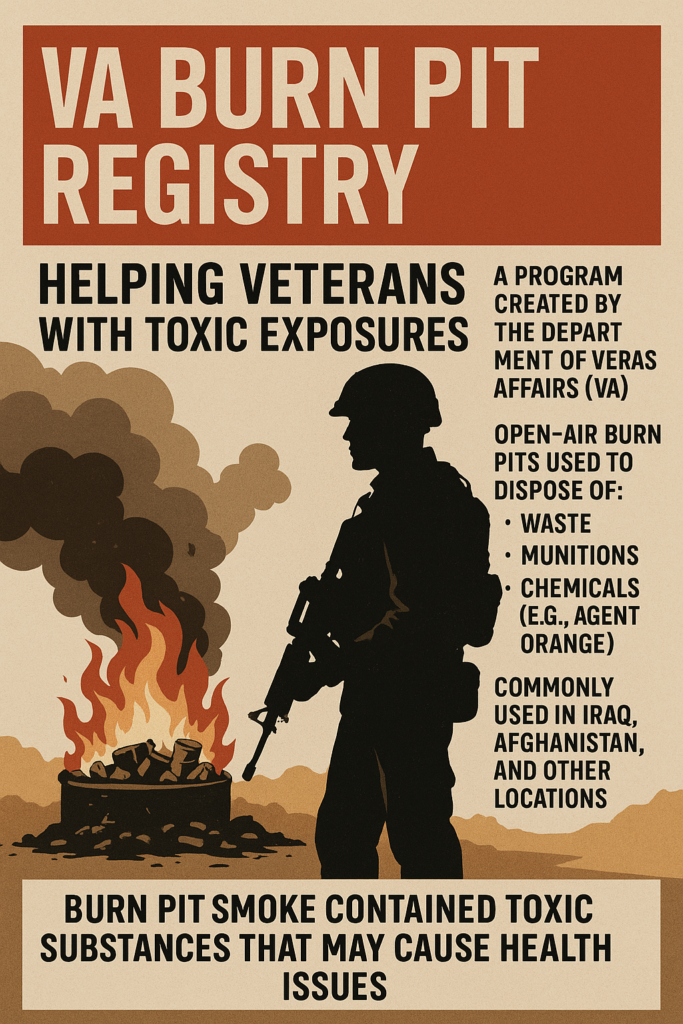
Burn pits were commonly used in Iraq, Afghanistan, and other overseas locations to get rid of waste like chemicals (like Agent Orange), paint, medical and human waste, metal cans, munitions, and other unused items. The burn pit smoke often contained toxic substances that could be harmful when breathed in over time.
The registry was established in 2014 as a way for the VA to collect data on potential health effects from burn pit exposure. Signing up for the registry is voluntary and doesn’t affect VA benefits or require enrollment in VA health care.
Who Can Participate in the Burn Pit Registry?
Veterans and service members who deployed to certain locations after September 11, 2001, may be eligible to participate in the VA Burn Pit Registry. These areas include:
- Operations Enduring Freedom/Operation Iraqi Freedom/Operation New Dawn
- Djibouti, Africa on or after September 11, 2001
- Operations Desert Shield or Desert Storm
- Southwest Asia theater of operations on or after August 2, 1990
You don’t need to have a current health condition or have been directly exposed to burn pit smoke to sign up. The registry is open to anyone who served in the eligible areas during the specified time periods.
Benefits of Joining the Burn Pit Registry
Participating in the Burn Pit Registry offers several benefits for veterans:
- Documentation: It provides a way to document your military exposure concerns and create a record of your deployment history.
- Health Assessment: You can get a free health evaluation from a VA provider to discuss exposure concerns.
- Staying Informed: The VA can keep you updated on ongoing research and new health information related to airborne hazards.
- Contributing to Research: Your participation helps the VA better understand and respond to health issues that may be related to military exposures.
Remember, joining the registry doesn’t automatically qualify you for VA disability benefits, but it can be a helpful step in understanding and addressing potential health concerns.
How to Sign Up for the Burn Pit Registry
Signing up for the Burn Pit Registry is a straightforward process:
- Go to the VA’s Airborne Hazards and Open Burn Pit Registry website.
- Create an account or sign in using your DS Logon, My HealtheVet, or ID.me credentials.
- Complete the online questionnaire, which takes about 40 minutes. You can save your progress and return later if needed.
- After completing the questionnaire, you can print a copy of your responses for your records.
- You can then schedule an optional free medical evaluation to discuss your concerns with a VA provider.
It’s important to gather information about your deployments and exposures before starting the questionnaire. This can help you provide more accurate and complete information.
What Information is Collected in the Registry?
The Burn Pit Registry questionnaire collects a variety of information to help understand potential exposures and effects. This includes:
- Deployment information and locations
- Occupational history
- Residential history
- Current and past health symptoms
- Smoking history
- Home environment and other exposures
The questionnaire is comprehensive, aiming to gather a full picture of your potential exposures and health status. It’s okay if you don’t remember every detail, just provide the best information you can.
Health Concerns Related to Burn Pit Exposure

While research is ongoing, some health issues have been associated with burn pit exposure. These may include:
- Respiratory problems like asthma, COPD, and bronchitis
- Allergies
- Sleep apnea
- Certain cancers
- Hypertension (added as a presumptive condition under the PACT Act)
However, it’s important to note that not everyone exposed to burn pit smoke will develop health problems. The registry helps the VA track potential health effects and provide appropriate care.
If you’re experiencing a health condition you believe may be related to burn pit exposure, it’s important to talk with your healthcare provider. The VA offers resources and care for veterans with concerns about burn pit exposure.
The Importance of the Burn Pit Registry for Research
The Burn Pit Registry plays a crucial role in helping researchers understand the long-term health effects of burn pit exposure. By collecting data from a large number of veterans, the VA can:
- Identify patterns in health issues among those exposed to burn pits
- Track changes in health over time
- Develop better treatments for related health conditions
- Improve policies to protect service members in the future
Your participation in the registry contributes to this important research, potentially helping countless other veterans and service members.
Recent Developments in Burn Pit Legislation
There have been significant developments in legislation related to burn pit exposure. The PACT Act, signed into law in August 2022, dramatically expanded VA health care and benefits for veterans exposed to burn pits and other toxic substances. In March 2024, the VA accelerated implementation so that all PACT Act presumptive conditions are now in effect. Veterans no longer have to wait for the original multi-year phase-in.
This act:
- Adds more than 20 presumptive conditions for burn pits and other toxic exposures, including several cancers and respiratory illnesses, plus hypertension and monoclonal gammopathy of undetermined significance (MGUS) for Vietnam-era veterans
- Adds more presumptive-exposure locations for Agent Orange and radiation
- Requires VA to provide a toxic exposure screening to every veteran enrolled in VA health care, and to re-screen at least once every five years
- Expands eligibility for VA health care to all veterans who served in a combat zone or were exposed to toxic substances, regardless of when they served
- Helps improve research, staff education, and treatment related to toxic exposures
As of 2024, the VA also began transitioning the Airborne Hazards and Open Burn Pit Registry to an updated participant experience based on recommendations from the National Academies of Sciences, Engineering, and Medicine. The registry remains an important tool for documenting exposure, but the toxic exposure screening required under the PACT Act is now the primary way most veterans flag concerns to the VA.
These changes mean far more veterans are eligible for benefits related to burn pit exposure than ever before. If you’re concerned about exposure, it’s worth checking with the VA about your eligibility — and if you previously had a claim denied for a condition that is now presumptive, you can file a supplemental claim.
Support and Resources for Veterans
If you have concerns about burn pit exposure or related health issues, several resources are available:
- VA Health Care: Enroll in VA health care to access comprehensive medical services.
- Veterans Service Organizations: Groups like the American Legion or Veterans of Foreign Wars can provide support and assistance with claims.
- Vet Centers: These community-based counseling centers offer a range of social and psychological services.
- VA’s Airborne Hazards and Open Burn Pit Registry website: This site provides up-to-date information on the registry and related health concerns.
Remember, you’re not alone in dealing with these issues. Reach out for help if you need it.
Taking Action: Next Steps for Veterans

If you think you may have been exposed to burn pits during your service, here are some steps you can take:
- Sign up for the Burn Pit Registry if you haven’t already.
- Complete your PACT Act toxic exposure screening with the VA, which is offered to every veteran enrolled in VA health care.
- Schedule a free health evaluation with the VA to discuss your exposure concerns.
- Keep track of any health symptoms you experience and discuss them with your healthcare provider.
- Stay informed about new research and developments related to burn pit exposure.
- Connect with other veterans who may have similar experiences.
By taking these steps, you can be proactive about your health and contribute to the broader understanding of burn pit effects on veterans’ health.
The Burn Pit Registry is an important tool for veterans and the VA alike. By participating, you’re not only looking after your own health but also helping fellow veterans and future service members. Your involvement can make a real difference in understanding and addressing the long-term effects of burn pit exposure.
Allow us to guide you through the process of receiving benefits you deserve. Begin today by taking our free medical evidence screening, at Allveteran.com.
 AllVeteran.com Advisors
With expertise spanning local, state, and federal benefit programs, our team is dedicated to guiding individuals towards the perfect program tailored to their unique circumstances.