












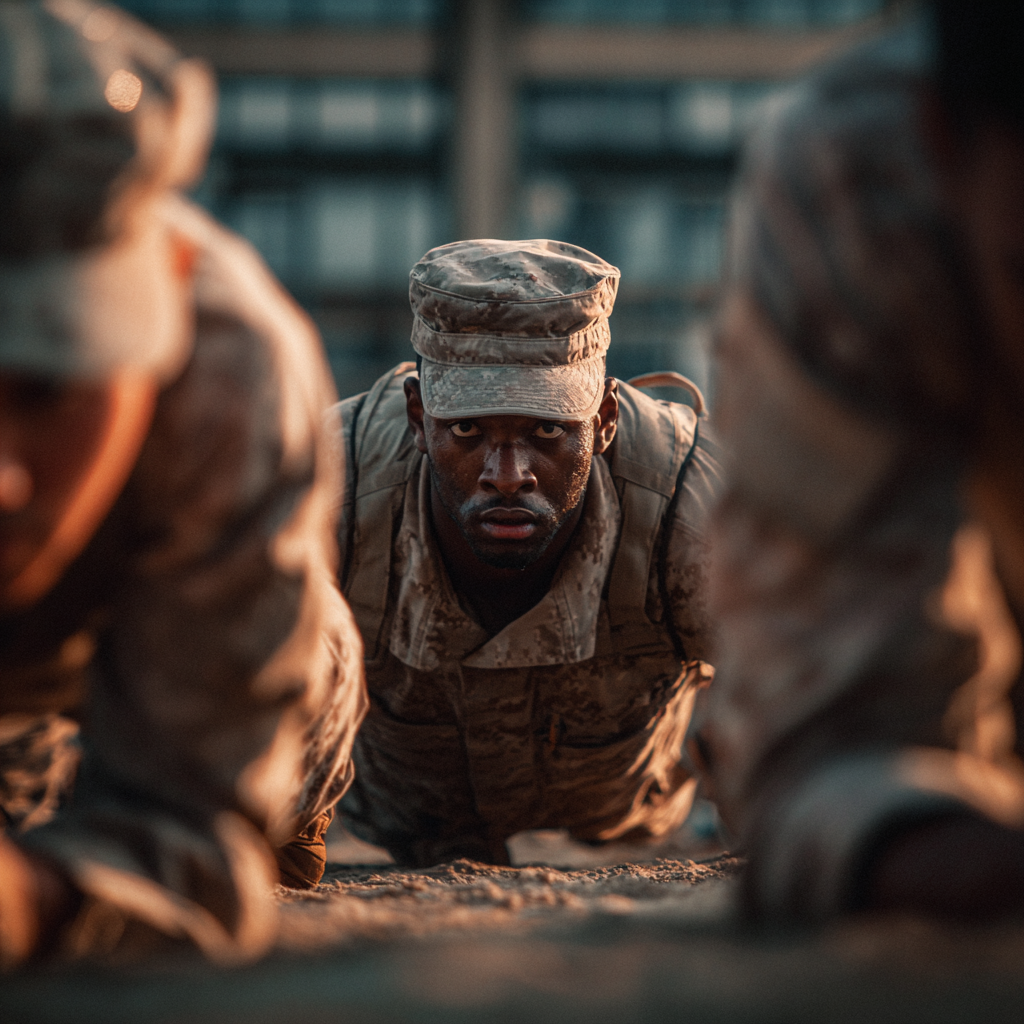
The Army’s 3 General Orders are the fundamental rules every soldier must memorize and follow for guard duty. The Three General Orders are among the first things recruits learn in basic training, serving as foundational guidance for military discipline. These general orders are written directives, and recruits are expected to know the exact words as part of their training.
- First General Order: “I will guard everything within the limits of my post and quit my post only when properly relieved.”
- Second General Order: “I will obey my special orders and perform all of my duties in a military manner.”
- Third General Order: “I will report violations of my special orders, emergencies, and anything not covered in my instructions to the commander of the relief.”
The U.S. Army’s general orders are designed for quick memorization and universal application across various operational scenarios.
What Are the Army’s 3 General Orders?
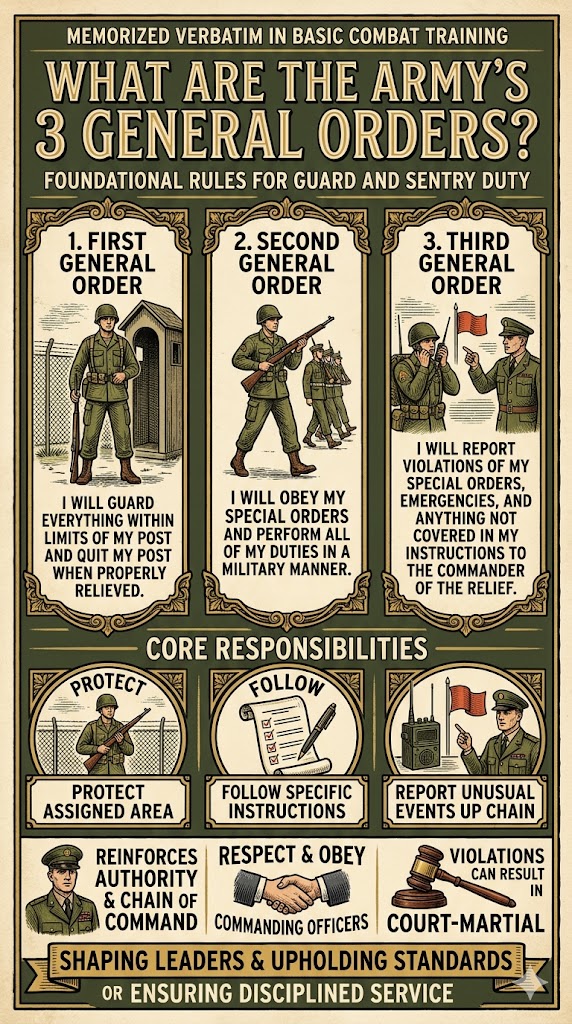
The 3 General Orders are foundational rules that govern how U.S. Army soldiers conduct themselves during guard or sentry duty. They serve as the baseline for what is expected of every soldier, emphasizing unwavering commitment to duty and discipline. Every Army recruit must memorize these directives verbatim during Basic Combat Training (BCT).
The three orders are:
- “I will guard everything within the limits of my post and quit my post only when properly relieved.”
- “I will obey my special orders and perform all of my duties in a military manner.”
- “I will report violations of my special orders, emergencies, and anything not covered in my instructions to the commander of the relief.”
These orders reinforce the importance of authority within the military chain of command, requiring soldiers to respect and obey the commanding officer. The general orders are binding directives for all soldiers; violations can result in court-martial.
These three statements cover the core responsibilities of any soldier on duty: protect your assigned area, follow your specific instructions, and report anything unusual up the chain of command.
They support the Army’s mission by ensuring disciplined service, effective leadership, and the completion of essential tasks within units. Adhering to these orders is fundamental, as it shapes leaders, develops leadership qualities, and upholds the standards expected in military service.
U.S. Army 3 General Orders
| Order Number | Official Verbatim Text | Core Duty |
|---|---|---|
| First General Order | I will guard everything within the limits of my post and quit my post only when properly relieved. | Post Protection |
| Second General Order | I will obey my special orders and perform all of my duties in a military manner. | Duty Compliance |
| Third General Order | I will report violations of my special orders, emergencies, and anything not covered in my instructions to the commander of the relief. | Threat Communication |
Why Three Orders Instead of Eleven?
Historically, all U.S. military branches used an 11-order version of the General Orders. The Navy, Marine Corps, and Coast Guard still require personnel to memorize all 11. The Army and Air Force condensed these into three essential directives to provide clarity and consistency.
This reduction was intentional—streamlining the rules makes them easier to internalize and execute under high-stress conditions without losing the core principles of sentry responsibility.
The shorter list allows soldiers to focus more mental energy on their special orders, which change based on each specific assignment or location.
How These Orders Are Tested in Training
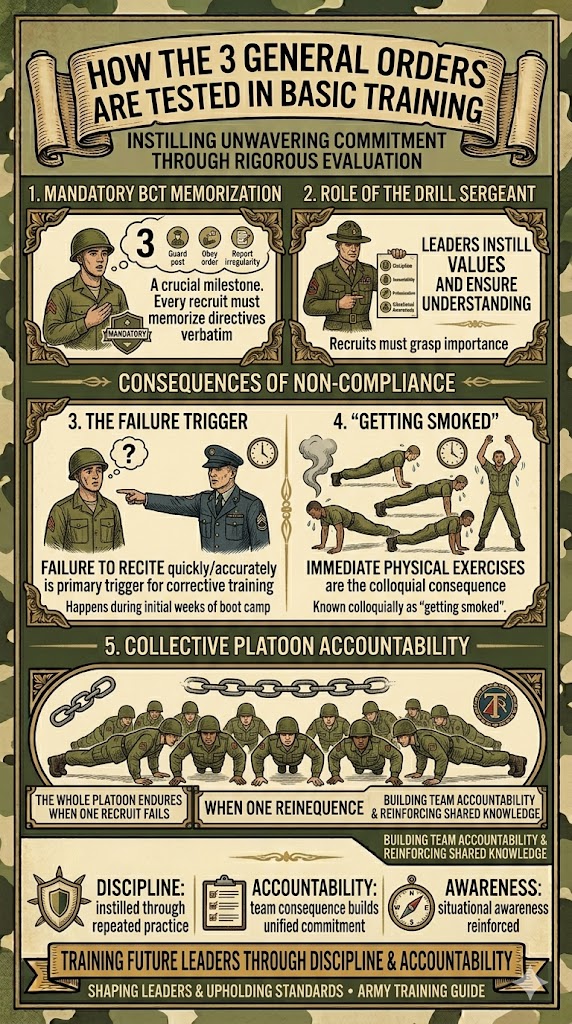
Memorization of the 3 General Orders is a mandatory milestone in BCT. Drill Sergeants, as leaders, demonstrate leadership and commitment by instilling these values in recruits and ensuring they understand the importance of discipline, accountability, professionalism, and situational awareness.
Failure to recite the orders quickly and accurately is one of the primary triggers for corrective training during the initial weeks of boot camp. This typically involves physical exercises like push-ups, colloquially known as “getting smoked.”
When one recruit fails, the entire platoon often faces corrective training together. This collective consequence builds team accountability and reinforces the importance of shared knowledge.
Real-World Application During Duty
These orders govern practical guard shifts throughout a soldier’s career. During BCT, recruits pull “Fire Guard”—nightly barracks watch where they must remain alert to all persons and circumstances within sight, ensuring the safety of both personnel and government property.
In deployed environments, the same orders apply to perimeter security and other sentry duties. Guards are instructed to enforce all orders and report violations as mandated by the Third General Order.
If an unauthorized person enters the barracks at night, for example, the guard must challenge the individual, relay calls from other posts if necessary, and report the incident to the Commander of the Relief, maintaining readiness regardless of circumstances.
The Third General Order is particularly significant because it empowers soldiers of all ranks to take initiative. Any security threat or procedural violation must be communicated up the chain, reinforcing a culture of shared accountability that protects the entire unit.
Practical Advice for Incoming Recruits
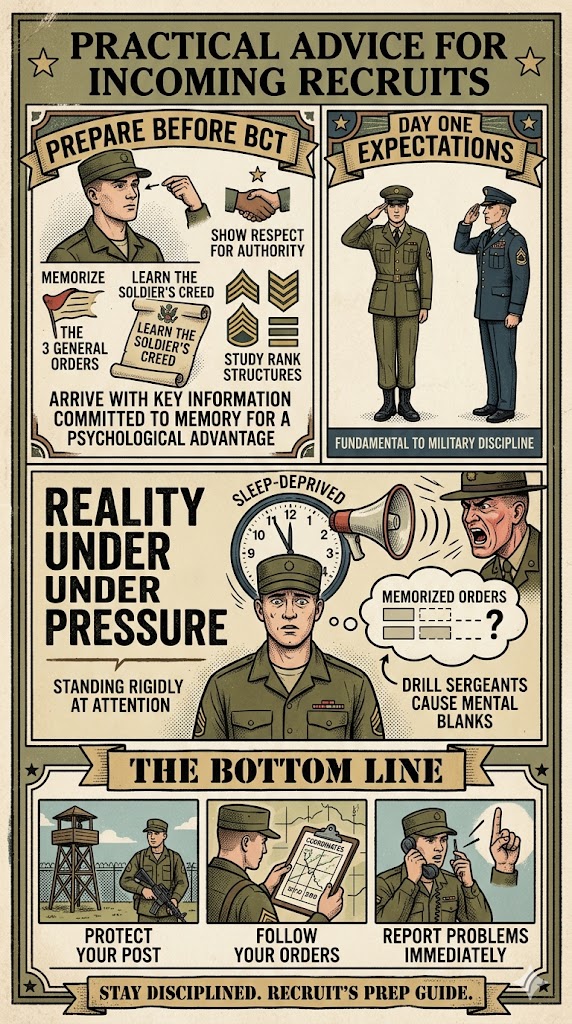
Veterans universally recommend memorizing the 3 General Orders before shipping out to BCT. Arriving with these, the Soldier’s Creed, and rank structures already committed to memory provides a significant psychological advantage. Recruits are expected to show respect for authority and embrace the values of service from day one, as these are fundamental to military discipline.
While three short sentences seem easy to memorize, the reality of recitation under pressure is different. Standing rigidly at attention, sleep-deprived, and being screamed at by Drill Sergeants causes frequent mental blanks even for prepared recruits.
The bottom line is straightforward: protect your post, follow your orders, and report problems immediately.
Example Scenario
Private Johnson, age 19, is on his third week of Basic Combat Training at Fort Moore when his Drill Sergeant suddenly orders him to recite the Second General Order while standing at attention after a 4 AM wake-up. Despite his commitment to learning the orders and performing his tasks under stress, the sleep deprivation and pressure cause him to stumble on the phrase “perform all of my duties in a military manner.”
The Drill Sergeant immediately orders the entire platoon to perform corrective training exercises. Johnson’s battle buddy later reminds him that the key is practicing recitation out of order, as instructors deliberately test recruits non-sequentially to simulate combat stress conditions.
Frequently Asked Questions
What are the 3 General Orders of the Army?
The Army’s 3 General Orders are: (1) I will guard everything within the limits of my post and quit my post only when properly relieved; (2) I will obey my special orders and perform all of my duties in a military manner; (3) I will report violations of my special orders, emergencies, and anything not covered in my instructions to the commander of the relief.
Why does the Army have 3 General Orders instead of 11?
The Army condensed the original 11 General Orders down to 3 essential directives to make them easier for trainees to memorize and execute under high-stress combat or guard scenarios. The Navy, Marine Corps, and Coast Guard still require all 11 orders, while the Army and Air Force use the streamlined version.
Do you have to memorize the 3 General Orders before Basic Training?
While not technically required before arrival, veterans strongly advise memorizing the 3 General Orders before shipping out to Basic Combat Training. Arriving with these orders already memorized gives recruits a significant psychological advantage and helps avoid early corrective training.
What happens if you can’t recite the 3 General Orders in Basic Training?
Failure to quickly recite the 3 General Orders is one of the primary triggers for corrective training during BCT, which includes physical exercises like push-ups. Often, the entire platoon is punished when one recruit fails, as a method to build team accountability.
When are the Army’s 3 General Orders used?
The 3 General Orders govern all guard and sentry duty, including Fire Guard (nightly barracks watch) during BCT and perimeter security in deployed environments. They establish the baseline expectations for any soldier assigned to protect a post when no other specific instructions are provided.
Why is the Third General Order considered important?
The Third General Order empowers soldiers of all ranks to take initiative and report security threats, procedural violations, or emergencies to the commander of the relief. This creates a culture of shared accountability that protects the entire unit and ensures critical information moves up the chain of command.
How do Drill Sergeants test recruits on the 3 General Orders?
Drill Sergeants require verbatim recitation on command and frequently test recruits out of order rather than sequentially. This method simulates the cognitive stress of a fast-changing combat environment, where soldiers must recall specific orders instantly without relying on memorized sequences.
 AllVeteran.com Advisors
With expertise spanning local, state, and federal benefit programs, our team is dedicated to guiding individuals towards the perfect program tailored to their unique circumstances.