













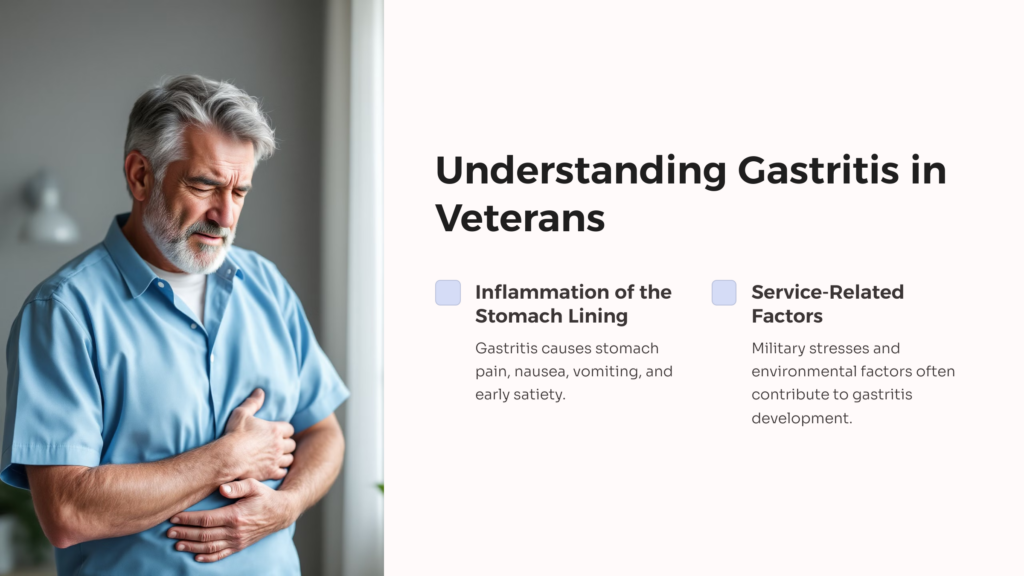
Studies have shown that there is a relatively high prevalence of gastrointestinal (GI) issues among veterans, including gastritis. This can be a result of stress, environmental exposure, and infections during service. Whatever the case may be, it can have a profound impact on their daily lives.
Typically, disability ratings for gastritis range from 10% to 60%. To qualify, veterans must demonstrate chronic gastritis with symptoms such as stomach pain, nausea, vomiting, or bleeding. Of course, the Department of Veterans Affairs (VA) requires documentation and proof of your condition.
Why This Update
VA rating processes can change, and we want to make sure you stay properly informed!
Tamila’s Take
Gastritis might sound like a mild issue, but for many veterans, it’s a recurring and painful condition that affects daily life. If you’re living with persistent stomach inflammation due to your service, or as a secondary issue, don’t ignore it. This is a condition the VA recognizes and compensates for when properly documented.
How the VA Rates Gastritis (Diagnostic Codes and Criteria)
Gastritis is rated under Diagnostic Code 7307 in the VA’s Schedule for Rating Disabilities. The VA uses specific rating criteria to assess gastritis and other digestive system conditions, considering the severity, frequency, and impact of symptoms. Several factors impact your overall rating for this condition, but there needs to be confirmation of chronic inflammation. The VA will also want to know if any other complications or related conditions are present.
Here is a breakdown of how the VA typically rates gastritis under Diagnostic Code 7307, which is similar to peptic ulcer disease rated under Diagnostic Code 7304. Ratings are determined based on symptom severity:
- 10% rating: Chronic gastritis with small nodular lesions and symptoms.
- 30% rating: Severe symptoms, including multiple small erosions or continuing distress.
- 60% rating: Severe hemorrhages or large ulcerated areas confirmed by diagnostic procedures.
In severe cases, such as those involving bleeding ulcers, the need for hospitalization, or other serious complications, higher ratings may be warranted.
The presence of secondary complications or related conditions, such as ulcers, anemia, or significant weight loss, can justify higher ratings or combined evaluations. If gastritis requires surgery, the veteran will receive a 100% rating for three months post-surgery, after which a reevaluation will occur based on residuals.
VA Disability Percentages for Gastritis Explained
The VA uses percentage-based ratings to determine monthly compensation for va disability compensation. The higher the rating, the more disabling the condition is considered.
For instance, someone who receives a 10% rating may experience mild discomfort, but it is largely manageable with diet or medication. A 30% rating could be tied to frequent symptoms that interfere with digestion or require constant treatment. Serious health issues that require hospitalization, repeated medical care, or strict dietary restrictions may result in a 60% rating.
When determining ratings, the VA considers symptom severity and the impact of gastritis on your overall health and daily functioning. If the severity of gastritis prevents you from maintaining substantially gainful employment, you may also be eligible for Total Disability Individual Unemployability (TDIU).
These percentages may also contribute to your combined VA disability rating if you have other service-connected conditions, potentially increasing your disability benefits.
Establishing Service Connection for Gastritis
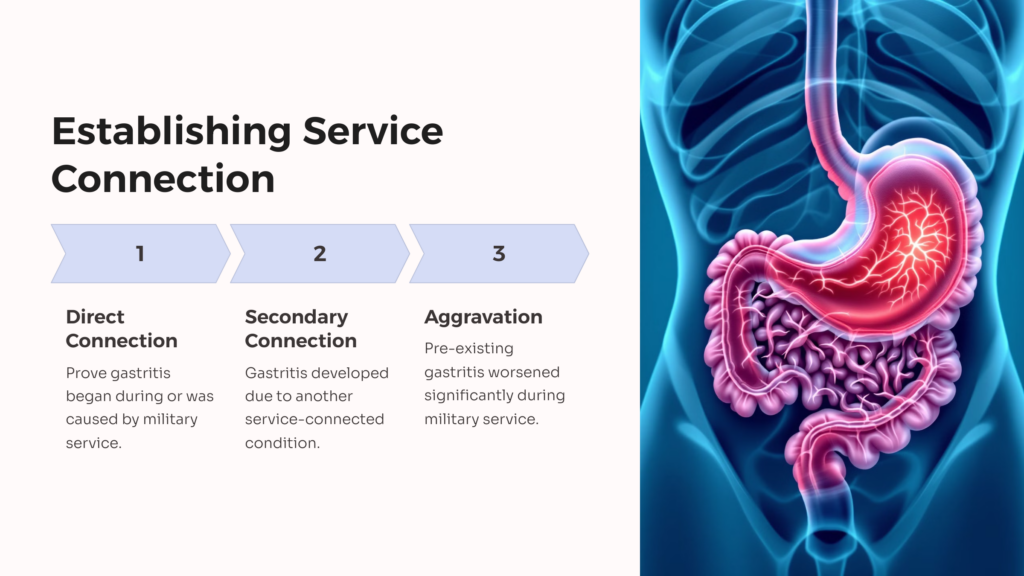
To receive VA benefits for gastritis, you need to establish a service connection. You can do this through a direct service connection, which means you were diagnosed with gastritis during active duty.
It can also be tied to a secondary service connection. Sometimes, a service-connected condition like PTSD, medication use, or substance abuse can trigger or aggravate gastritis. You can also establish service connection by providing evidence that you entered the service with pre-existing gastritis, and your military service worsened the condition.
You’ll need a current medical diagnosis and evidence of the condition or cause during service included with your VA disability claim. Additionally, you will need to include a nexus statement connecting your current condition to service or another disability.
Medical Evidence Needed to Support a Gastritis VA Claim
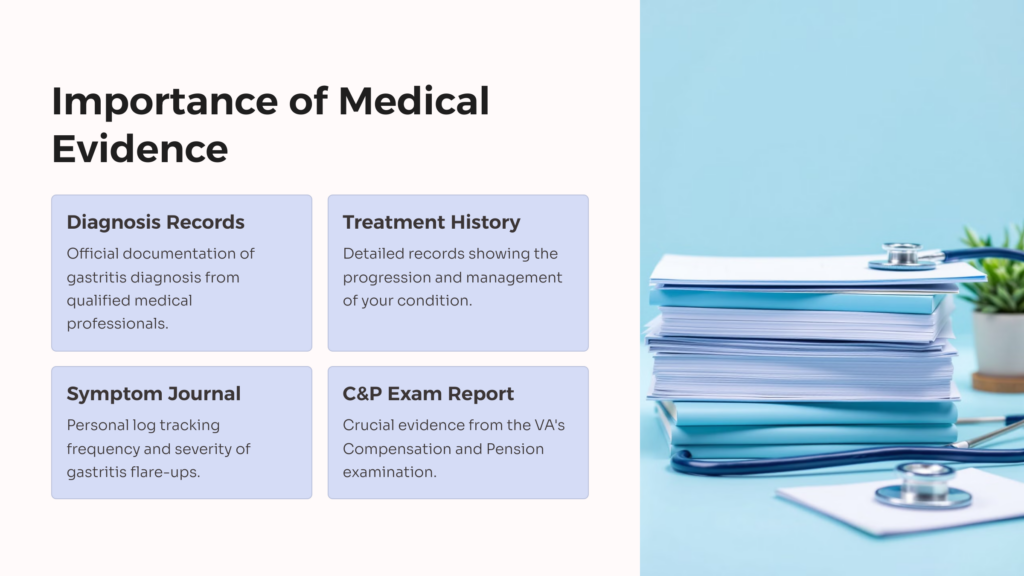
The VA will heavily rely on objective diagnostic evidence, particularly:
- Endoscopy or biopsy reports confirming chronic inflammation
- Treatment records showing persistent symptoms like nausea, vomiting, abdominal pain, or bleeding
- VA or private doctor evaluations detailing the condition’s frequency and impact on quality of life
You may also strengthen your claim with buddy statements, lay evidence detailing symptoms, and medical opinions showing a link between gastritis and another service-connected condition.
A Real Life Scenario to Consider
Mike, a Gulf War veteran, developed chronic gastritis after years of using nonsteroidal anti inflammatory drugs (NSAIDs) prescribed for his service-connected joint pain. This is more common than you’d think, and it can be difficult to live with chronic pain.
Mike’s gastritis is considered a secondary condition resulting from his medication use. Inflammation of the stomach lining can cause burning pain and nausea, which Mike experienced. After his gastroenterologist performed an endoscopy, he was diagnosed with moderate gastritis and provided documentation linking it to long-term medication use.
Medical records documenting Mike’s symptoms and treatment were crucial in his claim. As a result, the VA awarded him a 30% disability rating, recognizing the gastrointestinal condition as a secondary service connection.

FAQs About the VA Rating for Gastritis
- What is the VA diagnostic code for gastritis? Gastritis is rated under Diagnostic Code 7307 in the VA’s schedule for gastrointestinal disabilities.
- Can gastritis be a secondary VA condition? Yes. It’s commonly secondary to medications (NSAIDs), alcohol use tied to PTSD, or stress from service-connected mental health conditions.
- What’s the highest VA rating for gastritis? As mentioned above, 60% is the maximum schedular rating. This is typically reserved for cases involving hemorrhaging or large ulcerated areas. But combined ratings may contribute to your overall rating as well.
- Do I need an endoscopy for a VA gastritis claim? While not required, diagnostic confirmation through endoscopy or biopsy significantly strengthens your claim.
- How can I increase my VA rating for gastritis? You can submit new evidence showing worsening symptoms or file for a VA disability increase with updated medical evaluations.
- Does the VA combine gastritis ratings with other digestive conditions? Yes, but the VA uses the anti-pyramiding rule to avoid duplicate compensation. You may be rated under the condition that provides the highest benefit.
- What is the role of the stomach lining in gastritis? Gastritis is the inflammation of the stomach lining. When the stomach lining becomes inflamed, it can cause symptoms such as pain, nausea, and, in severe cases, ulcers or bleeding.
- What is irritable bowel syndrome (IBS) and how is it rated by the VA? Irritable bowel syndrome is a common functional gastrointestinal disorder that causes symptoms like abdominal pain, bloating, and changes in bowel habits. The VA recognizes IBS as a ratable condition, and ratings are based on the severity and frequency of symptoms and their impact on your daily life.
- What are common symptoms of gastritis for VA claims? Common symptoms include chronic abdominal pain, nausea, vomiting, and loss of appetite.
- What happens if gastritis is left untreated? If gastritis is left untreated, it can lead to serious complications, including an increased risk of developing stomach cancer. Chronic inflammation of the stomach lining may also result in ulcers, bleeding, or other long-term gastrointestinal issues.
- What is the PACT Act and how does it relate to gastrointestinal conditions? The PACT Act expands VA health care and benefits for veterans exposed to burn pits, Agent Orange, and other toxic substances. It includes provisions for certain gastrointestinal conditions, making it easier for affected veterans to qualify for VA disability benefits.
- What should I do if my VA claim for gastritis is denied? If your VA claim for gastritis is denied, you can still appeal the decision and potentially secure the disability compensation you deserve.
Don’t Let Gastritis Go Underrated
Gastritis might not be a condition that you’d immediately tie to your time in the service, but it can be. Veterans living with chronic stomach pain, nausea, or bleeding are suffering. And they deserve recognition and compensation. Whether your condition stems directly from service or is secondary to another disability like PTSD or long-term medication use, the VA has a clear process for evaluating and rating it.
Like everything with the VA, proper documentation is crucial. Make sure you include the evidence discussed above. Even if your symptoms seem manageable, don’t just assume you’ll get a low rating.
Need help gathering the right documentation or understanding how to file? AllVeteran.com offers a free medical evidence screening to help you build a stronger claim. Get the support you deserve.
 AllVeteran.com Advisors
With expertise spanning local, state, and federal benefit programs, our team is dedicated to guiding individuals towards the perfect program tailored to their unique circumstances.