













Every November 11th, Americans pause to observe Veterans Day, a federal holiday that stands as one of the nation’s most significant tributes to military history the military community. As a legal holiday officially recognized by law, Veterans Day underscores the nation’s commitment to honoring those who have served.
Veterans Day maintains a clear and powerful mission: to honor all American military veterans who have served in the United States Armed Forces, whether in times of war or peace, and to recognize the heroism and sacrifice made in the country’s service by all armed service members. This commitment to honoring the country’s service reflects the broader mission of Veterans Day.
The Birth of Armistice Day: When the Guns Fell Silent
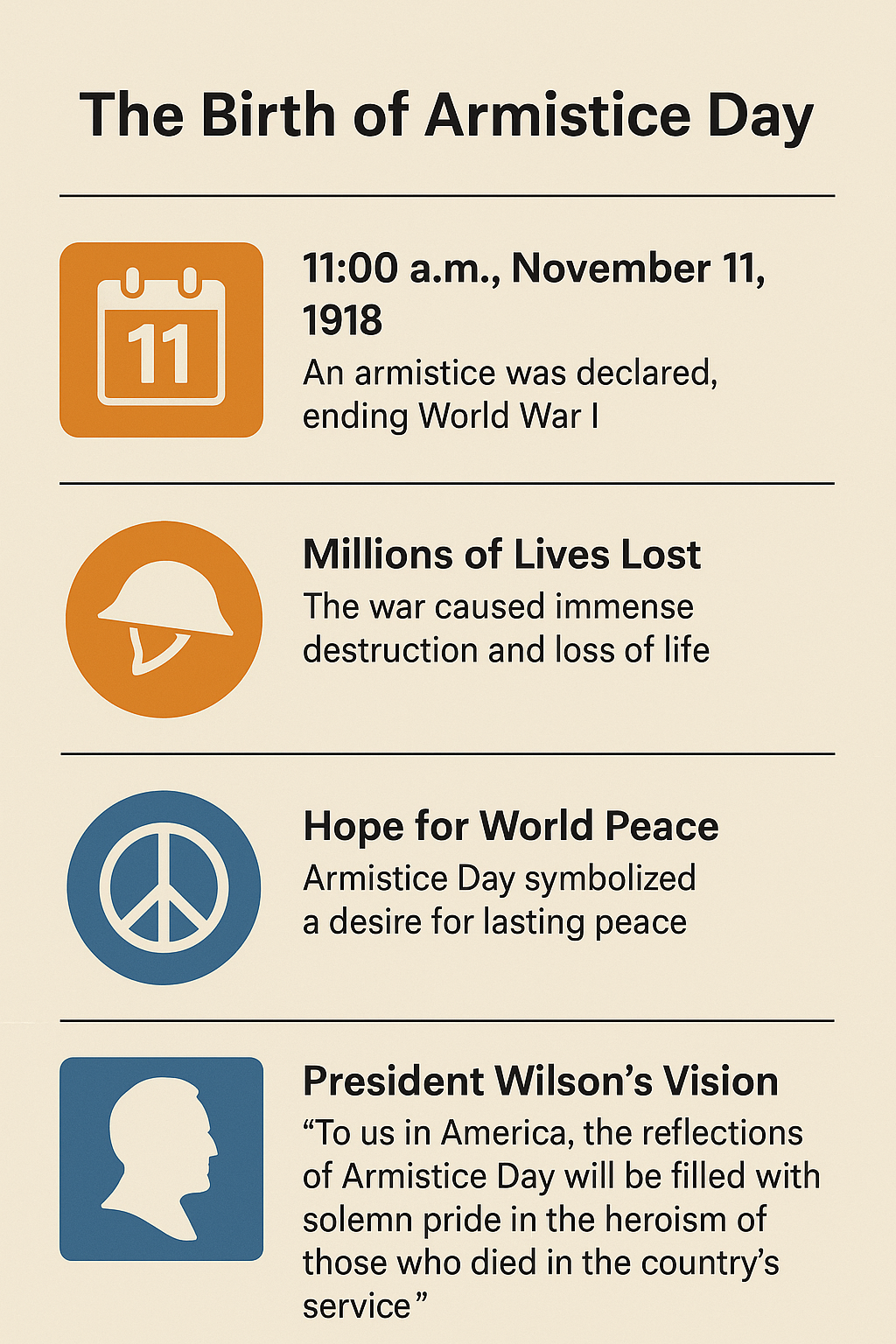
The origins of Veterans Day are intrinsically linked to one of history’s most devastating conflicts: World War I. On the eleventh hour of the eleventh day of the eleventh month in 1918, an armistice—a temporary cessation of hostilities—was declared between the Allied nations and Germany. This precise moment, 11:00 a.m. on November 11, 1918, marked the symbolic end of a war that had claimed millions of lives and reshaped the global landscape forever.
Though the Treaty of Versailles wouldn’t officially end World War I until June 28, 1919, the armistice date remained forever etched in public consciousness. The world had witnessed unprecedented destruction, and the cessation of fighting on November 11th represented not just military victory, but humanity’s hope for lasting peace and the broader aspiration for world peace symbolized by Armistice Day.
President Wilson’s Vision
In November 1919, just one year after the armistice, President Woodrow Wilson proclaimed the first commemoration of Armistice Day. His words captured the profound emotions Americans felt about the war’s conclusion:
“To us in America, the reflections of Armistice Day will be filled with solemn pride in the heroism of those who died in the country’s service and with gratitude for the victory, both because of the thing from which it has freed us and because of the opportunity it has given America to show her sympathy with peace and justice in the councils of nations.”
From Armistice Day to Veterans Day as a Federal Holiday
The hope that World War I would be “the war to end all wars” proved tragically misplaced. Within just two decades, the world was engulfed in an even more devastating conflict: World War II. Following that, American forces deployed to Korea in another major military engagement. These wars saw extraordinary mobilization—over 16 million Americans served in World War II, with an additional 5.7 million serving in the Korean War.
In response to these significant events, the United States Congress passed legislation to change Armistice Day to Veterans Day, expanding the holiday to honor all American veterans, not just those who served in World War I.
As a federal holiday, Veterans Day provides a day off for federal employees as part of its official observance. In recent years, veterans day deals and special offers from restaurants and retailers have become a common part of the observance, often extended to active duty service members as well as veterans.
Raymond Weeks: The Father of Veterans Day
As veterans from multiple wars returned home, a compelling question emerged: Why should November 11th honor only World War I veterans when so many others had also answered their nation’s call?
Enter Raymond Weeks, a World War II veteran from Birmingham, Alabama, who became instrumental in transforming the holiday. In 1947, Weeks organized “National Veterans Day” in Birmingham, featuring a parade and festivities specifically designed to honor veterans of all wars. He didn’t stop there—Weeks tirelessly advocated for a national holiday recognizing all war veterans, eventually leading a delegation to General Dwight D. Eisenhower, who embraced the concept. Weeks also worked closely with veteran organizations to promote the idea of a holiday honoring all veterans.
The Legislative Change of 1954
Responding to lobbying from veterans’ service organizations and recognizing the expanded scope of American military involvement, the 83rd Congress took decisive action in 1954. Lawmakers amended the 1938 act that had established Armistice Day, striking the word “Armistice” and replacing it with “Veterans.”
On June 1, 1954, President Dwight D. Eisenhower signed this historic legislation into law, officially renaming November 11th as Veterans Day. Eisenhower’s Veterans Day Proclamation, issued on October 8, 1954, solidified the holiday’s new purpose: to honor American veterans of all wars, past and present. The holiday now specifically recognizes active and retired military, reflecting its expanded scope. From that moment forward, Veterans Day became an inclusive tribute to every person who had served in the United States Armed Forces.
How Veterans Day Is Observed Across America
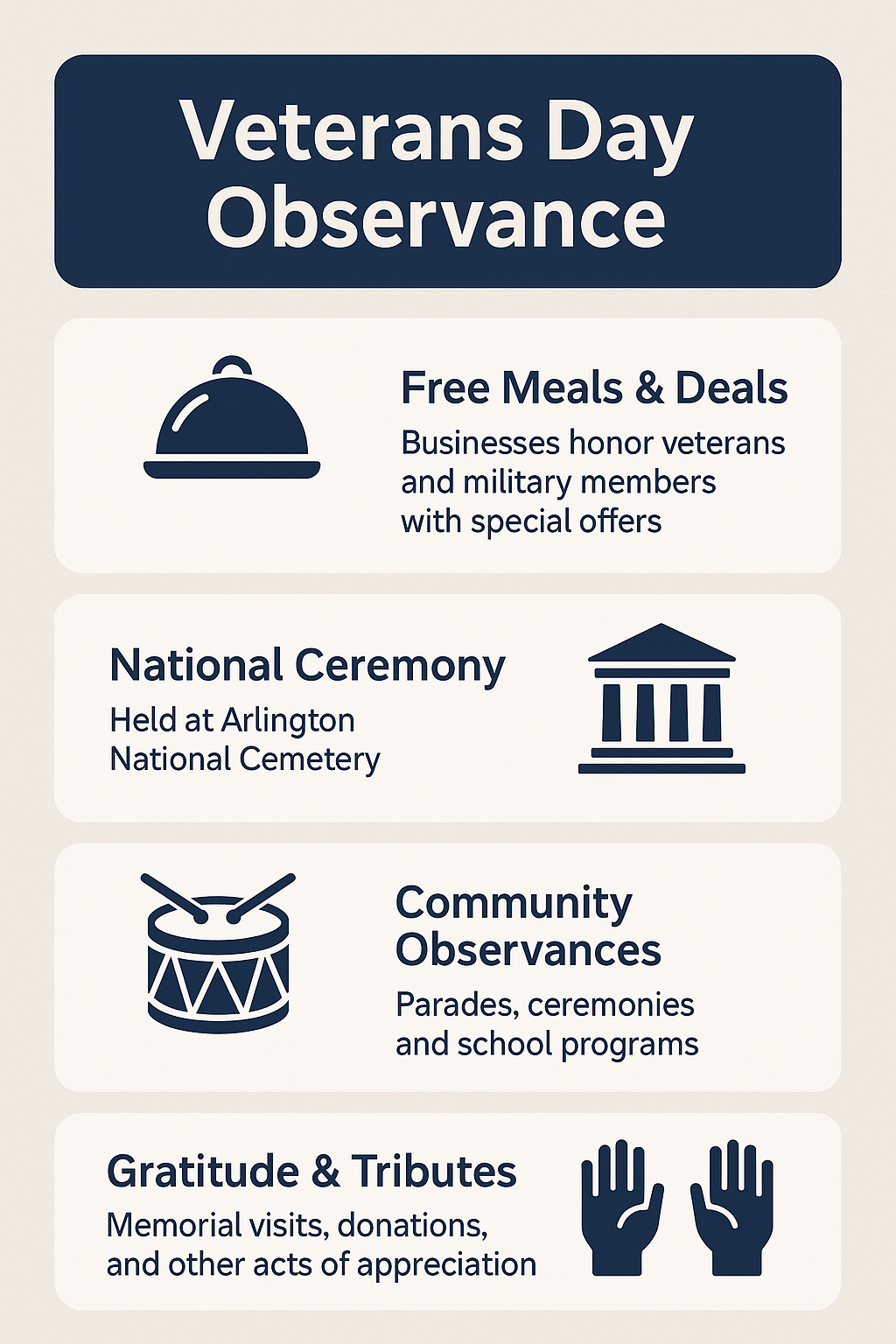
Veterans Day is commemorated nationwide through diverse traditions and observances that express collective gratitude for military service.
Many businesses honor veterans, active duty military, and other eligible groups with special Veterans Day deals.
Free Meals
Many veterans and military service members are given deals at restaurants and businesses as a token of gratitude. These include offers such as a free meals, free coffees, free car washes, free doughnuts, and pretty much anything else.
To get a free item or meal, veterans, active duty military personnel, and family members are often required to show a valid military ID in store at participating locations or participating locations nationwide.
In addition to these business tributes, appropriate ceremonies and saluting veterans are important aspects of how communities celebrate Veterans Day. Readers are encouraged to celebrate Veterans Day by participating in these offers and community events.
The National Ceremony at Arlington National Cemetery
The focal point for official national observance remains the Tomb of the Unknown Soldier at Arlington National Cemetery in Virginia. At precisely 11:00 a.m. on November 11th, a combined color guard representing all military services executes “Present Arms” at the tomb.
This is followed by a wreath-laying ceremony conducted by the President or an official representative, symbolizing the nation’s tribute to all who served. The haunting sound of “Taps” played by a bugler echoes across the hallowed grounds, and the remainder of the ceremony, including a parade of flags by veterans’ service organizations and remarks from dignitaries, takes place inside the Memorial Amphitheater.
Community Observances
Beyond the national stage, communities large and small host their own meaningful observances:
- Parades: Cities nationwide, including New York City’s famous Veterans Day Parade, feature marching active military, veterans, bands, and patriotic floats, saluting veterans as a central part of the celebration.
- Ceremonies and speeches: Local events include addresses from community leaders, veterans, and military officials reflecting on service and sacrifice.
- School programs: Educational institutions host assemblies and invite veterans to speak, ensuring younger generations understand the holiday’s significance.
- Memorial visits: Individuals and families visit veterans’ cemeteries and memorials to pay respects.
- Community gratitude: Many express thanks through donations to veterans’ organizations, volunteer work, or personal outreach to veterans they know, saluting veterans for their service.
- Business tributes: Numerous companies offer special discounts, free meals, or services to veterans and active-duty personnel, showing appreciation for their dedication.
The Global Perspective: Remembrance Day
The spirit of honoring military service on November 11th extends beyond U.S. borders. Many countries that were Allied nations in World War I observe similar commemorations, most commonly called Remembrance Day or Remembrance Sunday.
Canada and Australia observe Remembrance Day on November 11th, with Canada’s observance closely resembling the U.S. approach in honoring all who served. Great Britain observes Remembrance Sunday, typically the second Sunday in November, with church services and parades, most notably at the Cenotaph in Whitehall, London. In the United States, the Vietnam Veterans Memorial in Washington, D.C., stands as a key site of remembrance for those who served and sacrificed.
A widespread tradition in Britain and Commonwealth countries involves observing two minutes of silence at 11:00 a.m. on November 11th and wearing red remembrance poppies to honor military personnel who died in war. While poppies are prominent in these countries, in the United States, red poppies are traditionally associated with Memorial Day rather than Veterans Day.
A Living Tradition of Honor for Military Veterans
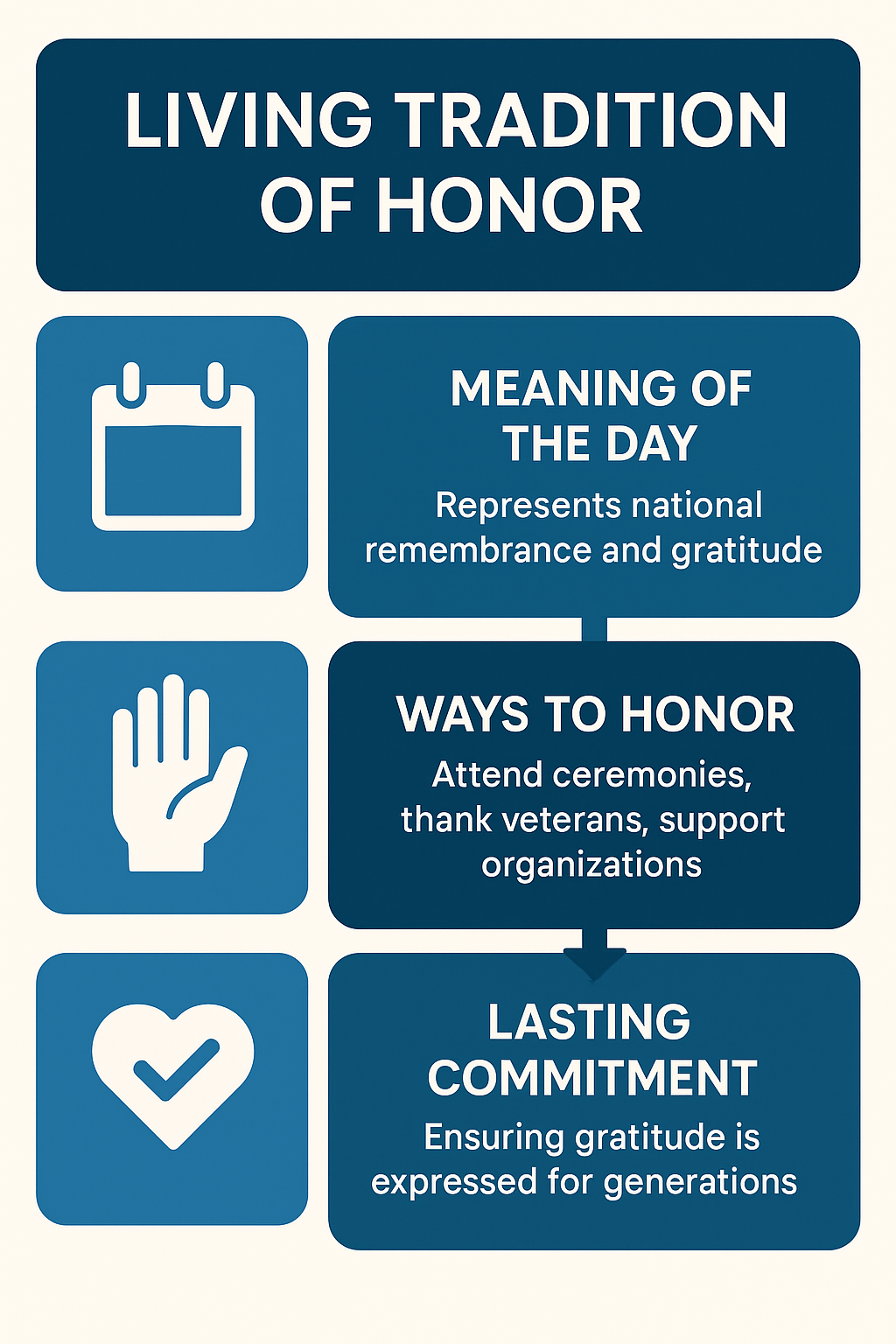
Veterans Day is far more than a federal holiday or a day off work—it represents a vital national commitment to remembrance and gratitude. The journey from Armistice Day to Veterans Day reflects America’s evolving understanding of military service and sacrifice. What began as a commemoration of a single war’s end has grown into an inclusive tribute to all who have answered their nation’s call across more than a century.
As we observe Veterans Day each year, we’re called to do more than simply enjoy a day off. We’re invited to actively recognize the patriotism, courage, and sacrifice of those who have defended our freedoms. Whether through attending ceremonies, thanking veterans personally, supporting veterans’ organizations, or simply taking a moment of silence at 11:00 a.m., each of us can participate in this living tradition of honor.
In the words that have become synonymous with veterans’ service: They answered the call, served with honor, and earned our eternal gratitude. Veterans Day ensures that gratitude is not just felt, but actively expressed—today, tomorrow, and for generations to come.
At AllVeteran.com, we seek to help veterans connect with resources that may make all the difference. To find out your disability rating, take our free medical evidence screening today!
 AllVeteran.com Advisors
With expertise spanning local, state, and federal benefit programs, our team is dedicated to guiding individuals towards the perfect program tailored to their unique circumstances.