





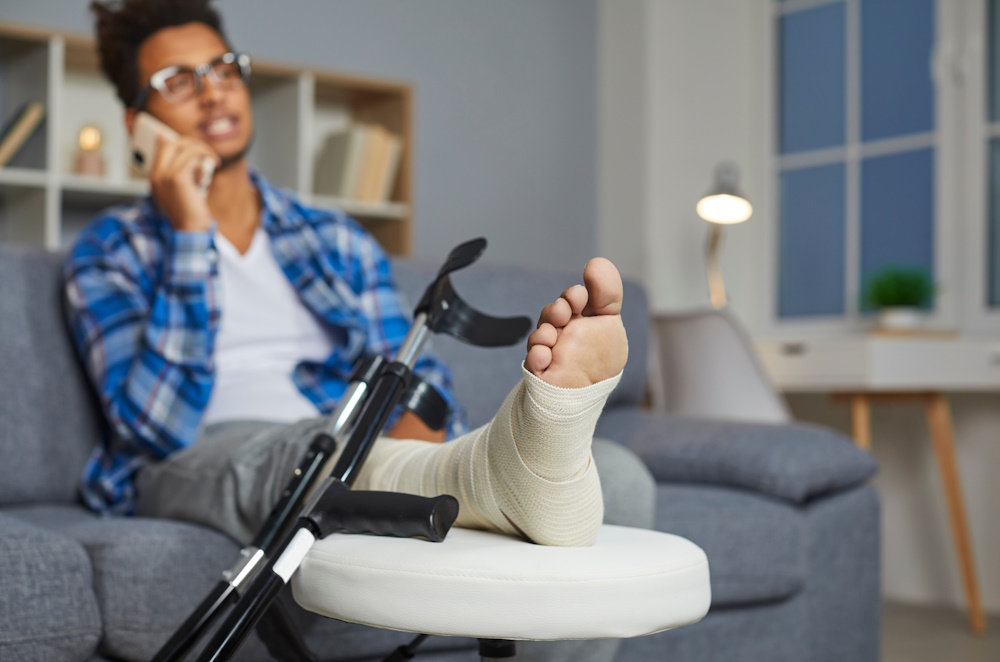







Not all disabilities change or progress over time, and understanding when a condition is considered “static” can make a major difference in how benefits are determined. In the world of VA disability ratings, a static disability refers to a condition that is stable, long-term, and unlikely to significantly improve or worsen. But what exactly does that mean for veterans when it comes to their compensation, reexaminations, or long-term medical care?
Why This Update
While the definition of static disability won’t really change, its possible that the benefits can. We just want to make sure we are up to date and clear so you can make the best decision.
Tamila’s Take
When many veterans are rated by the VA, they don’t understand the difference between a static and a dynamic disability. They just know their condition isn’t going away. Realizing that their condition is static can change everything.
A static disability means your condition is stable, long-term, and not expected to improve. For veterans, that can be a huge relief. It means fewer reexams, less paperwork, and more confidence that your benefits won’t suddenly be reduced. For those of us living with permanent injuries, like amputations, spinal cord damage, or irreversible hearing loss, this designation acknowledges the reality of our day-to-day lives.
Characteristics of Static Disabilities
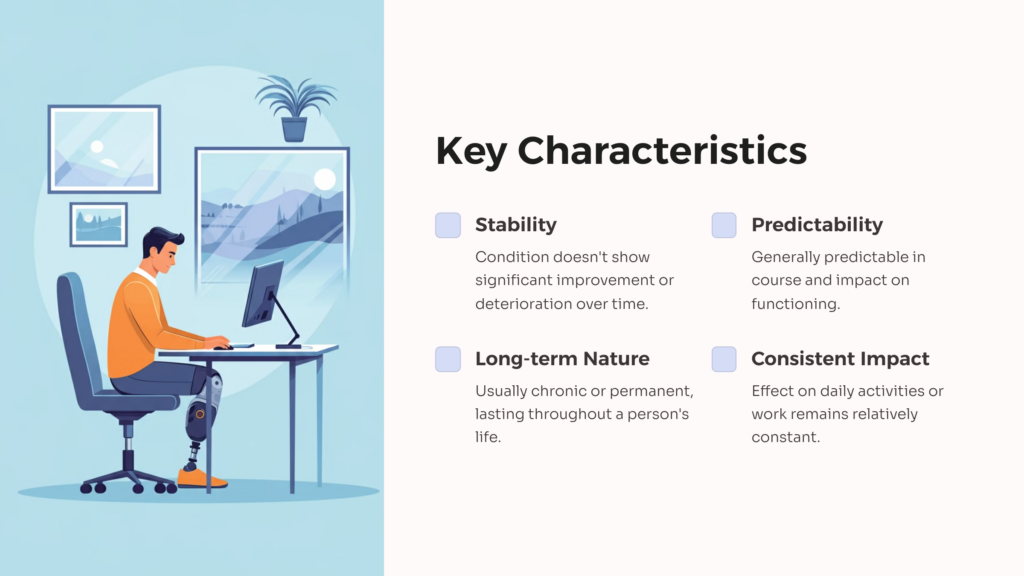
Static disabilities have several key features that set them apart from other types of impairments. These characteristics help medical professionals and disability evaluators assess and classify conditions accurately.
- Stability: The most defining feature of a static disability is its stability over time. The condition doesn’t show significant improvement or deterioration.
- Predictability: Static disabilities are generally predictable in their course and impact on a person’s functioning.
- Long-term nature: These disabilities are usually chronic or permanent, lasting for an extended period or throughout a person’s life.
- Consistent impact: The effect on a person’s ability to perform daily activities or work remains relatively constant.
Understanding these characteristics is crucial for proper disability management and support planning.
Examples of Static Disabilities
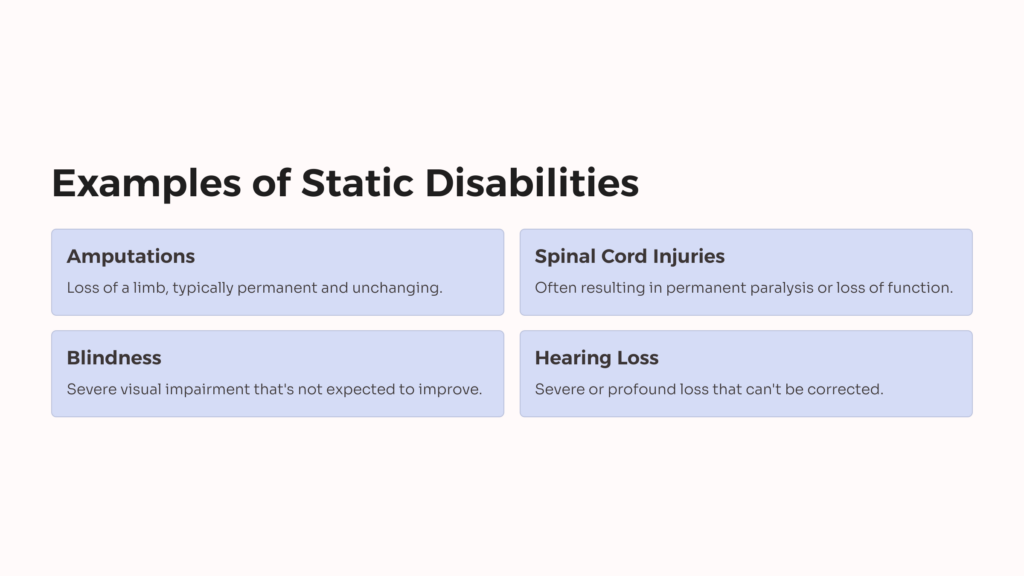
Static disabilities can encompass a wide range of conditions. Here are some common examples:
- Amputations: The loss of a limb is typically considered a static disability as the condition is permanent and unlikely to change significantly.
- Spinal cord injuries: Many spinal cord injuries result in permanent paralysis or loss of function, classifying them as static disabilities.
- Blindness or severe visual impairment: When vision loss is permanent and not expected to improve, it’s often categorized as a static disability.
- Hearing loss: Severe or profound hearing loss that can’t be corrected with treatment or devices is usually considered static.
- Certain neurological conditions: Some brain injuries or congenital neurological disorders may result in static disabilities.
These examples illustrate the diverse nature of static disabilities and their long-term impact on individuals’ lives.
Static vs. Dynamic Disabilities
To better understand static disabilities, it’s helpful to compare them with dynamic disabilities. The main difference lies in the potential for change over time.
Static disabilities:
- Remain relatively stable
- Have a consistent impact on functioning
- Require long-term management strategies
Dynamic disabilities:
- Can improve or worsen over time
- May have fluctuating effects on a person’s abilities
- Often need ongoing assessment and adjustments to treatment
Examples of dynamic disabilities include some mental health conditions, certain progressive diseases, and injuries that have the potential for recovery or rehabilitation.
Understanding this distinction is crucial for proper disability assessment, treatment planning, and benefit determination.
Importance in Disability Evaluation
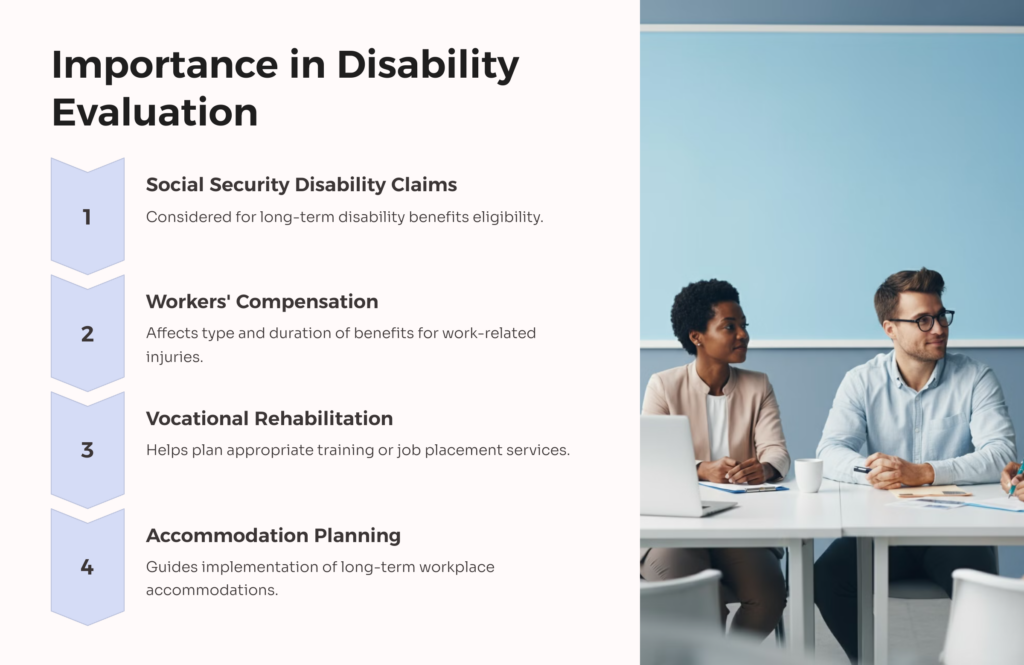
The concept of static disability plays a significant role in disability evaluation processes. It’s particularly important in areas such as:
- Social Security Disability claims: The Social Security Administration considers whether a condition is static when determining eligibility for long-term disability benefits.
- Workers’ compensation: In cases of work-related injuries, identifying a disability as static can affect the type and duration of benefits provided.
- Vocational rehabilitation: Understanding whether a disability is static helps in planning appropriate vocational training or job placement services.
- Accommodation planning: Employers use this information to implement suitable long-term workplace accommodations.
Accurate classification of a disability as static or dynamic ensures that individuals receive appropriate support and resources tailored to their specific needs.
Impact on Daily Life and Work
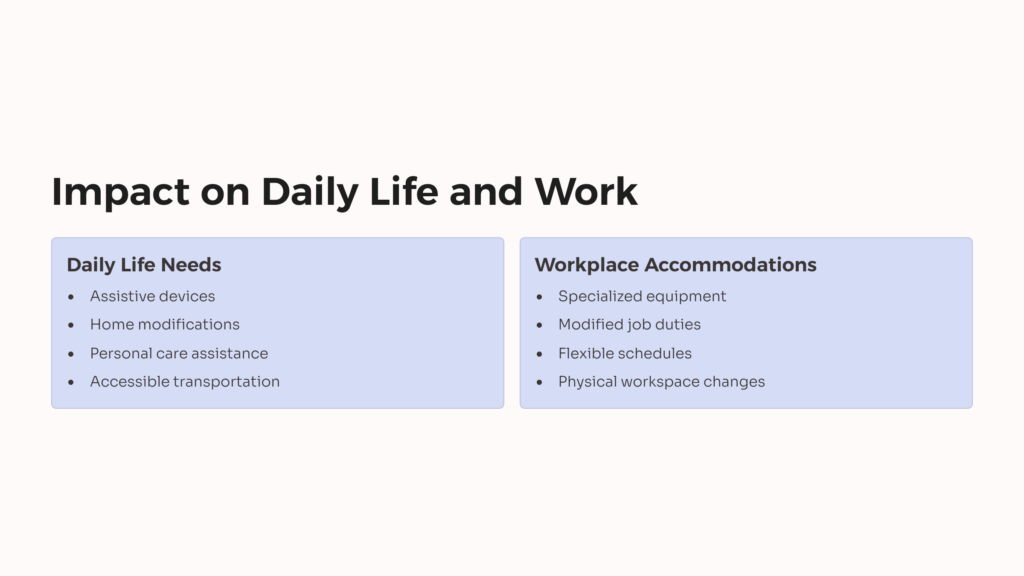
Static disabilities can have profound effects on a person’s daily life and work capabilities. These impacts are typically long-lasting and require ongoing adaptations.
In daily life, individuals with static disabilities may need:
- Assistive devices or technologies
- Home modifications
- Personal care assistance
- Accessible transportation options
In the workplace, accommodations might include:
- Specialized equipment or software
- Modification of job duties
- Flexible work schedules
- Physical changes to the work environment
Despite these challenges, many people with static disabilities lead fulfilling lives and successful careers with proper support and accommodations.
Management and Support Strategies
Managing a static disability involves developing long-term strategies to maximize independence and quality of life. Here are some key approaches:
- Medical management: Regular check-ups and maintenance therapies to prevent complications.
- Assistive technology: Utilizing devices and tools designed to enhance function and independence.
- Lifestyle adaptations: Modifying daily routines and environments to accommodate the disability.
- Psychological support: Addressing the emotional and mental health aspects of living with a permanent disability.
- Community resources: Accessing support groups, disability services, and advocacy organizations.
- Vocational training: Developing new skills or adapting existing ones for suitable employment.
These strategies help individuals with static disabilities maintain their health, independence, and overall well-being.
Legal Considerations and Rights
Individuals with static disabilities have specific legal rights and protections. Understanding these is crucial for ensuring fair treatment and access to necessary resources.
Key legal considerations include:
- Americans with Disabilities Act (ADA): Prohibits discrimination and ensures equal opportunities in employment, public accommodations, and other areas.
- Social Security Disability Insurance (SSDI): Provides financial support for those unable to work due to long-term disabilities.
- Workplace accommodations: Employers are required to provide reasonable accommodations for employees with disabilities.
- Education rights: Laws like the Individuals with Disabilities Education Act (IDEA) ensure access to appropriate education for students with disabilities.
- Housing rights: Fair housing laws protect individuals with disabilities from discrimination in housing.
Being aware of these legal protections empowers individuals with static disabilities to advocate for their rights and access necessary support services.
Advancements in Treatment and Technology
While static disabilities are generally stable, advancements in medical treatment and assistive technology continue to improve the lives of those affected. These developments can enhance function, independence, and quality of life.
Some notable advancements include:
- Prosthetic limbs with advanced functionality
- Brain-computer interfaces for communication
- Exoskeletons for mobility assistance
- Gene therapies for certain genetic conditions
- Stem cell treatments for spinal cord injuries
While these innovations may not cure static disabilities, they can significantly improve the ability of individuals to navigate daily life and participate more fully in society.
Example
A 45-year-old Army veteran, Henry, lost his leg above the knee due to an IED (improvised explosive device) blast. His amputation was quickly designated as a static disability by the VA. This means John receives his disability compensation without the stress of frequent reexaminations, allowing him to focus on rehabilitation, using his prosthetic, and adapting to his new life. He can confidently plan his finances and future knowing his benefits for this condition are stable.
Frequently Asked Questions
What is the primary benefit of a VA static disability rating?
The main benefit is that the VA typically will not require routine reexaminations for that condition, providing stability and continuity of your disability benefits without periodic reviews.
How does the VA determine if a disability is static?
The VA classifies a disability as static if medical evidence indicates the condition is stable, permanent, and not expected to significantly improve or worsen over the veteran’s lifetime.
Can a static disability rating ever be changed?
While rare, a static rating can be changed if there is a clear and sustained material improvement in the condition, or if there was a clear error in the original rating. However, this is not due to routine reexaminations.
Are all 100% disability ratings considered static?
Not necessarily. A 100% rating can be dynamic if the VA believes there’s a possibility of improvement. However, many 100% ratings, especially for severe, irreversible conditions, are often designated as static.
What if my condition is static but the VA still schedules a reexamination?
If you believe your condition is static and the VA schedules a reexamination, you should provide medical evidence confirming its stability. Consulting with a Veterans Service Organization (VSO) or attorney can help clarify the situation.
Does a static rating impact my ability to work?
A static rating itself doesn’t directly impact your ability to work, but the underlying static condition might. However, the stability of your benefits can allow for better planning of vocational rehabilitation or accommodations for employment.
Where can I find the VA’s official criteria for static disabilities?
The official criteria for VA static disabilities are detailed in the VA’s M21-1 Adjudication Procedures Manual, specifically within sections addressing reexaminations and permanency criteria.
Moving Forward with Confidence
Living with a static disability comes with its own set of challenges—but it also reveals incredible strength, adaptability, and resilience. With the right support, resources, and understanding, veterans with static disabilities can build meaningful, fulfilling lives while receiving the recognition and care they deserve. Your VA disability rating should reflect your true condition, and getting it right can make all the difference in your long-term stability.
If you have more questions about your static disability, don’t hesitate to reach out at AllVeteran.com! We are here to help!
 AllVeteran.com Advisors
With expertise spanning local, state, and federal benefit programs, our team is dedicated to guiding individuals towards the perfect program tailored to their unique circumstances.