










Sleep apnea is a condition that is recognized by the Department of Veterans Affairs (VA). The VA assigns disability ratings for sleep apnea based on the severity of the condition and treatment needs. Ratings can range from 0% to 100%, depending on a number of factors. To win a claim, veterans must prove a current diagnosis, service connection (direct or secondary), and submit strong medical evidence.
This condition remains one of the most claimed VA conditions, but it is also one of the most denied. With tighter scrutiny on nexus letters and secondary claims (especially PTSD-related cases), understanding how the VA evaluates sleep apnea is more important than ever. Here is what you need to know about how the VA rates sleep apnea and how to submit a strong claim.
Why This Update
Sleep apnea affects a lot of veterans, and new research is always coming out about conditions like this. We want to make sure we have the best information to share with you!
With the VA proposing changes to the sleep apnea rating criteria, it’s important to stay updated on the claims process. Veterans should prepare by ensuring their medical records document any complications they experience with their treatment.
Tamila’s Take
Sleep apnea isn’t just about being tired or snoring too loudly. Many veterans don’t even realize they have it until their partners told them they stopped breathing in their sleep. The CPAP machine might not be glamorous, but it can save your life, and it can also be the key to unlocking the benefits you’ve earned. If you’re waking up exhausted, don’t brush it off. Get the sleep study, get the diagnosis, and get it documented. You can’t fight the system if you’re running on empty.
How the VA Rates Sleep Apnea (0%, 30%, 50%, and 100%)
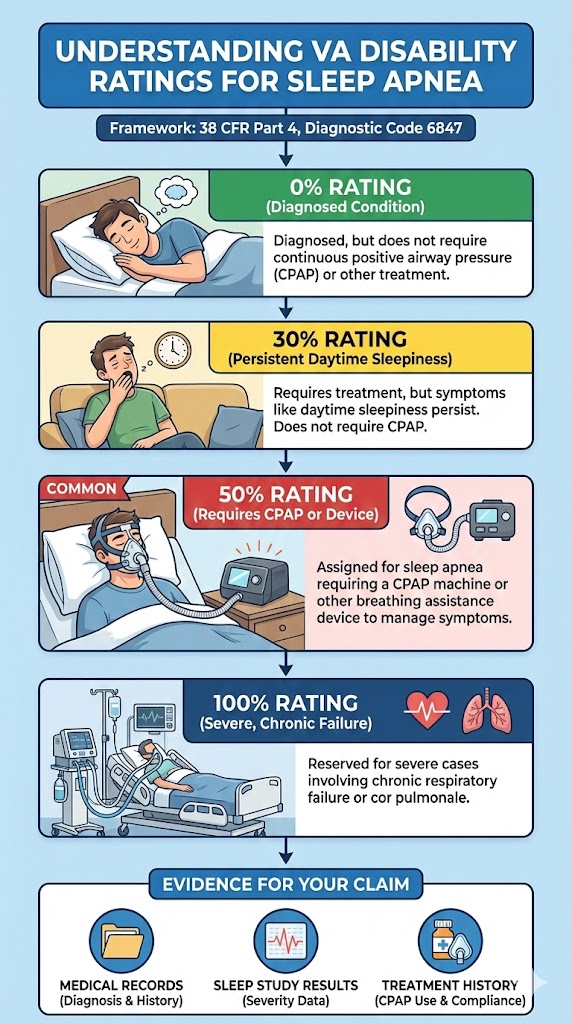
The VA uses Diagnostic Code 6847 to rate sleep apnea. Ratings are assigned as follows.
- 0%: Diagnosed sleep apnea with no significant symptoms.
- 30%: Persistent daytime hypersomnolence (excessive daytime sleepiness).
- 50%: Requires use of a CPAP machine or similar breathing assistance device.
- 100%: Chronic respiratory failure with carbon dioxide retention, cor pulmonale, or requires tracheostomy.
Most approved claims fall into the 50% category, which is why CPAP documentation is so critical.
CPAP Machines and How They Affect VA Sleep Apnea Ratings
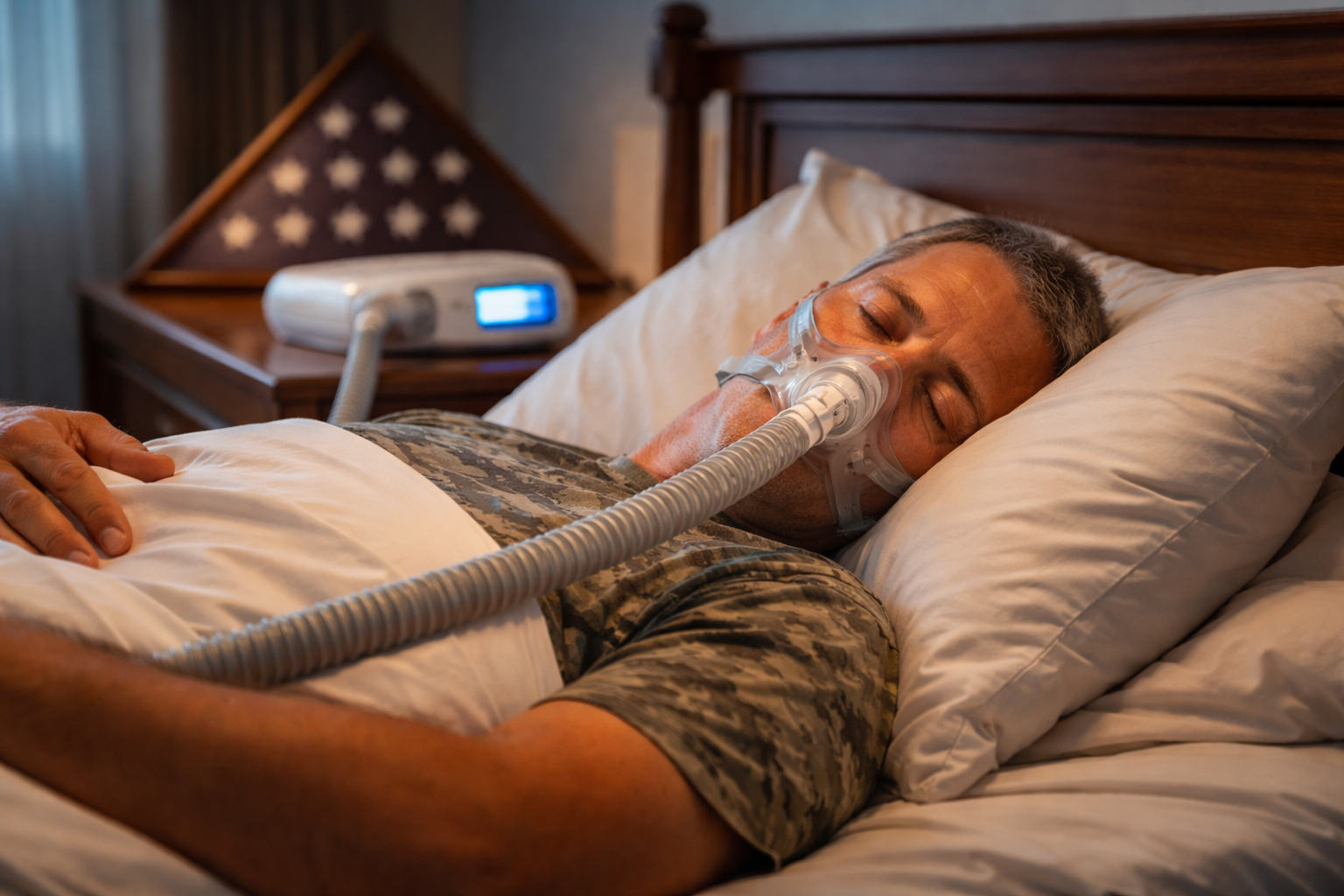
A CPAP prescription is one of the strongest pieces of evidence in a sleep apnea VA claim. If a VA or private doctor prescribes a CPAP, the VA generally assigns a 50% rating, even if symptoms are controlled.
That said, actual CPAP usage is not required. The prescription itself is what matters. However, it would still be recommended that you actually use the CPAP, as it can have a positive impact on how you feel day to day.
Your rating will be impacted by a submission of evidence of your prescription. Veterans denied at 0% or 30% often win increases once CPAP documentation is submitted, which should include the sleep study, prescription, and treatment notes confirming ongoing need.
Secondary Service Connection for Sleep Apnea
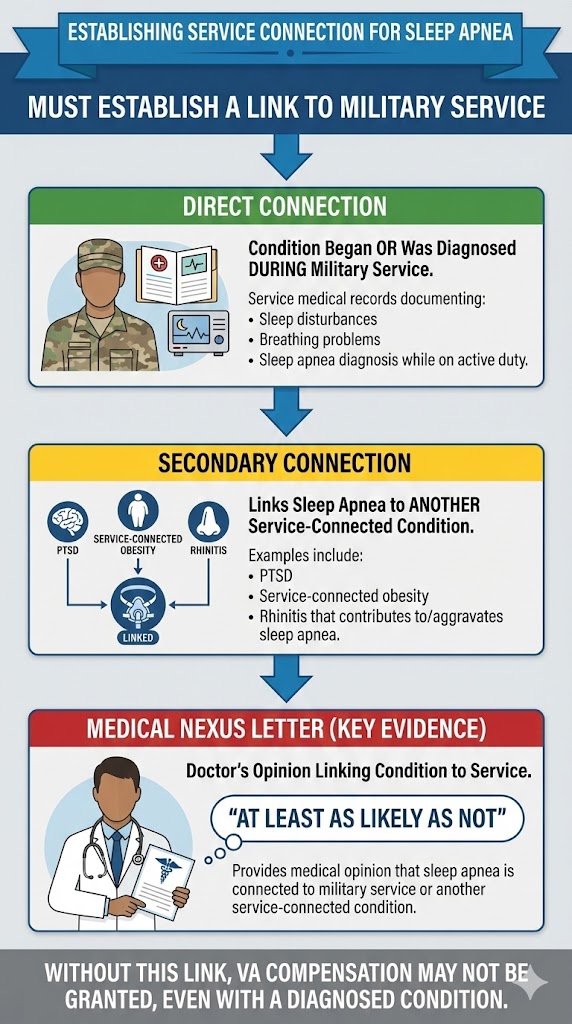
Sleep apnea can develop as a secondary condition to other service connected disabilities, such as PTSD, TBI, or chronic illnesses. Establishing this link often requires a strong medical nexus letter and a well-supported medical opinion from a healthcare professional, which are essential for connecting sleep apnea to other service connected disabilities and securing the appropriate VA rating.
Common secondary links include:
- VA sleep apnea secondary to PTSD
- Obesity as an intermediate step caused by service-connected orthopedic or mental health conditions
- Traumatic brain injury (TBI)
- Chronic sinusitis or rhinitis
- GERD
- Nasal obstruction due to service-connected nasal trauma
Exposure to burn pits, Agent Orange, or other toxins during military service have been linked to the development of sleep apnea. Many veterans who served in deployment zones were exposed to particulate matter from burn pits, which can lead to sleep apnea.
Evidence Needed to Win a VA Sleep Apnea Claim
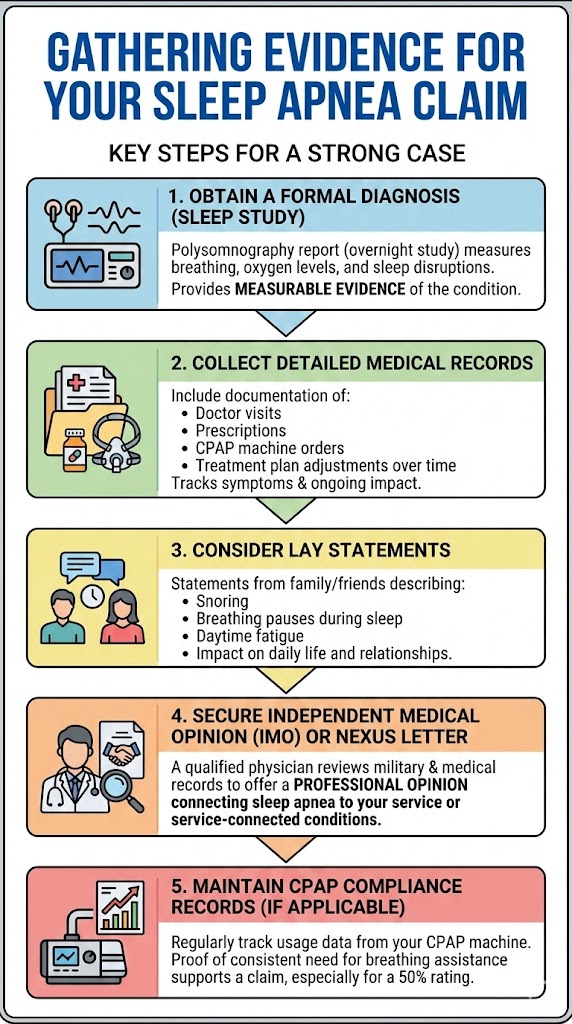
To succeed, your claim file should include:
- A sleep study confirming obstructive or central sleep apnea
- Medical records showing symptoms and treatment
- CPAP prescription, if applicable
- A well-reasoned nexus letter linking sleep apnea to service or a service-connected condition
- Lay statements describing snoring, breathing pauses, fatigue, or sleep disruption during or after service
VA sleep apnea claims often fail when veterans rely only on a diagnosis without proving service connection. It’s important to have all the pieces of the puzzle present.
Why VA Sleep Apnea Claims Are Commonly Denied
Sleep apnea claims are frequently denied for predictable reasons. The first is that there is no in-service documentation or credible secondary link, which means a granted service connection has not been established. You may also have weak or generic nexus letters, which can make it more likely that your claim will be denied. Failure to submit CPAP evidence will also impact your claim.
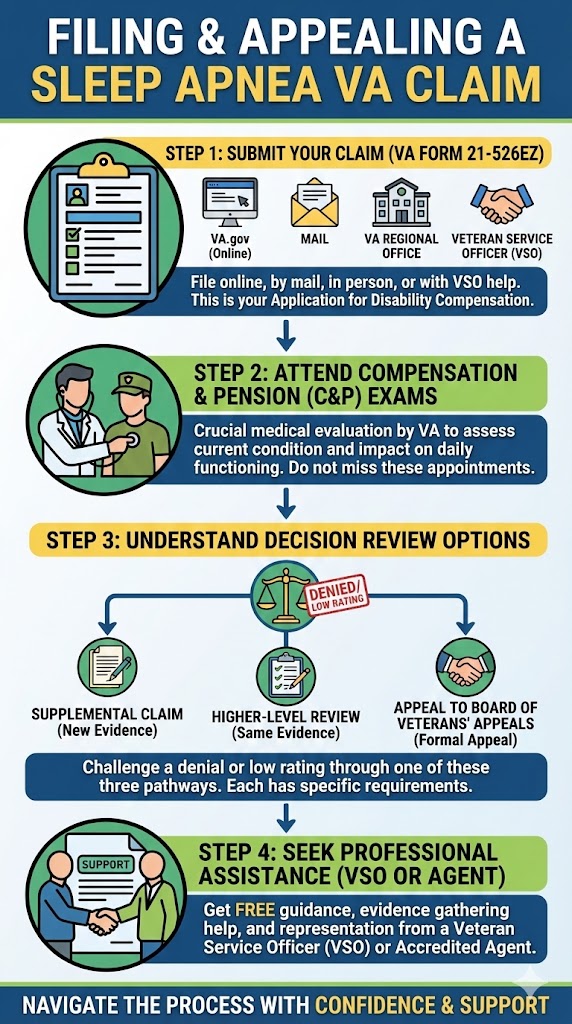
A denial doesn’t mean the claim is dead. It often means the evidence needs tightening through an appeal. If your sleep apnea claim was denied, you can file a supplemental claim to reopen the case if you have new and material evidence. It’s important not to give up on your claim. It could have a profound and positive impact on your life.
Example Scenario
Brian, an Army veteran with service-connected PTSD, was diagnosed with obstructive sleep apnea years after discharge. His initial claim was denied due to a lack of in-service documentation. This is all too common for veterans.
After working with his physician to obtain a detailed nexus letter explaining how PTSD-related sleep disturbance and weight gain contributed to sleep apnea, he refiled. The VA approved his claim at 50%, retroactive to his original filing date.
Going through the work and getting the proper documentation can go a long way.
FAQs About Sleep Apnea VA Ratings
What are the symptoms of sleep apnea?
Sleep apnea is a potentially serious disorder that occurs when a sleeping person cannot maintain enough oxygen flow through their nose and mouth. Common symptoms include loud snoring, gasping for air during sleep, and excessive daytime sleepiness.
How common is sleep apnea among veterans?
Active duty service members are 34 percent more likely to report not getting enough sleep than civilians with no history of military service, making sleep apnea a prevalent issue among those with military service.
What is the most common VA sleep apnea rating?
The most common rating is 50%, usually based on CPAP use.
Do I have to use my CPAP every night to qualify for 50%?
No. The VA focuses on whether a CPAP is medically required, not compliance.
Can sleep apnea be secondary to PTSD?
Sleep apnea can be linked to other service connected disabilities, such as PTSD or TBI, which may have developed during active duty or active service.
Why was my VA sleep apnea claim denied?
Most denials are due to a lack of service connection or inadequate nexus letters. Establishing service connected sleep apnea is key to obtaining VA benefits, and requires evidence that the condition is linked to active service or another service connected disability.
What evidence is most important for a sleep apnea VA claim?
A sleep study, CPAP prescription, and a clear nexus letter are critical. Medical evidence showing that your sleep apnea is linked to your time in active duty or as a result of another service connected disability will strengthen your claim for VA disability benefits.
Can central sleep apnea be rated by the VA?
Yes. Central sleep apnea is rated under the same criteria as obstructive sleep apnea. Central sleep apnea results from the brain failing to send proper signals to the muscles that control breathing, so documentation of these neurological issues is important for establishing a service connection, especially if linked to service-related conditions like TBI or PTSD.
Can I appeal a denied sleep apnea claim?
Yes. You can file a supplemental claim, Higher-Level Review, or Board appeal depending on the situation. Veterans sleep apnea claims are often linked to sleep apnea through military service, deployment, and exposure to risk factors, so providing new evidence of service connection or a stronger nexus can help your appeal.
Don’t Sleep on Your Claim
Sleep apnea might seem like a common condition, but in the VA’s eyes, it’s anything but simple. Untreated sleep apnea can lead to serious health issues, including heart disease, high blood pressure, stroke, and memory problems. Sleep apnea impacts a veteran’s ability to work and their quality of life, making it important to pursue a claim.
Whether it’s linked to PTSD, weight gain from service-connected injuries, or years of disrupted sleep, proving your case takes more than a diagnosis. It takes documentation, a solid nexus letter, and persistence. If you’ve been prescribed a CPAP, that alone could qualify you for a 50% rating. Don’t let missing evidence or weak connections stand in your way.
Need help tightening your claim or gathering the right medical support? Start with a free case evaluation and medical evidence screening at AllVeteran.com and take the next step toward the benefits you’ve earned.
 AllVeteran.com Advisors
With expertise spanning local, state, and federal benefit programs, our team is dedicated to guiding individuals towards the perfect program tailored to their unique circumstances.