














If you’re a veteran living with the constant congestion, pain, and fatigue of chronic sinusitis, you’re not alone—and you deserve support. Understanding how the sinusitis VA rating system works is a key step toward getting the benefits you’ve earned through your service.

The VA rates sinusitis from 0% to 50%, based on how often your symptoms flare up and how severely they impact your life. The VA uses specific diagnostic codes to assign ratings for sinusitis depending on the severity and frequency of your condition.
The process can feel complicated, but we’ll walk you through everything: what sinusitis is, why it’s common among veterans, how the VA evaluates claims, and what steps to take if you’re ready to apply—or appeal.
What Is Sinusitis—and Why Do So Many Veterans Have It?
Sinusitis is the inflammation of the tissues lining your sinuses, which are the air-filled spaces behind your eyes, forehead, cheeks, and nose. When this inflammation sticks around for more than 12 weeks, even with treatment, it’s classified as chronic sinusitis.
It might sound minor to someone who’s never had it, but chronic sinusitis can seriously impact your quality of life. Many veterans experience:
- Facial pain or pressure (especially around the nose, eyes, and cheeks)
- Constant nasal congestion and difficulty breathing
- Discolored mucus and postnasal drip
- Purulent discharge, which is thick, yellow, or green mucus, indicates active infection
- A dull or total loss of smell and taste
- Daily fatigue, brain fog, and recurring headaches
- Chronic sinusitis symptoms, such as ongoing facial pain, congestion, and sinus pressure
Constant sinusitis can persist even after treatment and may lead to chronic pain and ongoing sinusitis symptoms.
Military life, especially deployments to harsh environments, exposes service members to airborne toxins, dust, and smoke—all of which can damage the sinuses over time.
Prolonged exposure to environmental hazards and burn pit exposure are specific risk factors for veterans developing sinusitis. Many veterans also sustained physical injuries, such as facial trauma, or were exposed to burn pits, adding another layer of risk. Respiratory tract infections are a common cause of both acute and chronic sinusitis.
Rare but serious complications can occur if a sinus infection is left untreated or becomes severe. These include bone and skin infections, vision problems, and even a life-threatening meningitis infection if the infection spreads beyond the sinuses.
Environmental and Service-Related Causes
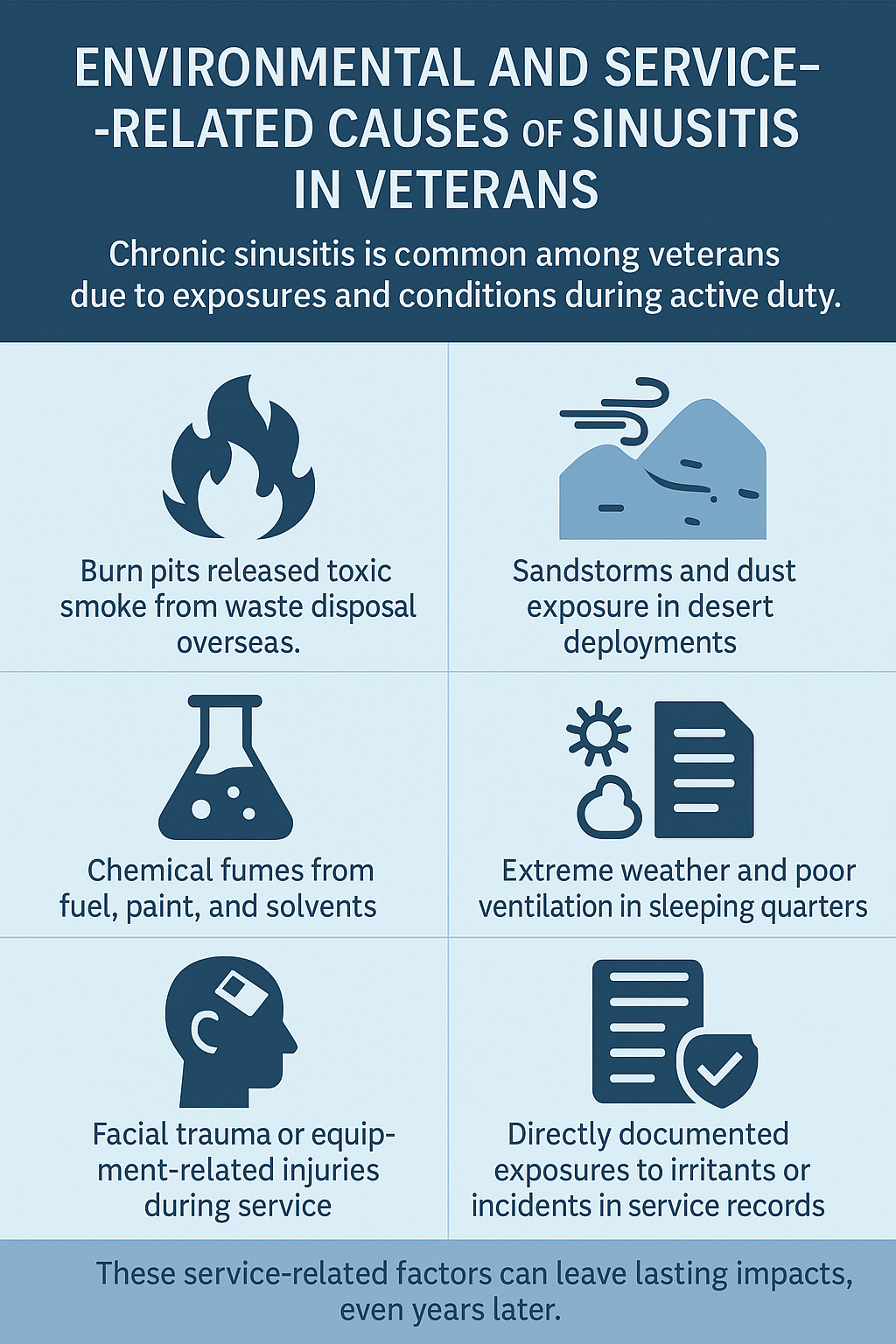
So why is chronic sinusitis so common among veterans? It often comes down to the environments you were in and the hazards you were exposed to during active duty:
- Burn pits are used to dispose of waste materials overseas, releasing toxic smoke
- Sandstorms and dust exposure in desert regions
- Chemical fumes from fuel, paint, or solvents
- Extreme weather and unventilated sleeping quarters
- Facial trauma or equipment-related injuries sustained in the line of duty
- Direct exposure to environmental irritants, injuries, or other incidents documented during your time in service
Even years after service, these exposures can leave a lasting mark.
How the VA Rates Sinusitis
The sinusitis VA disability rating is determined by the severity and frequency of your symptoms—especially how often you experience incapacitating or non-incapacitating episodes. The VA assigns ratings for sinusitis based on specific diagnostic codes and evaluation criteria, which consider the need for medical treatment and the impact on daily life. Incapacitating episodes often require antibiotic treatment and other medical treatment to manage symptoms such as pain, headaches, and purulent discharge.
Sinusitis is considered chronic sinusitis if symptoms persist for more than three months despite medical treatment. The rating percentages for sinusitis are as follows:
- 50%: Assigned after radical surgery with persistent symptoms, and for those considered chronic sinusitis cases.
- 30%: Four or more incapacitating episodes per year requiring prolonged antibiotic treatment, or more than six non-incapacitating episodes per year with symptoms.
- 10%: One or two incapacitating episodes per year requiring antibiotic treatment, or three to six non-incapacitating episodes per year.
- 0%: Symptoms are mild or controlled with minimal treatment.
These VA disability ratings for sinusitis help determine the benefits veterans receive based on the severity and management of their condition.
Incapacitating Episodes
Because the VA rating for this condition heavily relies on “incapacitating episodes,” it is important to know what that entails. These are serious flare-ups that:
- Are defined as incapacitating episodes that require bed rest and medical treatment from a physician, including physician-prescribed antibiotic treatment
- Often involve purulent discharge and require antibiotic treatment, sometimes for four to six weeks, to resolve the infection
- Can cause you to miss work or stay home from daily responsibilities
Non-Incapacitating Episodes
These still disrupt your life, but not to the point of total bed rest. Non-incapacitating episodes may require occasional doctor visits for symptom management. Sinusitis symptoms might include:
- Pain, headaches, and pressure, sometimes leading to chronic pain
- Thick nasal discharge
- Fatigue or difficulty concentrating
VA Rating Percentages for Sinusitis
If you have ever experienced sinusitis, you know it can be awful. That said, the way the VA determines your rating percentage for this ailment will depend on the intensity of your symptoms. Here’s how your rating may be determined:
- 0% – You’ve been diagnosed, but symptoms are minor and don’t require ongoing care
- 10% – 1–2 incapacitating episodes per year or 3–6 non-incapacitating episodes with headaches and nasal discharge
- 30% – 3 or more incapacitating episodes per year or more than 6 non-incapacitating episodes with persistent symptoms
- 50% – The most severe rating, usually after radical sinus surgery with chronic osteomyelitis, or for veterans who experience constant sinusitis symptoms—such as ongoing headaches, pain, and discharge—even after repeated surgeries
How to Prove Service Connection for Sinusitis
To qualify for VA disability benefits, your sinusitis must be linked to your military service, and you must meet the basic eligibility criteria for a VA disability rating. The VA generally looks for three things:
- A current medical diagnosis of chronic sinusitis, supported by medical records that document both the diagnosis and the history of your sinusitis symptoms
- Evidence that something happened during service (injury, exposure, etc.)
- A medical nexus, or medical opinion, connecting the current diagnosis to an in-service event
Sinusitis can be one of several service-connected conditions, and veterans may also have VA secondary conditions that are caused or worsened by sinusitis.
Direct Service Connection
If your sinusitis started while you were in the military or worsened during service, and you have documentation to prove it, this is the most straightforward path.
Establishing a direct service connection requires evidence of an in-service event, such as exposure or injury, that is linked to your sinusitis. Examples include:
- Documentation of an in-service event, such as deployment in dusty or chemical-heavy environments
- Documentation of chronic sinus infections while in service
- Medical evaluations showing facial trauma
Presumptive Service Connection (Thanks to the PACT Act)
Thanks to the PACT Act of 2022, the VA recognizes chronic sinusitis as a presumptive condition for many veterans who served in areas with high toxin exposure, including those with burn pit exposure—meaning you don’t need a nexus letter if you served in one of these locations:
- Southwest Asia since August 2, 1990 (including service during the Persian Gulf War)
- Post-9/11 deployments in places like Afghanistan and Syria
Your condition must have appeared within 10 years of leaving active duty to qualify.
Secondary Service Connection
Sinusitis can be claimed as one of several VA secondary conditions if it is linked to another service-connected disability.
Sometimes sinusitis is linked to—or made worse by—another service-connected disability condition, such as:
- Allergic rhinitis
- Sleep apnea
- Deviated septum
- Asthma
- Chronic respiratory conditions
If one of these is already service-connected, you might be able to file a secondary claim for sinusitis.
How to File a Sinusitis VA Disability Claim
The VA disability claims process for sinusitis involves several key steps. Disability claims for sinusitis can be complex and may require legal or professional assistance to ensure all necessary documentation is included. Here’s a simple step-by-step breakdown.
1. Get a Diagnosis
Make sure your diagnosis is documented—ideally by an ENT specialist. The more detailed the notes, the better.
2. Gather Evidence
You’ll need:
- Military records showing relevant exposures or injuries
- CT scans, MRIs, or endoscopy results
- Documentation of antibiotics and other treatments
- A nexus letter (unless you qualify for presumptive service)
- Personal statements about how sinusitis affects your life
3. File Your Claim (VA Form 21-526EZ)
Filing your VA form can be done online at VA.gov, by mail, or with help from a VSO (Veteran Service Officer).
4. Prepare for the C&P Exam
The Compensation & Pension (C&P) exam, also known as the VA exam for sinusitis or p exam for sinusitis, is where the VA specifically assesses the severity and impact of your sinusitis on your health and daily life. Be honest, detailed, and bring:
- Symptom journals
- Medication logs
- Proof of missed work or daily limitations
What If You’re Underrated—or Denied?
If your sinusitis worsens or you believe your initial rating was too low, you can request a rating increase by submitting updated medical evidence.
If your claim was denied, you can file a VA appeal to challenge the decision and seek a higher rating. The VA appeal process includes:
- Supplemental Claim (with new evidence)
- Higher-Level Review (a second look with no new evidence)
- Board Appeal (a hearing with a Veterans Law Judge)
Working with a VSO or a VA-accredited attorney can be very helpful.
What About TDIU?
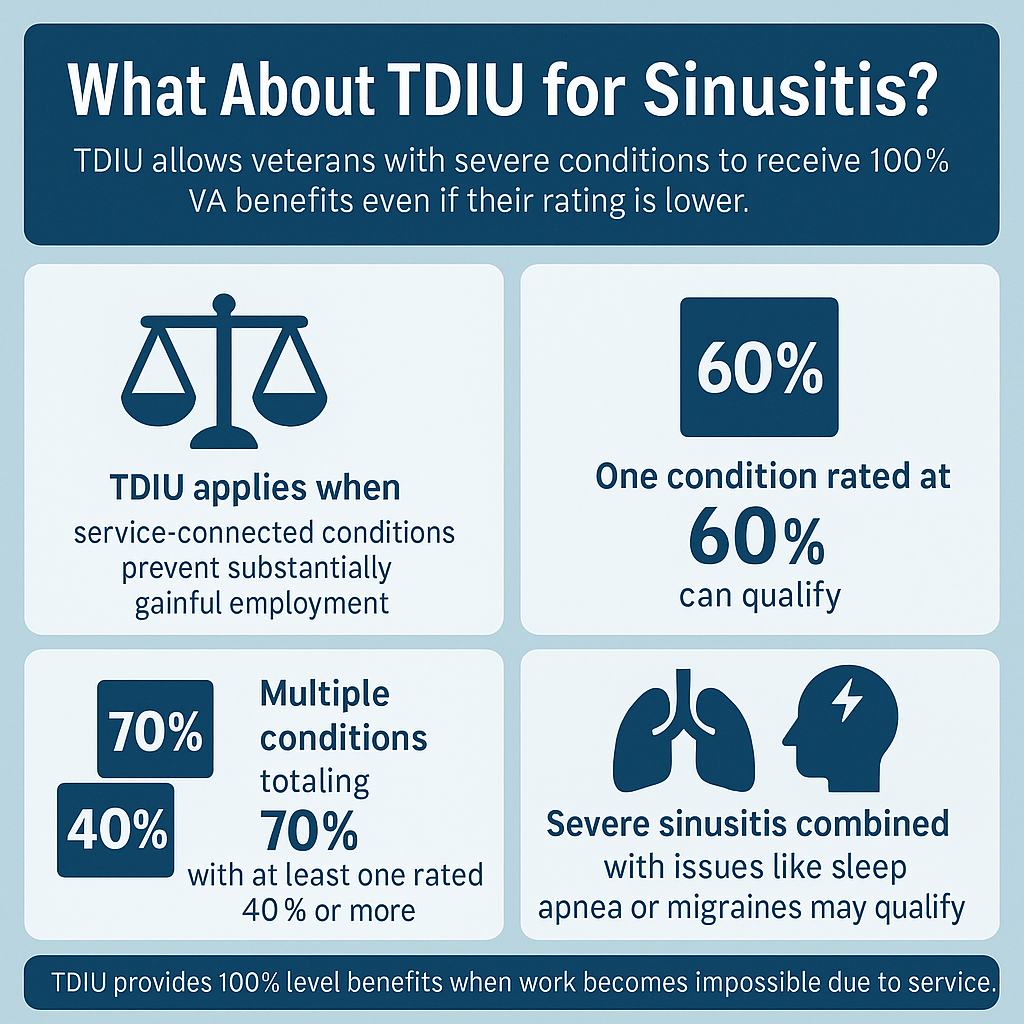
While sinusitis alone might not seem like it would qualify you for Total Disability Individual Unemployability (TDIU), it could—especially when combined with other conditions.
If your combined service-connected disability conditions make it impossible to maintain substantially gainful employment, TDIU could grant you VA benefits at the 100% level—even if your total rating is technically lower. To qualify:
- One condition rated at 60%, or
- Multiple conditions totaling 70%, with one rated at 40% or more
Severe sinusitis combined with conditions like sleep apnea or migraines could make you eligible.
Common Pitfalls to Avoid
Even a strong case can get delayed or denied due to avoidable mistakes. Watch out for:
- Missing medical documentation
- Weak or vague nexus letters
- Failing to attend your C&P exam
- Overlapping claims that violate VA pyramiding rules
Always double-check your evidence and keep copies of everything.
Additional Benefits Tied to Sinusitis VA Ratings
Getting a sinusitis VA rating doesn’t just mean a monthly check—it can also unlock VA compensation and VA disability compensation for veterans.
A sinusitis VA rating may qualify you for disability compensation, which can increase if you have two or more disabilities or if your sinusitis combines with other VA disabilities. This can also lead to:
- Free VA healthcare, including ENT specialists and prescription meds
- Special Monthly Compensation (SMC) in severe cases
- Dependent benefits if you have a spouse or kids
- Education or job retraining support
- Increased ratings when sinusitis worsens or combines with other conditions
Even a 0% rating gives you access to healthcare for your condition.
You Don’t Have to Battle Chronic Illness Alone
If you’re battling chronic sinus issues and served in the military, your suffering isn’t something you should just deal with. The sinusitis VA rating system is designed to acknowledge the toll these symptoms take on your life and to get you the help and compensation you’ve earned.
Lean on Veterans Service Officers, support groups, and professionals who understand the system. You can also seek assistance from Veterans Affairs when filing or appealing a sinusitis VA rating claim to help establish service connection and obtain the benefits you deserve. Your health—and your service—deserve recognition.
At Allveteran.com, we seek to help veterans connect with resources that may make all the difference. To find out your disability rating, take our free medical evidence screening today!
 AllVeteran.com Advisors
With expertise spanning local, state, and federal benefit programs, our team is dedicated to guiding individuals towards the perfect program tailored to their unique circumstances.