













There are numerous ways you can support your VA disability claim, but one of the most underused is the buddy letter. These letters, also known as lay statements, are written from someone who personally witnessed your in-service injury, symptoms, or changes in behavior.
A strong buddy letter can make or break your VA claim by filling in gaps in service records or when medical or official documentation is missing. They serve as additional evidence to supplement service records and medical documentation, helping provide a fuller picture of the veteran’s situation.
Why This Update
The VA can update its processes, and we want to be as clear and informed as we can be.
Tamila’s Take
Buddy letters are one of the most underused tools in VA claims. Credible statements from those who know the veteran well can make a significant difference in the outcome of a claim. I’ve seen claims denied for years simply because a veteran didn’t realize a short, honest statement from the right person could change everything.
What Is a Buddy Statement?
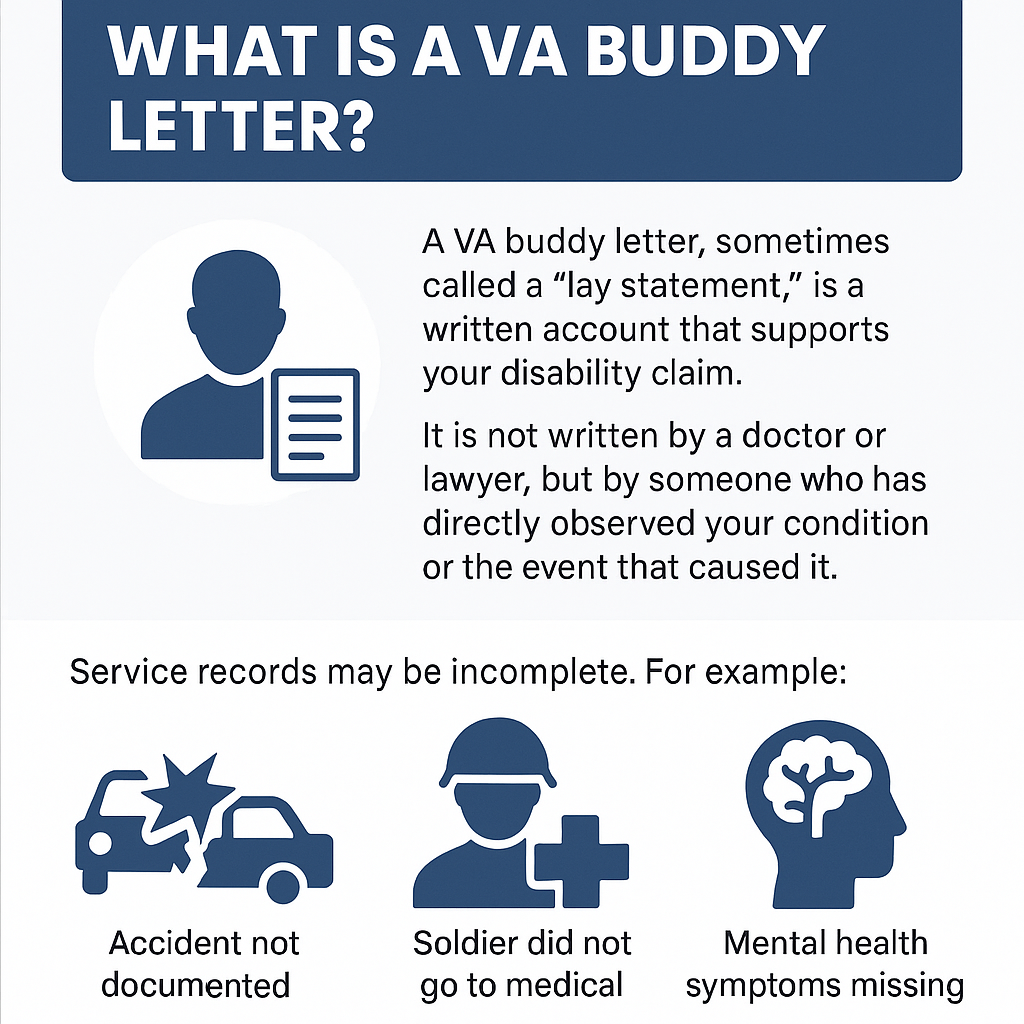
A VA buddy letter is a form of lay evidence. It helps establish facts that medical records alone may not show. Buddy letters serve as supporting evidence, especially when official records are incomplete, by providing corroborating testimonies and supplementary information that reinforce a veteran’s claim.
The VA is required to assist veterans in developing their claims and must consider lay evidence like buddy statements. Ultimately, they can support a service connection, symptom severity, or continuity of symptoms. Buddy letters are especially valuable in PTSD, musculoskeletal, hearing loss, and older claims.
The real power of buddy letters comes from their ability to translate medical terminology into relatable human experiences, helping validate veterans’ experiences by providing real examples of their challenges.
Who Can Write a Buddy Letter for a VA Claim?
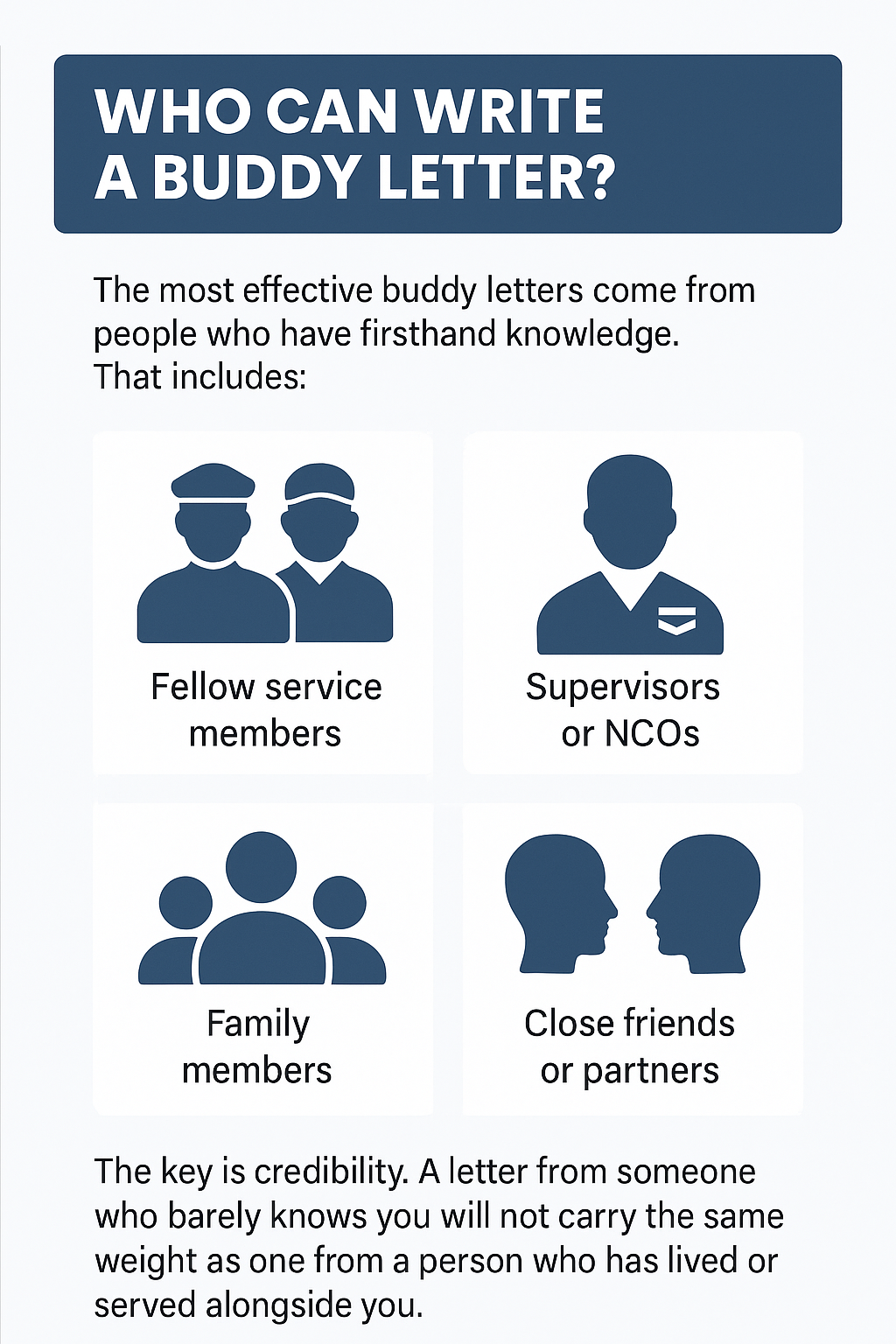
Many people can write a buddy letter, as long as they have firsthand knowledge of what they’re describing.
Common writers include:
- Fellow service members who served alongside you (the most credible buddy letters come from those who served alongside the veteran or have directly observed their condition)
- Spouses, partners, family members, or friends
- Coworkers or supervisors
- Anyone else who personally observed your symptoms or the in-service event
Individuals who write VA buddy letters must be 18 years or older.
The key is credibility. The writer doesn’t need medical expertise. They simply need direct observation and honesty.
What to Include
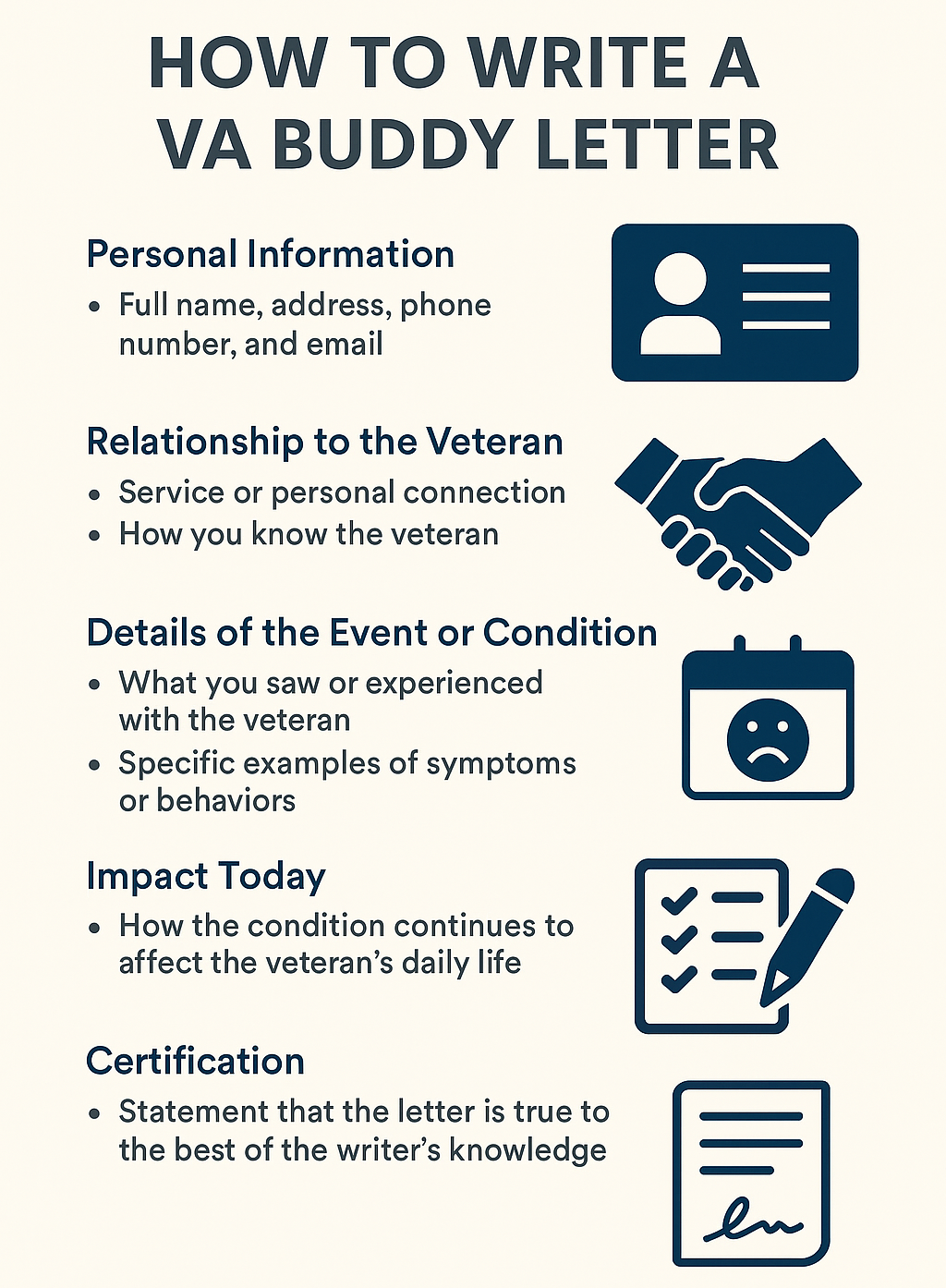
A well-written VA buddy statement sample should include:
- The writer’s full name and contact information
- The veteran’s full name and Social Security Number (or VA file number)
- How they know the veteran and for how long
- Specific observations (not opinions or diagnoses)
- Specific dates, locations, and concrete examples of events
- Quantifiable details to describe the worsening of the veteran’s condition (e.g., frequency of nightmares)
- Evidence of how the veteran’s disability affects their daily life, work performance, and social interactions
- Signature and date
Buddy letters should provide clear evidence regarding how a veteran’s disability impacts their daily life, work, and social interactions. The VA requires that buddy letters include the writer’s contact details and be signed to affirm their truthfulness.
One page is usually enough. Don’t stress about how long the letter is. The factual details are what matter most.
VA Buddy Letter Example (Sample Statement)
Below is a realistic VA buddy letter example you can adapt. This format works well for many types of claims.
Supporting Statement for VA Disability Claim
My name is John Smith. I served with [Veteran’s Name] in the U.S. Army from March 2012 to July 2015 in Bravo Company, 2nd Battalion. I am writing this statement to support his VA disability claim.
During our deployment to Afghanistan in 2013, I personally witnessed [Veteran’s Name] injure his lower back while carrying heavy equipment during a patrol near Kandahar. After that incident, he frequently complained of back pain and had difficulty standing or lifting gear.
I also noticed that after this injury, he often avoided physical tasks and required assistance during movements. These symptoms continued for the remainder of our deployment.
I am providing this statement based on my direct observations. I certify that this statement is true and correct to the best of my knowledge.
Signature: ____________________
Date: ____________________
For PTSD claims, a buddy statement for a VA claim may describe behavioral changes, sleep issues, anger, withdrawal, or stress reactions after a traumatic event. Again, each letter will look different, depending on your condition and your past service.
Common Mistakes to Avoid in a Buddy Letter
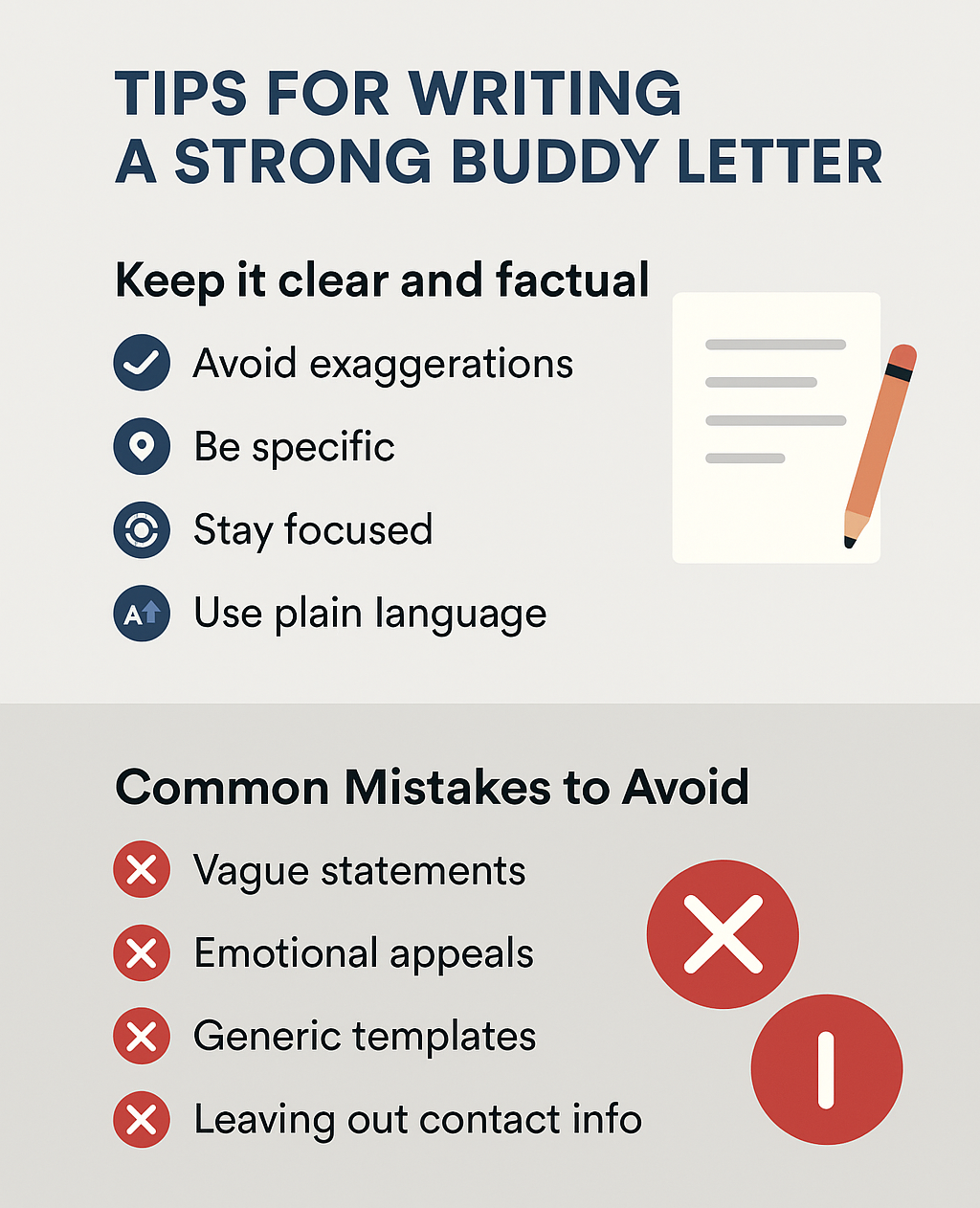
Avoid these five frequent issues that weaken otherwise helpful letters.
- Being vague or overly general
- Offering medical opinions instead of observations
- Using emotional language without factual detail
- Forgetting to sign and date the letter
- Submitting statements from people without first-hand knowledge
The most effective buddy letters are specific, credible, and come from people with firsthand knowledge who have directly observed the veteran’s condition, like a fellow service member or a partner. Credible statements from individuals who can provide firsthand accounts carry significant weight, especially when medical records are incomplete or missing.
Example- Giving A Different Perspective
Tom, a Navy veteran, filed a claim for knee pain related to shipboard duties, but his service treatment records were incomplete. That’s where his buddy letter came into play.
His former supervisor submitted a buddy letter describing years of ladder climbing and visible knee problems during deployments. The VA accepted the lay evidence and granted service connection, avoiding a denial due to missing records.
Buddy letters serve as supporting evidence and additional evidence, especially when official records are missing or incomplete. They provide a fuller picture and different perspectives from those who witnessed the veteran’s condition, helping validate the veteran’s experiences.
FAQs About the VA Buddy Letter
What is a VA buddy letter?
It’s a written lay statement from someone who witnessed your injury, symptoms, or changes related to service.
Do buddy letters really help VA claims?
Yes. They can establish service connection, symptom history, and severity when records are missing or unclear.
Who should write a buddy letter for a VA claim?
Anyone with first-hand knowledge, including service members, family, or coworkers.
Do I need a specific form for a buddy letter?
VA Form 21-10210 is recommended, but a signed letter with the required details is also acceptable.
Can a spouse write a buddy statement?
Yes. Spouse statements are common and valuable, especially for mental health and chronic conditions.
How long should a VA buddy letter be?
Usually one page. Clear and specific is better than long and emotional.
Can I submit more than one buddy letter?
Yes. Multiple consistent statements can strengthen your claim.
Your Story Deserves to Be Heard
A VA buddy letter isn’t just paperwork. It’s a powerful tool that can bridge the gap between your lived experience and the VA’s requirements. When done right, it can validate your claim, fill in missing details, and provide the kind of human context that medical records alone can’t capture. Whether you’re dealing with a service-connected injury, mental health condition, or chronic pain, don’t underestimate the value of a clear, honest statement from someone who saw it happen.
 AllVeteran.com Advisors
With expertise spanning local, state, and federal benefit programs, our team is dedicated to guiding individuals towards the perfect program tailored to their unique circumstances.