










Bruxism, the involuntary grinding or clenching of teeth, is not assigned a direct VA disability rating. Instead, the Department of Veterans Affairs rates bruxism secondarily, often linking it to service-connected conditions such as PTSD, anxiety, or other mental health disorders. It can also be rated based on its physical effects, including temporomandibular joint (TMJ) dysfunction, severe dental damage, or as part of a sleep disorder.
Veterans must establish a clear service connection, providing medical evidence that demonstrates how their bruxism is a direct result of or aggravated by their military service, or a pre-existing service-connected condition, to qualify for benefits.
Why This Update
VA ratings can be updated, and we want to make sure we have the best information possible for you to work with.
What is Bruxism?
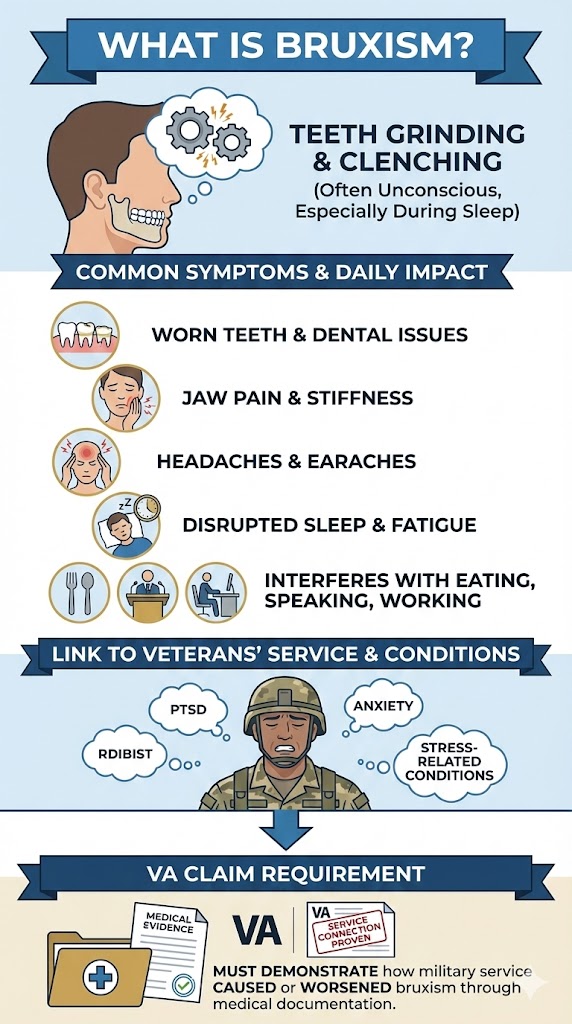
Bruxism involves teeth grinding or clenching, often unconsciously, leading to dental and jaw issues. Many people experience bruxism during sleep without realizing it until symptoms become severe.
Common symptoms include worn teeth, jaw pain, headaches, earaches, and disrupted sleep that can significantly affect daily activities. These symptoms may interfere with eating, speaking, working, and sleeping.
For veterans, bruxism is frequently linked to service-connected conditions like PTSD, anxiety, and stress-related conditions.
Veterans need to demonstrate through medical evidence how their military service caused or worsened their bruxism. This documentation helps the VA understand the relationship between military service and current symptoms.
VA Disability Rating for Bruxism
The VA does not have a specific diagnostic code for bruxism itself. This means veterans typically cannot receive a rating for bruxism as a standalone condition. However, the VA uses specific rating criteria for disabilities related to bruxism, including secondary disability ratings when bruxism is linked to a primary service-connected condition.
Ratings are usually assigned secondarily to other service-connected conditions it causes or is a symptom of. Common pathways include rating as a symptom of mental health conditions, temporomandibular disorder (TMD), TMJ, dental damage, or sleep disorders. These are evaluated under the VA’s rating criteria, and an examiner will use a Disability Benefit Questionnaire (DBQ) for TMJ/dental conditions to assess the impact of bruxism.
Secondary Service Connection
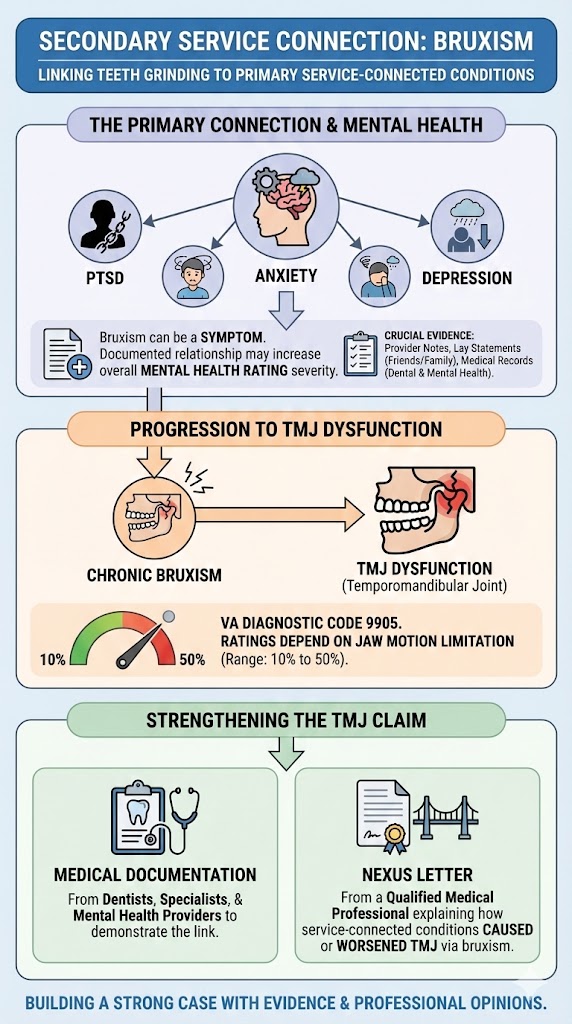
Bruxism often appears as a symptom of PTSD, anxiety, or depression and can be considered a secondary service connected condition. When documented as a symptom of these conditions, it may contribute to the overall mental health rating.
When bruxism is documented as part of these conditions, secondary disability ratings may be assigned if it increases the severity of the primary mental health diagnosis. Mental health providers can document the relationship between psychological symptoms and bruxism in treatment notes. Lay statements from friends, family, or coworkers can help substantiate the presence and impact of bruxism symptoms, especially when self-awareness is limited. Medical records, including dental and mental health documentation, are crucial in supporting a secondary service connection claim.
Chronic bruxism can lead to Temporomandibular Joint (TMJ) dysfunction, which the VA rates under Diagnostic Code 9905. TMJ ratings depend on the limitation of jaw motion. Ratings may range from 10% to 50% based on the extent of movement restriction.
Medical documentation from dentists, specialists, and mental health providers is important for demonstrating this link. A nexus letter from a qualified medical professional explaining how service-connected conditions caused or worsened TMJ dysfunction through bruxism may strengthen your claim.
Dental Damage and Sleep Disorders
Severe tooth wear, fractures, lost teeth, or other dental and oral conditions directly caused by bruxism may qualify for compensation under various dental codes in 38 CFR § 4.150. The rating schedule covers conditions like loss of teeth, jaw deformities, osteomyelitis (bone infection), malunion of the jaw, and other jaw conditions. Dietary restrictions, such as the need for mechanically altered foods or semisolid foods, may also be considered in the rating process for jaw and dental conditions.
Veterans may work with dental professionals to document how bruxism directly caused these conditions. Dental treatment records showing progressive damage over time can provide strong supporting evidence.
Veterans need to establish through sleep studies and medical documentation that their sleep disorder is connected to their service or another service-connected condition. The rating schedule does not specify requirements related to bruxism as a causal factor, so clear medical nexus documentation may be important.
Filing a Bruxism Claim
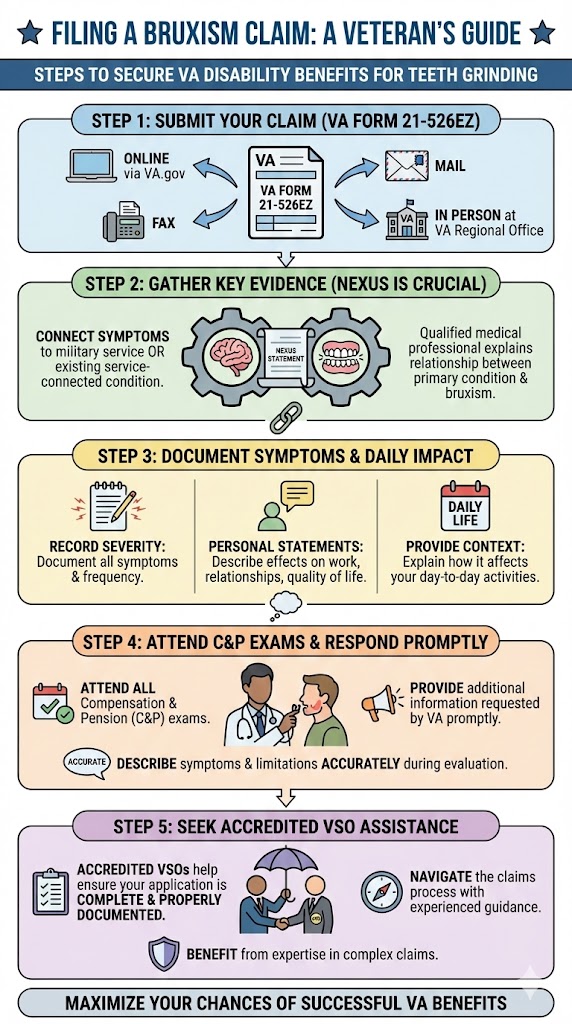
Veterans can apply for VA disability online or by submitting VA Form 21-526EZ via mail, fax, or in person at a VA regional office.
Each piece of evidence can help connect your symptoms to your military service or an existing service-connected condition. This typically includes a nexus statement from a qualified medical professional explaining the relationship between your primary condition and bruxism.
Document all symptoms, their severity, and their impact on your daily life. Personal statements that describe how bruxism affects your work, relationships, and quality of life can provide valuable context for your claim and increase your chances of receiving VA benefits.
Attend all Compensation & Pension (C&P) exams and promptly provide any additional information requested by the VA. C&P exams are medical evaluations conducted by VA healthcare providers to assess your condition. These examinations are important to your claim, so describe your symptoms and limitations accurately.
Veterans may benefit from seeking assistance from an accredited Veterans Service Organization (VSO) or representative to navigate the claims process. VSOs often have experience with complex claims and may help ensure your application is complete and properly documented.
Example Scenario
Preston, a Marine veteran, developed severe bruxism after returning from deployment. His therapist noted the connection to his service-connected PTSD. The constant teeth grinding led to chronic jaw pain, headaches, and significant wear on his molars, eventually requiring extensive dental work.
His dentist noted severe temporomandibular joint (TMJ) dysfunction with limited jaw opening. This was formally diagnosed during a VA Compensation & Pension (C&P) exam. Preston filed a claim, linking his TMJ and dental issues secondary to his PTSD, and provided medical evidence from both his mental health provider and dentist.
Frequently Asked Questions
Can bruxism be directly service-connected for VA disability benefits?
No, the VA does not have a direct diagnostic code for bruxism. It is typically rated as a secondary condition to a service-connected disability, or based on the damage it causes.
What conditions can bruxism be secondarily linked to for a VA rating?
Bruxism is often linked to service-connected mental health conditions like PTSD, anxiety, or depression. It can also be secondary to TMJ dysfunction, dental damage, or specific sleep disorders.
How does TMJ dysfunction from bruxism get rated by the VA?
TMJ dysfunction caused by bruxism is rated under Diagnostic Code 9905, based on the limitation of motion in the jaw. Ratings range from 10% to 50% depending on the severity of movement restriction.
Can dental damage caused by bruxism be service-connected?
Yes, significant dental damage, such as tooth loss, severe wear, or other oral conditions directly caused by service-connected bruxism can be rated under specific dental and oral condition codes.
Is it possible to get a VA rating for bruxism as a sleep disorder?
If bruxism significantly disrupts sleep and leads to other diagnosed sleep disorders (e.g., requiring a CPAP machine), it may be factored into a rating for sleep apnea syndromes under Diagnostic Code 6847.
What kind of evidence do I need to claim bruxism for VA disability?
You need comprehensive medical evidence from dentists, doctors, and mental health professionals, including diagnoses, treatment records, and a nexus statement linking your bruxism to your service or a service-connected condition.
Should I work with a VSO for a bruxism VA claim?
Yes, working with a Veterans Service Organization (VSO) can be highly beneficial. They can help you gather evidence, understand the claims process, and ensure your claim is properly filed, increasing your chances of success.
 AllVeteran.com Advisors
With expertise spanning local, state, and federal benefit programs, our team is dedicated to guiding individuals towards the perfect program tailored to their unique circumstances.