













When a loved one returns from military service with serious injuries or illnesses, the responsibility of caregiving often falls on family members. Recognizing this sacrifice, the Department of Veterans Affairs offers financial support through the VA caregiver stipend application process, officially known as the Program of Comprehensive Assistance for Family Caregivers (PCAFC). As with many things with the VA, it can be confusing when it comes to applying for this stipend, though. That said, here is how to apply for the VA caregiver stipend and everything you need to know about the process.
Tamila’s Take
I’ve spent years standing beside the men and women who came home injured and the families who quietly carry the weight with them. Reading through this process, I’m reminded of how much unseen labor caregivers give every single day. The VA’s caregiver stipend isn’t charity; it’s recognition of the fact that caring for a wounded veteran is real work that deserves real support.
If you’re stepping into that role, don’t downplay what you do. Be honest and specific about the care you provide, because that’s what ensures the veteran in your life gets the level of help they’ve earned. And if the system feels overwhelming, remember: you’re not asking for a favor. You’re securing the benefits that make it possible for your veteran to stay safe, stable, and at home.
Why This Update
We want to make sure you have the best information on how to apply for the caregiver stipend, and how to make sure you get your benefits!
Understanding the VA Caregiver Stipend Program
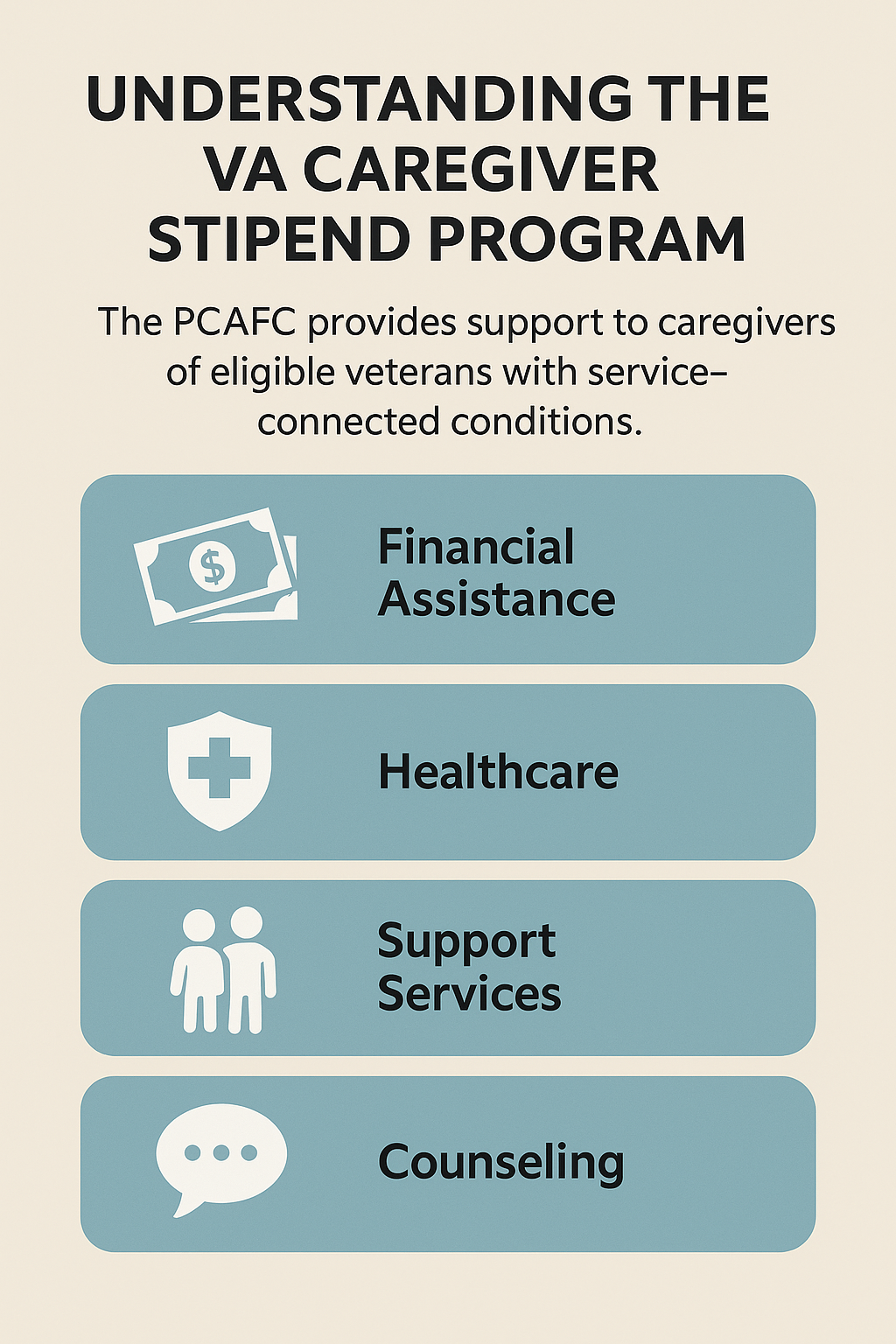
The VA Caregiver Stipend Program provides crucial financial and clinical support to family members who care for veterans with serious service-connected injuries and illnesses. The program offers a full range of support services and benefits to families caring for veterans, ensuring they receive comprehensive assistance throughout the caregiving process.
Unlike the Program of General Caregiver Support Services (PGCSS), which provides support resources but no financial stipend, PCAFC specifically includes monthly payments to compensate caregivers for their dedication and time.
Key benefits and other benefits available through the program include financial assistance, healthcare, support services, and counseling, all designed to alleviate the burdens faced by caregivers.
Since October 1, 2022, the program has expanded to include eligible veterans from all service eras, significantly broadening access to these critical benefits.
Who Qualifies for the VA Caregiver Stipend?
The VA caregiver stipend application requires both the veteran and the family caregiver to meet specific eligibility criteria. This program is designed to support veterans with service-connected disabilities and mental health conditions, providing assistance to those who need it most.
Veterans must have a service-connected disability rating of 70% or higher to qualify for the VA Caregiver Stipend program. The veteran’s enrollment in VA health care is an important part of the eligibility process, as access to VA health care benefits is required.
Veteran Eligibility Requirements
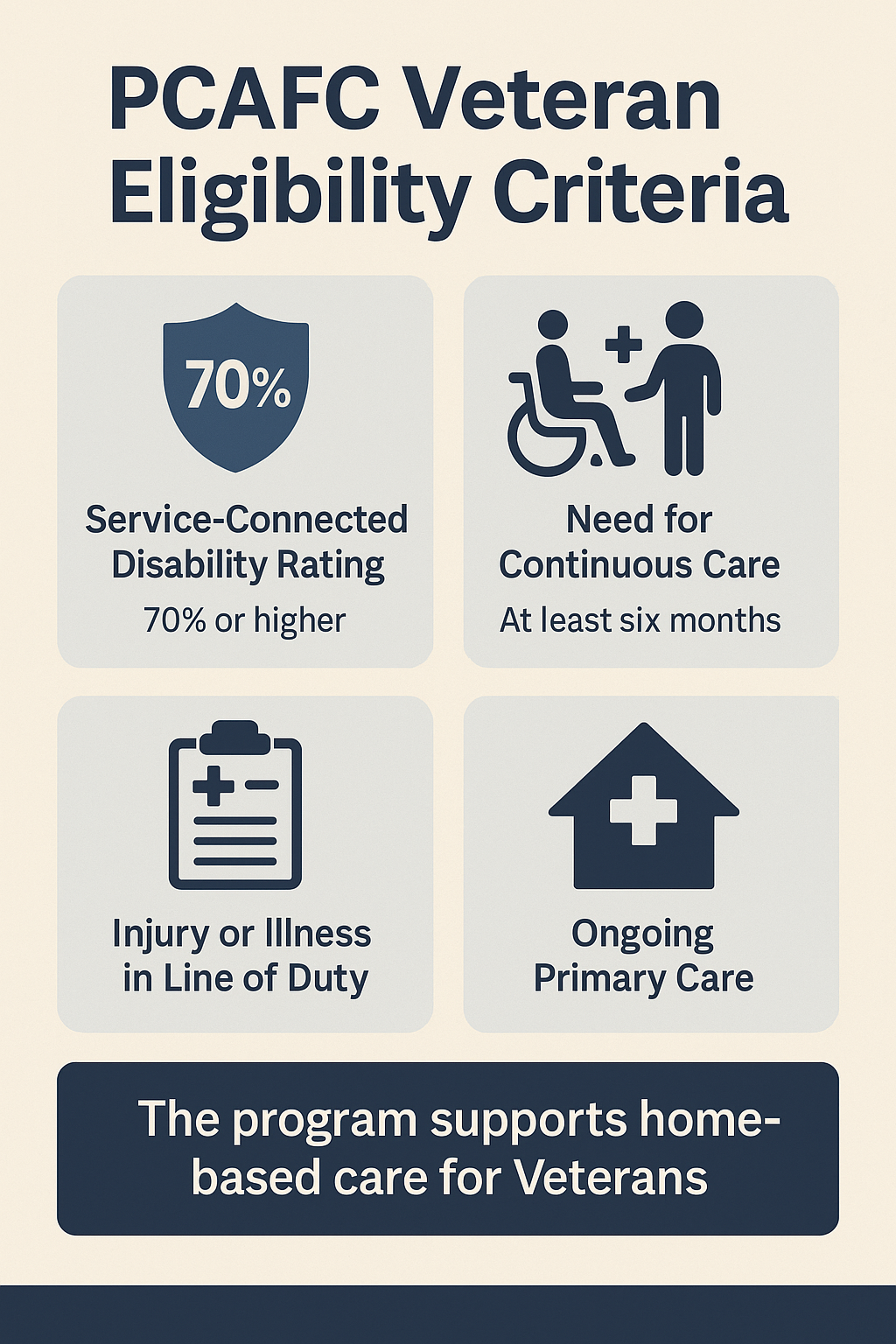
To qualify for PCAFC benefits, Veterans must meet all of the following conditions:
Service-Connected Disability Rating: The Veteran must have either a single service-connected disability rated at 70% or higher, or a combined service-connected rating of 70% or more by the VA.
Need for Continuous Care: The Veteran must require in-person care for at least six months based on one of these criteria:
- Inability to perform Activities of Daily Living (ADLs): Requiring personal care services each time they complete one or more daily activities, including dressing, bathing, grooming, toileting, feeding, or mobility assistance
- Need for supervision or protection: Based on neurological impairment or injury affecting daily safety (risk of getting lost, choking, or self-harm), which may require constant supervision
- Need for regular instruction: Without which the veteran’s ability to function would be seriously impaired
- Veterans with traumatic brain injury may require higher levels of care and supervision under this program.
The veteran’s level of care needs is assessed to determine eligibility and the caregiver stipend amount.
Additional Requirements:
- The injury or illness must have been incurred or aggravated in the line of duty
- Participation in the program must be in the veteran’s best interest
- The program is designed to support the veteran’s care at home
- The veteran must have ongoing care from a Primary Care Team
- Personal care services cannot be simultaneously provided by another individual or entity
Family Caregiver Eligibility Requirements
Both the caregiver and the veteran must meet eligibility requirements. Designated family caregivers must meet these criteria:
- Be at least 18 years old
- Be a spouse, child, parent, stepfamily member, extended family member, or live full-time with the veteran
- Successfully complete VA caregiver education and training
- Demonstrate the ability to provide required personal care services
- Have no determination of abuse or neglect
Benefits Provided Through the VA Caregiver Program
The designated Primary Family Caregiver receives comprehensive support:
- Monthly Stipend: A tax-free monthly payment ranging from approximately $1,800 to $2,900 (depending on location and veteran’s needs).
- Healthcare Access: If not already covered, caregivers may receive health insurance through CHAMPVA (Civilian Health and Medical Program of the Department of Veterans Affairs)
- Respite Care: At least 30 days per year, providing temporary relief while alternative care is arranged for the Veteran
- Travel Benefits: Reimbursement when traveling with the Veteran for VA-approved medical care
- Education and Training: Comprehensive caregiver skills training
- Free legal and financial consultation
How Much Is the VA Caregiver Stipend?
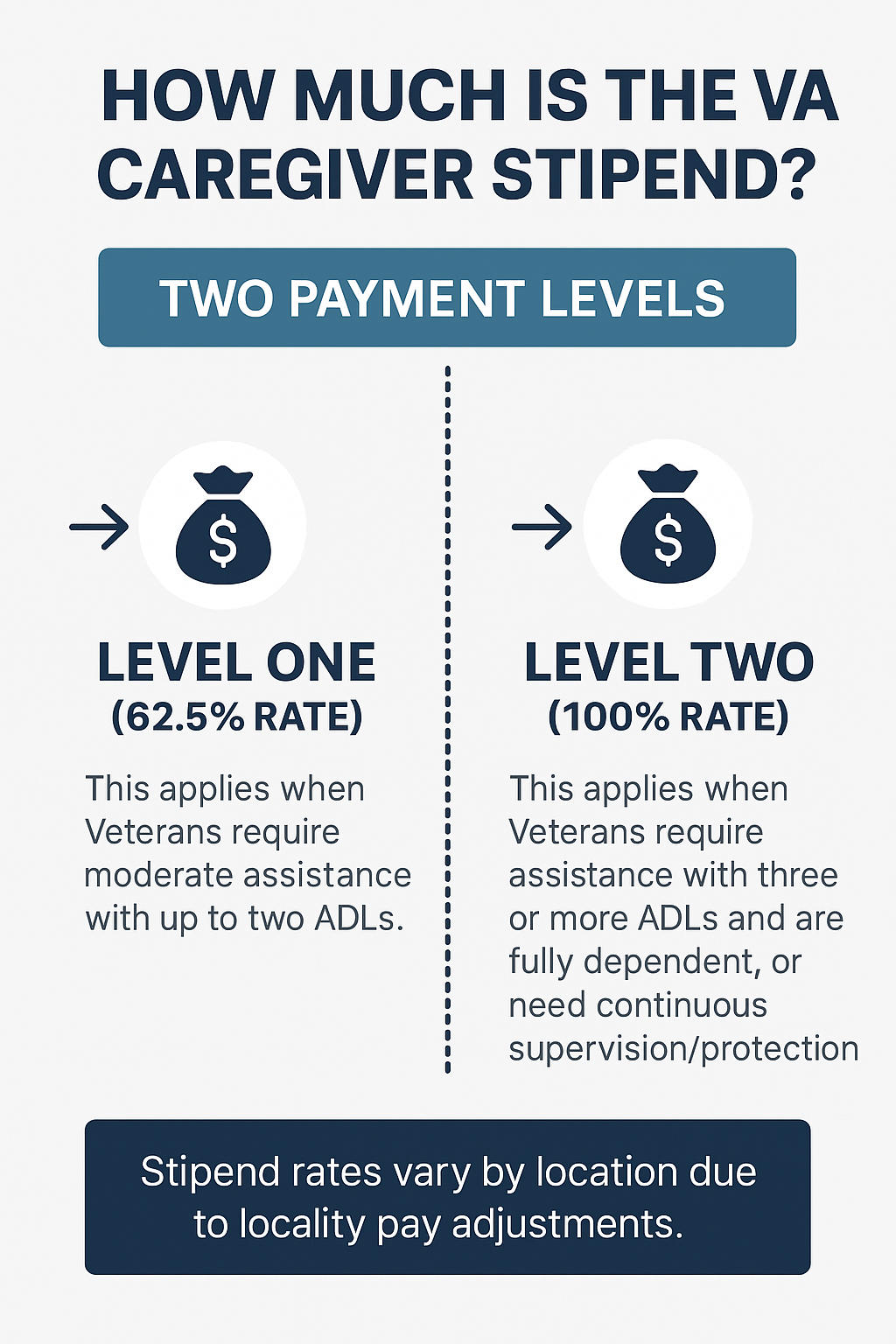
The monthly stipend amount is calculated using a pay scale that is based on the veteran’s level of care needs and the assigned stipend tier. Specifically, the calculation uses the Office of Personnel Management (OPM) General Schedule (GS) Grade 4, Step 1 annual rate, adjusted for the locality where the Veteran resides.
Higher levels of care may provide more resources to caregivers, including additional training, travel reimbursements, and support services, to address the increased caregiving demands. Caregivers in level 3 provide the highest level of care for veterans with severe disabilities, receiving the highest financial support.
All caregivers receiving stipends must enroll in direct deposit through the VA Customer Engagement Portal. Detailed instructions are available here.
What If You Don’t Qualify for PCAFC?
If your VA caregiver stipend application is denied or you don’t meet PCAFC requirements, you may still access valuable support through the Program of General Caregiver Support Services (PGCSS). Other VA programs also offer additional support and other program benefits, such as respite care, training, health insurance, and counseling. Utilize VA resources, including the VA Caregiver Support Coordinator and mental health support, for ongoing assistance.
PGCSS Benefits Include:
- Access to Caregiver Support Teams at VA facilities
- Phone and text support via the Caregiver Support Line
- Peer support mentoring and support groups
- Education and training opportunities
- Enhanced respite care
- Information and referrals to VA and community resources
Example Scenario
David, a veteran, served two combat tours in Afghanistan and has a combined 80% service-connected disability rating for PTSD and traumatic brain injury. His wife Sarah quit her nursing job to provide full-time supervision after David experienced multiple safety incidents when left alone, including leaving the stove on and wandering from their Dallas home during dissociative episodes.
They submitted VA Form 10-10CG online and underwent a home visit assessment and they were approved for Level 2 benefits at approximately $3,375 per month based on the Dallas locality pay rate.
Frequently Asked Questions
What are the 2026 eligibility requirements for the VA Caregiver Program (PCAFC)?
Veterans must have a 70% or higher service-connected disability rating, be enrolled in VA health care, and require in-person care for at least 6 continuous months. The care need must stem from inability to perform activities of daily living (bathing, dressing, mobility) or need for constant supervision.
Caregivers must be 18+, live full-time with the veteran, and can be family or non-family members.
Are legacy VA Caregiver Program participants still eligible?
Yes. A September 2025 Final Rule extended eligibility for legacy participants (enrolled before October 1, 2020) through September 30, 2028.
How do I apply for VA Caregiver benefits?
Complete VA Form 10-10CG, which requires both veteran and caregiver signatures. Apply online at VA.gov (fastest method), mail to the Health Eligibility Center in Atlanta, GA, or submit in-person through your local VA medical center’s Caregiver Support Coordinator.
What is the difference between Level 1 and Level 2 VA Caregiver benefits?
Level 2 applies to veterans deemed “unable to self-sustain in the community” requiring continuous assistance, paying 100% of the GS-4 Step 1 rate.
Level 1 covers veterans needing substantial care but who don’t meet the self-sustain threshold, paying 62.5% of that rate.
Is the VA Caregiver Program open to all veterans regardless of service era?
Yes. As of 2026, the program is fully open to eligible veterans from all service eras including World War II, Korea, Vietnam, Gulf War, and Post-9/11. Veterans must still meet the 70% disability rating requirement and demonstrate qualifying care needs to be accepted into the program.
Taking the Next Step
Ready to Apply? Start your VA caregiver stipend application today by:
- Visiting the official VA website to apply online
- Calling the VA Caregiver Support Line at 1-855-260-3274 for personalized guidance
- Contacting your local VA medical center’s Caregiver Support Team
Don’t let the application process intimidate you. Thousands of family caregivers have successfully navigated this system and are now receiving the support they deserve. Your dedication to caring for a Veteran matters, and the VA is ready to help.
At Allveteran.com, we are here to help simplify the process! Take our free medical evidence screening today!
 AllVeteran.com Advisors
With expertise spanning local, state, and federal benefit programs, our team is dedicated to guiding individuals towards the perfect program tailored to their unique circumstances.