













Roughly 11% to 18% of veterans experience elevated rates of depression, while anxiety disorders affect approximately 10% to 15%. That’s a massive number of troops struggling with mental health issues after they’ve left military service, and there are benefits provided by the Department of Veterans Affairs (VA) that many veterans don’t know about.
The VA allows secondary claims when anxiety or depression from the veteran’s military service causes or worsens another condition. If approved, these secondary conditions can increase your overall VA disability rating and monthly disability compensation.
However, going into the claims process can be overwhelming. So, it’s important to go into it informed. Here is everything you need to know about secondary conditions to anxiety and depression.
Tamila’s Take
I can tell you that secondary conditions are one of the most overlooked opportunities to increase your benefits. I’ve worked with veterans who were dealing with insomnia, migraines, or chronic pain for years and never realized those issues could be tied back to their service-connected anxiety or depression. The VA recognizes these connections, but only if you clearly document them and provide the right medical evidence.
The biggest mistake I see is veterans treating each condition separately instead of understanding how they’re connected. When you start looking at the full picture of how your mental health affects your physical health, that’s when your claim becomes much stronger. If your anxiety or depression is causing other issues in your life, don’t ignore it. Those secondary conditions could significantly impact both your rating and your financial stability.
Why This Update
There may be updates coming to the way mental health conditions are rated by the VA. As of May 2026, the old system is still in place.
What Are Secondary Conditions?
In VA terms, a secondary condition is a disability that is caused or aggravated by an existing service-connected condition.
For example, a veteran with service-connected anxiety develops chronic insomnia. Or, a veteran with depression develops migraines or gastrointestinal issues.
To qualify, you must show:
- A current diagnosis of the secondary condition
- An existing condition with a direct service connection
- A medical nexus linking the two
The VA recognizes that VA secondary conditions mental health claims are legitimate when properly supported by evidence.
Common VA Secondary Conditions to Anxiety and Depression
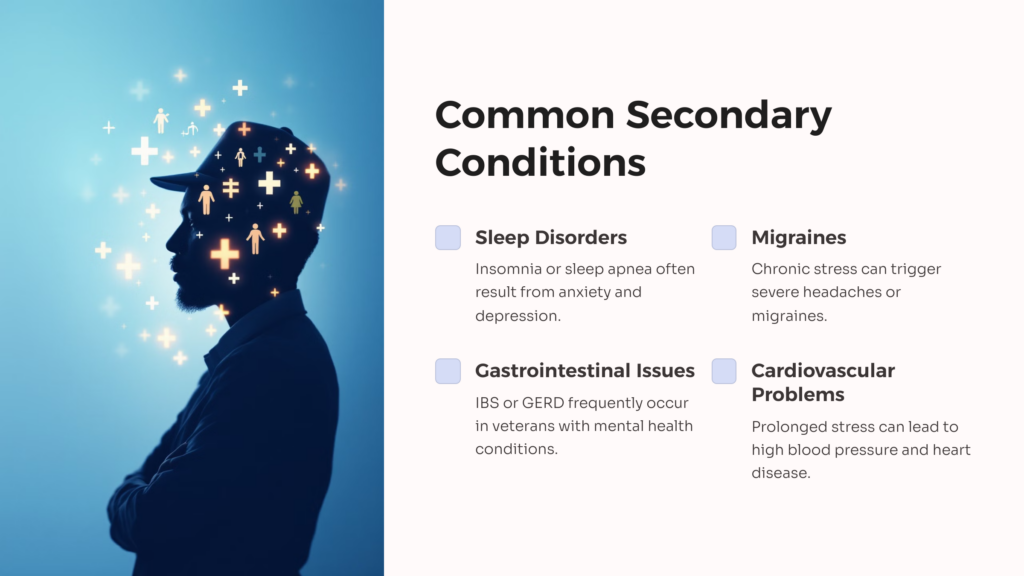
There are many recognized secondary conditions to anxiety and depression. Some of the most common include sleep disturbances. If you experience insomnia, sleep apnea, or night terrors, it could be considered a secondary condition to your anxiety symptoms by the VA. Mental health conditions often disrupt sleep cycles, leading to chronic fatigue and further complications.
Headaches and migraines are also recognized as secondary conditions. Stress and anxiety can trigger frequent migraines, and veterans often experience worsening headache conditions tied to mental health.
Gastrointestinal issues, such as GERD, irritable bowel syndrome (IBS), and chronic stomach pain, can also be secondary conditions. Stress and depression can significantly impact digestion and gut health.
Additionally, chronic pain conditions, like fibromyalgia, or back or joint pain aggravated by tension and stress, can be considered. Lastly, substance use disorders, such as alcohol or drug dependency, are linked to coping with anxiety or depression, and may be accepted by the VA.
How the VA Evaluates Secondary Service Connection
The VA evaluates anxiety secondary conditions in disability claims using the same framework as primary claims, but with an added focus on the connection between conditions.
Key factors include:
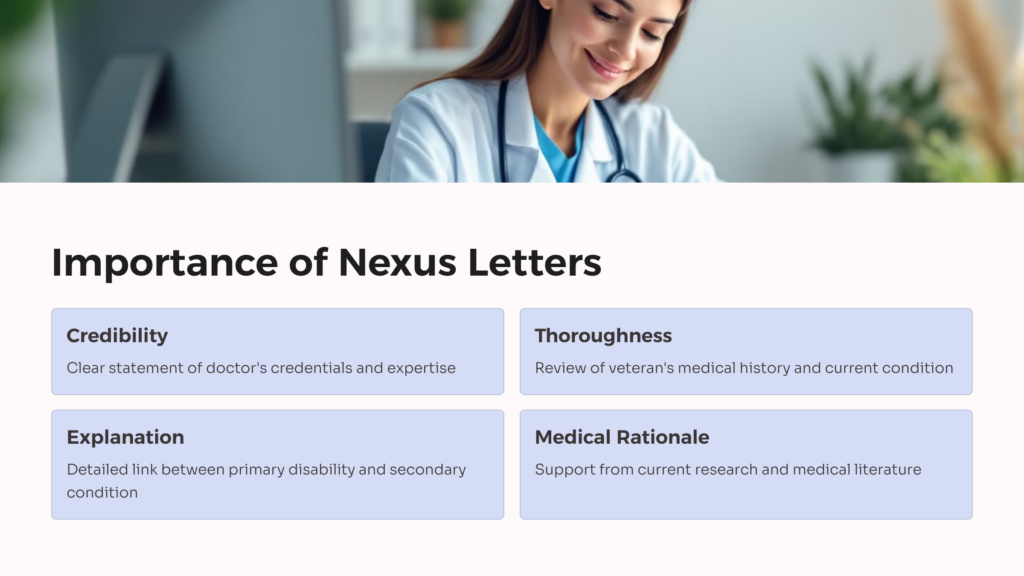
- Medical nexus letter explaining causation or aggravation
- Consistent treatment records
- Severity of symptoms and impact on daily life
The VA may schedule a Compensation and Pension (C&P) exam to determine whether the secondary condition is linked to the primary condition. Without a strong nexus, most secondary depression claims in cases are denied.
How to File a Secondary Claim for VA Disability Benefits
If you believe you have a secondary condition, here is how to file secondary VA claims for mental health-related conditions:
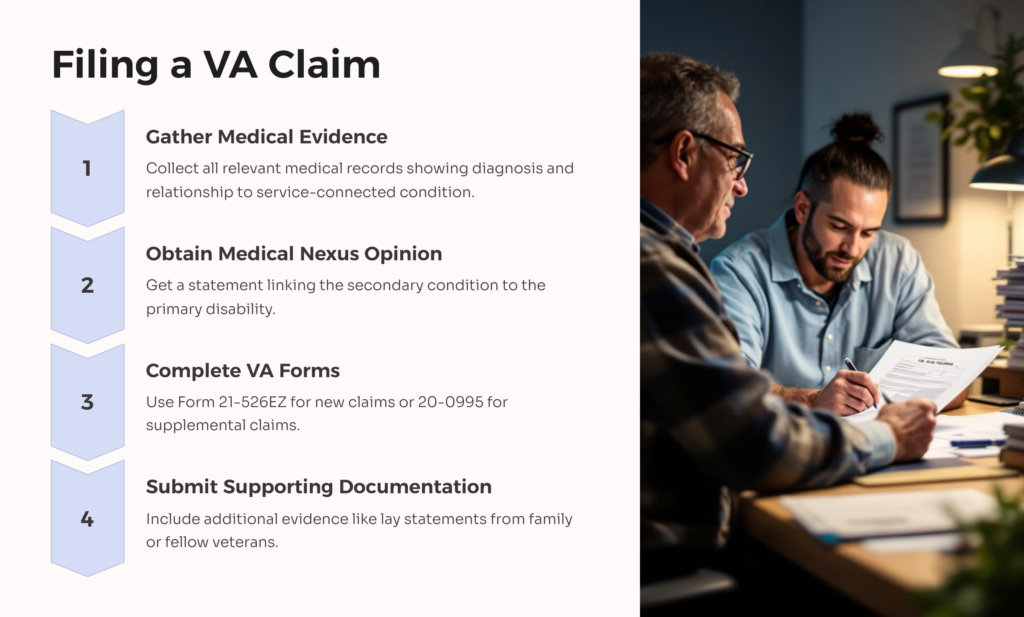
- Get a Diagnosis: You need a confirmed medical diagnosis of the secondary condition.
- Obtain a Nexus Letter: A doctor must clearly state that your anxiety or depression caused or worsened the condition.
- Submit a Claim: File online through VA.gov or with a VA Form 21-526EZ.
- Attend Any Required Exams: The VA may schedule a C&P exam to evaluate your claim.
- Provide Supporting Evidence: Include medical records, personal statements, and lay evidence.
Filing the first time correctly can significantly reduce delays.
Tips to Maximize Your VA Benefits with Mental Health Conditions
To maximize your VA disability rating for secondary mental health conditions, focus on strong documentation and consistency.
You should try to do the following to ensure your claim is accepted.
- Document symptoms regularly and consistently
- Seek ongoing treatment and follow medical advice
- Use lay statements to describe daily impact
- Ensure your nexus letter is detailed and specific
- Consider how multiple conditions may combine under VA math to increase your total rating
How the VA Really Rates Anxiety and Depression
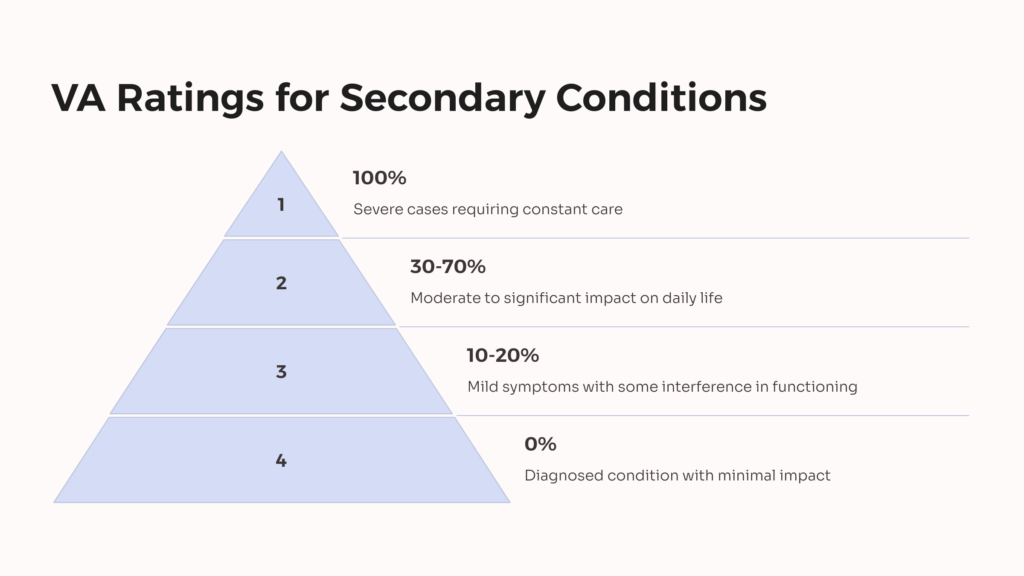
When it comes to the VA rating for anxiety and depression, here’s an example many people can relate to. James, a Marine veteran with a 50% rating for anxiety, began experiencing severe insomnia and migraines. His doctor linked both conditions to chronic anxiety and stress. After filing secondary claims with medical evidence and a nexus letter, James received an additional 30% rating for migraines and 30% for insomnia. His combined rating increased significantly, resulting in higher disability benefits. It can be life-changing for some veterans.
FAQs About Secondary Conditions
When it comes to secondary conditions, like anxiety and depression, here are some of the most frequently asked questions (FAQs).
What are secondary conditions in VA disability claims?
They are conditions caused or aggravated by an existing service-connected disability.
Can anxiety cause other VA-rated conditions?
Yes. Anxiety secondary conditions VA disability claims often include sleep disorders, migraines, and gastrointestinal issues.
Do I need a nexus letter for a secondary claim?
Yes. A medical nexus is critical to prove the connection between conditions.
Can depression lead to physical health problems for VA claims?
Yes. Conditions caused by depression VA claims may include chronic pain, digestive issues, and substance use disorders.
How do I file a secondary VA claim?
Submit a claim with medical evidence and a nexus letter through VA.gov or VA Form 21-526EZ.
Can secondary conditions increase my VA rating?
Yes. Approved secondary conditions are combined with your existing rating, increasing overall compensation.
What is the most common reason secondary claims are denied?
Lack of a strong medical nexus linking the primary and secondary conditions.
Take Control of Your Full VA Disability Picture
When it comes to your VA claim, it isn’t about just one condition. You have to take the time to understand how everything connects. Any one condition could be tied to your service, and some of the secondary conditions can play a major role in your overall rating and, ultimately, financial stability. But you must take the time to identify and document everything properly.
 AllVeteran.com Advisors
With expertise spanning local, state, and federal benefit programs, our team is dedicated to guiding individuals towards the perfect program tailored to their unique circumstances.