













A VA Higher-Level Review (HLR) typically aims for a decision within 125 days, or roughly four to five months, according to official VA goals. Generally, the HLR process follows a standard timeline and procedure, with most reviews completed within this period unless complications arise.
This timeframe can fluctuate due to factors like the complexity of the claim, the workload at the specific VA regional office, and whether an informal conference is requested. The HLR process involves an experienced adjudicator, typically a Decision Review Officer (DRO), who is more experienced than the original rater and re-examines existing evidence to identify errors.
Tamila’s Take
Higher‑Level Reviews are one of those parts of the VA system that veterans don’t really understand until they’re stuck in the middle of one. I’ve worked with so many vets who thought an HLR would be quick and clean, only to find themselves months deep, refreshing VA.gov and wondering what went wrong. The truth is, an HLR can absolutely fix a bad decision, but it’s not a magic button. It’s a legal process, and like everything else with the VA, timing, clarity, and patience matter.
It’s also important to understand that a denial at the HLR stage isn’t the end of the road. It just means you’re moving to the next lane, where you can bring new evidence or get a judge involved. If you’re waiting on an HLR right now, stay on top of your mail, keep your contact info updated, and don’t let the delay convince you that nothing is happening. These reviews take time, but they can absolutely turn a claim around when the VA made a mistake the first time.
Why This Update
The VA’s processes can fluctuate, and we want to make sure that you are informed on the latest steps in each milestone to benefits.
What Is a VA Higher Level Review?
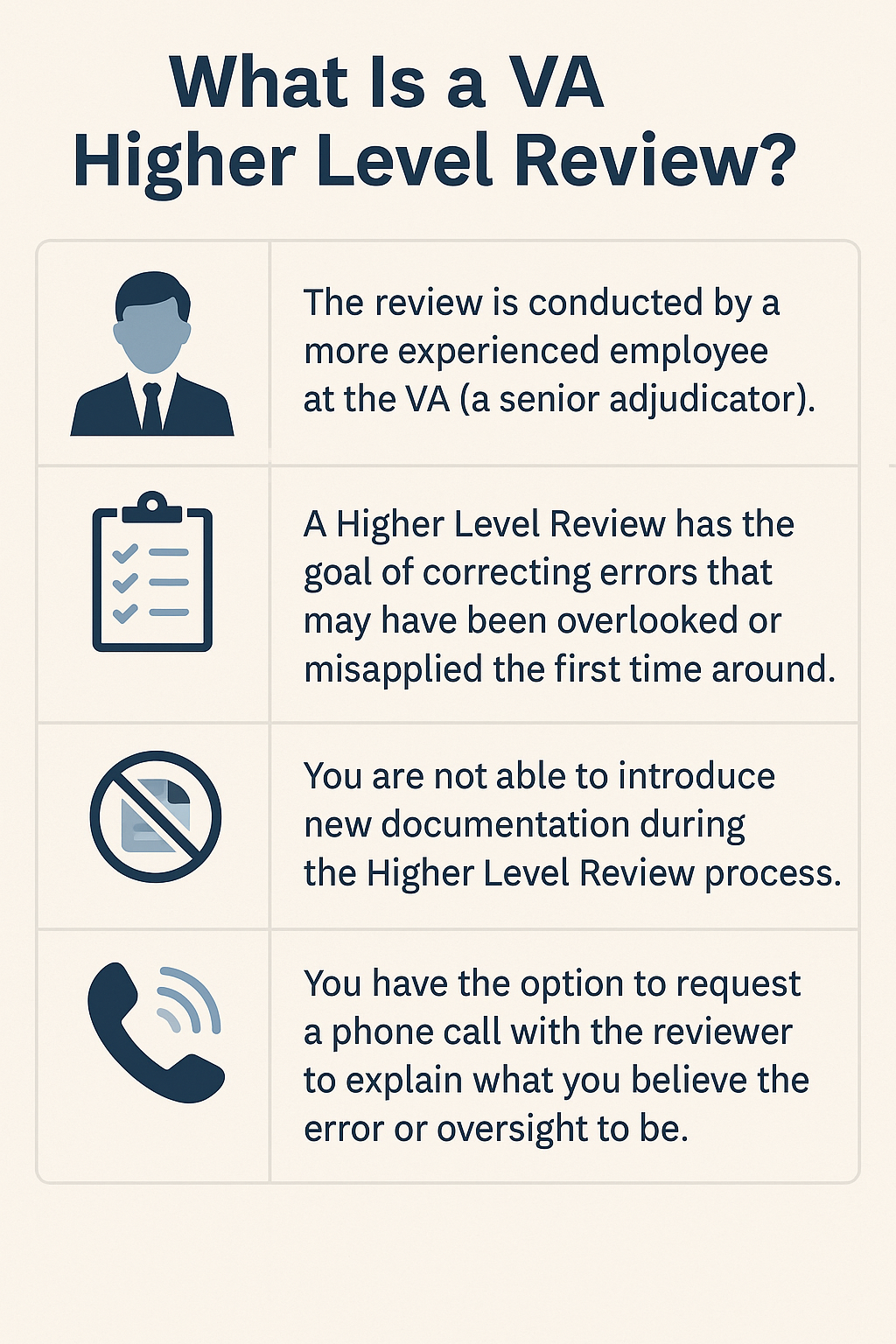
A Higher-Level Review provides a fresh look at an initial VA disability benefits claim decision by a senior reviewer. The review focuses solely on the existing evidence in your file, no new evidence can be introduced. The primary goal is to identify and correct errors in law or fact made during the initial VA decision-making process.
When Should You Request a Higher Level Review?
A Higher-Level Review should be requested when you believe the VA made an error in the original decision, and you do not have new or additional evidence to support your claim. It is appropriate in cases where the initial denial or rating was based on an incorrect application of the law or a failure to consider evidence that was already submitted.
A Higher-Level Review must be requested within one year of the date on their VA decision letter. The form used to request this process is VA Form 20-0996.
Importantly, you cannot request a second Higher-Level Review of the same decision once a review has already been completed. If a claim has been escalated to the Board of Veterans’ Appeals, you are also no longer eligible for a Higher-Level Review on that specific issue.
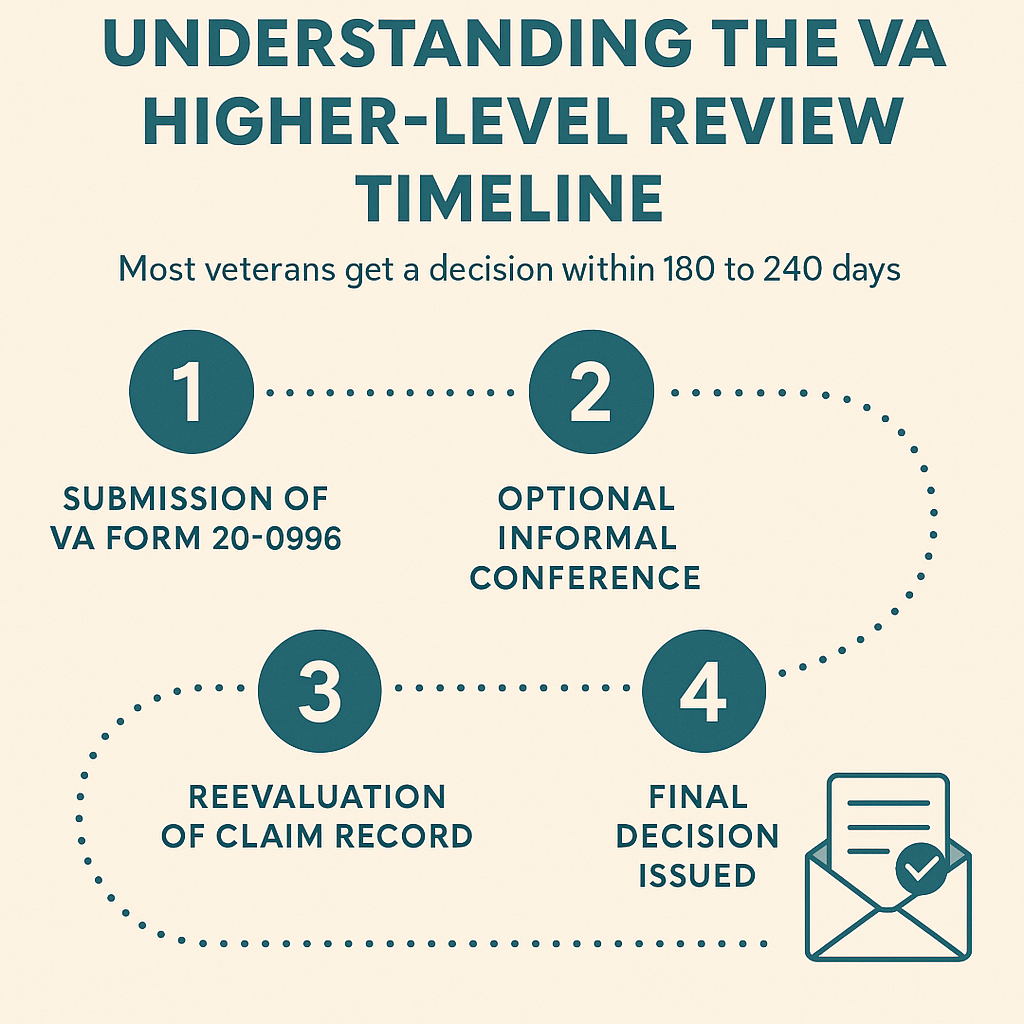
What to Expect During the Higher Level Review Process
Once your request is submitted and accepted, your claim enters a waitlist for reassessment.
If you selected an informal conference, you or your representative will receive a call to explain the errors you believe were made in the previous review.
You can also submit a written statement to clarify your position and address any errors you believe occurred in the initial decision.
When the review is complete, you will receive a letter with either:
- A grant of benefits, either partial or full.
- Identification of a duty-to-assist error that triggers further claim development.
- A denial of the appeal, which leaves you with options to pursue a Supplemental Claim or Board Appeal.
Factors That Can Affect Your Review Timeline
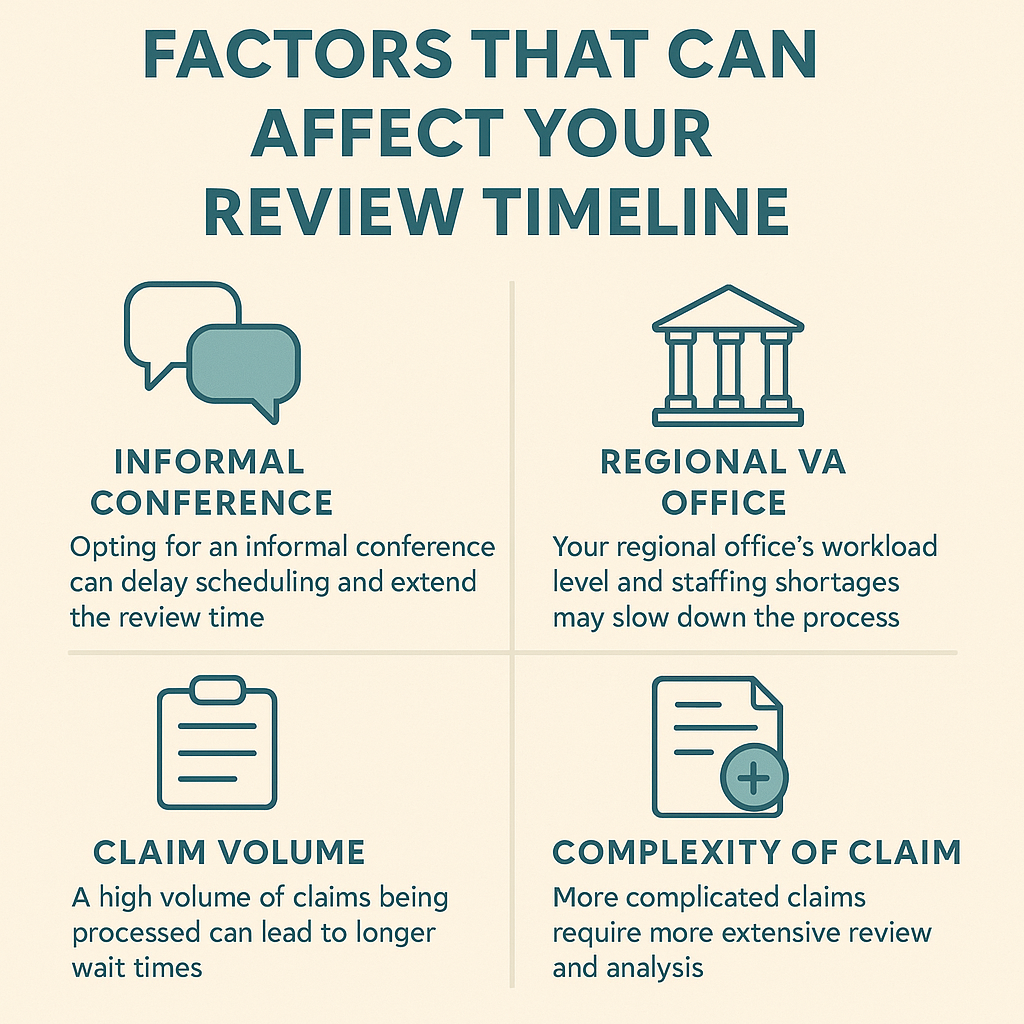
Informal Conference: Requesting an informal conference may extend the timeline due to scheduling complexities and limited personnel. You can decide whether the potential benefits of direct communication outweigh the possible delay.
Regional Office Workload: High claim volumes and staffing shortages at specific VA regional offices may affect how quickly your review is completed. Some regional offices process claims more quickly than others based on their resources and current caseload.
Claim Complexity: If your claim involves multiple disabilities or extensive medical records, it may require a longer review time. A straightforward single-issue claim may move through the system faster than a complex claim with multiple conditions.
Timely Responses: Responding promptly to VA communications or requests for information may help prevent unnecessary delays. Keep your contact information current so you don’t miss important notices.
What Happens After a Higher Level Review Decision?
Once a decision is made, you will receive a letter explaining the outcome. If the reviewer finds that the initial decision was incorrect, your benefits may be granted or adjusted. If the reviewer identifies a legal or procedural error, such as a failure to assist in gathering evidence, the case may be sent back to the VA for further development.
If the decision is upheld and you still disagree, you have other appeal options. You can file a Supplemental Claim if you have new and relevant evidence, or you can request a Board Appeal to have your case reviewed by a Veterans Law Judge. Both of these options must be initiated within one year of receiving your Higher-Level Review decision.
Working with a Veterans Service Organization during the appeals process can provide valuable support and increase your chances of a successful outcome.
How to Speed Up VA Higher Level Review
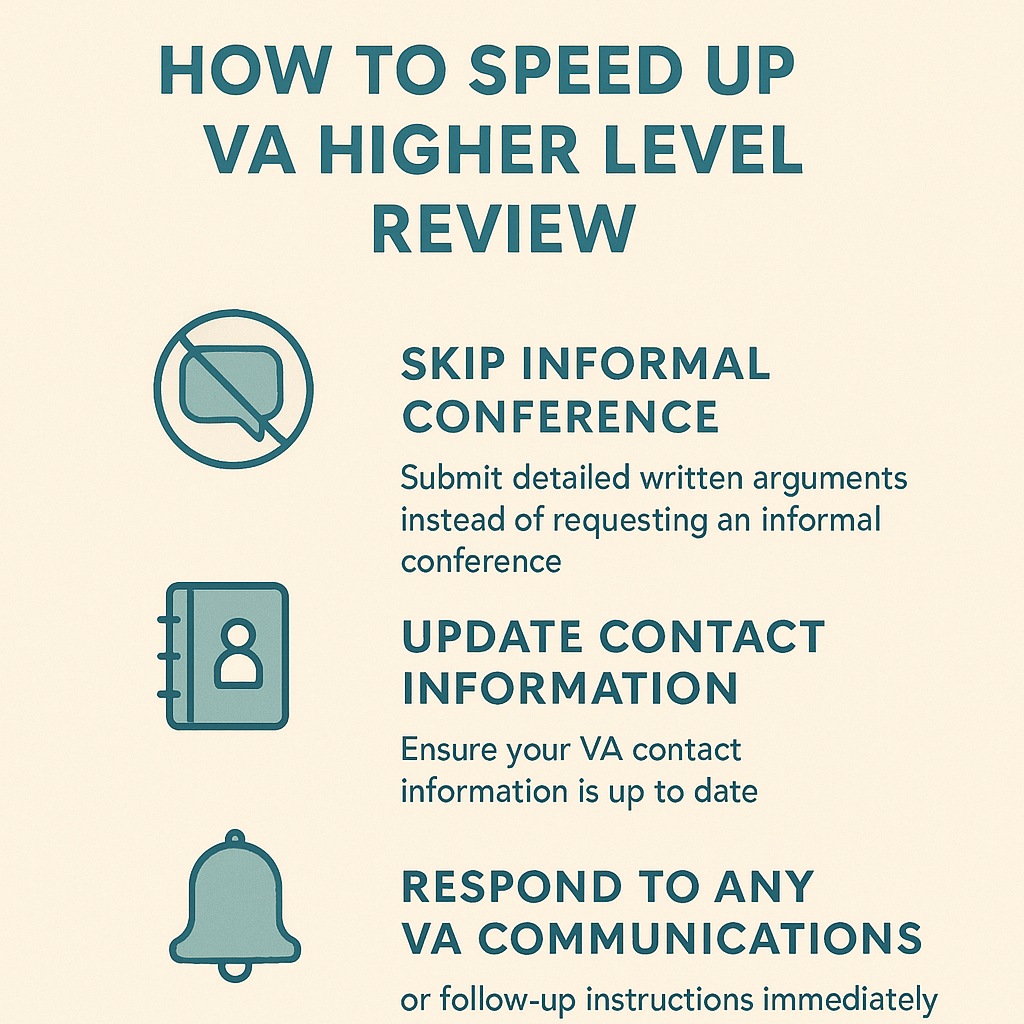
Consider forgoing the informal conference if your arguments and well-supported opinion can be clearly communicated in writing. While the conference can be helpful, presenting a clear argument in your detailed written statement may result in a faster decision.
Submit a detailed written statement with Form 20-0996. Explicitly reference specific documents in your existing claim file, pointing to all the evidence already in your file to support your position.
Ensure all your contact information (phone, address, email) is consistently up-to-date with the VA to avoid missed communications.
Example Scenario
After receiving a denial for her initial VA claim, Sue requested a Higher-Level Review. She believed the VA had overlooked a key medical report already in her file. She opted out of an informal conference. Instead, she submitted a concise written statement referencing the specific evidence.
Her VA.gov account updated to ‘A higher-level reviewer is taking a new look’ after two months. She now monitors its progress, waiting for an answer to her VA claim and hoping for the best case scenario—a reversal of the denial.
Frequently Asked Questions
What is a VA Higher-Level Review?
A Higher-Level Review (HLR) allows a more experienced reviewer to re-examine the existing claim record for errors without introducing new evidence. This process focuses on identifying clear and unmistakable errors in the previous decision.
How long does a Higher-Level Review typically take?
While the VA aims for 125 days, many veterans experience average wait times of 6-8 months with more complicated cases or busier offices.
Can I submit new evidence during a Higher-Level Review?
No, a Higher-Level Review is based solely on the evidence that was part of your claim at the time of the initial decision. New evidence or other evidence cannot be submitted; the review is limited to the evidence available at the time of the original decision.
What factors can delay the HLR timeline?
Delays can be caused by requesting an informal conference, high workloads at specific VA regional offices, the complexity of your claim, and incomplete or outdated contact information.
How can I track the status of my Higher-Level Review?
You can track your HLR status by logging into your VA.gov account under ‘Decision Reviews and Appeals’ or by calling the VA directly at 1-800-827-1000.
What happens if my Higher-Level Review is denied?
If your HLR is denied, you still have options, including filing a Supplemental Claim (if you have new and relevant evidence) or requesting an appeal to the Board of Veterans’ Appeals, where a Veterans Law Judge will review your case.
Is an informal conference mandatory for an HLR?
No, an informal conference is optional. While it allows you to highlight perceived errors, choosing not to have one may sometimes lead to a faster decision.
How do I choose between a Higher-Level Review and a Supplemental Claim?
Choosing between a Higher-Level Review and a Supplemental Claim depends on whether you have new and relevant evidence. If you have new evidence, such as medical opinions or documentation for conditions, a Supplemental Claim is the appropriate appeal option.
How do I request a Higher-Level Review?
You or your accredited representative can request a Higher-Level Review by submitting form 20-0996. You can also submit a letter describing in detail the errors in the original decision when making your request.
What Happens After Higher Level Review VA
If your claim is denied, there are still options. You can file a Supplemental Claim with new evidence or make an appeal to the Board of Veterans’ Appeals. While these options are available, each one comes along with its own timeline and requirements. Take the time to learn about each option and which will suit your situation best.
 AllVeteran.com Advisors
With expertise spanning local, state, and federal benefit programs, our team is dedicated to guiding individuals towards the perfect program tailored to their unique circumstances.