













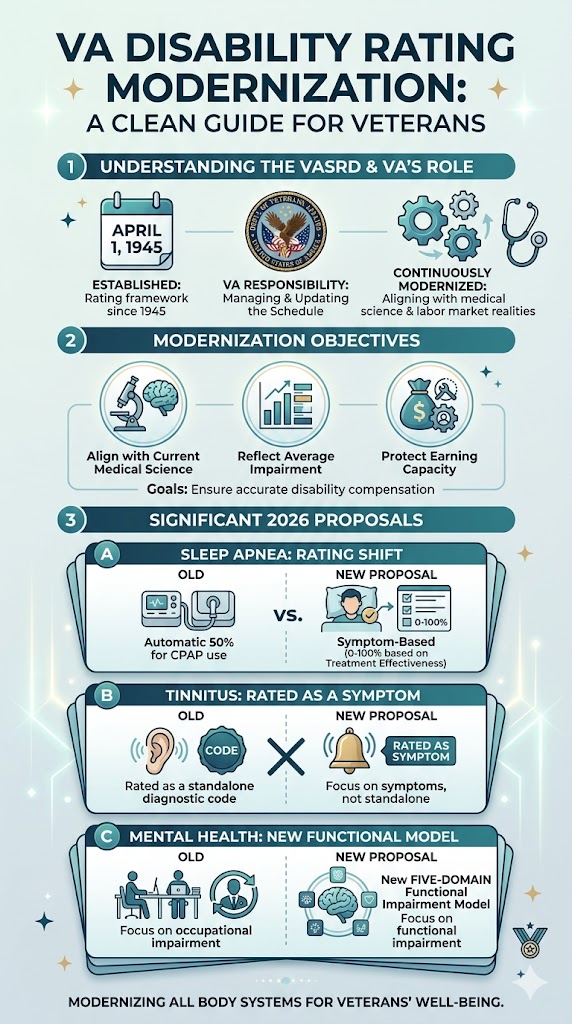
The current Veterans Affairs disability rating framework, the VA Schedule for Rating Disabilities (VASRD), has been in existence since April 1, 1945, and has been continually modernized to reflect advances in medical science and labor market realities.
The Department of Veterans Affairs is responsible for managing and updating the VASRD, including the modernization of diagnostic codes and rating criteria. The VA is working on a multi-year effort to modernize all body systems in the VASRD. This modernization aims to ensure accurate disability compensation ratings by aligning with current medical science, average impairment, and earning capacity.
2026 has brought new modernization proposals to the rating schedule (and therefore disability compensation).
The most significant changes affect Sleep Apnea, which shifts from automatic 50% for CPAP use to symptom-based ratings (0-100% based on treatment effectiveness), Tinnitus (now rated as a symptom rather than standalone), and Mental Health (new five-domain functional impairment model replacing the old occupational focus).
The 2026 VA Disability Landscape
The VA disability rating system is in the middle of a significant transition.
The VA’s modernization plan includes updating outdated diagnostic criteria and aligning evaluation criteria with contemporary clinical and functional evidence. The new system is designed to more accurately evaluate service connected disabilities in line with current medical and occupational standards.
The proposed changes to the VA disability ratings for 2026 are still being discussed and have not yet been finalized. The changes to Sleep Apnea, Tinnitus, and mental health ratings remain the most debated topics among veterans.
Veterans disability groups have expressed concerns that the new rule could result in reduced disability ratings for veterans who take medications to alleviate symptoms, and that some veterans may avoid seeking necessary treatment due to fears that it could negatively impact their disability compensation.
The proposed rule change has also raised concerns about its implications for veterans with progressive and unpredictable illnesses, who may experience fluctuating symptoms and treatment needs.
Sleep Apnea
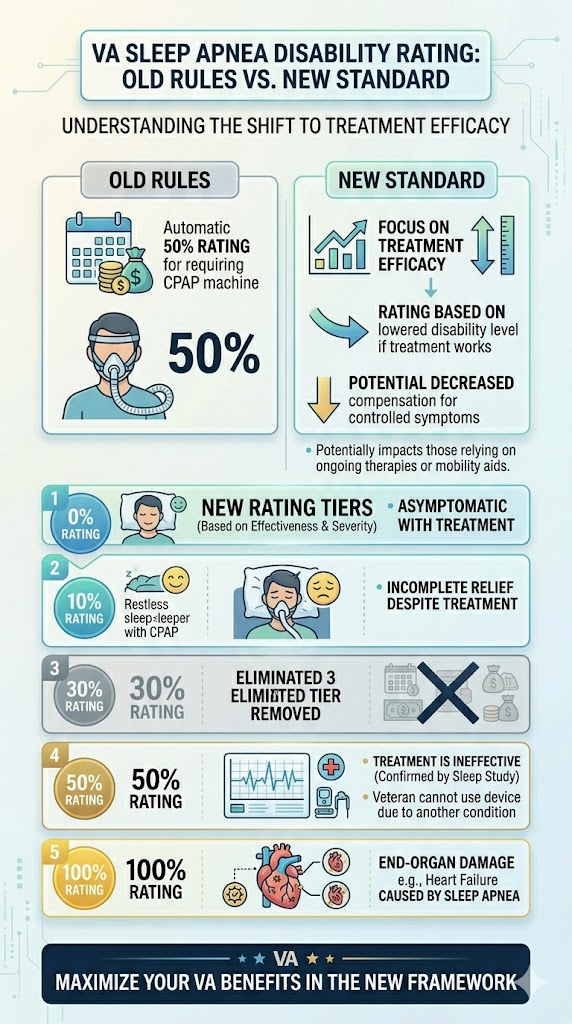
Sleep apnea rating changes represent the most significant loss for new claimants. Under the old rules, requiring a CPAP machine automatically qualified a veteran for a 50% rating.
The new standard focuses on treatment efficacy rather than treatment necessity. If medication or treatment lowers the level of disability, the rating will be based on that lowered disability level according to the new VA rule. The new rule may decrease compensation for veterans whose symptoms are controlled, potentially impacting those who rely on ongoing therapies or mobility aids.
- 0%: Asymptomatic with treatment (CPAP controls symptoms effectively)
- 10%: Incomplete relief despite treatment
- 50%: Treatment is ineffective (confirmed by sleep study) or veteran cannot use the device due to another condition
- 100%: End-organ damage such as heart failure caused by sleep apnea
The proposed changes for sleep apnea will eliminate the 30% rating, allowing only 0%, 10%, 50%, or 100% ratings based on treatment effectiveness and severity.
Tinnitus
Under the new system, tinnitus will no longer have its own diagnostic code and will instead be evaluated as a symptom of an underlying issue like traumatic brain injury (TBI) or hearing loss. If you already have compensable hearing loss (10% or higher), tinnitus gets bundled into that rating with no additional payout.
The only exception: veterans with non-compensable (0%) hearing loss can still receive a separate 10% tinnitus rating.
Mental Health
Mental health ratings have shifted to the “Five Domains of Functional Impairment” model, which evaluates:
- Cognition
- Interpersonal interactions
- Task completion
- Life activities and navigating environments
- Self-care
The proposed changes to the VA ratings for mental health conditions aim to create a more objective evaluation process for mental disorders. The new system will replace vague and subjective language with a domain-based model that focuses on measurable symptoms across these five key areas.
Each domain is scored from 0 (none) to 4 (total impairment). This change is largely positive: veterans who can hold jobs but struggle significantly in personal or social areas can now qualify for a higher rating, including 100%, which was difficult under the old occupational-focused criteria.
Additionally, the 0% VA rating for mental health conditions is being eliminated, ensuring every diagnosed and service-connected mental health condition receives a minimum rating of 10%.
Grandfathering Rules: Holding on to Your Disability Compensation
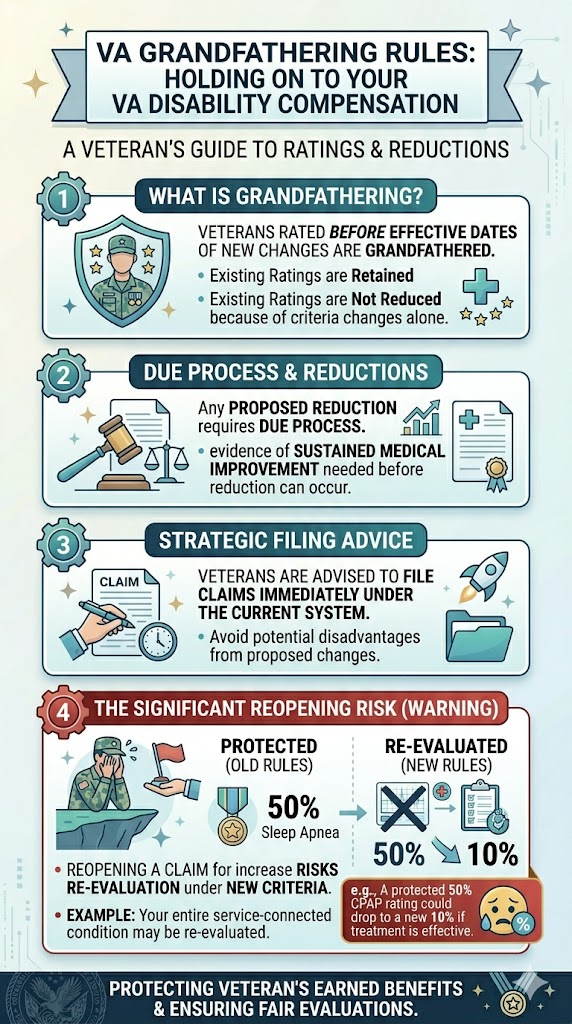
Veterans rated before the effective dates of these changes are grandfathered. This means existing ratings will not be reduced simply because the criteria changed.
Any proposed reduction in VA disability benefits requires due process and evidence of sustained improvement before a reduction can occur. Veterans are advised to file their claims immediately under the current system to avoid potential disadvantages from the proposed changes.
However, there’s a significant risk in reopening claims. If you currently hold a 50% sleep apnea rating under the old CPAP standard and apply for an increase, your entire service connected condition may be re-evaluated under the new criteria. You could drop from a protected 50% to a new 10% if your treatment is deemed effective.
Example Scenario
Derek, an Army veteran, was recently diagnosed with obstructive sleep apnea requiring nightly CPAP use.
Under the new sleep apnea criteria, his CPAP provides symptomatic relief, meaning he no longer qualifies for the automatic 50% rating that existed before the rule change. His C&P examiner documented “asymptomatic with treatment,” placing him at the 0% tier under current respiratory standards.
After the rule change, there is a real risk that veterans like Derek could see reduced ratings simply because their symptoms are controlled by medication; such a notion raises questions about the fairness of penalizing veterans for seeking effective treatment.
Frequently Asked Questions
Can I still get 50% for sleep apnea with a CPAP in 2026?
As of March, 2026, the new rules have not been approved, and the 50% rating is still given with CPAP use.
Will my existing VA rating be reduced under the new 2026 VASRD rules?
No, veterans rated before the effective dates are grandfathered and will not have ratings reduced simply because criteria changed. However, if you apply for an increase, your entire condition may be re-evaluated under the stricter new criteria, potentially resulting in a reduction.
How is tinnitus rated under the 2026 VA rules?
Under the new rating rules, Tinnitus will no longer be a standalone diagnostic code, but rated as a symptom of an underlying condition like TBI or hearing loss. A separate 10% rating is only granted if you have non-compensable (0%) hearing loss; otherwise, tinnitus is bundled into your hearing loss rating.
What are the five domains for VA mental health ratings in 2026?
The new mental health rating system would evaluate five functional domains: Cognition, Interpersonal interactions, Task completion, Life activities/Navigating environments, and Self-care. Each domain is scored 0-4, with the 0% rating eliminated and 10% now the minimum compensable rating.
Can I get 100% VA mental health rating while still working in 2026?
Yes, the new mental health criteria will make this significantly easier. The new Five Domains model focuses on overall functional impairment rather than just occupational impact, allowing veterans who maintain employment but suffer severe impairment in other areas to qualify for 100%.
What VA disability ratings are easier to get in 2026?
Digestive conditions and mental health claims have become more favorable. However, new sleep apnea and tinnitus claims face stricter criteria than before.
Practical Implications
The 2026 rules create clear categories of winners and losers among new claimants. Those with mental health conditions now have an easier path to higher ratings, even while employed, but new sleep apnea claimants lose the automatic 50% CPAP rating, and tinnitus filers with compensable hearing loss lose the stackable 10% rating.
The broader shift in 2026 is toward proving functional impairment rather than simply proving a diagnosis exists. Claims now require demonstrating exactly how a condition limits your ability to work, socialize, and complete daily tasks. Veterans should specifically report the symptoms that persist despite medication, as well as the side effects of medications, to demonstrate functional impairment.
Medical examiners play a crucial role in accurately assessing functional impairment and must be attentive to symptoms and side effects that persist despite treatment. Submit thorough medical evidence with veterans claims and disability claims to support accurate ratings and ensure fair evaluations.
 AllVeteran.com Advisors
With expertise spanning local, state, and federal benefit programs, our team is dedicated to guiding individuals towards the perfect program tailored to their unique circumstances.