













Fibromyalgia is a chronic disorder characterized by widespread musculoskeletal pain, fatigue, sleep disturbances, and cognitive issues. The Department of Veterans Affairs (VA) recognizes fibromyalgia as a medically unexplained chronic multisymptom illness (MUCMI) and as a presumptive illness for Gulf War veterans. This means that for veterans who served in certain military operations, fibromyalgia may be automatically linked to their military service, making it easier to qualify for VA disability compensation as a presumptive illness.
Typically, a fibromyalgia diagnosis will provide veterans with a rating between 10% and 40%, depending on how severe and persistent their symptoms are. To receive compensation from the VA for fibromyalgia, you must show that the condition is service-connected.
Tamila’s Take
I’ve walked alongside many vets who felt dismissed or misunderstood when trying to explain fibromyalgia. The pain is real, the fatigue is real, and the frustration of being told “your labs look fine” is real, too. Fibromyalgia is one of those conditions that doesn’t show up neatly on a scan, which makes strong documentation and honest symptom reporting absolutely essential. The VA won’t see the bad days unless you put them on paper, and too many veterans settle for a low rating simply because they didn’t know how to advocate for themselves.
If your symptoms are constant, life‑altering, or resistant to treatment, don’t be afraid to push for the rating that reflects your reality. Keep records, speak up during your C&P exam, and don’t minimize what you’re living with. You served your country. You shouldn’t have to fight this battle alone or in silence.
Why This Update
While the ratings have not changed for fibromyalgia, the amounts associated with them have updated to match the 2026 COLA of 2.8%.
What Is the VA Rating for Fibromyalgia?
The VA disability rating for fibromyalgia is assigned under Diagnostic Code 5025. This condition is recognized as a chronic disorder characterized by widespread pain and other systemic symptoms.
The VA evaluates fibromyalgia based on the presence and severity of symptoms such as:
- Widespread musculoskeletal pain
- Associated fatigue and sleep disturbances
- Headaches or cognitive difficulties, including mental fog
- Irritable bowel symptoms
- Depression or anxiety
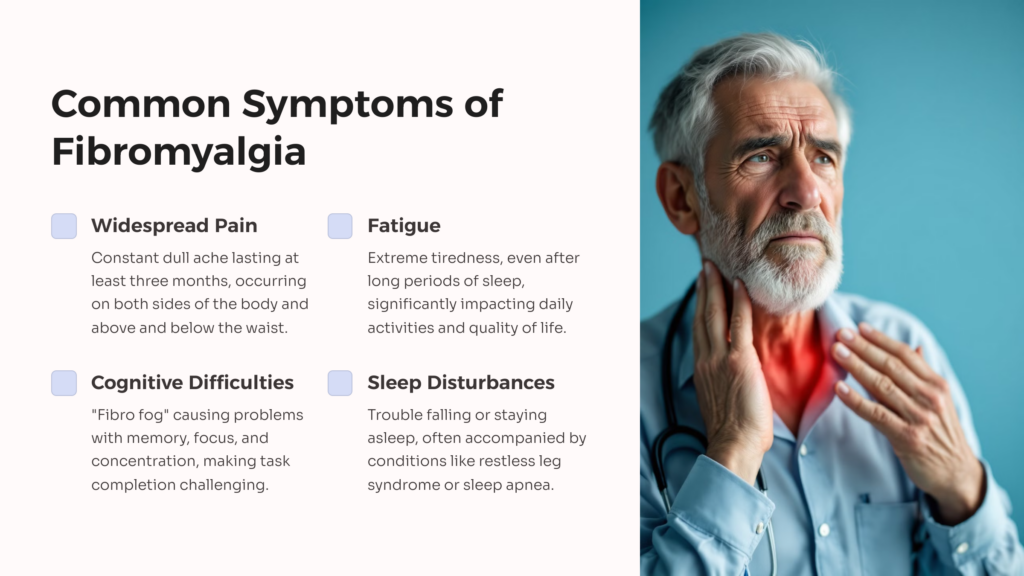
Fibromyalgia is unique because it often involves multiple symptoms that affect the entire body rather than a single injury or organ system. This makes detailed medical documentation especially important when filing a claim. Veterans should ensure their medical records detail the frequency, duration, and impact of their fibromyalgia symptoms when filing a claim.
VA Rating Criteria for Fibromyalgia
Ratings vary from 10% to 40%, depending on the severity of the condition. Widespread pain, a key criterion, means pain in both the left and right sides of the body, above and below the waist, affecting both the axial skeleton (spine, chest, and low back) and the extremities. Here is a breakdown of each rating you might receive.
Veterans with multiple service-connected conditions receive a combined rating. Establishing secondary service connection for fibromyalgia—such as when it results from or is aggravated by another service-connected disability—can increase overall compensation.
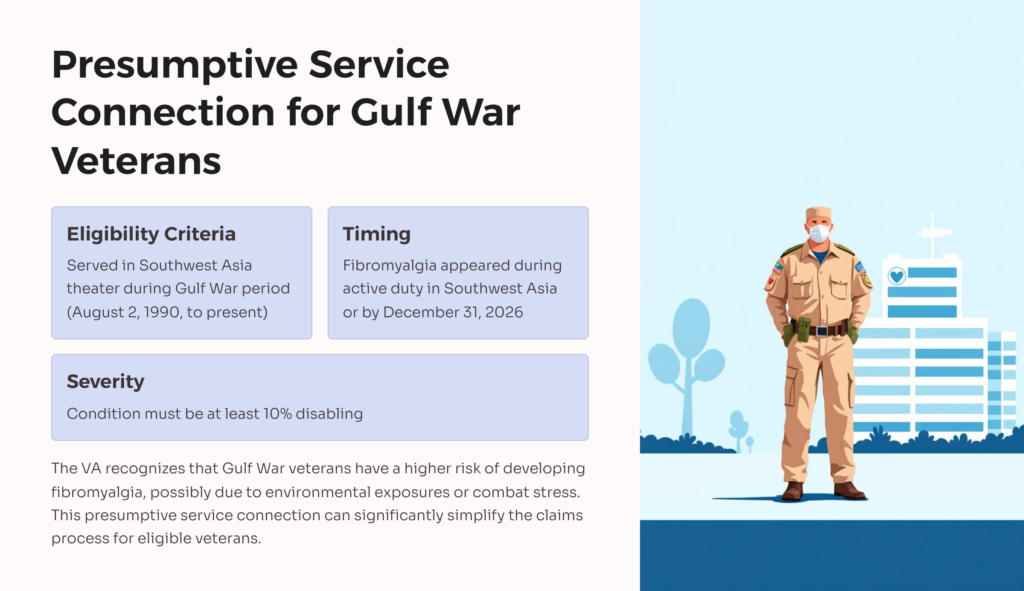
For certain Gulf War veterans, the VA presumes fibromyalgia is service-connected, which can simplify the claims process.
10% Rating
A 10% fibromyalgia VA rating percentage is assigned when symptoms require continuous medication for control. Typical characteristics include widespread pain controlled with medication, mild fatigue or sleep issues, and symptoms that respond to treatment.
20% Rating
A 20% rating applies when symptoms occur frequently but are not constant. Common indicators include pain and fatigue that flare up episodically, symptoms present more than one-third of the time, and partial response to treatment.
40% Rating
The maximum VA rating for fibromyalgia is 40%. Veterans may qualify when symptoms are constant, treatments provide little relief, and the condition significantly impacts daily functioning. Many veterans with severe fibromyalgia receive the highest rating because symptoms often persist despite treatment.
What Is the Maximum VA Rating for Fibromyalgia?
The maximum VA rating for fibromyalgia is 40%. However, veterans may still receive higher overall compensation if fibromyalgia contributes to additional service-connected conditions. This may include chronic fatigue syndrome, depression or anxiety, sleep disorders, and gastrointestinal conditions.
These conditions may be rated separately if medical evidence shows they are distinct disabilities rather than symptoms already included in the fibromyalgia rating.
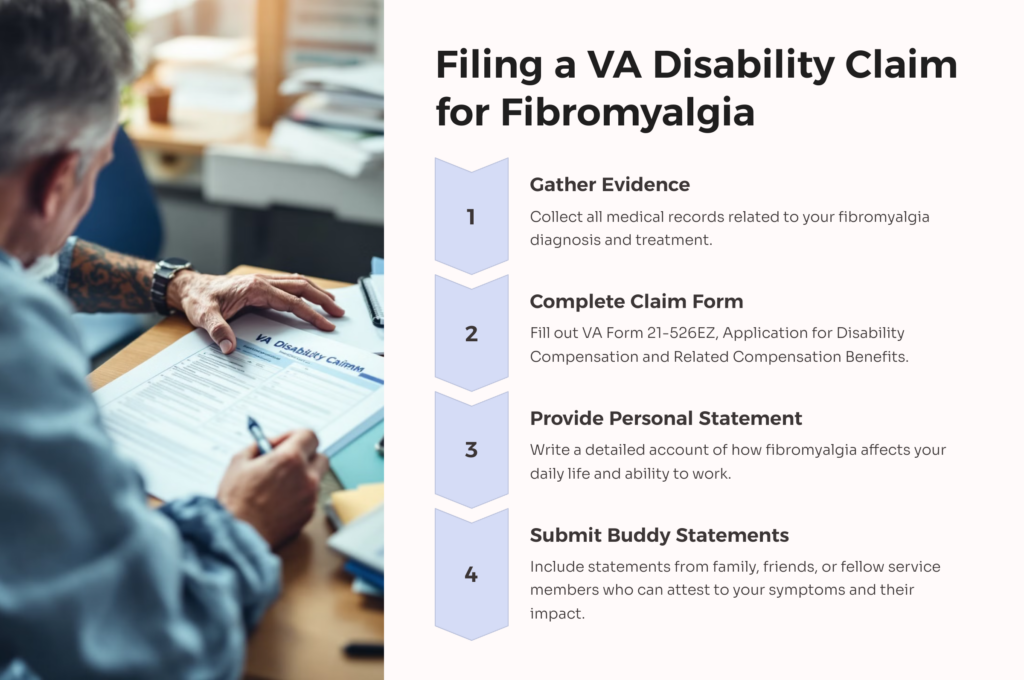
Can Fibromyalgia Be Secondary to PTSD or Other Service-Connected Conditions?
Secondary service connection requires a medical nexus, or clear link, between fibromyalgia and a primary service-connected disability. Proper documentation is essential to establish this connection and support your VA disability claim.
Common secondary connections and secondary conditions related to fibromyalgia include:
- PTSD or chronic stress disorders
- Traumatic brain injury
- Chronic pain conditions
- Gulf War environmental exposures
Veterans who served in Southwest Asia during the Gulf War may also qualify for a fibromyalgia presumptive VA claim. In these cases, the VA may grant service connection without requiring proof that the condition began during active duty.
How to Increase Your Fibromyalgia VA Rating
Veterans who believe their current rating is too low may be able to request a VA disability rating increase.
The most effective ways to strengthen a fibromyalgia claim are to maintain updated medical records documenting worsening symptoms. You should also include statements from physicians describing functional limitations. Evidence showing treatments have failed to control symptoms will also strengthen your claim.
The VA may schedule a C&P exam for fibromyalgia VA claims to assess how the condition affects daily life and employment. Keeping a symptom journal can also help demonstrate the frequency and severity of flare-ups.
If symptoms have become constant or resistant to treatment, veterans may qualify for the 40% maximum rating.
An Example for Dealing With a Fibromyalgia Rating
Angela, a former Air Force logistics specialist who served in the Gulf War, began experiencing chronic pain, fatigue, and sleep disturbances several years after leaving service. At first, she received a rating at 10% for fibromyalgia.
Her symptoms worsened and became constant despite medication. After submitting updated medical records and completing a new C&P exam, the VA increased her rating to 40%, reflecting the severity of her condition.
Going through the steps to ensure you are receiving the proper compensation can make a difference. Under the PACT Act, Gulf War veterans diagnosed with fibromyalgia are eligible for benefits beyond the original deadline of December 31, 2026.
FAQs About the VA Rating for Fibromyalgia
Below are some of the most frequently asked questions (FAQs) about receiving a VA rating for this condition.
What is the fibromyalgia VA rating?
The VA assigns ratings of 10%, 20%, or 40% depending on how severe and persistent the symptoms are.
What is the maximum VA rating for fibromyalgia?
The highest possible rating under Diagnostic Code 5025 is 40%.
How the VA rates fibromyalgia?
The VA evaluates symptom frequency, response to treatment, and overall functional impact.
Can fibromyalgia be secondary to PTSD?
Yes. Medical evidence may show fibromyalgia secondary to PTSD or other service-connected conditions.
Do Gulf War veterans receive presumptive service connection for fibromyalgia?
Yes. Fibromyalgia is recognized as a presumptive condition for many Gulf War veterans.
Will I need a C&P exam for fibromyalgia VA claims?
Most veterans will attend a Compensation and Pension exam to evaluate symptoms and severity.
Can fibromyalgia qualify for TDIU?
Yes. If fibromyalgia prevents substantially gainful employment, a veteran may qualify for Total Disability based on Individual Unemployability.
Moving Forward With the Support You Deserve
Fibromyalgia can be an exhausting and unpredictable condition, but understanding how the VA evaluates it puts you in a stronger position to secure the benefits you’ve earned. Whether your symptoms are mild, intermittent, or constant and life‑altering, the key to receiving the correct rating is thorough documentation, consistent treatment, and clear communication during your C&P exam. And if your condition has worsened over time, remember that you have every right to request a higher rating that reflects your current reality.
You don’t have to navigate this process alone. With the right evidence and advocacy, you can ensure the VA sees the full impact fibromyalgia has on your daily life.
 AllVeteran.com Advisors
With expertise spanning local, state, and federal benefit programs, our team is dedicated to guiding individuals towards the perfect program tailored to their unique circumstances.