













Trying to understand how the VA decides disability claims can feel overwhelming. Rules change, evidence requirements shift, and even small mistakes can slow your case down for months. This VA disability cheat sheet gives you a clear, practical explanation of what actually matters so you can file stronger claims, avoid common pitfalls, and protect the benefits you’ve earned.
Whether you’re filing your first claim, adding a new condition, or appealing a denial, the goal is the same: put together a clean, well-supported case that clearly shows what you’re dealing with and how it connects to your service.
The Four Core Pieces Every Veteran Needs
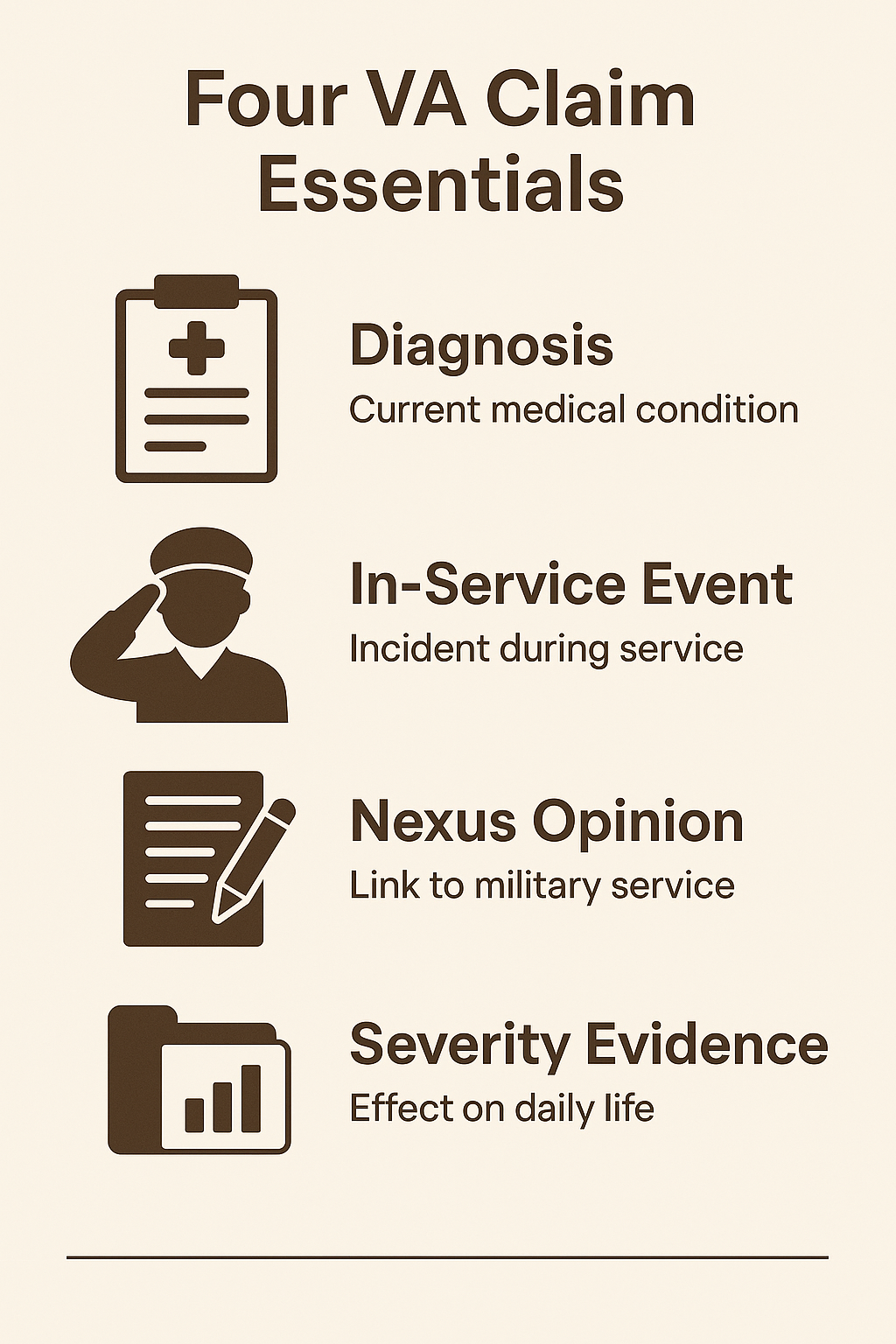
Every successful VA claim—no matter the condition—requires the same four basic elements. If even one is missing, VA usually denies the claim.
1. A current medical diagnosis
You must have an official, documented diagnosis for the condition you’re claiming. Symptoms alone are not enough. The diagnosis can come from VA providers, private doctors, or old service treatment records.
A claim cannot move forward without this foundation.
2. Proof something happened in service
This is the evidence connecting your condition to your time in uniform. It may be:
- A documented injury
- Exposure (burn pits, Agent Orange, explosions, chemicals)
- A training accident
- A pre-existing condition that got worse
Even if your records are thin, statements from you or fellow service members can help fill gaps.
3. A medical nexus opinion
The nexus is the “because of” link. In simple terms:
Your doctor must explain why your current diagnosis is at least as likely as not related to your service.
This can come from:
- Your VA provider
- A private doctor
- A specialist familiar with your condition
A strong nexus letter can turn a weak VA disability claim into an approved one.
4. Evidence of the severity and impact
The VA rates disabilities based on how they affect your daily life, work ability, physical functioning, and mental health.
This is where you need to document:
- Flare-ups
- Missed work
- Limited mobility
- Panic attacks
- Problems with sleep, memory, or concentration
- How pain affects your everyday routine
Your VA rating depends heavily on this part.
Five Ways to Establish Service Connection
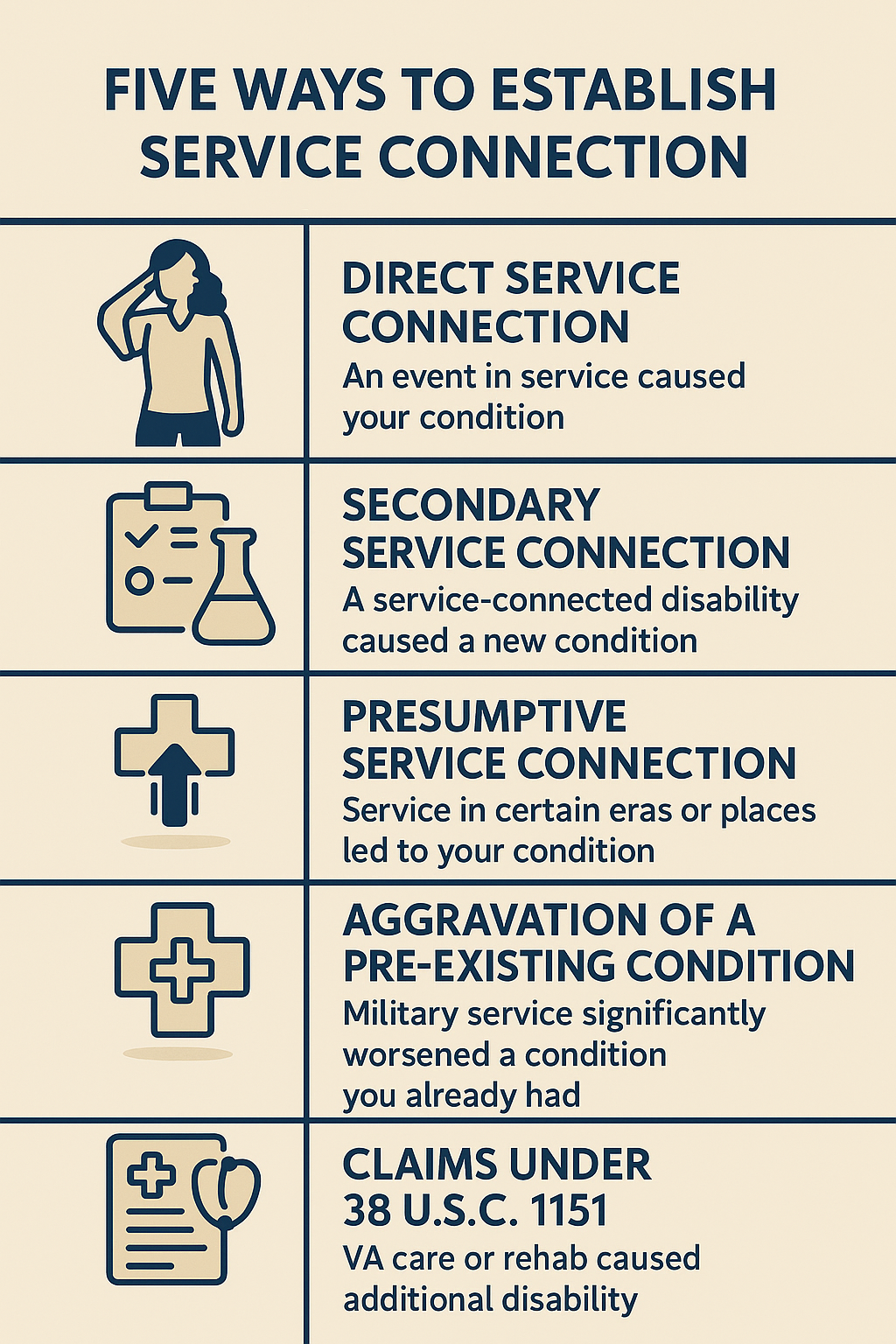
Your va disability cheat sheet should help you understand the different pathways to get something service connected.
Direct service connection
The simplest route. Something happened in service, and you have a current disability because of it. Examples: PTSD from combat, knee injury from training, hearing loss from weapons fire.
Secondary service connection
One service connected disability issue causes or worsens another. Examples:
- Migraines caused by tinnitus
- Sciatica caused by a back injury
- Depression caused by chronic pain
Secondary claims often raise your overall combined rating.
Presumptive service connection
These conditions are automatically presumed related to service if you served in certain places or eras. Examples:
- Agent Orange-related conditions
- Burn pit toxic exposure
- Gulf War illnesses
You still need a current diagnosis, but you don’t have to prove the in-service event.
Aggravation of a pre-existing condition
If you had a condition before service and military duties made it significantly worse, the VA can grant service connection for the amount of worsening.
Claims under 38 U.S.C. 1151
If VA medical care or vocational rehab caused additional disability (surgical mistakes, medication errors, etc.), VA pays disability compensation as if it were service connected.
Core Strategies From the VA Disability Cheat Sheet
File an Intent to File early
This protects your effective date and potential back pay. It takes about a minute on VA.gov and gives you up to a year to gather evidence before submitting the full claim.
Get help from accredited professionals
VSOs (DAV, VFW, American Legion, etc.) offer free assistance. Accredited attorneys and agents can help with more complex claims and appeals.
You don’t need to fight the system alone.
Use the SEM framework: Strategy, Education, Medical Evidence
Strategy:
File focused claims instead of long lists. Prioritize conditions that meaningfully impact your life or could significantly change your combined disability rating.
Education:
Read the VA rating criteria (VASRD) for your conditions so you understand how ratings work and what examiners look for.
Medical Evidence:
Gather treatment records, test results, DBQs, and nexus letters. The VA makes decisions based on documentation, not assumptions.
Make your C&P exam count
The C&P exam is critical. Come prepared:
- Speak honestly about your worst days
- Explain real-life limitations (standing, walking, driving, social settings, work)
- Don’t minimize your symptoms
- Bring notes if needed
- Ask for a copy of the exam afterward
Your rating often rises or falls based on how well this exam reflects your true condition.
Know your appeal options
If you are denied or underrated, you can:
- Request a Higher-Level Review
- File a Supplemental Claim with new evidence
- Appeal to the Board of Veterans’ Appeals
Many veterans win on appeal—not the first attempt.
Possible Changes Coming in 2025–2026
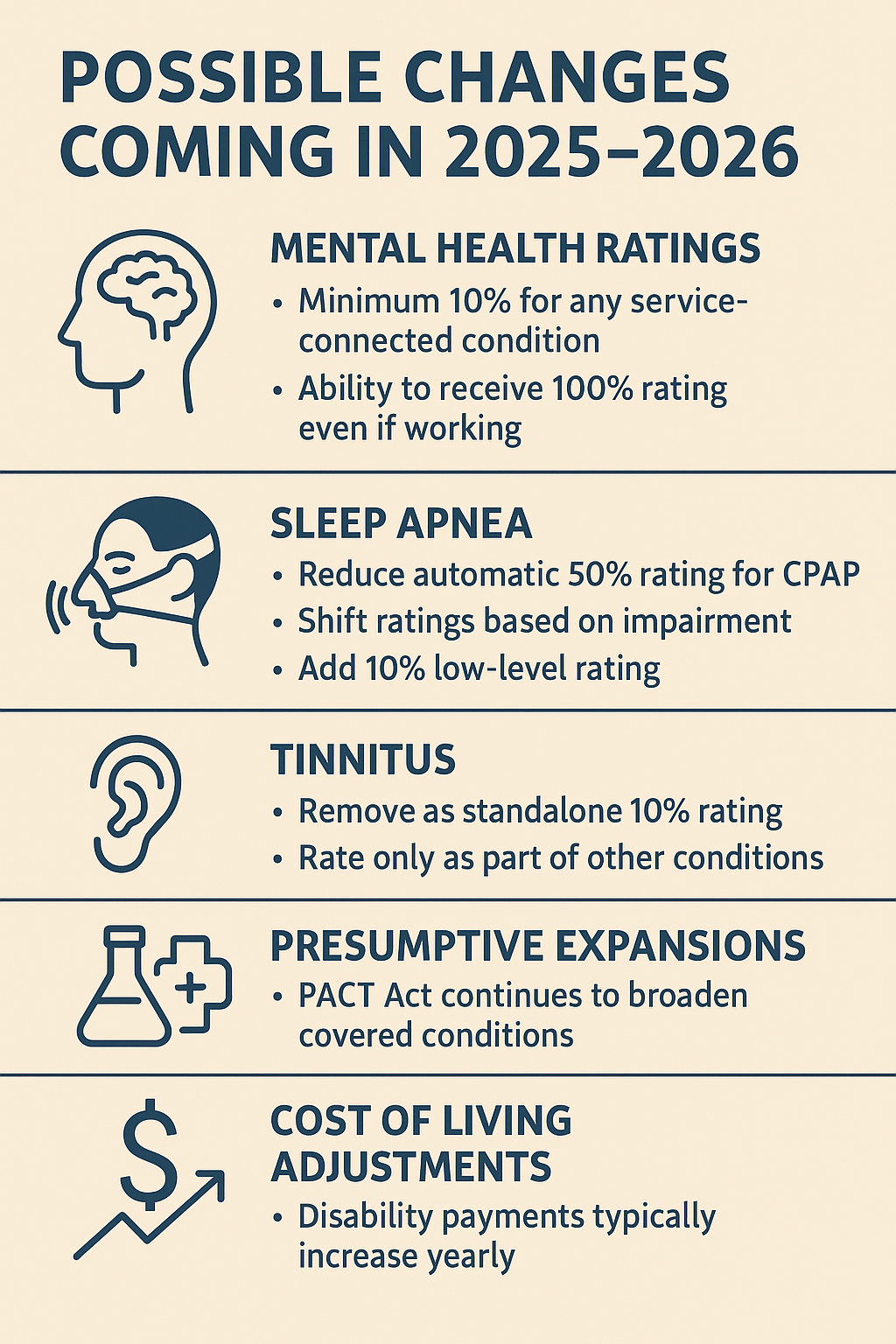
These updates have been proposed or are in process. They are not fully implemented yet, but veterans should be aware of them.
Mental health ratings
VA is moving toward a new system that focuses on five “functional categories” rather than old symptom lists. Proposed changes include:
- Minimum 10% for any service-connected mental health condition
- Ability to receive a 100% rating even if working
- Ratings tied more closely to functional impairment
Sleep apnea
Proposed updates would:
- Reduce the automatic 50% rating for CPAP use
- Shift ratings based on impairment rather than equipment
- Add a low-level 10% rating
These are still proposed, not final.
Tinnitus
VA has proposed removing tinnitus as a standalone 10% rating and instead rating it only as part of other conditions like hearing loss or TBI. This has not been finalized, but many veterans are filing claims now to avoid possible future changes.
Presumptive expansions
The PACT Act continues to expand. Many cancers, respiratory illnesses, and hypertension for Vietnam-era veterans are now presumptive.
Cost of Living Adjustments
Disability checks typically increase each year with the federal COLA. Exact percentages vary by year.
Common Service-Connected Disabilities
Based on recent VA reporting, the most common service-connected disabilities include:
- Tinnitus
- Hearing loss
- Knee issues
- Back and neck strain
- PTSD
- Scars
- Sciatica
- Ankle limitations
- Migraines
- Shoulder and arm limitations
Other common conditions: arthritis, sleep apnea, TBI, depression, asthma, and Type 2 diabetes.
Seeing your condition listed does not guarantee approval, but it shows the VA handles these issues often and has clear rating guidelines.
Why Strong Medical Evidence Wins Claims
Every part of your claim depends on documentation. You strengthen your case when you:
- Attend regular medical appointments
- Talk honestly with your providers
- Track symptoms, flare-ups, and missed work
- Gather private medical records
- Request independent evaluations for mental health or complex conditions
- Make sure everything is written in your records—not just spoken aloud
Weak documentation leads to weak ratings. Strong documentation makes your case much harder to deny.
Additional Benefits Your Rating Unlocks
A VA disability rating can open the door to far more than special monthly compensation:
- VA health care
- VR&E career services
- VA home loans advantage
- Life insurance options
- GI Bill benefits
- Aid and Attendance
- DIC benefits for families
- VA ID card and related discounts
Always review what additional VA disability benefits you qualify for after receiving a new rating.
Tamila’s Take
Taking the time to understand the benefits you have secured is essential. When you don’t understand your VA disability ranking, how many benefits you should receive, or how to build a solid claim, it is a recipe for disaster. I’ve seen many veterans go into the claims process blind, and it can be stressful. It’s best to go into the situation with as much knowledge under your belt as possible.
Putting This VA Disability Cheat Sheet Into Action
This VA disability cheat sheet is designed to give you a clear map—not legal advice, not guarantees. But if you follow the structure, document your conditions well, and stay persistent, you will be in a far better position than most veterans entering the system.
If you take anything away, let it be this:
- Protect your effective date
- Build your VA claim around clear evidence
- Prepare for your C&P exam
- Use help when you need it
- Appeal if the VA gets it wrong
You earned these benefits through your service. With the right preparation and persistence, you can secure them.
At Allveteran.com, we seek to help veterans connect with resources that may make all the difference. To find out your disability rating, take our free medical evidence screening today!
 AllVeteran.com Advisors
With expertise spanning local, state, and federal benefit programs, our team is dedicated to guiding individuals towards the perfect program tailored to their unique circumstances.