














For veterans living with lupus, managing the condition is only part of the battle—navigating the VA disability benefits system can be just as complex and frustrating. Lupus is a VA qualifying disability; however, receiving benefits isn’t automatic; it requires meeting specific medical and service-connection criteria, along with a thorough understanding of how the VA evaluates the condition. With the right information and approach, you can improve your chances of securing the support you’ve earned. Here is what you need to know about lupus and how the VA approaches it.

Lupus (Systemic Lupus Erythematosus or SLE) is a chronic autoimmune disorder where the body’s immune system mistakenly attacks healthy tissues and organs. This results in widespread inflammation that can damage multiple body systems, including the joints, skin, kidneys, blood cells, brain, heart, and lungs.
Veterans with lupus typically experience a wide range of symptoms that may include:
- Extreme fatigue and persistent fever
- Joint pain, stiffness, and swelling (arthritis)
- A distinctive butterfly-shaped rash across the face (malar rash)
- Skin lesions that worsen with sun exposure (photosensitivity)
- Oral ulcers in the mouth or nose
- Hair loss
- Chest pain, often exacerbated by deep breathing
- Shortness of breath
- Headaches, confusion, and memory problems (“lupus fog”)
- Raynaud’s Phenomenon (fingers and toes turning white or blue in cold conditions)
- Gastrointestinal issues
- Swelling in the extremities (edema)
What makes lupus particularly challenging is its unpredictable nature, with symptoms that fluctuate between periods of flare-ups (exacerbations) and remission. While lupus affects predominantly women (9 out of 10 cases), it can impact anyone regardless of gender, age, or background.
Is Lupus Recognized as a VA Qualifying Disability?
Yes, lupus is unequivocally recognized as a qualifying disability by the VA. The Department of Veterans Affairs acknowledges both Systemic Lupus Erythematosus (SLE) and cutaneous lupus (which primarily affects the skin) as conditions that can significantly impair a veteran’s ability to function and work.
However, a critical distinction exists: simply having a lupus diagnosis isn’t sufficient to receive VA disability benefits. To qualify for compensation, veterans must establish a “service connection”—demonstrating that their lupus is linked to their military service in some way.
How to Establish Service Connection for Lupus

Establishing a service connection for lupus can be more challenging than for conditions with obvious in-service incidents or injuries. This is partly because lupus has a genetic component and its onset can be gradual and difficult to pinpoint. Veterans typically need to meet three key criteria:
1. Current Diagnosis
A formal diagnosis of lupus from a qualified medical professional is the essential first step. This diagnosis should be clearly documented in your medical records and should specify whether you have SLE, cutaneous lupus, or another variant.
2. In-Service Event, Injury, or Illness
You must provide evidence of an event, exposure, or illness that occurred during military service that could have caused or aggravated your lupus. This might include:
- Exposure to environmental toxins or chemicals
- Extreme stress situations
- Certain medications
- Sun exposure or other environmental factors
3. Medical Nexus
A medical opinion (known as a “nexus statement”) from a healthcare provider that explicitly links your current lupus diagnosis to the in-service event or exposure is crucial. This statement should explain, with medical reasoning, how your military service likely caused or contributed to your lupus.
Four Methods to Establish Service Connection for Lupus
When applying for VA disability benefits for lupus, veterans have four primary paths to demonstrate that their condition is connected to their military service. Each pathway offers a different approach based on how and when the illness developed, and understanding which one applies to your situation is key to building a strong claim. Whether lupus began during active duty, appeared years later, or was worsened by another service-connected condition, the VA provides multiple ways to establish eligibility. Here’s a breakdown of the four main ways to establish service connection for lupus.
1. Direct Service Connection
This method requires proving that a specific event or exposure during service directly caused the onset of lupus or significantly worsened a pre-existing, non-service-connected lupus condition. Veterans need to identify the specific in-service trigger and provide medical evidence linking it to their current lupus diagnosis.
2. Chronic Illness Presumption
Lupus is included on the VA’s list of chronic diseases that may be presumed service-connected if the condition manifests to a compensable degree within one year of discharge from military service. This presumptive service connection is significant because it means veterans don’t need to pinpoint a specific in-service event—they only need to show that symptoms began within that one-year window, even if formal diagnosis came later.
3. Aggravation of a Pre-existing Condition
If a veteran had lupus before joining the military, but their service significantly worsened the condition beyond its natural progression, service connection may be granted based on aggravation. This requires medical evidence comparing the condition’s severity before and after military service.
4. Secondary Service Connection
If lupus develops or is aggravated as a result of another service-connected disability, it may qualify for benefits on a secondary basis. For example, some studies suggest links between severe PTSD and autoimmune disorders, including lupus.
VA Disability Ratings for Lupus

The VA assigns disability ratings for lupus using specific diagnostic codes that reflect the condition’s severity, frequency, and overall impact on your health. These ratings are designed to capture how often lupus flares occur, how much they limit daily functioning, and whether the disease affects multiple organ systems. Here’s how the VA evaluates and rates lupus under its schedule for rating disabilities.
Systemic Lupus Erythematosus (SLE)
SLE is rated under Diagnostic Code 6350 with the following criteria:
- 10% rating: Exacerbations occur once or twice a year, or the veteran has been symptomatic during the past two years
- 60% rating: Exacerbations lasting a week or more occur two or three times per year
- 100% rating: The condition is acute, with frequent exacerbations producing severe impairment of health (may include hospitalization or serious organ complications)
Cutaneous Lupus (Skin-Predominant)
Cutaneous lupus is typically rated using the General Rating Formula for the Skin under Diagnostic Code 7806:
- 60% rating: Lesions involving more than 40% of the entire body or exposed areas, OR constant/near-constant systemic therapy required over the past 12 months
- 30% rating: Lesions involving 20-40% of the entire body or exposed areas, OR systemic therapy required for 6 weeks or more (but not constantly) over the past 12 months
- 10% rating: Lesions involving 5% to less than 20% of the entire body or exposed areas, OR intermittent systemic therapy required for less than 6 weeks over the past 12 months
- 0% rating: Lesions involving less than 5% of the entire body or exposed areas, AND only topical therapy required over the past 12 months
Alternatively, cutaneous lupus may be rated as disfigurement of the head, face, or neck (DC 7800) or scars (DCs 7801-7805) if that is the predominant disability.
Combined Ratings and Predominant Disability
When lupus affects multiple body systems, the VA will evaluate the veteran under these rating methods:
- The specific lupus codes (DC 6350 or DC 7806/7809), OR
- By rating the residuals under the appropriate body systems (e.g., joints, kidneys, heart) and combining those separate ratings
The VA assigns the rating method that results in the highest overall compensation. It’s important to note that ratings under DC 6350 and DC 7809/7806 cannot be combined—the VA will use one or the other.
Secondary Conditions Related to Lupus
Lupus can lead to numerous secondary conditions that may qualify for additional VA disability benefits. When these conditions are connected to service-connected lupus, they can increase a veteran’s overall combined disability rating. Common secondary conditions include:
- Kidney disease (Lupus Nephritis)
- Heart disease (Lupus Carditis, atherosclerosis)
- Lung disease (Lupus Pneumonitis, Pleuritis, Pulmonary Hypertension)
- Neurological disorders (cognitive dysfunction, headaches, seizures, peripheral neuropathy)
- Blood disorders (anemia, thrombocytopenia)
- Arthritis
- Skin conditions (beyond initial lupus rashes)
- Raynaud’s Phenomenon
- Fibromyalgia
- Osteoporosis (often due to steroid treatment)
- Vasculitis (inflammation of blood vessels)
- Sjögren’s Syndrome (dry eyes, dry mouth)
To service-connect these secondary conditions, veterans must provide medical evidence and a medical nexus linking the secondary condition to their service-connected lupus.
The VA Claims Process for Lupus: Step-by-Step Guide
If you’re ready to file a VA disability claim for lupus, knowing each step in the process can make a world of difference. Below, we’ll walk you through each phase of the VA claims process so you can confidently build your case and pursue the support you deserve.
1. Gather Comprehensive Evidence
Collect all relevant medical records documenting:
- Lupus diagnosis
- Symptoms and their frequency
- Treatment history
- Impact on daily activities and work
- Service records showing potential exposures or events
- A strong medical nexus opinion linking lupus to military service
Lay statements from you and others who witnessed your symptoms can provide valuable supporting evidence.
2. File Your Claim
Submit VA Form 21-526EZ (Application for Disability Compensation and Related Compensation Benefits) online, by mail, or in person. You can file an “Intent to File” to establish an earlier effective date while gathering documentation.
3. Attend the Compensation and Pension (C&P) Exam
The VA will schedule a C&P exam with a VA or contracted medical professional who will:
- Review your records
- Conduct an interview and physical examination
- Assess the severity and impact of your lupus
During this exam, be honest and detailed about all your symptoms, including the frequency and severity of flare-ups and how your condition affects your ability to work and perform daily activities.
4. Await the VA’s Decision
The VA reviews all evidence and the C&P examiner’s report to determine service connection and assign a disability rating.
5. Appeal if Necessary
If your claim is denied or you receive a lower rating than expected, you have the right to appeal the decision within one year. During the appeal, you can submit additional evidence, including stronger medical opinions or lay statements.
Common Challenges and Tips for a Successful Claim
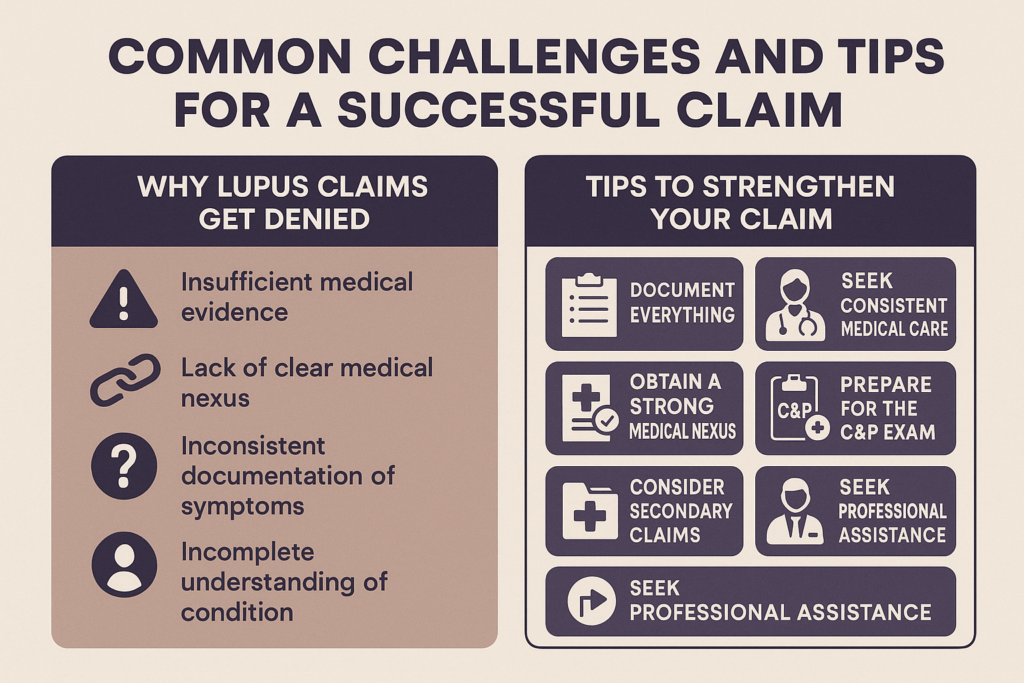
Why Lupus Claims Get Denied
Many lupus disability claims are denied or receive low ratings due to:
- Insufficient medical evidence
- Lack of a clear medical nexus
- Inconsistent documentation of symptoms and flare-ups
- Incomplete understanding of how lupus impacts the veteran’s specific condition
Tips to Strengthen Your Claim
Before you submit a claim, you want to make sure you are doing everything you can to make a strong claim. Here are some key tips that can help you strengthen your claim with the VA.
Document Everything
Keep a detailed log of symptoms, flare-ups (frequency, duration, severity), treatments, and how lupus affects your daily activities and ability to work.
Seek Consistent Medical Care
Regularly see doctors (VA and/or private) and ensure all symptoms are documented in medical records. Inform your healthcare providers about your military service history.
Obtain a Strong Medical Nexus
Work with a medical professional who understands both lupus and the VA system to get a well-reasoned medical opinion linking your condition to service.
Prepare for the C&P Exam
Review your medical history and be ready to articulate the full scope of your symptoms and limitations to the examiner. Bring documentation of flare-ups if possible.
Consider Secondary Claims
Be aware of potential secondary conditions caused or aggravated by lupus and file claims for them if applicable.
Seek Professional Assistance
Navigating the VA system can be complex. Veterans Service Officers (VSOs), accredited veterans disability lawyers, or other qualified representatives can provide invaluable guidance through the process.
Total Disability Based on Individual Unemployability (TDIU)
Veterans whose lupus symptoms prevent them from maintaining substantially gainful employment may be eligible for Total Disability based on Individual Unemployability (TDIU), even if their schedular disability rating is less than 100%.
TDIU pays benefits at the 100% rate. Generally, to qualify based on a single disability, that condition must be rated at least 60% disabling. For multiple disabilities, one must be at least 40% with a combined rating of 70% or more.
The VA assesses the functional impact of service-connected lupus on the veteran’s ability to work, considering education, training, and work history. For veterans severely impacted by lupus, TDIU can provide essential financial support when working is no longer possible.
Securing The Benefits You Deserve
Lupus is a recognized and compensable condition under VA disability law, and veterans affected by it have every right to pursue the support they’ve earned. While the claims process can feel overwhelming, knowing how to establish service connection, gather strong medical evidence, and understand the VA’s rating criteria puts you on a clearer path to approval. Success often comes down to preparation—comprehensive medical records, a well-supported nexus statement, and honest communication during your C&P exam are all essential.
If challenges arise, don’t hesitate to lean on Veterans Service Organizations or accredited legal professionals who specialize in VA claims. You’ve already made sacrifices in service to your country—now it’s time to make sure you receive the care and compensation you rightfully deserve.
At Allveteran.com, we seek to help veterans connect with resources that may make all the difference. To find out your disability rating, take our free medical evidence screening today!
 AllVeteran.com Advisors
With expertise spanning local, state, and federal benefit programs, our team is dedicated to guiding individuals towards the perfect program tailored to their unique circumstances.