














For many veterans, the battle doesn’t end when service does. Returning to civilian life can bring new challenges, including the weight of anxiety that stems from combat experiences, survivor’s guilt, or the struggle to adapt outside of military structure. These feelings are not only common but also recognized as significant health concerns by the U.S. Department of Veterans Affairs (VA).
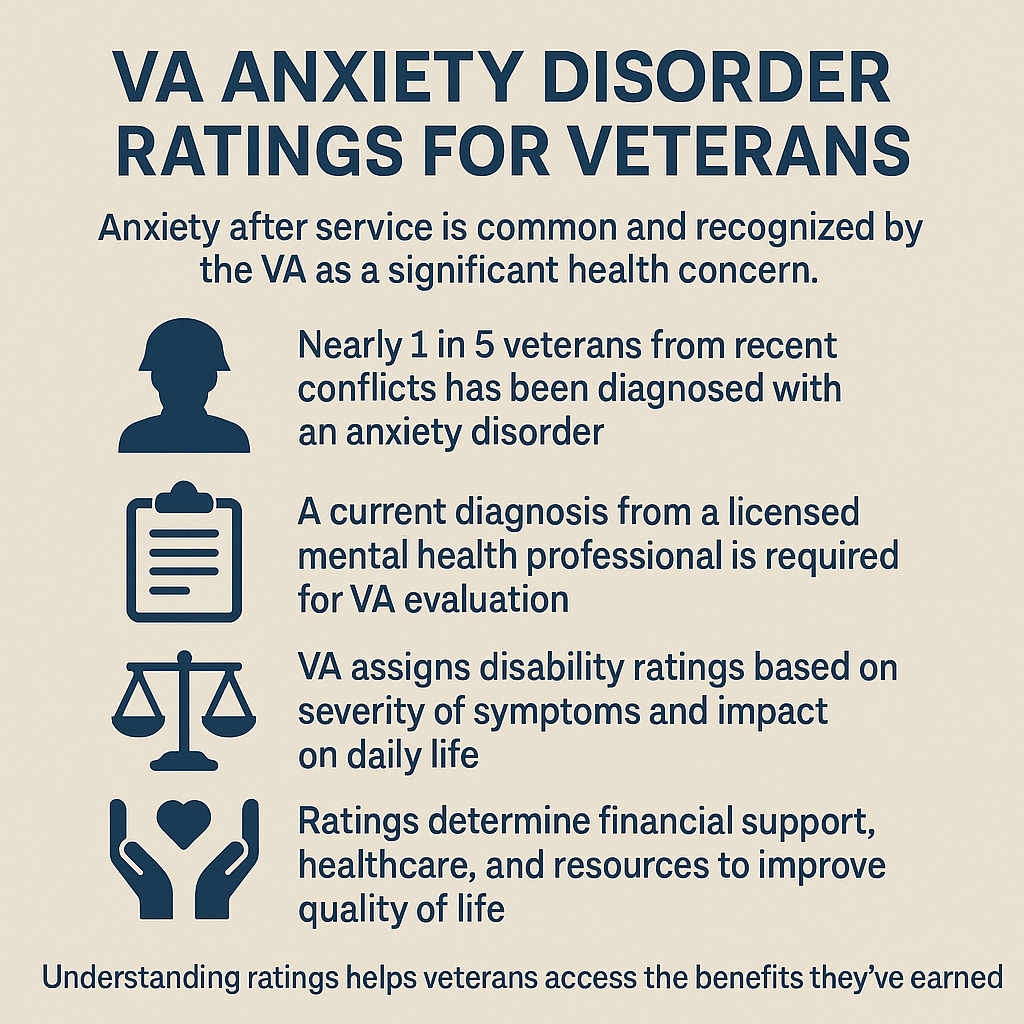
In fact, nearly one in five veterans who served in recent conflicts has been diagnosed with an anxiety disorder—a type of mental health disorder recognized by the VA. Understanding how the VA evaluates these conditions and assigns disability ratings is critical because those ratings directly determine the financial support and resources veterans can access to help them manage their mental health and improve their quality of life. Having a current diagnosis of an anxiety disorder from a mental health professional is essential for VA evaluation and benefits.
Understanding Anxiety in Veterans
Anxiety in veterans can originate from various causes. Post-traumatic stress disorder (PTSD) is a mental health condition triggered by traumatic events, leading to anxiety, nightmares, and other symptoms. Some of the most common causes include traumatic experiences they’ve had during their service, the guilt of surviving when others didn’t, or simply the process of readjusting to civilian life after service. Anxiety symptoms in veterans can manifest as extreme worry, agitation, restlessness, panic attacks, fatigue, flashbacks of combat experiences, or nightmares.
Persistent and excessive worry is a core symptom of generalized anxiety disorder (GAD), which involves ongoing, uncontrollable anxiety about various life aspects and can significantly impact daily functioning and relationships. PTSD symptoms can include flashbacks, nightmares, and heightened anxiety. A panic attack is a recurring and intense episode characterized by sudden feelings of fear, heart palpitations, shortness of breath, and other physical symptoms.
Veterans may be diagnosed with more than one type of anxiety disorder, including panic disorder, PTSD, social anxiety disorder, generalized anxiety disorder (GAD), obsessive compulsive disorder (OCD), and panic disorders. Obsessive compulsive disorder (OCD) is characterized by intrusive thoughts (obsessions) and repetitive behaviors (compulsions) that interfere with daily functioning. Other anxiety disorders, such as specific phobias, are also recognized by the VA for disability benefits.
Anxiety and related mental health issues can significantly impact daily life and functioning. These conditions can affect social relationships and lead to social impairment, making it difficult to maintain friendships and family connections. Anxiety and related disorders can also impact occupational functioning and overall occupational and social functioning, sometimes resulting in difficulty maintaining employment or performing work-related tasks. Substance abuse may co-occur with anxiety disorders and can complicate diagnosis and treatment.
According to the VA, nearly 20% of veterans who have served in recent conflicts are diagnosed with an anxiety disorder, indicating a prevalent issue in our military community.
The VA Rating System
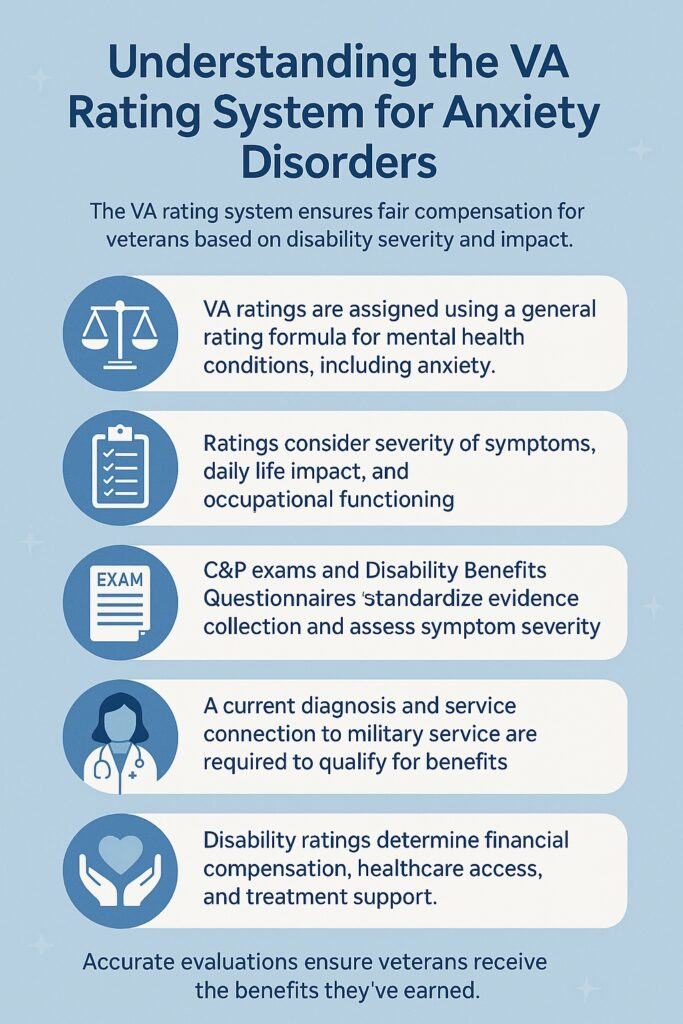
The VA disability rating system is a method by the Department of Veterans Affairs to assess the severity of a veteran’s disability and determine the amount of VA disability benefits they should receive. The system was introduced in an effort to ensure a fair, consistent manner of providing financial compensation to veterans based on the severity of their disabilities. Factors considered in the VA rating system include the nature and severity of the disability, its impact on the veteran’s ability to work, and the veteran’s overall health condition.
The VA uses a general rating formula to assign VA ratings for mental health conditions, including anxiety disorders. Anxiety VA ratings are assigned based on the severity of symptoms and their impact on daily life and occupational functioning. Disability ratings for anxiety are determined using specific criteria and can affect the level of compensation a veteran receives.
Any veteran experiencing an anxiety disorder or any mental health condition can file a VA claim to receive VA disability benefits, which can help with treatments, financial support, and overall quality of life. It is important to have a diagnosed anxiety disorder and to establish a service connection to military service to qualify for benefits. The C&P exam and the Disability Benefits Questionnaire play a crucial role in the VA claim process for anxiety and other mental disorders by standardizing medical evidence collection and assessing symptom severity.
The VA recognizes various types of anxiety disorders, including unspecified anxiety disorder and service connected anxiety disorder, as well as other mental disorders. Anxiety VA disability ratings and ratings for anxiety are used to determine eligibility for VA benefits. Anxiety is evaluated based on the impact of symptoms on occupational and social functioning. A disability rating for anxiety is assigned according to the general rating formula and can be combined with ratings for other mental disorders.
VA Rating for Anxiety Disorders
The VA rates disabilities on a scale from 0% to 100%, in 10% increments. Each percentage represents a certain degree of disability and corresponds with a certain monthly disability compensation rate.
For example, a 10% rating means a mild disability and receives the lowest compensation; at this level, veterans typically experience mild symptoms that are generally manageable and may only cause minor impairments. A 30% rating indicates that anxiety symptoms may make it difficult for veterans to perform occupational tasks, affecting work efficiency or causing occasional absences. Impaired impulse control, such as irritability or angry outbursts, can contribute to a higher disability rating.
Occupational impairment and occupational and social impairment are key factors in determining the appropriate VA rating for anxiety disorders, as these reflect the impact of symptoms on a veteran’s ability to work and interact socially. A 100% rating implies total disability and garners the highest VA disability compensation. Specific diagnostic requirements and criteria are used to assign these ratings, which could range from mild social anxiety to severe post-traumatic stress disorder.
Benefits Available to Veterans based on VA Rating
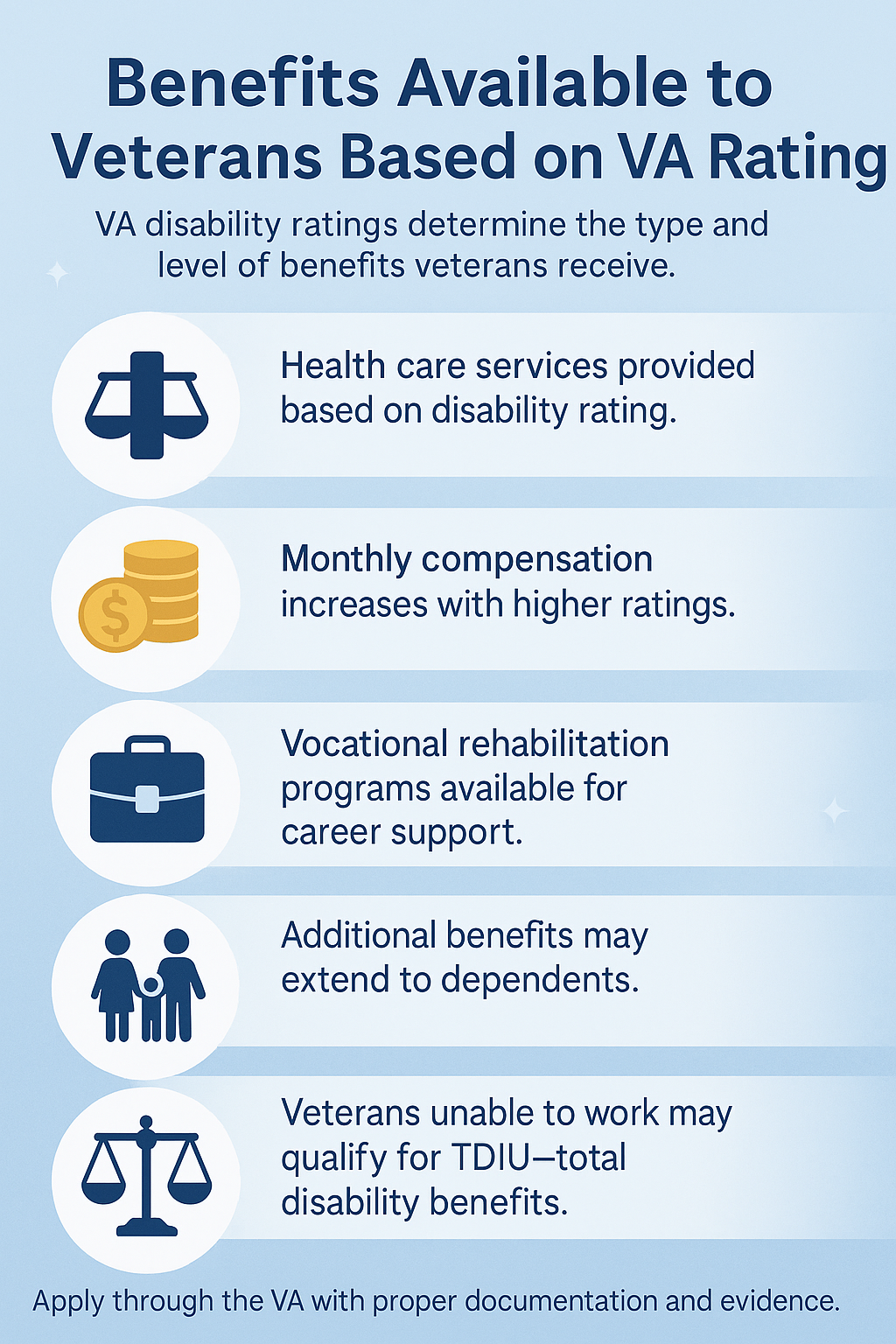
The benefits received by veterans vary based on their VA rating. These benefits can include health care services, monthly compensation, and additional support like vocational rehabilitation or dependent benefits. VA benefits are determined by the assigned disability rating and can include compensation, health care, and support services. Veterans who are unable to maintain substantially gainful employment due to their service-connected anxiety disorder may qualify for total disability benefits through TDIU. The process to apply for these benefits is available on the Veterans Affairs website and requires the submission of relevant documentation and evidence relating to the anxiety disorder.
How to Improve Your Anxiety VA Disability Rating
If veterans feel their initial VA rating does not accurately represent their level of disability, there are steps they can take to request a reevaluation. Seeking help from a mental health expert, gathering relevant medical records and personal statements, and regularly following up with the VA are all essential in this process. If they are still dissatisfied with the final rating, veterans do have the right to appeal their VA disability claim decision, following due process.
Get the Help You Need By Being Proactive
The more you understand about anxiety and the VA rating system, the better equipped you’ll be to take control of your health and future. Seeking treatment early and advocating for the support you deserve can make a meaningful difference in daily life.
At Allveteran.com, our mission is to ensure no veteran faces these challenges alone. We connect veterans with resources that provide real solutions and lasting relief. Take the first step today—find out your disability rating with our free medical evidence screening and start building the path toward the benefits and care you’ve earned.
 AllVeteran.com Advisors
With expertise spanning local, state, and federal benefit programs, our team is dedicated to guiding individuals towards the perfect program tailored to their unique circumstances.