













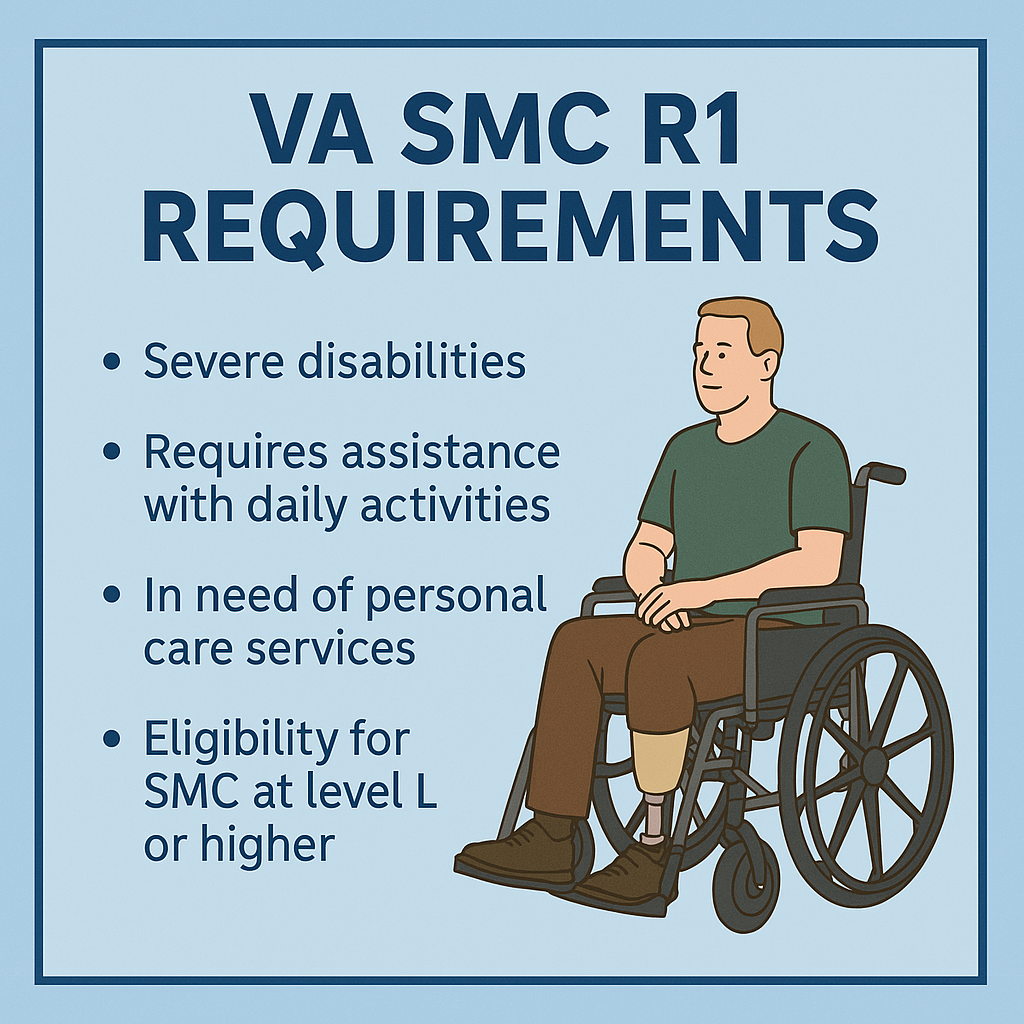
VA Special Monthly Compensation (SMC) at the R1 level provides one of the highest levels of financial support available to veterans with severe service-connected disabilities. Here is everything you need to know about the eligibility requirements for SMC R1 and how qualified veterans can apply for this critical benefit.
Why This Update
The VA’s information and requirements can change, and we want to make sure we keep you updated and informed!
Tamila’s Take
SMC R1 isn’t about weakness. It’s about dignity. It’s about recognizing that some of us gave more than just time. We gave up parts of our independence. This benefit helped us afford in-home care, adaptive equipment, and gave my wife the support she needed as my caregiver. It changed our lives.
If you’re reading this and thinking, “That sounds like me,” don’t wait. Don’t downplay your struggle. You served. You sacrificed. And now it’s time to let the VA serve you.
Understanding Special Monthly Compensation (SMC) R1
Special Monthly Compensation (SMC) is a specialized benefit paid to veterans living with severe service-connected conditions. Unlike regular disability compensation, SMC is not an addition to basic disability rates but rather a substitution that provides increased compensation for veterans for particularly serious circumstances. SMC R1 is among the highest levels, specifically for veterans who need a significant degree of care.
The benefit helps cover the considerable costs associated with profound care needs, improving quality of life for veterans with severe disabilities. This compensation is distinct from other SMC rates, designated for the most critical circumstances. SMC R1 recognizes that some veterans face extraordinary challenges due to their service-connected disabilities and may need enhanced financial support to maintain their quality of life.
Primary Eligibility Criteria for VA SMC R1
To qualify for SMC R1, veterans must meet several specific requirements related to their service-connected disabilities. The veteran must need “regular aid and attendance” due to their service-connected disabilities, meaning they require daily assistance with basic personal care activities. This represents a significant level of impairment that affects their ability to function independently.
An additional, distinct service-connected disability rated 50% or more is mandatory. This additional disability must be separate from the condition causing the need for aid and attendance. All disabilities contributing to SMC R1 eligibility must be recognized as service-connected by the VA. The combination of these requirements helps ensure that SMC R1 benefits reach veterans with the most severe and complex disability profiles.
Defining ‘Need for Regular Aid and Attendance’
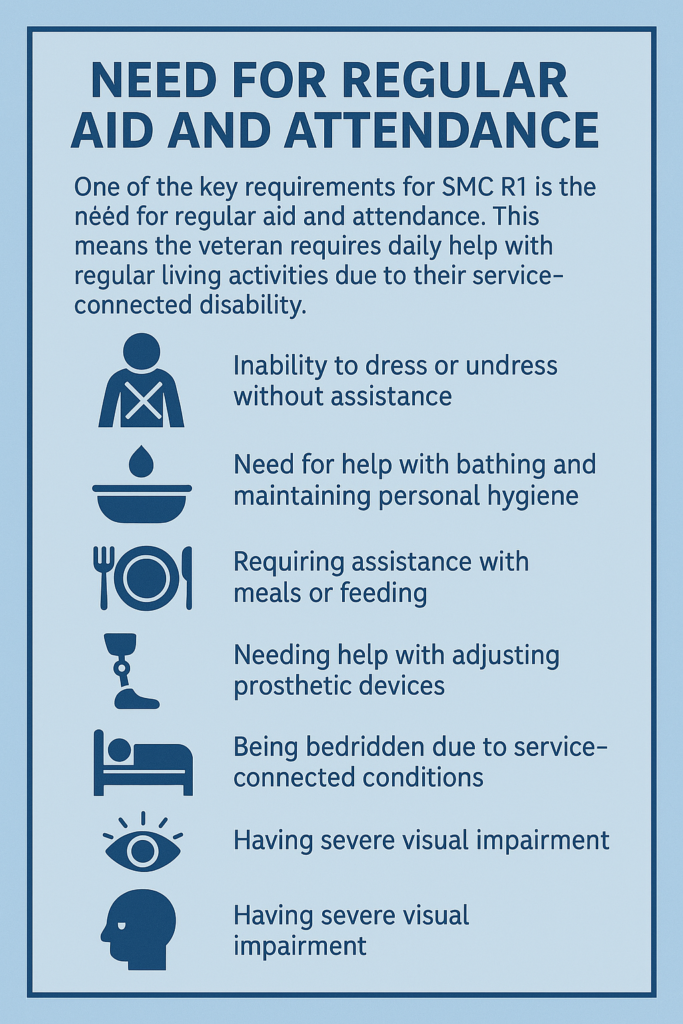
According to 38 CFR § 3.352(b), the need for regular aid and attendance is defined by a veteran’s helplessness as a result of service-connected disability, including the inability to dress, bathe, or feed oneself, frequent need for prosthetic adjustment, or being bedridden. This criterion means the veteran needs daily assistance with personal living activities due to service-connected conditions.
This means needing help with dressing, bathing, personal hygiene, feeding, or adjusting prosthetic devices. Being bedridden due to service-connected conditions or having significant vision loss can also qualify. The VA reviews how well the veteran can function independently to determine this need, considering all aspects of how disabilities affect daily activities.
Meeting the Additional Disability Requirement
Veterans must have one or more additional service-connected disabilities, rated at 50% or higher. These additional disabilities must be independent of the condition that creates the need for “regular aid and attendance.” This separation is crucial to the eligibility determination.
For instance, a veteran who needs aid due to a severe spinal cord injury could qualify with an additional 50% rating for service-connected post-traumatic stress disorder (PTSD). The VA requires clear documentation that these disabilities are distinct and meet the rating threshold. The purpose of this requirement is to recognize veterans who face multiple severe challenges beyond those that create their need for daily care assistance.
The Application Process for VA SMC R1
To apply for SMC R1, veterans should follow these steps. First, gather comprehensive medical documentation detailing the need for aid and attendance and all relevant service-connected disabilities.
VA Form 21-2680, titled “Examination for Housebound Status or Permanent Need for Regular Aid and Attendance,” is used to provide medical evidence for housebound status or the need for regular aid and attendance to determine eligibility for increased disability compensation.
Applications can be submitted online via VA.gov or eBenefits, by mail, or at a VA regional office. The VA will review the claim, potentially schedule further medical examinations, and then issue a decision. Working with a Veterans Service Organization (VSO) or accredited representative is highly recommended for assistance throughout the application process.
Navigating Denials and Maximizing Your Claim
Comprehensive medical evidence is essential to a successful claim, clearly outlining the extent of disabilities and the necessity for aid and attendance. The more thorough and specific your documentation, the better the VA can understand your circumstances and make an accurate decision. If a claim is denied, veterans have the right to appeal through a Supplemental Claim, Higher-Level Review, or the Board of Veterans’ Appeals.
SMC R1 rates may provide substantial support and are adjusted annually to account for cost-of-living increases. Veterans receiving SMC R1 may also qualify for other VA support programs, such as home health care or adaptive housing grants. These additional benefits can provide comprehensive support for veterans with severe disabilities, addressing both financial needs and practical care requirements.
Example Scenario
Sgt. Miller, a veteran living with a service-connected traumatic brain injury (TBI) and severe PTSD, is rated 100% disabled. Due to his TBI, he needs daily assistance with dressing, bathing, and managing medications, qualifying him for aid and attendance. Additionally, his PTSD is independently rated at 70%. These combined conditions mean Sgt. Miller meets the criteria for SMC R1, enabling him to receive higher compensation to support his extensive care needs.
Frequently Asked Questions
What is the difference between SMC and regular VA disability compensation?
SMC is an additional benefit paid *on top of* regular disability compensation, designed for veterans living with specific severe disabilities or combinations of disabilities that may create a greater need for care or significantly impact their quality of life.
Can I qualify for SMC R1 if my disabilities are not 100% service-connected?
No, a primary requirement for SMC R1 is to be entitled to the 100% rate of compensation due to service-connected disabilities. All qualifying conditions must be service-connected.
What does ‘regular aid and attendance’ specifically mean for SMC R1?
It means you require the regular personal assistance of another person to perform daily living activities, such as dressing, bathing, eating, adjusting prosthetic devices, or protecting yourself from the hazards of your daily environment, due to your service-connected disabilities.
Does my additional disability for SMC R1 need to be related to the condition causing my need for aid and attendance?
No, the additional disability (or disabilities) rated at 50% or more must be *separate* from the condition(s) that qualify you for aid and attendance. They must both be service-connected, but independent of each other in terms of their primary disabling effects.
How long does it take for the VA to process an SMC R1 application?
The processing time for VA claims, including SMC R1, can vary significantly depending on the complexity of the case, the completeness of submitted evidence, and the VA’s current workload. It’s best to check the VA’s website for current average processing times or consult with a VSO.
Can I work while receiving SMC R1 benefits?
SMC R1 is based on the severity of your service-connected disabilities and your need for aid and attendance, not solely on your ability to work. However, receiving SMC R1 reflects a very high level of disability, which may make substantial gainful employment difficult or impossible. Eligibility is primarily about your medical needs, not your employment status.
What if I disagree with the VA’s decision on my SMC R1 claim?
You have the right to appeal a denied SMC R1 claim. You can file a Supplemental Claim with new and relevant evidence, request a Higher-Level Review, or appeal directly to the Board of Veterans’ Appeals. It’s highly recommended to seek assistance from a VSO or a VA-accredited attorney during the appeals process.
Getting Access to Vital Benefits
Stay informed about your benefits! Here at AllVeteran.com, we want to help veterans get the compensation they deserve! If you think you or a loved one may qualify for Special Monthly Compensation, reach out and take our free medical evidence screening today!
 AllVeteran.com Advisors
With expertise spanning local, state, and federal benefit programs, our team is dedicated to guiding individuals towards the perfect program tailored to their unique circumstances.