













Transitioning from military service to military life is fairly difficult for many veterans. A Pew Research study found that about a third (32%) of post-9/11 veterans say that it was somewhat difficult, while 16% said it was very difficult to get back into civilian life. Add finding a job and re-entering the workforce as a disabled veteran, and many vets find it challenging, to say the least.
Disabled veterans often face unique barriers to employment in the civilian workforce, including physical and mental health challenges and societal stigma.
There is some good news, though. Employment pathways for disabled veterans exist, and jobs are available, offering diverse job opportunities and the potential for rewarding civilian careers. Veterans bring valuable skills, dedication, and leadership to the workforce, making them valuable assets to employers.
With the right resources and strategy on your side, veterans with disabilities can find fulfilling roles. The Jobs for Veterans State Grants (JVSG) program provides funding to State Workforce Agencies for individualized career services to veterans. Here is what you need to know about finding the right job for you. Employment readiness assistance is also available to help veterans prepare for civilian employment and support a successful transition.
Top Jobs for Disabled Veterans in 2025
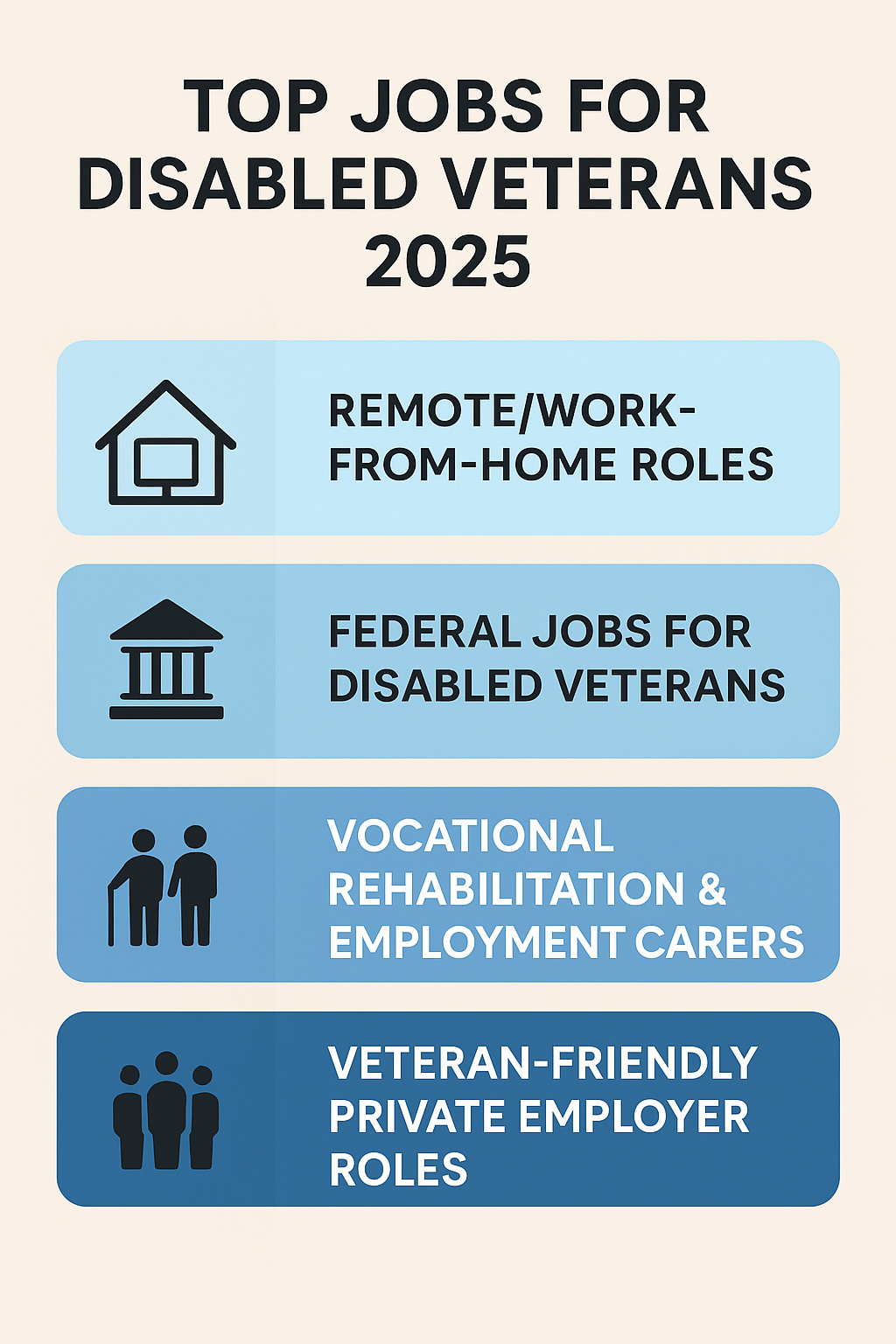
While each veteran brings a unique mix of skills and limitations, certain roles stand out as a strong fit for employment for veterans with disabilities. There is a wide range of career opportunities available to disabled veterans, with many programs and organizations dedicated to supporting their transition into meaningful civilian roles.
The National Veterans’ Training Institute (NVTI) focuses on improving employment services for veterans through a skills-development program. Here are categories worth considering:
- Remote/Work‑From‑Home Roles: With many organizations adopting hybrid or fully remote work, these roles allow veterans with mobility or health constraints to work from home.
- Federal Jobs for Disabled Veterans: Many agencies use special hiring authorities, such as Schedule A or programs aimed at veterans with disabilities. These roles can include administrative support, program analyst, contracting assistant, or Veterans Affairs workforce roles.
- Vocational Rehabilitation & Employment (VR&E) Careers: Through the Veteran Readiness & Employment (VR&E) Program, veterans may train for jobs like recruiter, logistician, vocational counselor, or small business owner, leveraging their military experience to excel in these positions.
- Veteran‑Friendly Private Employer Roles: Many companies actively recruit veterans with disabilities for roles in operations, logistics, compliance, cybersecurity, and more.
Successfully integrating into the civilian workforce can present challenges, but employment services such as vocational rehabilitation, job training, and job placement initiatives play a crucial role in supporting veterans during this transition.
State Vocational Rehabilitation Agencies administer employment services for individuals with disabilities in all 50 states, ensuring that veterans have access to the resources they need.
These options reflect that the best careers for disabled veterans don’t always focus on accessible specialties. They focus on matching skills, accommodations, and workplace flexibility.
VA Resources and Programs That Support Veteran Career Opportunities
The U.S. Department of Veterans Affairs offers several standout programs aimed at VA employment assistance for veterans with disabilities or service‑connected conditions:
- The VA Careers & Employment page connects transitioning service members and veterans with tailored job and training resources, and provides detailed information about employment opportunities for veterans.
- The VAforVets initiative helps veterans search for jobs, connect veterans with job opportunities and support services, and find opportunities at VA and beyond.
- The VR&E Program helps veterans with service‑connected disabilities get training, job placement, and support for employment accommodations.
These resources are built with employment for veterans with disabilities in mind, covering everything from resume building to securing needed accommodations in the workplace. They offer important benefits such as training, financial support, and workplace resources, and federal employees play a key role in delivering these employment services to veterans.
Federal and State Hiring Preferences for Disabled Veterans
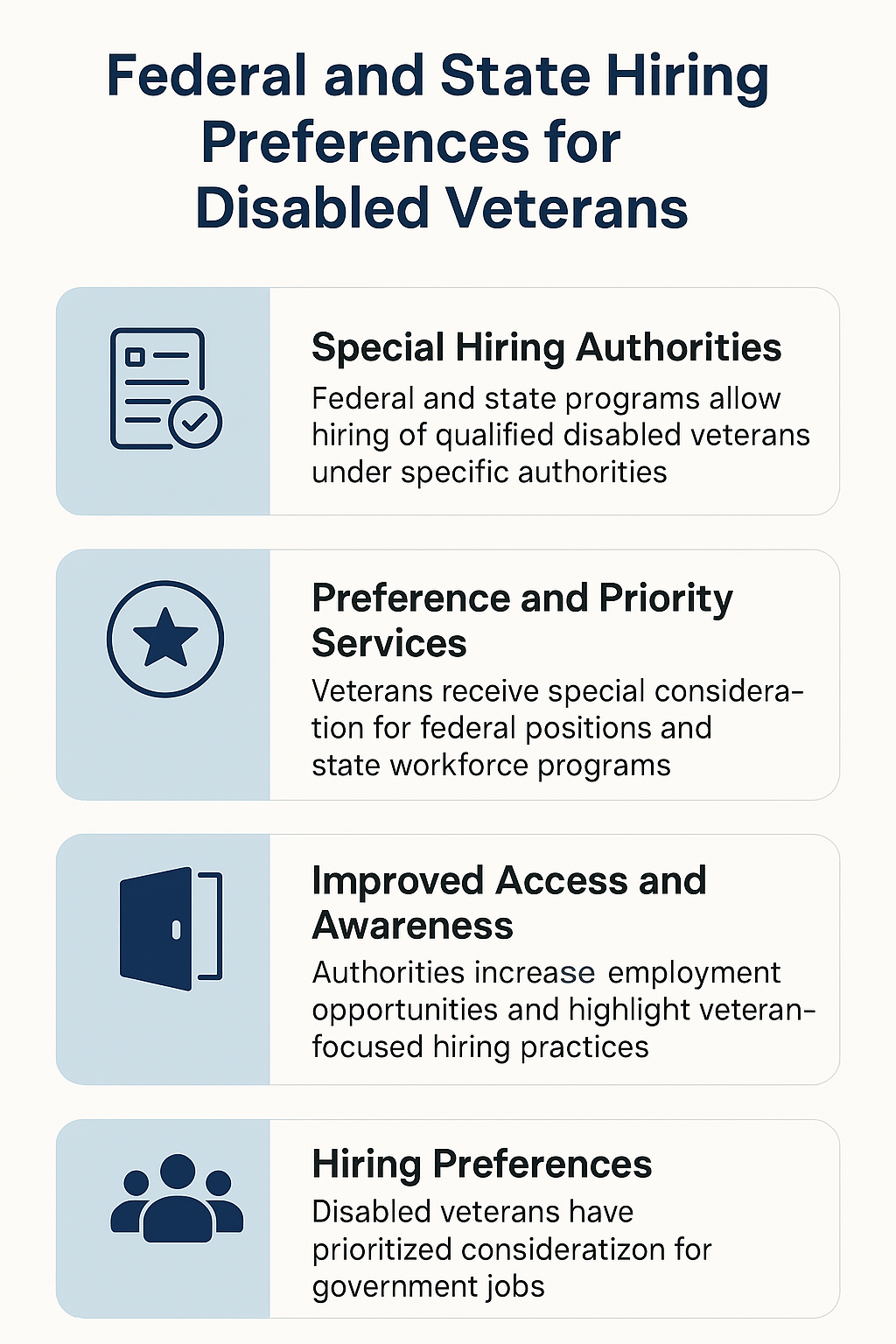
Disabled veterans often benefit from hiring preferences and programs at the federal and state levels, which boost their chances of landing a government job. Federal employment offers special consideration to preference eligible and eligible veterans, especially those who served on active duty in the armed forces.
One example is the special hiring authority for veterans with disabilities under the Schedule A hiring authority. Additionally, state workforce agencies often provide veteran priority services.
By leveraging these authorities, including veterans special hiring authorities and the appointing authority that allows for streamlined hiring of veterans and military spouses, jobs for disabled veterans improve not only because of accommodation but also because of enhanced access, reduced competition, and employer awareness of veteran‑focused hiring practices.
The hiring process for veterans differs from that for non veterans, as highly qualified veterans are given preference in federal employment, ensuring they receive prioritized consideration for available positions.
Remote and Work‑from‑Home Jobs for Disabled Veterans
Remote work has been a game‑changer for veterans with disabilities. When health limitations, mobility restrictions, or ongoing treatments make commute or on‑site schedules difficult, remote jobs for disabled veterans provide a realistic, flexible alternative. There is also a growing number of remote job opportunities specifically designed for veterans with disabilities, offering diverse and inclusive employment options.
Common remote roles include:
- Customer service representative, chat support
- IT support/technician via remote help‑desk
- Project coordinator or virtual assistant (where military skills such as organization, leadership, and adaptability can be a strong asset)
- Accessibility/tester roles for digital platforms
- Cybersecurity or compliance analyst
With many veteran‑friendly employers posting remote positions (including over 200 remote postings from veteran‑friendly companies recently), this category is expanding rapidly.
Veteran‑Friendly Companies Actively Hiring
Many companies now pursue veteran hiring programs explicitly targeting people with disabilities or service‑connected conditions. In fact, many organizations actively seek to hire veterans and provide employment opportunities for both veterans and military spouses.
Employers are increasingly recognizing the value of integrating disabled veterans into their workforce due to their strong work ethic and dedication. Organizations may offer built‑in accommodations, mentorship, veteran networks, and an inclusive culture. For instance, those featured by veteran‑employment organizations include large employers in technology, logistics, manufacturing, government contracting, and healthcare.
When seeking the right employer, look for signs like: veteran hiring champions, participation in veteran job fairs, clear pathways for veterans with disabilities, flexible/remote roles, and internal veteran‑resource groups.
Additionally, some companies offer specific programs and initiatives aimed at supporting the employment and career transition of military spouses, including noncompetitive hiring authorities and tailored resources for the military spouse community. The Military Spouse Noncompetitive Appointing Authority allows agencies to appoint certain military spouses without using traditional competitive examining procedures.
How the VA’s Vocational Rehabilitation & Employment (VR&E) Program Works
The VR&E program is designed for veterans with service‑connected disabilities who need assistance transitioning to meaningful employment. Its services include job training, resume help, coaching, employment accommodations, and support for veterans interested in starting their own businesses. Hire Heroes USA provides free career coaching, resume help, and job search support to veterans and their spouses, further enhancing the resources available to veterans.
Veteran mentoring programs are also available to help veterans transition to civilian or federal government careers, providing guidance from experienced veteran mentors.
Participation in VR&E gives disabled veterans a structured path for veteran job training programs and employment for veterans with disabilities, bridging the gap between service and civilian work, including opportunities within the federal government.
Tips for Transitioning from Military Service to Civilian Employment
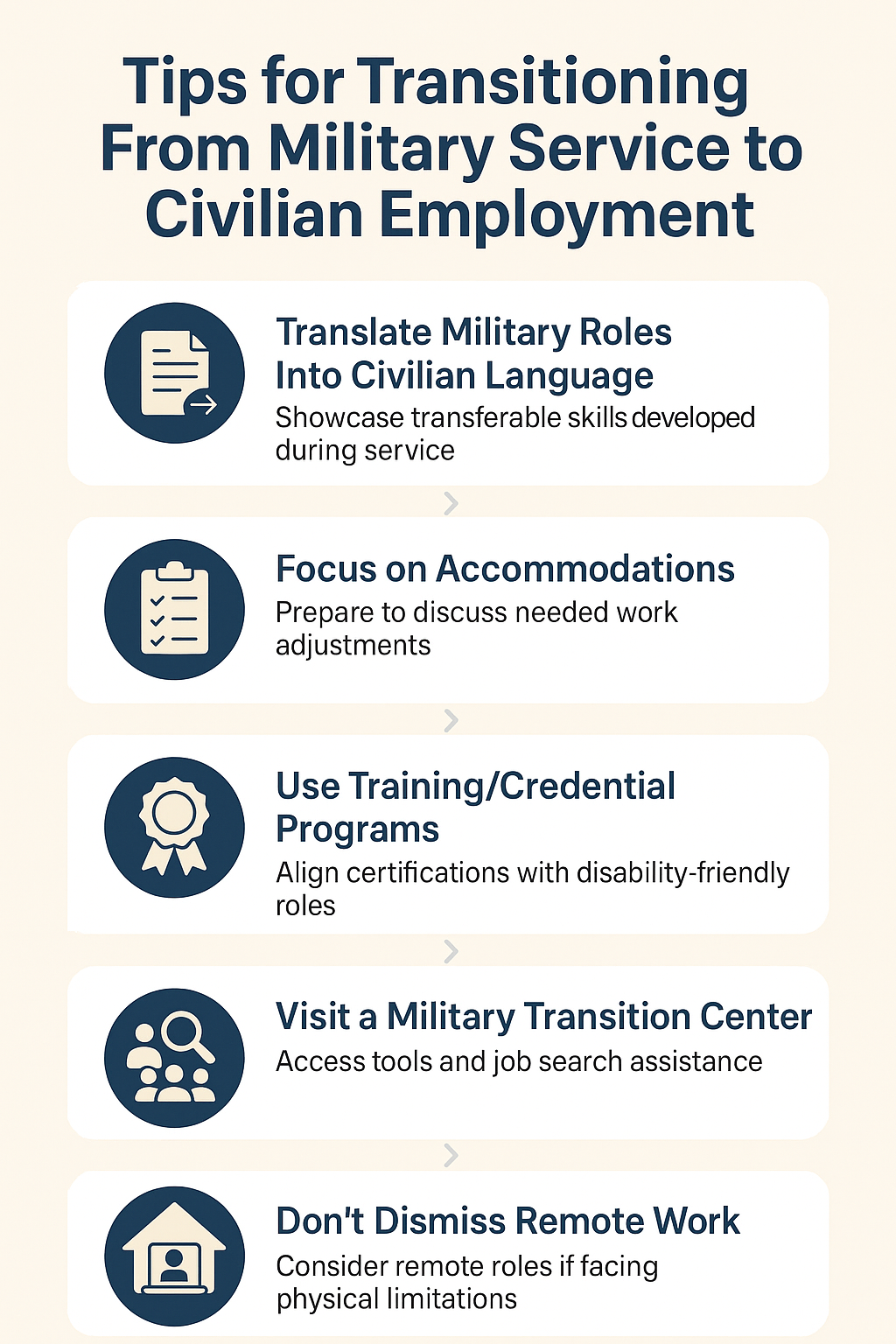
Making a successful jump into civilian employment as a veteran with disabilities takes more than submitting resumes, so here are some key steps to boost your odds:
- Translate your military MOS or job into civilian-friendly language. Highlight how your service roles developed transferrable skills like leadership, tech proficiency, logistics, or security.
- Focus on accommodations: If you need work adjustments (flexible schedule, ergonomic station, remote setup), prepare to speak about them confidently.
- Use training/credential programs: Even short courses or certifications aligned with your disability‑friendly role (e.g., cybersecurity, accessibility tester) help position you for jobs for disabled veterans. Eligibility for certain programs may depend on the service member’s status.
- Visit a military transition center for tools, training, self-assessment, and job search assistance to help translate your military experience into civilian career opportunities.
- Leverage veteran networks and job fairs targeted at veterans with disabilities. Organizations like Disabled American Veterans run job fairs and employer‑match events.
- Don’t dismiss remote work: If physical limitations or health treatments make traditional work hard, remote roles may be the ideal solution.
FAQs About Jobs for Disabled Veterans
For disabled veterans, there are a lot of questions that come up while you are searching for the right job. Here are some of the most frequently asked.
- What are the best careers for disabled veterans? There isn’t one “best” career, but jobs in IT support, cyber/compliance, remote customer service, federal administrative roles, accessibility testing, logistics coordination, and veteran‑service roles are well-suited to veterans with disabilities.
- Does the VA provide employment assistance for disabled veterans? Yes. Through programs like VR&E and initiatives under VAforVets, the VA offers job training, accommodation planning, resume support, and employment placement. You can find detailed information about these programs and additional resources on the VA’s official website and through local VA offices.
- Can disabled veterans get federal jobs more easily? Yes. Hiring authorities like Schedule A and veterans’ preference laws give employment for veterans with disabilities an advantage in federal recruiting, and many agencies also provide employment readiness assistance to help veterans prepare for federal careers.
- Are there remote jobs specifically for veterans with disabilities? Absolutely. Many veteran‑friendly employers now list remote work opportunities open to veterans with disabilities, recognizing the need for flexibility and accessibility.
Your Service Deserves the Right Job and Support
You’ve served with honor and developed skills that deserve recognition. Now it’s time to channel that experience into a career that respects your service, meets your needs, and helps you thrive. Civilian success isn’t just possible. It’s your next mission. Visit AllVeteran.com to explore jobs for disabled veterans, access tailored resources, and take the next step toward a fulfilling future.
 AllVeteran.com Advisors
With expertise spanning local, state, and federal benefit programs, our team is dedicated to guiding individuals towards the perfect program tailored to their unique circumstances.