













Having chronic hip pain or issues with your hips can be excruciating. It can limit your range of motion and potentially even require extensive surgeries. When it comes to how the Department of Veterans Affairs (VA) rates bilateral hip conditions, there is a lot of information to go through.
The VA uses specific diagnostic codes to determine the appropriate hip pain VA rating percentage, which ranges from 0% to 90%. These diagnostic codes are used to classify different hip conditions and help establish the correct VA disability compensation.
When a single hip is affected, you may receive a rating up to 90%. However, when both hips are impacted, the VA will apply the “bilateral factor”, which increases your overall combined rating. The VA disability rating for bilateral hip pain can get up to 100%, depending on the severity of the specific hip condition.
Why This Update
VA ratings can be updated, and we want to make sure you have all the right information so you can get the disability compensation you deserve!
Tamila’s Take
Hip pain is one of those conditions that quietly steals mobility and quality of life. I’ve seen too many veterans settle for low ratings because they didn’t know how to document their pain, flare-ups, or functional limitations. This article is here to help ensure you get the benefits you deserve for both hips, because walking away from pain shouldn’t mean walking away from compensation.
Diagnostic Codes: How the VA Rates Bilateral Hip Conditions
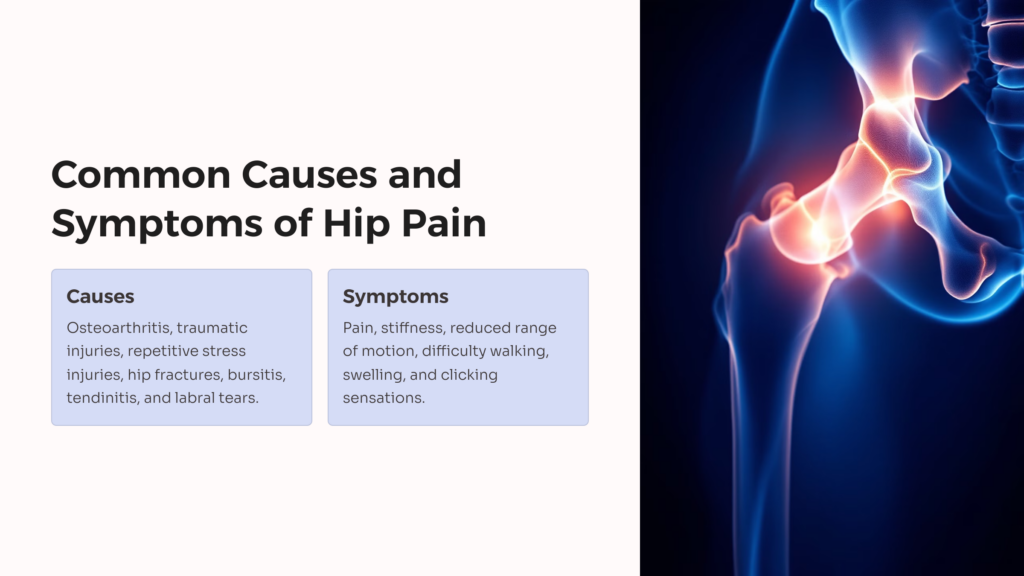
The VA uses multiple diagnostic codes depending on the type of hip condition. Some of the most common conditions include hip osteoarthritis, bursitis, and residuals from injury or replacement surgery. Here is a breakdown of the ratings:
- 5251: Thigh extension limitation (up to 10%)
- 5252: Thigh flexion limitation (10%–40%)
- 5253: Abduction, adduction, or rotation limitation (10%–20%)
- 5003: Degenerative arthritis (10%–20%)
- 5054: Hip replacement (30%–90%)
Ratings are determined by evaluating each hip’s limitation of motion using a goniometer, as outlined in 38 CFR § 4.71a and Diagnostic Codes 5250-5255. The VA uses these diagnostic codes to assess hip range and assign motion VA ratings based on the degree of range of motion.
Range of Motion (ROM) is the primary rating factor for major joints, specifically measuring the restriction in movement such as flexion (leg forward) and extension (leg backward). The severity of limited range in movements like adduction, abduction, and rotation is also considered when determining the level of impairment for various hip-related conditions.
For bilateral hip issues, the VA adds a bilateral factor, which is an extra 10% of the combined rating for both hips, since both sides of the body are affected and cause increased overall impairment.
VA Disability Rating for Bilateral Hip Conditions
Hip conditions may receive different ratings depending on severity and impact on movement. Someone with frequent hospitalization due to their hip condition will receive a higher rating than someone who just experiences occasional pain.
Most of the time, you’ll see it broken down like this:
- 10%–20%: Mild limitations in motion or occasional pain
- 30%–50%: Moderate to severe limitations, use of assistive devices
- 70%–90%: Total hip replacement, severe pain or weakness, frequent hospitalization, or long-term prosthesis issues
If a hip is completely fused (ankylosis), the VA assigns ratings ranging from 60% to 90% depending on the severity and position of the joint. Ankylosis of the hip is rated at 60% for favorable ankylosis, 70% for intermediate ankylosis, and 90% for extremely unfavorable ankylosis that requires crutches.
The VA rates hip osteoarthritis at 10% or 20% under diagnostic code 5003, based on X-ray evidence. Hip replacements are rated under diagnostic code 5054, with a temporary 100% rating given for four months following surgery.
Establishing Service Connection for Bilateral Hip Disabilities
To receive VA benefits, you must prove that your bilateral hip condition is service-connected. This can happen in three ways:
- Direct service connection: Injuries or wear and tear during active duty caused chronic, service-related hip pain.
- Secondary service connection: A service-connected condition, such as a back, knee, or ankle issue, led to compensatory stress on the hips, resulting in a secondary condition.
- Aggravation: Pre-existing hip issues worsened during military service.
You’ll need to show a current diagnosis, in-service event or condition, and a nexus (a medical connection between the two). Obtaining a nexus letter from a private physician can be crucial to establish the connection between your hip condition and your military service.
Be sure to review and submit all service records relating to your medical history and their connection to military service, as these are important for substantiating your claim for service-connected conditions.
Medical Evidence Needed to Support a Bilateral Hip Disability Claim
To file a strong claim, you will need to submit comprehensive medical records, including X-ray evidence, MRIs, or other imaging confirming joint degeneration or abnormalities. The VA may schedule you for a Compensation and Pension exam (C&P exam or pension exam) to assess the severity of your hip condition and its impact on your daily life.
To prepare for the C&P exam, gather all relevant medical and service records related to your hip pain. During your C&P exam, a range of motion test may be performed, and you should be honest about your pain levels and describe the functional impact of your hip condition. That should be submitted with your evidence as well.
Other things that can make your claim stronger include doctors’ notes describing flare-ups, joint pain, stiffness, or use of mobility aids. Be sure to document the underlying physical condition causing your hip pain, such as arthritis or injury, as this helps the VA accurately diagnose and rate the severity of your disability. You can also submit lay statements from family, friends, or coworkers confirming mobility limitations.
What a VA Rating Looks Like in Real Life
Consider this example. Carlos, a former infantry soldier, began experiencing chronic bilateral hip pain after years of airborne jumps and ruck marches. After separation, he was diagnosed with degenerative joint disease in both hips.
Many veterans experience hip pain at higher rates than the general population due to the physical demands of military service.
The VA awarded him 20% per hip, and with the bilateral factor applied, his combined VA rating increased from 36% to 40%, boosting his monthly compensation by hundreds of dollars. That can go a long way in terms of what you need to live.

FAQs About VA Ratings for Bilateral Hip Condition
- What is the average VA rating for bilateral hip conditions? Most bilateral hip ratings fall between 20% and 60%, depending on motion limitations and pain severity. However, the VA disability rating for hip pain can range from 0% to 100%, depending on the severity of the condition and its impact on daily functioning.
- What is the bilateral factor in VA claims? The VA adds 10% of the combined value of both disabilities if both limbs (like both hips) are affected, slightly increasing the final combined rating. The VA may award a bilateral hip strain VA rating using diagnostic codes 5313-5318 or codes 5250-5255 based on the limited range of motion in the hip.
- Can I get a higher rating if I’ve had a hip replacement? Yes. Temporary 100% ratings are granted post-surgery, and permanent ratings up to 90% may apply depending on pain and prosthetic function. The VA rates hip replacements under diagnostic code 5054 based on the degree of ongoing hip pain and range of motion after surgery.
- Can hip issues be secondary to other service-connected disabilities? Yes. Hip problems are commonly a secondary condition to back, knee, or leg injuries due to overcompensation or gait issues. Hip pain can be caused by other service-connected disabilities, and establishing this link is important for your claim.
- What if only one hip is service-connected? You can still get rated for a single hip, but the bilateral factor only applies when both sides are service-connected.
- Can I increase my VA rating if my hip condition worsens? Yes. File for a rating increase with updated medical evidence or proof of worsening symptoms.
- What documentation is important for my claim? Providing evidence of a nexus event, ongoing hip pain, and painful motion is crucial. Medical records, imaging, and doctor statements help support your claim and ensure the VA accurately rates your condition.
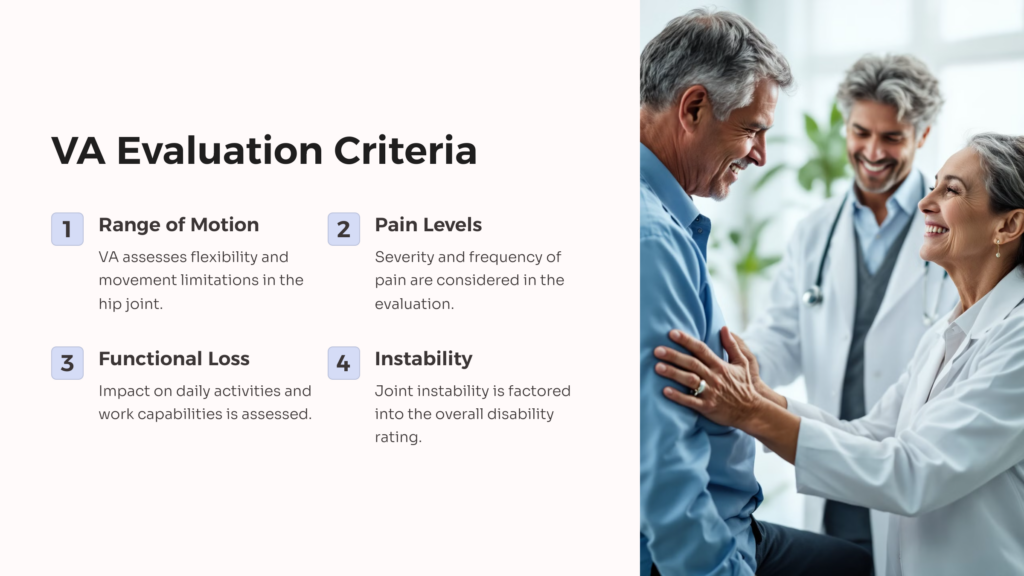
- What does my rating depend on? Hip pain depend on the underlying cause and severity of your condition. The VA considers factors like range of motion, pain, and how the condition affects your ability to work and perform daily activities.
- What diagnostic codes does the VA use for hip conditions? The VA uses diagnostic codes 5250-5255 and 5313-5318 to rate hip conditions, including limited motion, ankylosis, and muscle injuries.
- Can I qualify for TDIU due to my hip condition? Yes. Total Disability Individual Unemployability (TDIU) may be granted to veterans who cannot obtain substantially gainful employment due to their service-connected disabilities, including hip pain. If your hip pain or related symptoms are sufficiently severe, or if certain hip pain causes prevent you from working, you may be eligible for TDIU benefits.
Don’t Let Hip Pain Undermine Your Benefits
Hip conditions can have a significant impact on your day-to-day life. It can impact your mobility, independence, and overall quality of life. Taking the time to understand how the VA evaluates these conditions is key to maximizing your compensation. If both hips are affected, the bilateral factor could significantly boost your overall rating. But you’ll need strong medical evidence, a clear service connection, and a well-documented claim.
If you’re unsure where to start, or if you think your current rating doesn’t reflect the full extent of your condition, AllVeteran.com is here to help. Our free medical evidence screening can identify gaps in your claim and connect you with the support you need to pursue the benefits you’ve earned.
 AllVeteran.com Advisors
With expertise spanning local, state, and federal benefit programs, our team is dedicated to guiding individuals towards the perfect program tailored to their unique circumstances.