














The Army Fitness Test (AFT) officially replaced the Army Combat Fitness Test (ACFT) as the standard United States Army physical fitness test on June 1st, 2025.
This switch stems from extensive data analysis collected over 18 months from nearly one million ACFT iterations, with rigorous analysis support from the RAND Corporation.
As part of this update, the standing power throw event was one event removed from the test, following concerns about its effectiveness in promoting fitness and readiness, as well as its injury risk.
Army leadership emphasizes that this change follows the typical three-to-five-year cycle of fitness standard updates, but with a critical focus on aligning physical demands with modern combat realities.
Key Objectives of the AFT
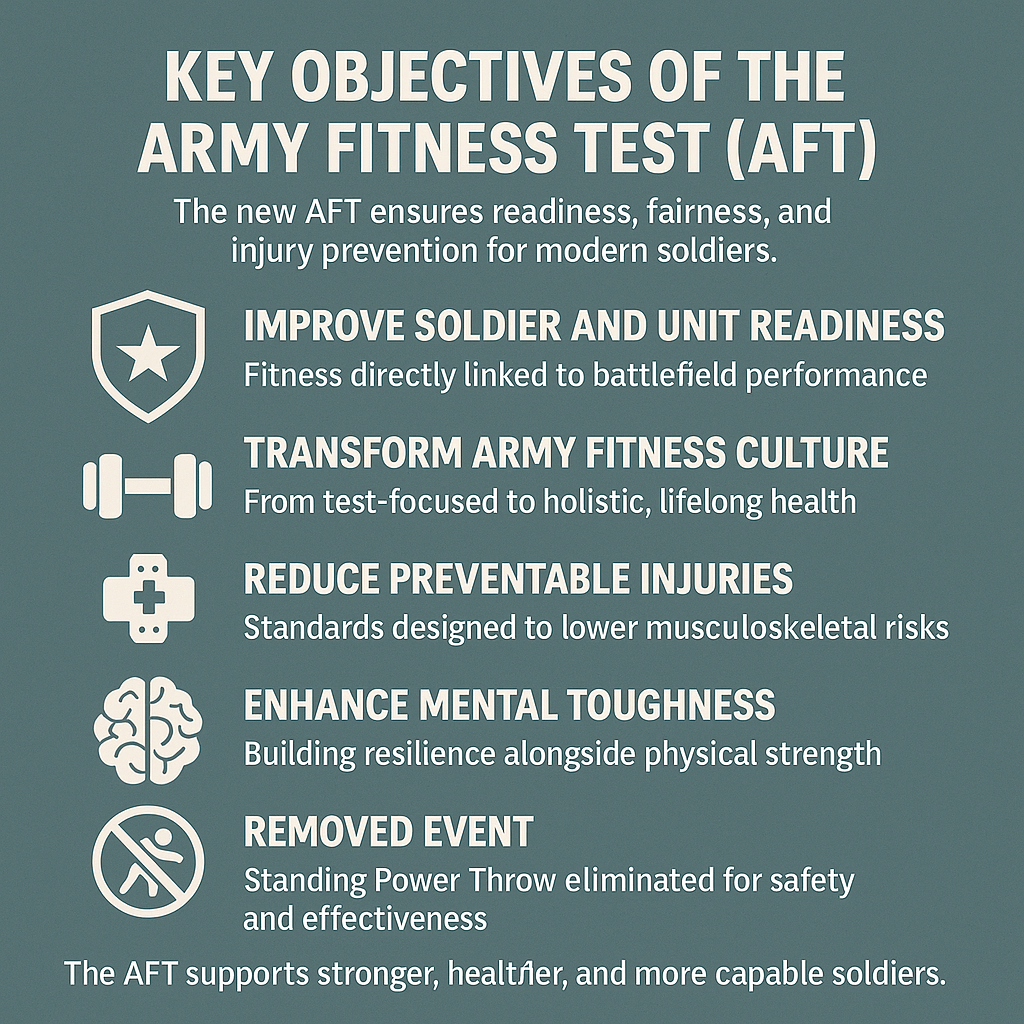
The new Army fitness test is designed to meet multiple strategic goals, from improving overall soldier readiness to reducing preventable injuries. It also seeks to create a fairer, more inclusive standard that better reflects the physical demands of modern military service.
The test is specifically designed to assess a broad range of soldier capabilities, ensuring a comprehensive fitness evaluation.
It aims to achieve several strategic objectives:
- Improve Soldier and Unit Readiness: Ensuring soldiers possess physical capabilities directly correlated with battlefield tasks and improving physical performance as a key aspect of readiness
- Transform Army Fitness Culture: Shifting focus from merely passing tests to cultivating holistic fitness and lifelong well-being
- Reduce Preventable Injuries: Implementing standards that minimize musculoskeletal injury risks
- Enhance Mental Toughness: Developing physically strong and mentally resilient forces
A significant change in the new Army fitness test is the removal of the standing power throw (the “ball yeet” event), which was eliminated due to its ineffectiveness in promoting fitness readiness and elevated injury risk.
The Five Core Events of the New Army Fitness Test
The AFT consists of five carefully designed events that comprehensively evaluate a soldier’s physical prowess across various Army fitness requirements.
1. 3 Repetition Maximum Deadlift Event (MDL)
Assessment Focus: Muscular strength (lower body, grip, core)
Soldiers use a hex bar to deadlift maximum weight for three continuous repetitions. The repetition maximum deadlift event builds well-conditioned back and leg muscles crucial for lifting heavy objects, loading equipment, and casualty extraction while preventing common hip, knee, and lower back injuries.
2. Hand Release Push-Up – Arm Extension Event (HRP)
Assessment Focus: Muscular endurance (upper body, core)
Soldiers perform hand-release push-ups in two minutes. Each repetition requires pushing the whole body up as a single unit, ensuring the elbows are fully extended at the top. The up position is achieved when the arms are straight and fully extended. After lowering to ground contact, soldiers extend their arms into a “T” position before returning to the starting position.
The only authorized rest position during the event is the front-leaning rest, where the body remains straight and no part of the body except the hands and feet touch the ground. Any other rest position is not permitted.
This directly translates to combat tasks like moving obstacles and quick ground movements under fire.
3. Sprint-Drag-Carry Event (SDC)
Assessment Focus: Muscular endurance, strength, anaerobic power and endurance
This timed event consists of five 50-meter shuttles (250 meters total):
- Sprint: 25m sprint and back
- Drag: Pull a 90-pound sled backward 25m and back
- Lateral: Lateral shuffle 25m and back
- Carry: Two 40-pound kettlebells 25m and back
- Sprint: Final 25m sprint and back
This multifaceted event assesses the soldier’s ability to perform high-intensity, short-duration physical tasks, reflecting combat tasks like reacting to fire, building fighting positions, and casualty extraction.
4. Plank Event (PLK)
Assessment Focus: Muscular endurance (core), balance
Soldiers hold the proper plank position for maximum time, maintaining a straight line from head to heels, ensuring that no part of his or her body touches the ground except the forearms and toes. Strong core strength is fundamental for all soldier tasks, including obstacle navigation, rope climbing, and maintaining stability under load.
5. Two-Mile Run Event (2MR)
Assessment Focus: Aerobic endurance
Soldiers complete a timed two-mile run on a measured, generally flat outdoor course such as a track, road, or sidewalk. Higher aerobic endurance is vital for sustained movement, ruck marches, infiltration, and quick recovery after intense physical exertion.
New Army Fitness Test Scoring Standards
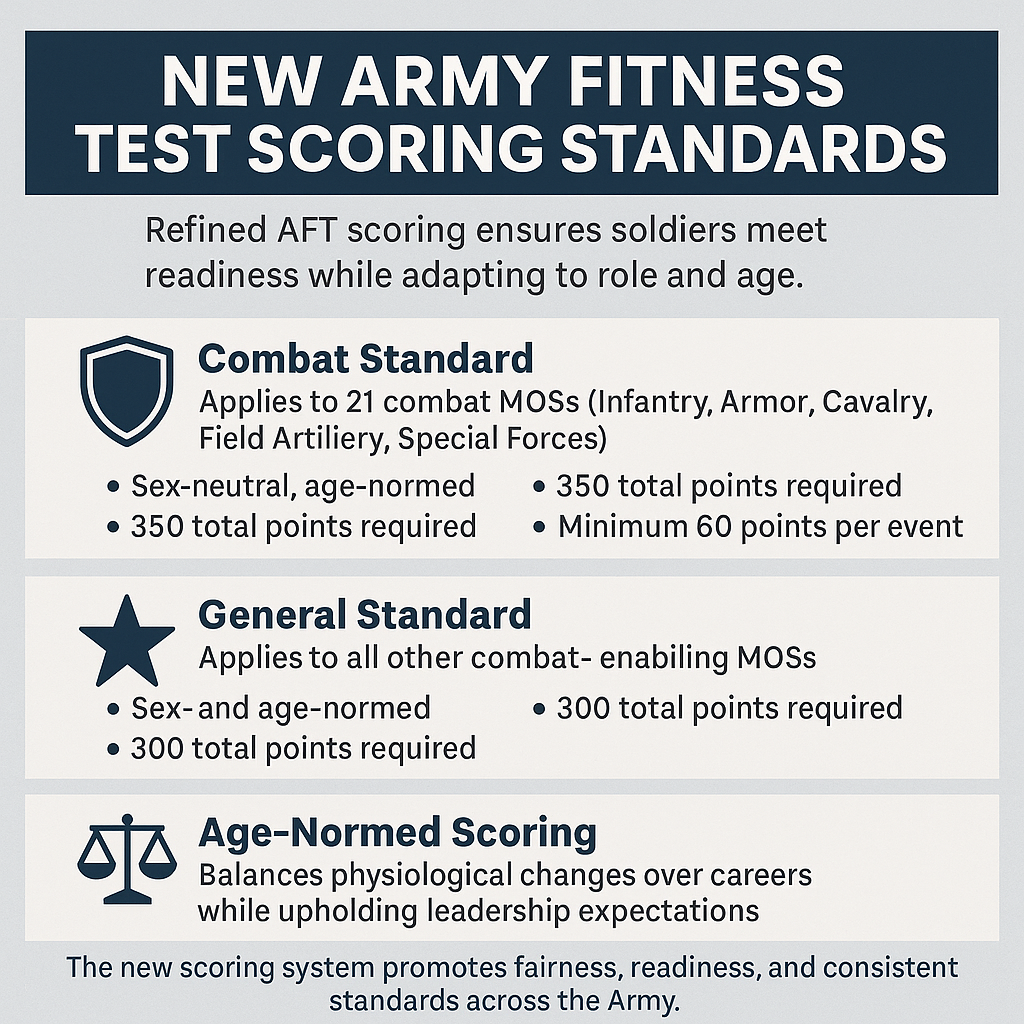
The new Army fitness test introduces refined scoring with two primary categories tailored to different military roles. To pass the test, soldiers must achieve a minimum score in each event, ensuring they meet the required standards for readiness and eligibility.
Combat Standard
Applies to soldiers in 21 designated combat Military Occupational Specialties (MOSs), including Infantry, Armor, Cavalry, Field Artillery, and Special Forces, who must meet specific combat standards. Features:
- Sex-neutral, age-normed standard
- 350 total points required
- Minimum 60 points per event
General Standard
Applies to all other soldiers in combat-enabling specialties:
- Sex- and age-normed scoring
- 300 total points required
- Minimum 60 points per event
The age-normed scoring acknowledges physiological demands throughout military careers while maintaining leadership expectations across all age groups.
Implementation Timeline and Policy Impact
The new Army physical fitness test rollout follows a carefully phased approach:
First, active duty soldiers are required to meet the new standards by the initial implementation date, while reserve soldiers—including National Guard and Army Reserve personnel—have separate deadlines to comply with the updated requirements in their respective phases.
The policy impact is significant, as the Army Fitness Test (AFT) is typically administered during annual training periods. This ensures that both active duty and reserve soldiers are evaluated on their physical readiness as part of their routine military obligations.
For soldiers with a medical profile, a permanent medical condition may qualify them for alternative aerobic events or other testing accommodations, in accordance with Army policy. This allows those with longstanding health issues to meet fitness requirements through approved alternatives.
Phase 1: June 1, 2025
AFT officially becomes the test of record for all soldiers in the United States Army.
Phase 2: September – December 2025 (Voluntary Reclassification)
Combat MOS soldiers scoring 300-349 points receive diagnostic tests, training plans, and counseling. Voluntary reclassification options are available for qualifying personnel.
Phase 3: January 1, 2026 (Mandatory Reclassification – Active Component)
New scoring standards take effect for active component combat MOSs. Soldiers not meeting the 350 combat standard face involuntary reclassification based on service time and rank.
Phase 4: June 1, 2026 (Reserve and National Guard)
New scoring standards were implemented for Reserve and National Guard components.
Impact on Promotions and Body Composition
AFT scores now play a direct role in promotion points, with revised tables determining how performance translates into career advancement. For the time being, ACFT scores will still count toward promotions until September 30, 2025, giving soldiers time to transition to the new system. The updated policy also provides Height and Weight assessment exceptions for those who perform well on the AFT, offering an incentive for high achievement. While medical profiles can defer testing temporarily, all soldiers are expected to complete the AFT by January 2026 to remain in compliance.
Training for the New Army Fitness Test
Success on the new Army fitness test requires consistent, integrated training rather than mere test preparation, aligning with the Holistic Health and Fitness (H2F) initiative and broader military training standards.
Incorporating warm-up and cool-down exercises into your training regimen is essential to improve performance and reduce the risk of injury.
When following general training principles, always focus on using proper technique during all training activities to ensure safety and effectiveness.
General Training Principles
To prepare effectively for the AFT, soldiers are encouraged to establish a regular fitness routine that aligns with the Physical Activity Guidelines, aiming for 150 to 300 minutes of aerobic exercise each week. Progress should be gradual, with intensity or duration increasing by no more than 10% weekly to reduce the risk of injury while still building strength and endurance. A holistic approach is essential, incorporating all five components of AFT fitness to ensure balanced development and readiness across every tested area.
Event-Specific Training Recommendations
Deadlift (MDL) Training:
- Focus on technique with 3-5 repetitions with heavy weights
- Include Sumo Deadlifts, Squat Jumps, and Forward Lunges
- End deadlift workouts with cardio for leg endurance
Hand Release Push-Up and Plank Training:
- Integrate HRP and plank holds into all upper-body workouts
- Use the Supine Chest Press, 8-count T Push-ups, and the Incline Bench
- Try “Death by Push-ups Challenge” for combined training
- Note: Sit ups were previously used to assess core endurance in the Army Physical Fitness Test (APFT), but the plank is now the standard for measuring core strength.
Sprint-Drag-Carry Training:
- Practice Straight Leg Deadlifts, Bent Over Rows
- Include 300M Shuttle Runs, interval-based cardio
- Follow with paced running intervals and air squats
Two-Mile Run Training:
- Maintain regular cardio with varied workouts
- Include tempo runs, intervals, long, slower runs
- Consider non-impact alternatives for injury recovery
- For soldiers with medical conditions preventing them from performing the standard two-mile run, alternate events are available and are scored on a pass/fail basis. These alternate events can be used to meet fitness or promotion requirements.
Preparing for Success on the New Army Fitness Test
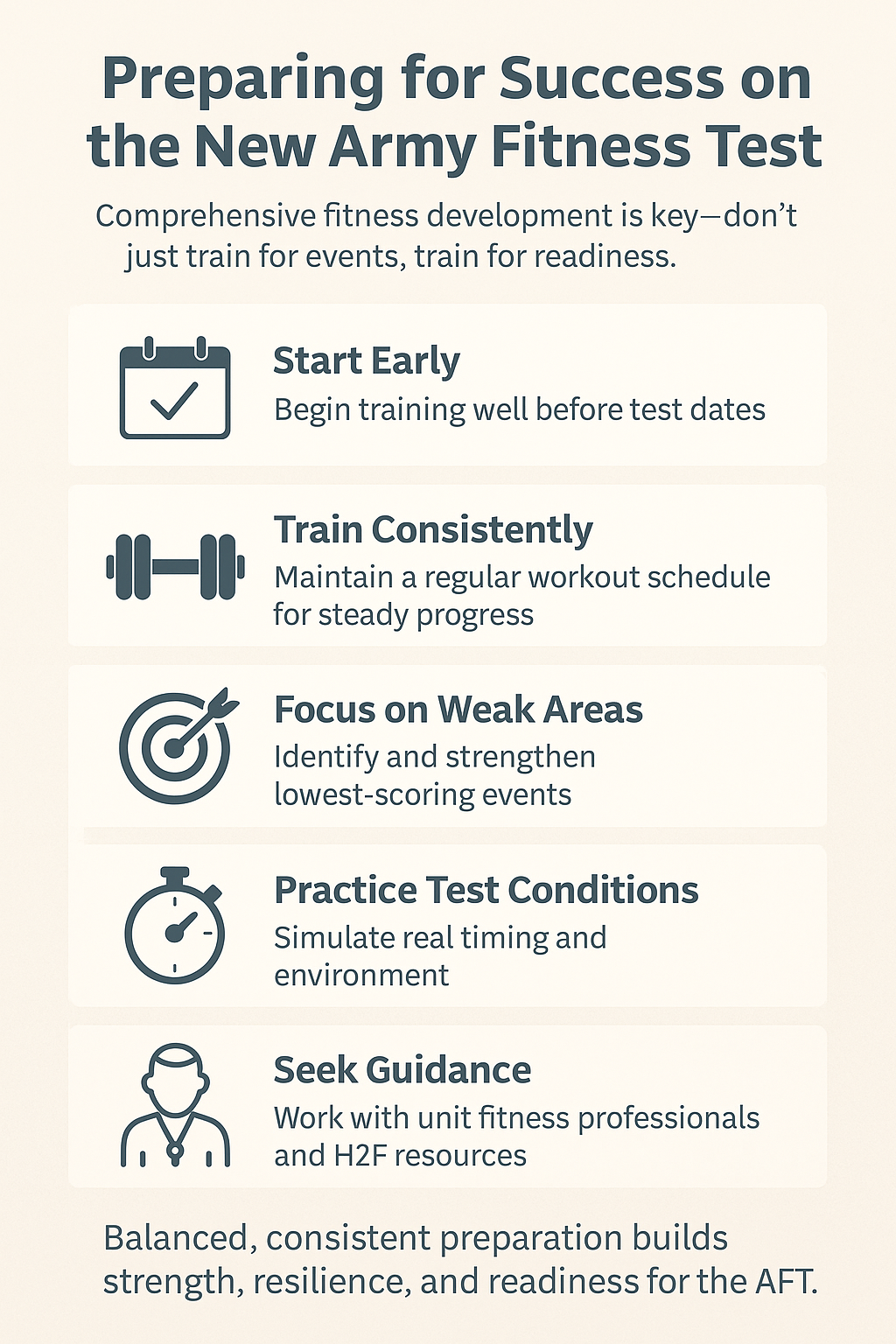
Soldiers preparing for the new Army fitness test should focus on comprehensive fitness development rather than event-specific training.
- Start Early: Begin training well before test dates
- Train Consistently: Maintain regular exercise schedules
- Focus on Weak Areas: Identify and improve the lowest-scoring events
- Practice Test Conditions: Simulate actual test environment and timing
- Seek Professional Guidance: Utilize unit fitness professionals and H2F resources
Fitness Requirements Are Constantly Evolving
This new test represents a significant evolution in Army fitness requirements and standards, designed to better prepare soldiers for modern combat demands while promoting long-term health and readiness. With its five-event structure, role-specific scoring, and emphasis on functional fitness, the AFT challenges soldiers to develop comprehensive physical capabilities essential for battlefield success.
At Allveteran.com, we seek to help veterans connect with resources that may make all the difference. To find out your disability rating, take our free medical evidence screening today!
 AllVeteran.com Advisors
With expertise spanning local, state, and federal benefit programs, our team is dedicated to guiding individuals towards the perfect program tailored to their unique circumstances.