













People ask a simple but important question: is PTSD a disability? The answer is yes. Post-Traumatic Stress Disorder is recognized as a disability by the Social Security Administration (SSA), the U.S. Department of Veterans Affairs (VA), and under the Americans with Disabilities Act (ADA). But recognition is only part of the picture. To qualify for disability benefits, your PTSD must substantially limit your ability to function in daily life, and you must document that impact clearly.
This guide explains how PTSD qualifies as a disability, what evidence matters, and the steps you can take to secure the support available.
What PTSD Really Means
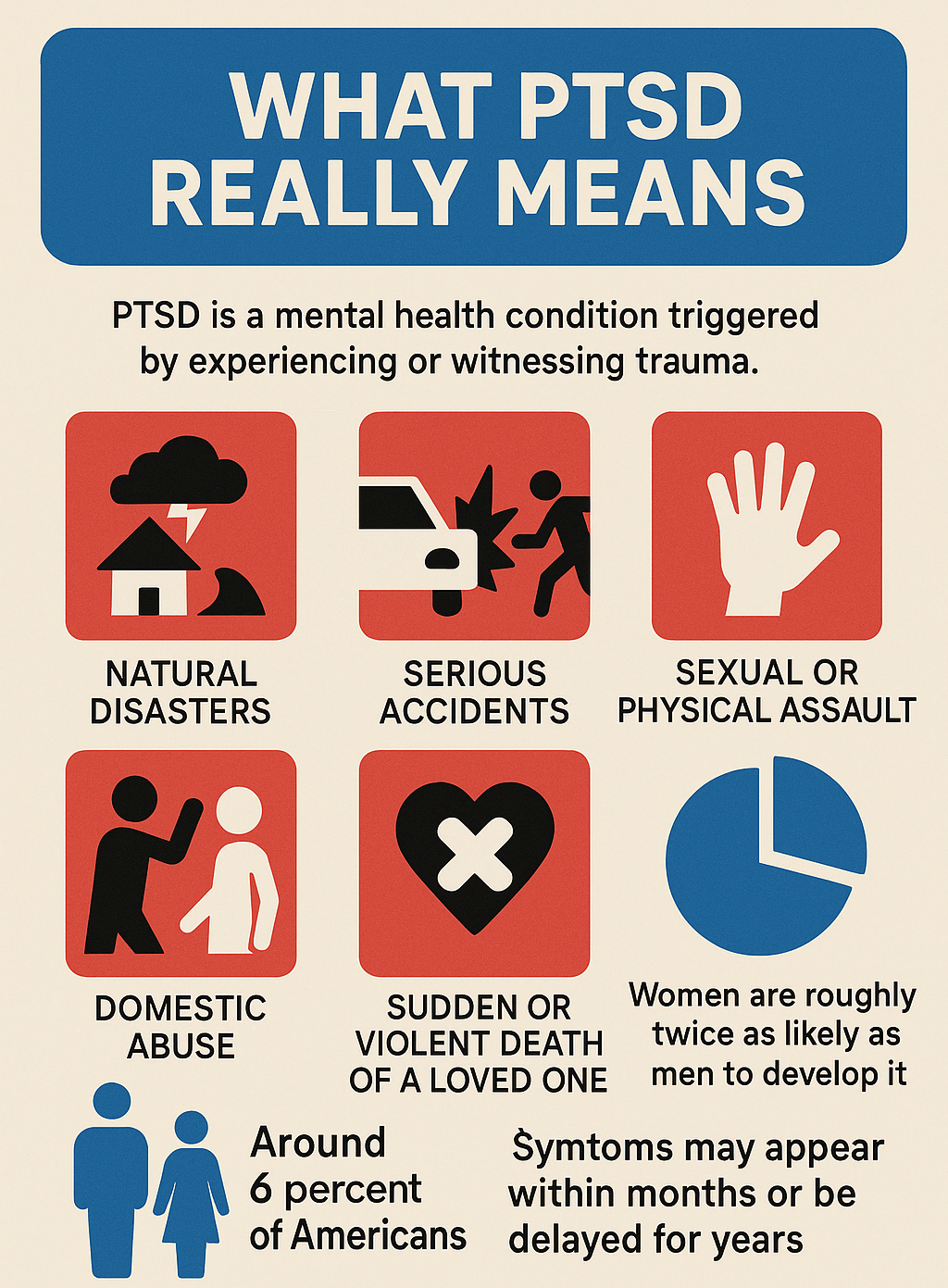
PTSD is a mental health condition triggered by experiencing or witnessing trauma. Military combat is the example many think of, but PTSD can also result from:
- Natural disasters
- Serious accidents
- Sexual or physical assault
- Domestic abuse
- Sudden or violent death of a loved one
Around 6 percent of Americans will experience PTSD at some point in their lives. Women are roughly twice as likely as men to develop it. Symptoms may appear within months or be delayed for years. For some people, PTSD becomes a chronic condition if left untreated.
How Symptoms Affect Daily Living
PTSD symptoms fall into four broad groups. They do not just cause emotional pain; they interfere with work, relationships, and basic tasks.
1. Intrusion and re-experiencing
- Flashbacks that feel like the trauma is happening again
- Nightmares and disrupted sleep
- Intense physical reactions to reminders, like rapid heartbeat or nausea
2. Avoidance
- Refusing to think or talk about the trauma
- Avoiding places, people, or activities tied to memories
- Pulling away from social connections
3. Negative thoughts and mood
- Persistent negative beliefs about yourself or others
- Hopelessness about the future
- Emotional numbness or detachment
- Overwhelming guilt or shame
4. Arousal and reactivity
- Constantly on guard for danger
- Irritability or angry outbursts
- Concentration problems
- Sleep difficulties
Together, these symptoms can make it hard to hold a job, keep relationships steady, or manage day-to-day life. That impact is what turns a medical diagnosis into a legally recognized disability.
Is PTSD a Disability under the ADA?
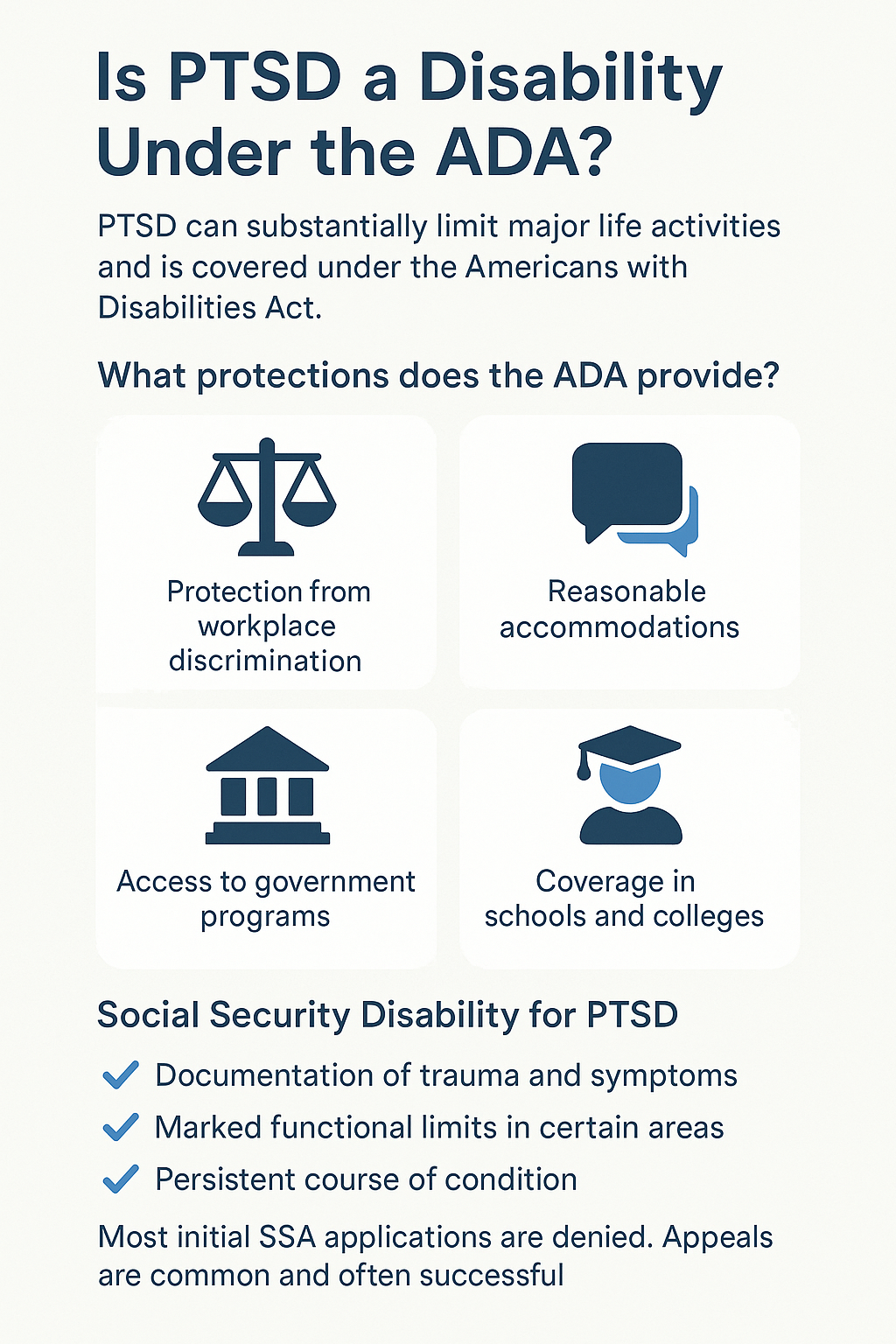
Yes. The ADA defines disability as a physical or mental impairment that substantially limits major life activities such as working, sleeping, thinking, or interacting with others. PTSD fits squarely within that definition if symptoms are severe.
What protections does the ADA provide?
- Protection from workplace discrimination
- An interactive process to request reasonable accommodations
- Equal access to government programs and public spaces
- Coverage in schools and colleges
Housing rights are not covered by the ADA but by the Fair Housing Act, which also prohibits disability discrimination and requires reasonable accommodations such as allowing an emotional support animal.
For work, accommodations might include flexible scheduling for therapy, a quieter workspace, or written instructions to reduce memory strain. Employers must provide these unless doing so would cause undue hardship.
Social Security Disability for PTSD
The SSA evaluates PTSD under Listing 12.15 of its impairment guide. To qualify for Social Security Disability Insurance (SSDI) or Supplemental Security Income (SSI), you must show both medical evidence and functional limitations.
SSA requires documentation of:
- Exposure to actual or threatened death, serious injury, or violence
- Involuntary re-experiencing of the trauma
- Avoidance of reminders
- Negative changes in mood or thinking
- Increased arousal and reactivity
Then you must meet either:
- Marked functional limits (extreme in one or marked in two of these areas): learning and applying information, interacting with others, concentrating and maintaining pace, or adapting and managing yourself
- Serious and persistent course: at least two years of documented treatment or structured support with limited ability to adapt outside that support
Most initial SSA applications are denied. In fact, about 60 to 70 percent of disability claims are turned down at first. Appeals are common and often successful if evidence is complete.
VA Disability Compensation for PTSD
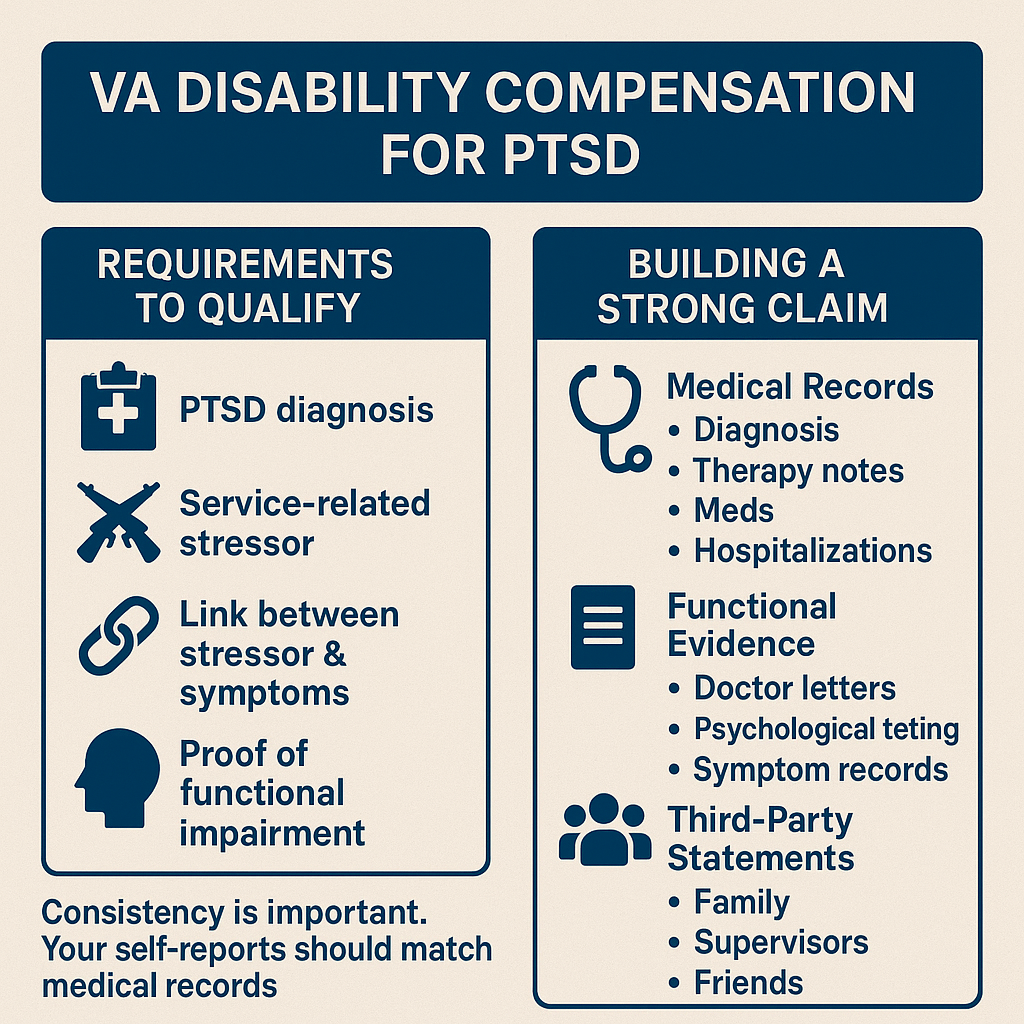
Veterans can receive disability compensation if PTSD is linked to their service. You must show:
- A professional PTSD diagnosis
- A service-related stressor
- A clear link between the stressor and current symptoms
- Proof of functional impairment
The VA assigns a disability rating based on severity. Veterans may also qualify for Social Security benefits at the same time; the two programs operate separately.
Building a Strong Claim
Winning a disability claim for PTSD is less about the diagnosis and more about demonstrating how symptoms limit your functioning. Evidence is critical.
Medical records
- A diagnosis from a licensed professional
- Therapy and psychiatry notes
- Medication records and treatment response
- Any psychiatric hospitalizations
Functional evidence
- Doctor letters spelling out work limits (for example, inability to concentrate for more than short periods)
- Psychological testing results
- Records showing symptom progression
Third-party statements
- Family describing your daily struggles
- Supervisors explaining work performance problems
- Friends or caregivers noting behavioral changes
Consistency is important. Your self-reports should match what doctors note in records. Gaps in treatment or inconsistent evidence can hurt your case.
Treatment That Helps and Strengthens Claims
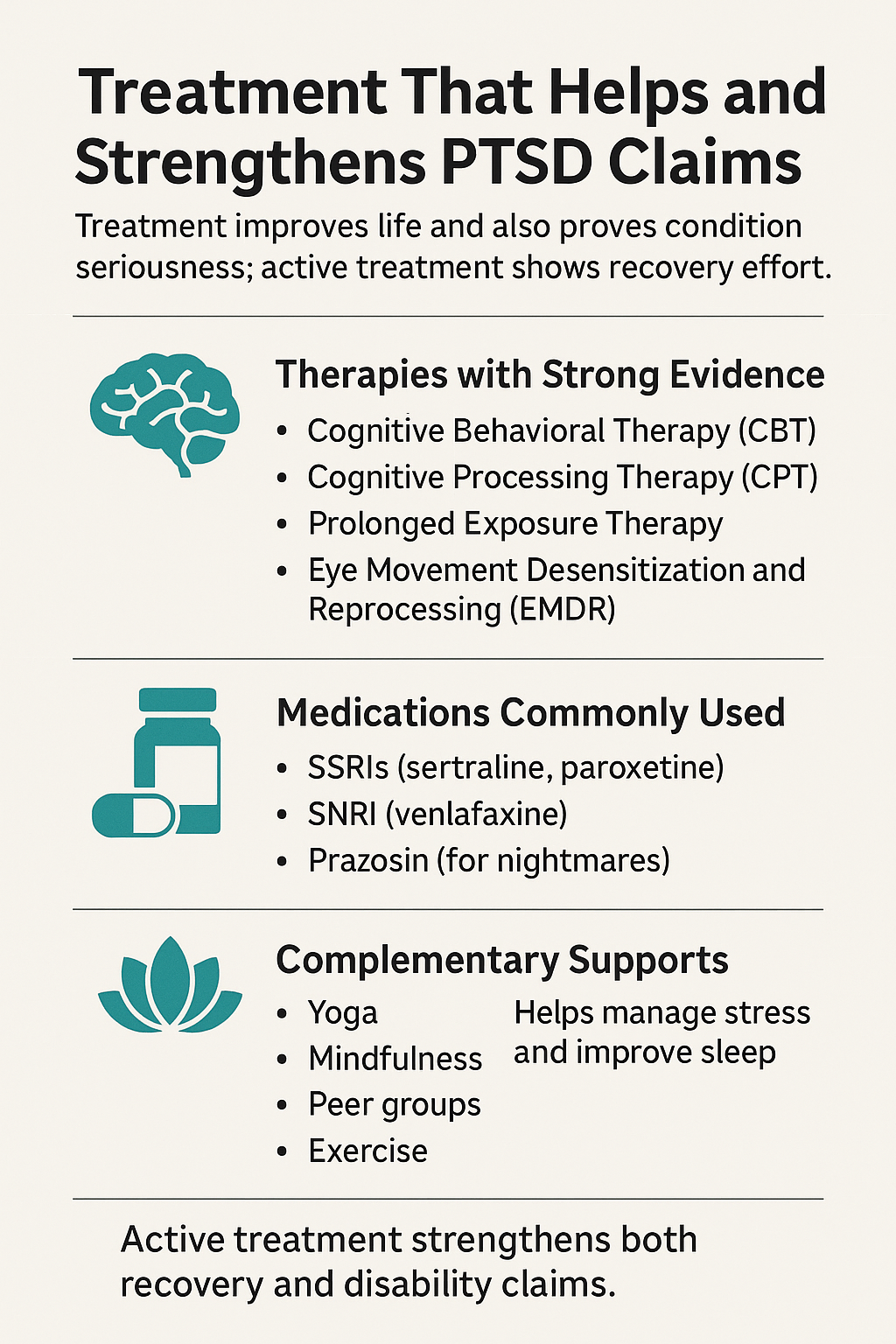
Treatment is about improving your life, but it also helps prove the seriousness of your condition. Active treatment shows effort to recover, which benefits decision-makers evaluating your claim.
Therapies with strong evidence:
- Cognitive Behavioral Therapy (CBT)
- Cognitive Processing Therapy (CPT)
- Prolonged Exposure Therapy
- Eye Movement Desensitization and Reprocessing (EMDR)
Medications commonly used:
- SSRIs such as sertraline and paroxetine
- SNRI venlafaxine
- Prazosin for nightmares in some cases
Complementary supports:
Yoga, mindfulness, peer groups, and exercise can help manage stress and improve sleep.
Legal and Professional Help
Disability law is complicated. Working with an attorney or accredited advocate can increase approval odds. They can:
- Collect and organize medical evidence
- Ensure applications address the exact SSA or VA criteria
- Prepare you for hearings
- File appeals if denied
Many lawyers work on contingency, meaning you pay only if your claim succeeds.
Practical Steps to Take
If you believe your PTSD prevents you from working or handling daily activities, here is a roadmap:
- Get a clear diagnosis from a qualified mental health professional.
- Stick with treatment and follow your provider’s plan.
- Collect documentation of symptoms, limitations, and treatment history.
- Ask for written opinions from doctors about specific functional limits.
- Gather statements from family or former employers who have seen the effects.
- File your claim with SSA or VA as soon as you meet the requirements.
- Prepare for appeals if denied, since persistence is often necessary.
- Consult legal help to strengthen your case and navigate the process.
The Takeaway
So, is PTSD a disability? Yes—if it limits major life activities in a significant way. Federal law and programs recognize PTSD as a serious mental health condition deserving of protection and support. The ADA can secure accommodations in work and school. SSA can provide monthly disability benefits if functional limits are well documented. The VA can compensate veterans whose PTSD stems from military service.
Qualifying takes more than a diagnosis. It requires consistent treatment records, detailed medical notes, and credible accounts of how PTSD affects your life. While the process can be long and frustrating, benefits are possible with persistence and the right evidence.
Living with PTSD is not a weakness. It is a recognized medical condition. If your symptoms interfere with daily life, know that legal protections and financial benefits exist to help you. With proper documentation and support, you can claim the assistance you are entitled to.
At Allveteran.com, we seek to help veterans connect with resources that may make all the difference. To find out your disability rating, take our free medical evidence screening today!
 AllVeteran.com Advisors
With expertise spanning local, state, and federal benefit programs, our team is dedicated to guiding individuals towards the perfect program tailored to their unique circumstances.