













If you have ever dealt with the VA disability rating system, you know that it isn’t one-size-fits-all. Veterans often have to receive additional help to get the resources they need and deserve. Surprisingly, one of the most overlooked factors influencing a veteran’s claim is their Military Occupational Specialty (MOS), which varies by branch (such as Army, Navy, Air Force, Marines, or Coast Guard). No matter what your job was in the military, it will have an impact on how your VA disability rating is calculated. This is because your exposure to certain conditions may have an impact on your rating.
As a veteran, it is crucial to understand how VA ratings may vary based on your MOS. Your military service can significantly influence your disability rating, as conditions arising during or worsened by service are key factors in claims. Having a full understanding of it can help you get the benefits you’ve rightfully earned.
Tamila’s Take
One thing I’ve learned after years of working with veterans is that too many of them underestimate how much their actual job in the military shaped their health. I can’t tell you how many times I’ve heard someone say, “Well, I wasn’t in the infantry,” or “I just worked in an office,” as if that somehow means their pain, hearing loss, or anxiety doesn’t count. But your MOS tells a story, one that the VA pays attention to, whether you realize it or not.
Your service counted. Your injuries count. And your MOS is part of the proof that helps the VA finally see the full picture.
Why This Update
Every year, disability benefits amounts are adjusted to reflect the COLA. That means that your VA rating carries a new meaning.
What Are VA Disability Ratings?
If you aren’t already familiar with the VA disability rating system, these are percentages assigned by the U.S. Department of Veterans Affairs (VA) to determine the severity of service-connected conditions. The percentage assigned to your case will have a direct impact on the amount of monthly disability compensation you will receive. These ratings are used to determine your entitlement to VA disability compensation.
Ratings range from 0% to 100% and they go up in 10% increments. A higher percentage reflects greater impairment and results in a higher monthly payout. Veterans who are eligible for VA disability compensation must meet certain requirements, and eligibility depends on factors such as service connection, the severity of the condition, and supporting evidence.
The Role of MOS in Disability Claims
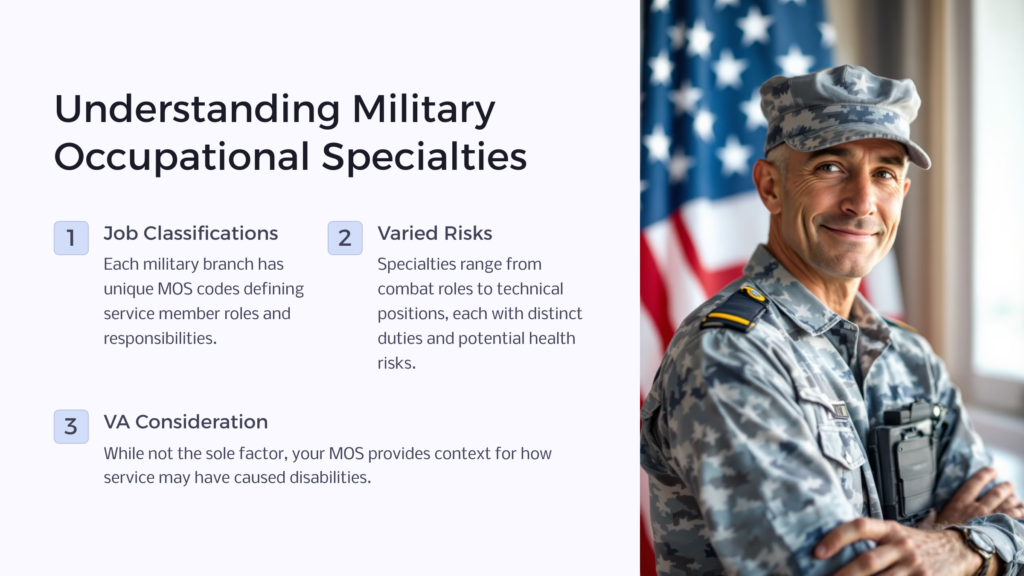
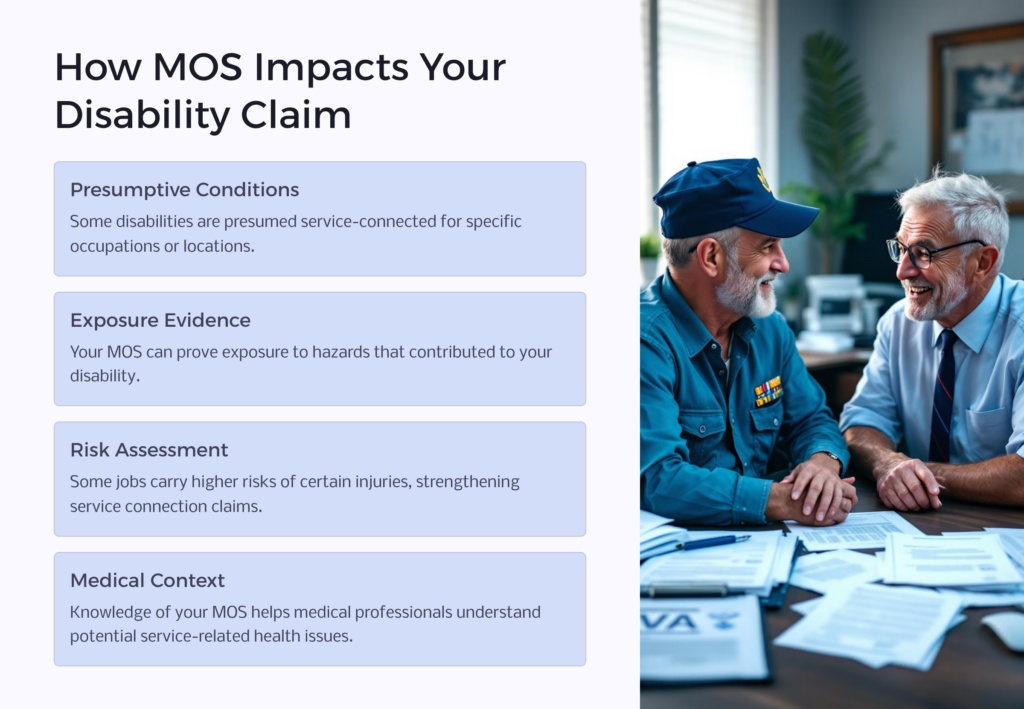
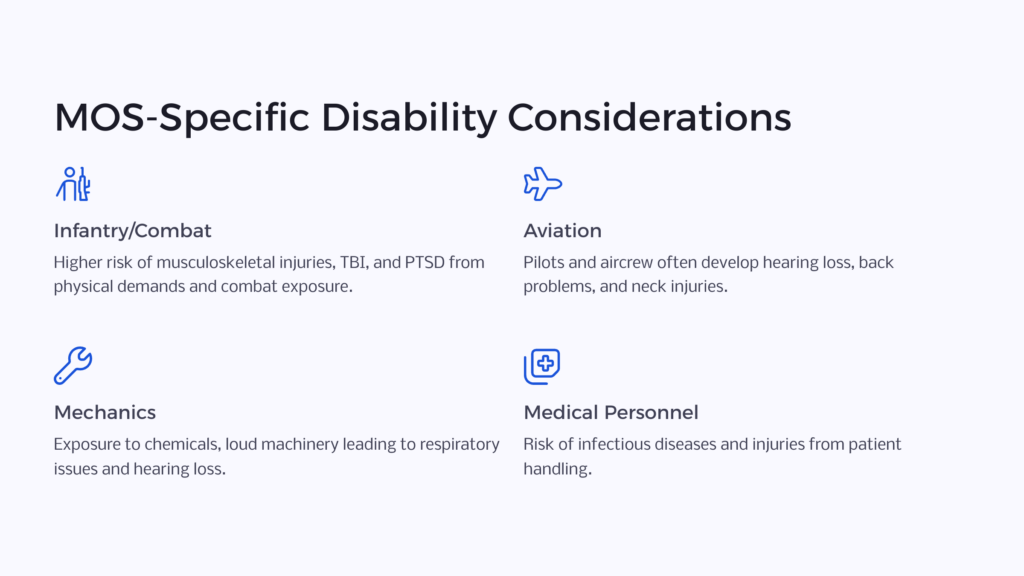
When it comes to disability claims, your MOS not only defines your duties and responsibilities in the service. It also identifies the risks you were exposed to during your time in uniform. For example, a specific MOS, such as a mechanic, could be associated with exposure to hazardous fumes, while an infantry soldier could be faced with constant concussive blasts. All of these things can impact your life beyond your time of service, and the VA ratings by MOS reflect these differences.
You won’t receive a disability rating based on your job title alone, but your MOS can provide some context to your condition. Be sure to include details about your MOS and your specific duties when filing your claim, as this information can be crucial.
While your MOS is important, it does not guarantee a disability rating. The VA considers multiple factors, including medical evidence and service records, when making a determination.
Common Conditions by Combat MOS
Combat positions, such as infantry, artillery, special forces, and combat engineers, are frequently exposed to physical and psychological stressors on the job. Post-Traumatic Stress Disorder (PTSD) is commonly linked to combat exposure, including firefights and stress from combat incidents. Veterans in these MOSs often file disability claims for these conditions:
- Post-Traumatic Stress Disorder (PTSD)
- Tinnitus and hearing loss: The VA considers noise exposure when evaluating claims for tinnitus and hearing loss. The Duty MOS Noise Exposure Listing helps determine the likelihood of hazardous noise exposure for specific Military Occupational Specialties. Tinnitus is the most common disability claim among veterans.
- Traumatic Brain Injury (TBI)
- Joint and back injuries
- Scarring and shrapnel wounds
Many of these conditions result in a moderate to high VA disability rating. It will all depend on the severity of your specific case. For example, individuals with tinnitus will typically receive a 10% rating. Individuals suffering from PTSD could be rated anywhere from 30% to 100%. The VA uses the Duty MOS Noise Exposure Listing to help establish in-service noise exposure for certain MOSs, which can be critical for hearing-related claims.
Some conditions can become worse over time due to continued exposure or the nature of the injury, which may impact your disability rating and benefits.
Common Conditions by Support MOS
Individuals who worked in support roles, like administration, supply chain, maintenance, or IT, might not have faced combat trauma, but that doesn’t mean that they don’t encounter harmful environments. Veterans in these fields frequently file claims for the following conditions:
- Repetitive stress injuries (like carpal tunnel syndrome)
- Sleep apnea (often aggravated by long shifts or irregular sleep schedules)
- Hearing loss from equipment or radio communications
- Chemical exposure for mechanics and logistics personnel
- Migraines may arise as a result of blast injuries, as well as stress or sleep disturbances related to PTSD
Secondary conditions can also develop from these initial injuries or exposures, so it is important to recognize and claim any additional health issues that arise as a result.
It might be easy to shrug these things off because they don’t sound as dramatic as a battlefield wound or psychological trauma. However, they can still have a lasting impact on their lives following their time in the service, and they have long-term consequences.
When filing a claim, it is crucial to document a current disability and provide treatment records as supporting medical evidence. Understanding how VA disability claims by specialty are evaluated helps these veterans avoid having their claims undervalued.
How to Strengthen Your VA Claim
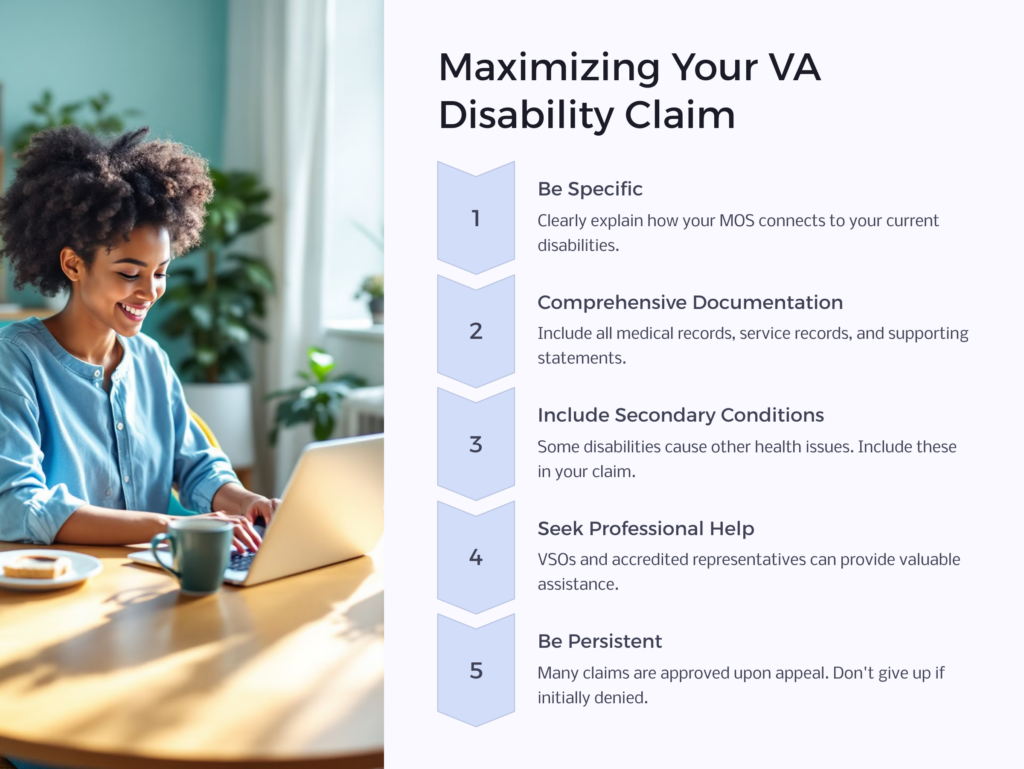
If you want to get the highest rating possible for your VA claims, it’s crucial to build a VA disability claim that clearly links your condition to your MOS. The process involves gathering and submitting strong evidence to support your case. Start by collecting:
- Your Military Occupational Specialty code and job description
- Service medical records showing exposure and/or treatment
- Buddy statements from colleagues who witnessed the issue
- Medical nexus letters connecting your condition to service
For complex cases, seeking help from a VA-accredited attorney or VSO can help you organize your documentation and argue your claim more effectively.
Example Scenario
James, age 34, served as an 88M Motor Transport Operator for eight years before separating in 2024. He developed chronic lower back pain and sciatica from long hours driving military vehicles over rough terrain, and was recently diagnosed with sleep apnea requiring a CPAP machine. His VSO advised him to file an Intent to File immediately in March 2026, citing the paused medication-impact rule that could affect future sleep apnea ratings.
Under current criteria, his sleep apnea qualifies for the automatic 50% rating for CPAP use, and his lumbosacral strain with secondary sciatica could combine for additional compensation at the 2026 COLA-adjusted rates.
FAQs About VA Ratings and MOS
There are always a number of questions that come up when you’re talking about VA ratings and MOS. Here are some of the most frequently asked.
How does MOS affect VA disability ratings?
Your MOS can influence what conditions the VA expects to see, making it easier to prove service connection for illnesses or injuries common to your specialty.
Do combat MOS veterans receive higher ratings?
Not automatically, but combat MOS roles often involve more severe or visible injuries, which can lead to higher ratings if properly documented.
Can support MOS veterans get high ratings, too?
Yes. While the types of conditions may differ, support MOS veterans can still receive high ratings, especially for chronic or degenerative conditions.
Is there a chart of VA ratings by MOS?
The VA doesn’t publish one, but many law firms and veterans’ organizations collect data and publish common conditions, rating trends, and additional information for each by MOS.
What if my MOS changed during my service?
List all MOSs you served under. The VA will consider each when reviewing your full service record and associated medical issues.
Your Service Counts, Make Sure Your Benefits Do Too
Veterans often assume their disability isn’t “serious enough” unless they served in combat, but that’s simply not true. Every MOS comes with its own risks, and the VA is meant to recognize that.
We honor the sacrifices you made while serving our country. Understanding how VA ratings vary by MOS can help you build a stronger claim, gather the right evidence, and secure the VA benefits you’ve earned. Whether you carried a rifle or a wrench, your service mattered, and so should your benefits.
Visit AllVeteran.com today for a free medical evidence review and expert guidance to help you get the VA rating you deserve—start today and take the first step toward the benefits you’ve earned.
 AllVeteran.com Advisors
With expertise spanning local, state, and federal benefit programs, our team is dedicated to guiding individuals towards the perfect program tailored to their unique circumstances.