













Submitting a claim with the Department of Veterans Affairs (VA) can be stressful. If you have submitted a claim and received a “decision deferred” status, you might be wondering what it means.
A deferred decision simply means the VA needs more information before making a final decision. A deferred claim means the VA has postponed a final decision pending additional evidence or clarification. Here is everything you need to know.
What Does ‘Decision Deferred’ Mean on a VA Claim?
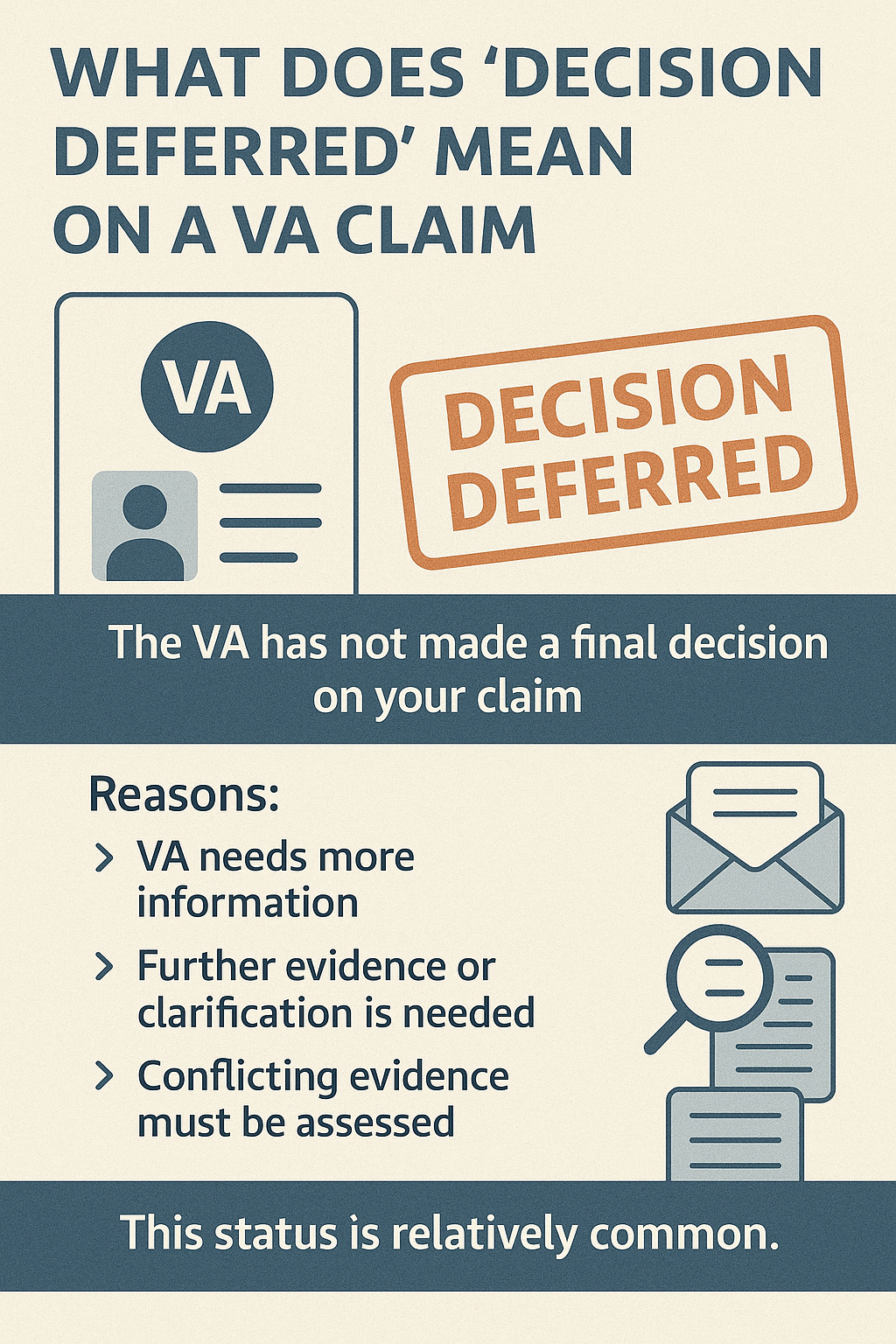
Anyone who has filed a claim for VA disability benefits and has gotten a “decision deferred” response might be a little confused, and even concerned. While it’s not an outright refusal, the VA’s “decision deferred” status means they haven’t made a final ruling on your claim, for one reason or another. Deferrals are a common part of the VA claims process and occur when the VA needs more information before making a decision. When a veteran files a claim, it may be subject to deferral if more evidence is required.
Essentially, this puts your claim on pause while the VA is deferring a decision to gather additional evidence or get clarification on one or more issues. You might have to schedule another Compensation & Pension (C&P) exam. The VA may also request service records, or they might have conflicting evidence that has already been submitted that needs to be assessed. The VA may need additional service treatment records, private medical records, or a clarifying medical opinion (nexus letter) to resolve a claim. When the VA asks for additional documentation or clarification, it is important to respond promptly to avoid further delays.
If you’ve received a “decision deferred” status, you’re not alone. This claim status is relatively common. The good news is that it is often a sign that your claim is being seriously considered by the VA.
Common Reasons for a Deferred VA Claim
There are several reasons why a VA disability claim might be deferred. Most commonly, it’s because the VA cannot make a decision based on the evidence currently in the record. The evidence needed to make a decision can vary, and missing evidence is a common reason for deferral. A deferred claim often stems from gaps or ambiguities that need to be resolved before a final ruling can be issued.
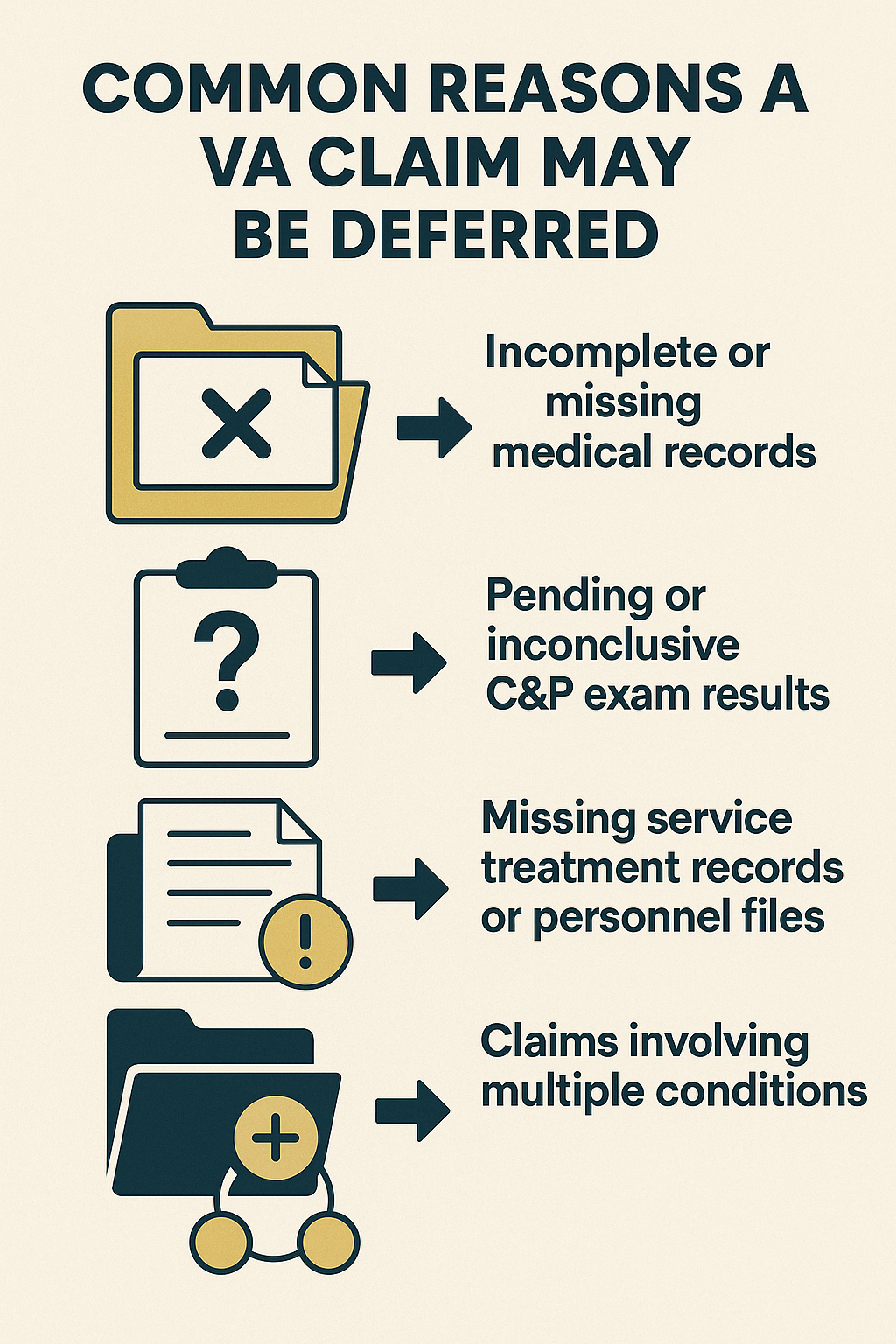
Typical reasons a VA claim may be deferred include:
- Incomplete or missing medical records
- Pending or inconclusive C&P exam results
- Conflicting documentation in your file
- Missing service treatment records or personnel files
- Claims involving multiple conditions where some issues are ready for decision and others are not
- Missing evidence such as private records or a required medical opinion
Sometimes, the VA may require more evidence to resolve conflicting information.
How a Deferred Status Affects Your VA Disability Benefits Timeline
A VA deferred rating decision often delays your overall claim resolution. While a deferral is not a denial, it still holds up part of your case. This can affect when you begin receiving benefits, especially if the deferred issue is the most severe or impactful condition you claimed. A deferred decision can also affect when the VA determines your eligibility for benefits and your VA rating, which directly impacts the amount of compensation you may receive.
Typically, a deferred claim enters what the VA calls the “claim under development status”, meaning the VA is actively working to gather the information it needs. That might involve ordering new exams, requesting additional records, or referring your case to a specialist. Claims go back into the “under development” phase when deferred, during which the VA will notify the claimant and request more evidence. Resolving a deferred claim can impact back pay if the claim is eventually approved, as the effective date of your benefits is preserved but payment may be delayed. There’s no set time limit for how long this stage lasts, but the VA generally aims to resolve claims within 125 days. However, in reality, a deferred decision can stretch that timeline significantly, sometimes pushing it out by several months.
If you’re eager to keep track of the process, you can monitor your claim at the VA’s official status page, which provides ongoing updates as your case progresses.
Providing the necessary information or evidence can help move your claim forward and increase the chances of a favorable decision.
VA Deferred Claim vs. Denied Claim: Key Differences
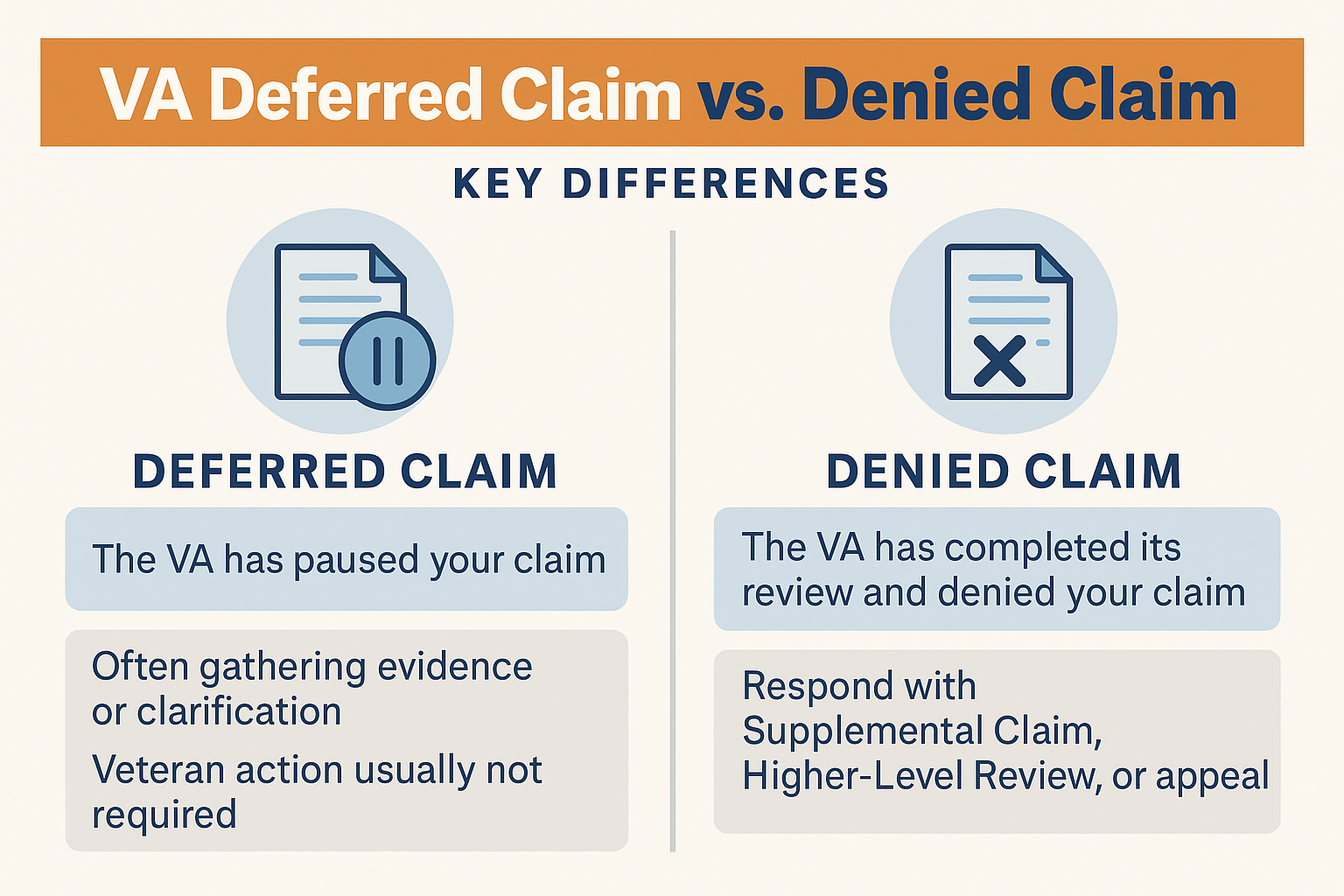
A common source of confusion is the difference between a deferred claim and a denied claim. In short, a deferred decision means the VA has paused your claim, while a denial means the VA has completed its review and decided to deny your claim because it does not meet the requirements for benefits.
With a deferred decision, the VA is often still gathering evidence or clarification and plans to issue a decision once that development is complete. No action is required from the veteran unless the VA specifically requests something.
On the other hand, if your claim is denied, that’s a final ruling—at least for now. You’ll need to respond by filing a Supplemental Claim, a Higher-Level Review, or an appeal to the Board of Veterans’ Appeals. A board appeal is one of the formal options for contesting a denied claim. The VA will send you a decision letter outlining whether your claim is deferred, approved, or denied. If you submit new evidence and the VA issues a continued rating decision, it means they have reviewed the additional information but decided not to change your existing rating.
Understanding this difference is key. A deferred VA disability claim status can still turn into an approval with the right follow-up, while a denial must be actively contested if you want a different outcome.
What to Do If Your VA Decision Is Deferred
Receiving a deferred decision can be frustrating, but there are steps you can take to avoid unnecessary delays. Understanding the VA disability claims process can help you respond effectively to a deferred decision. First, carefully review the notification from the VA to see if they are requesting any additional evidence from you. If they are, respond promptly. The faster you provide the needed documentation, the sooner your claim can move forward.
Here’s how you can take action:
- Submit any requested medical records or statements immediately
- Submit private records if requested by the VA to support your VA disability claims
- Attend all scheduled C&P exams without delay
- Provide a nexus letter or buddy statements to strengthen the service connection
- Consult a Veterans Service Officer (VSO) or accredited attorney for guidance
Even if the VA hasn’t formally requested anything, proactively submitting helpful documentation can speed up the process. Staying proactive is key to successfully navigating VA disability claims. You can also check in periodically to confirm the VA has received all necessary information.
How to Track a Deferred VA Claim Status
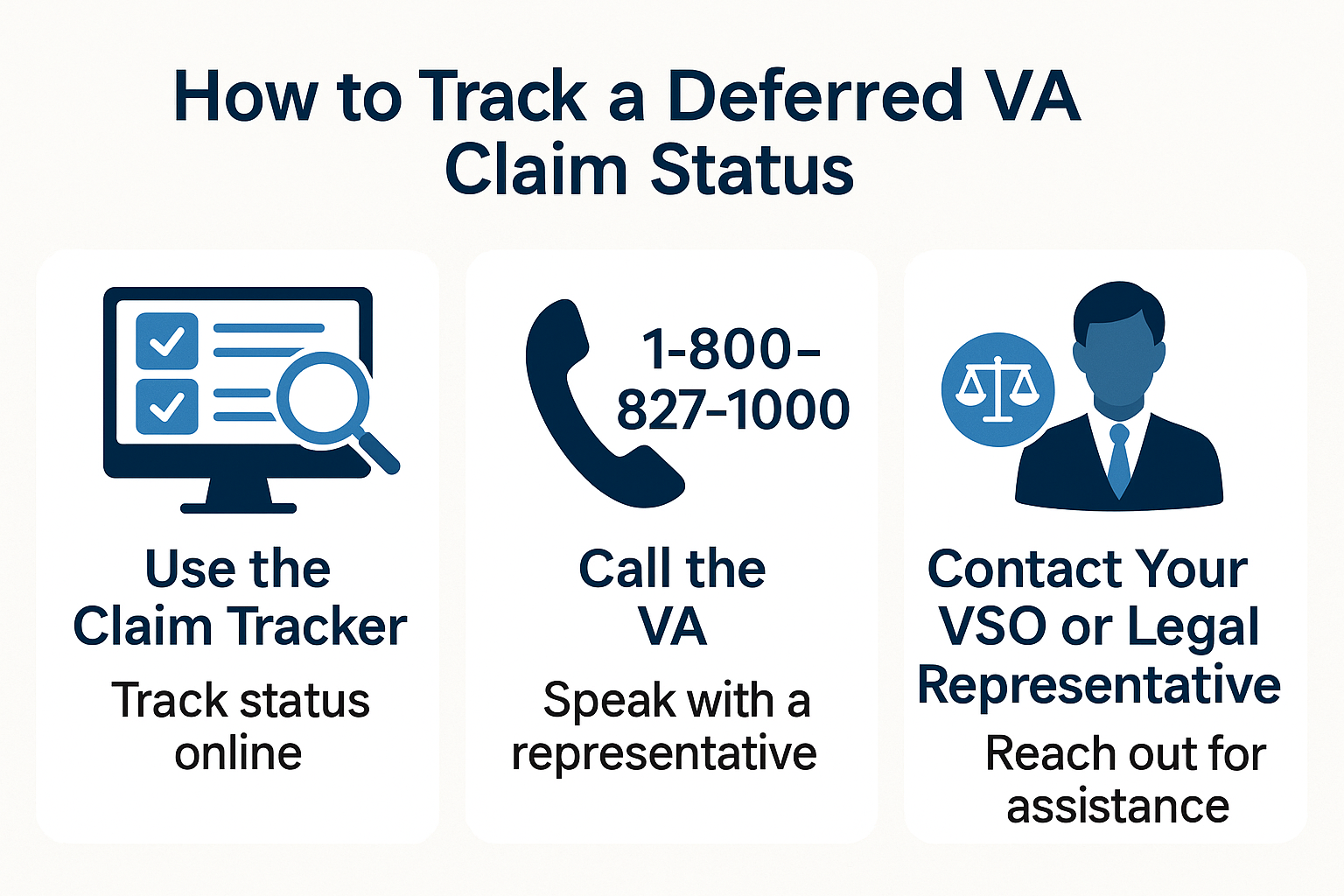
Once your claim is deferred, staying informed becomes even more important. The best way to keep track of your status is through the VA’s claim tracker, which provides real-time updates on where your case stands. This tool will show whether your claim is still under review, waiting on exams, or being prepared for a final decision. It’s also important to keep track of all VA letters you receive, as these documents are essential for organizing your communication and supporting your claim documentation.
If you’re unable to get the information you need online, you can also call the VA at 1-800-827-1000. Another option is to contact your VSO or legal representative, who may have access to internal systems and better insight into the reasons for your deferral. Understanding common VA issues can help you interpret updates and communications about your deferred claim.
Can You Speed Up a Deferred VA Decision?
There’s no guaranteed method to fast-track a deferred decision, but there are ways to potentially move your claim along more quickly. The most important thing is to respond promptly to any requests from the VA. If the deferral is due to missing medical documentation or exams, your quick compliance can make a big difference in the timeline. Attending all scheduled appointments is critical because failing to attend can lead to further delays or denials. Sometimes, the VA may require a new exam to clarify your condition before making a decision.
In some cases, you may qualify for priority processing. Veterans who are terminally ill, experiencing severe financial hardship, are homeless, or over the age of 85 can request expedited handling. You may also ask your Congressional representative to make an inquiry on your behalf, which sometimes leads to quicker movement, though it’s not a guaranteed solution.
Moving Forward After a Deferred Decision Has Been Made
A VA decision to defer status can feel like an unexpected setback, but it’s important to remember that it’s not a denial. It means your claim is still active and the VA is taking additional steps to gather the information needed for a fair outcome. While waiting can be difficult, this phase can also work in your favor, giving you the opportunity to supply stronger evidence and ensure your claim is as solid as possible. If a deferred claim is eventually approved, the VA will issue back pay starting from the original effective date. Establishing a clear connection between your condition and your military service is crucial for a successful outcome.
Being proactive makes a difference. Whether it’s submitting documents quickly, attending required exams, or staying in contact with your representative, taking control of what you can will help move things along.
Many veterans who face a deferred decision end up receiving the benefits they deserve—sometimes with more favorable ratings—once all the evidence is in place. Understanding the VA disability claims process can help you stay engaged and avoid unnecessary delays. Understanding the process and staying engaged is the best way to keep your claim on track and avoid unnecessary delays.
At Allveteran.com, we seek to help veterans connect with resources that may make all the difference. To find out your disability rating, take our free medical evidence screening today!
 AllVeteran.com Advisors
With expertise spanning local, state, and federal benefit programs, our team is dedicated to guiding individuals towards the perfect program tailored to their unique circumstances.