













When it comes to dealing with the Department of Veterans Affairs (VA), many veterans feel overwhelmed. And when you have to take the steps to make a claim, there are certain things that can make or break the entire process for you. One of those things is knowing how to access your military health records. The process depends on when you served and what kind of records you need.
You can get your service treatment records (STRs), medical records, and VA treatment history through the National Archives, TRICARE, or directly from the VA. But, of course, it’s a little more complicated than that. Recently, veterans filing for disability benefits have been reporting longer delays due to incomplete or missing medical documentation. So, ensuring you have your full military health records on hand before filing can drastically reduce claim processing time. Here’s what you need to know about accessing your military records and how it impacts your claim.
Tamila’s Take: Why Your Medical Records Matter More Than You Think
As a veteran, I learned the hard way that your military medical records aren’t just paperwork. They’re your proof. They’re the backbone of your VA claim, your service connection, and in many cases, your financial stability. But most of us don’t realize that until we’re already knee‑deep in a denied claim, wondering what went wrong.
When you’re in the military, you don’t think about documentation. You get hurt, you go to sick call, you push through, and you move on. Nobody tells you that years later, the VA is going to want every detail, meaning every visit, every diagnosis, every X‑ray, before they’ll approve a single percentage point.
Who Can Access Military Health Records and Why They’re Important
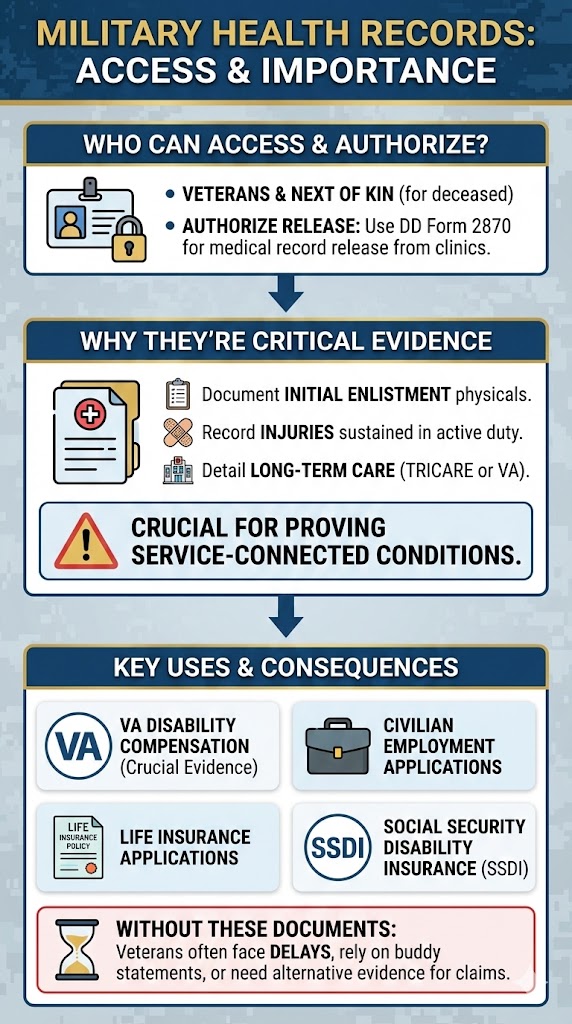
Military medical records are critical for proving service-connected injuries or conditions. These records document everything from initial enlistment physicals to injuries sustained in active duty, as well as any long-term care received through TRICARE or the VA.
That said, only certain people can access these records. This includes veterans and next of kin (for deceased service members). DD Form 2870 is used to authorize the release of medical records from clinics.
When you are applying for disability compensation through the VA, these records are crucial. They can also come in handy when applying for civilian employment, life insurance, or Social Security Disability Insurance (SSDI).
Without these documents, veterans often face delays or need to rely on buddy statements and alternative evidence to support their claims for VA benefits.
Ways to Request Military Medical Records (VA, TRICARE, and Archives)
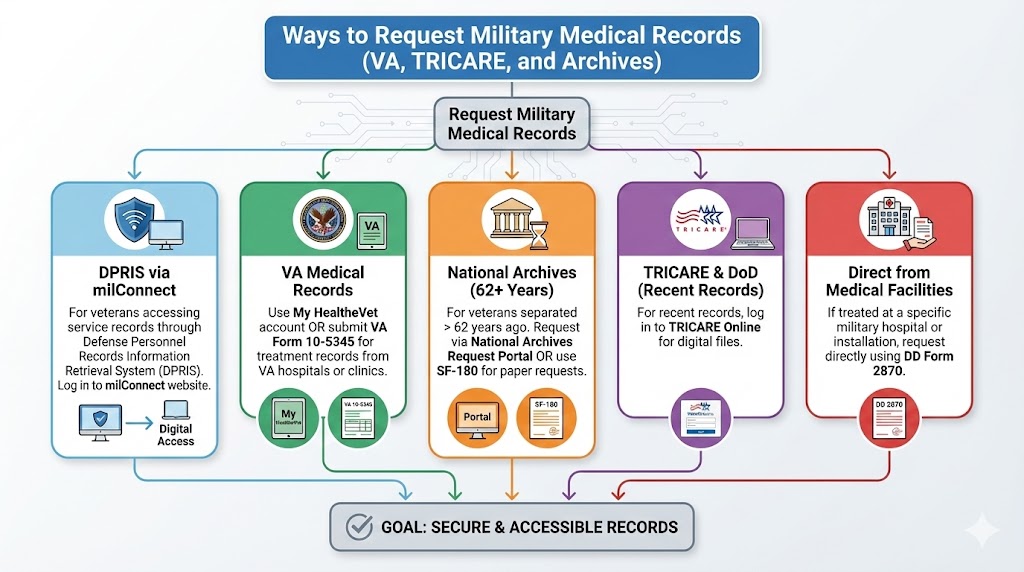
Knowing how to request your medical records is important. When it comes to military service records, there are multiple ways to access them, depending on your service period and whether you received care through the VA, TRICARE, or during active duty.
Veterans can access their military medical records through the Defense Personnel Records Information Retrieval System (DPRIS) via the milConnect website.
- VA Medical Records: Use your My HealtheVet account or submit VA Form 10-5345 to request treatment records from VA hospitals or clinics.
- National Archives: Veterans who separated from service more than 62 years ago should request records via the National Archives Request Portal. Use SF-180 for paper requests.
- TRICARE and DoD Records: For recent records, log in to TRICARE Online, where digital files are often still available.
- Direct Requests to Medical Facilities: If you were treated at a specific military hospital or installation, you can often request records directly using DD Form 2870.
Forms and Information You’ll Need to Submit a Request
To streamline your request, be ready to provide the following information:
- Full legal name used during service
- Date of birth and Social Security Number
- Branch of service and dates of active duty
- Type of records requested (inpatient, outpatient, dental, etc.)
Commonly used forms include:
- SF-180: Standard form to request service records from the National Personnel Records Center (NPRC)
- DD Form 2870: Authorization to release medical or dental records from the DoD or VA
- VA Form 10-5345: Used to release VA healthcare records
How Long Does It Take and What to Do If Records Are Missing
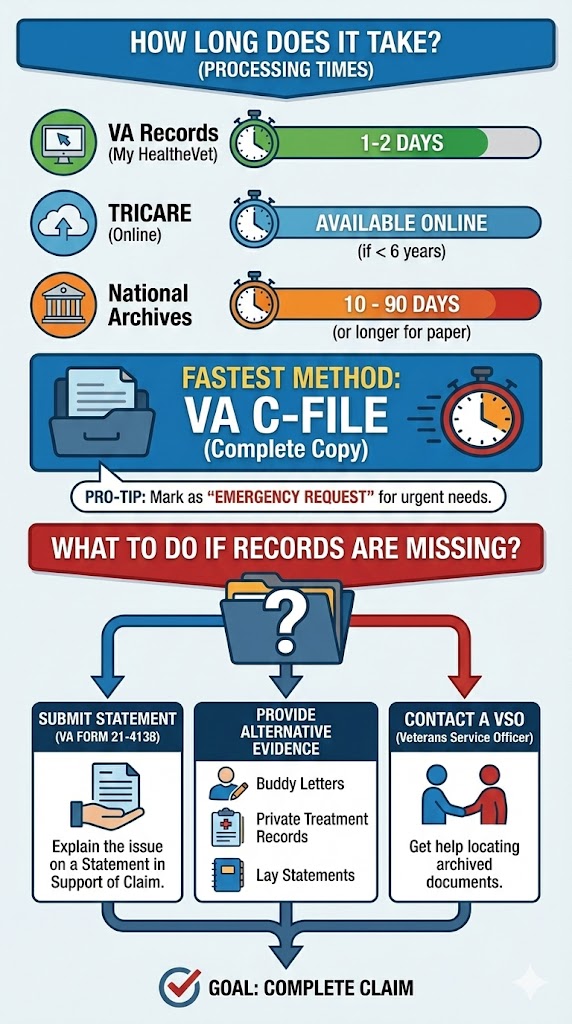
Processing times vary depending on the request source. VA records via My HealtheVet can often be downloaded within one to two days. National Archives requests can take 10 to 90 days, or longer for paper files. Whereas, TRICARE records are usually available online if accessed within six years of treatment.
The fastest method to obtain military medical records is to request a complete copy of your VA C-File. Veterans can expedite their records request by marking it as an ‘Emergency Request’ if they have urgent needs.
If any of your military service records are missing, you should submit a statement in support of the claim (VA Form 21-4138) explaining the issue. Be sure to provide alternative evidence like lay statements, buddy letters, or private treatment records. You can contact a VSO (Veterans Service Officer) for help locating archived documents.
What This Could Look Like In The Real World
Picture this scenario. James, a Marine Corps veteran, filed a disability claim for a back injury but was denied due to a lack of in-service documentation. He realized his service treatment records hadn’t been submitted. James filled out an SF-180 and submitted it to the National Archives. Three months later, he received his full STRs, resubmitted his claim, and received a 40% rating with back pay.
FAQs about Accessing Military Medical Records
When it comes to accessing your military medical records, it’s important to have all the information you need. That said, here are some of the most frequently asked questions (FAQs) about the process.
- How do I request my military medical records? You can use SF-180 or DD Form 2870, or access My HealtheVet or TRICARE Online Patient Portals, depending on your service and treatment history.
- How long does it take to get military medical records? Digital requests may take a few days, but archive requests can take several weeks or even months.
- What if I don’t know where my records are stored? Start by contacting the National Archives or your local VA Regional Office. They can help guide your request.
- Can I request someone else’s military medical records? Yes, if you’re the next of kin or have legal authorization (such as a power of attorney or a court order).
- Are service treatment records the same as VA treatment records? No. STRs cover active-duty care. VA records cover treatment received at VA facilities after discharge.
- Do I need my military health records for a VA claim? Yes. They’re crucial for proving a service connection and maximizing your rating.
- Can I view my military records online? You can access many VA and TRICARE records online, but STRs often require a written request through the National Archives.
Compiling the Information You Need
Being able to access your medical records is a key part of a successful VA disability claim. Each one of these documents helps verify what happened during your service and connect any current conditions to those events. Basically, it gives the VA a full picture of your health history. Taking the time to gather them before filing can prevent delays, strengthen your claim, and protect your right to the benefits you’ve earned.
If you’re unsure where to start, overwhelmed by missing records, or need help understanding what evidence the VA is looking for, AllVeteran.com is here to guide you. Take the first step toward a smoother, faster VA process. Get the support you deserve!
 AllVeteran.com Advisors
With expertise spanning local, state, and federal benefit programs, our team is dedicated to guiding individuals towards the perfect program tailored to their unique circumstances.