













Veterans experiencing chronic headaches, including migraines, tension headaches, or those secondary to conditions like TBI, may be eligible for VA disability benefits. The VA rates these conditions based on frequency, severity, and the impact on a veteran’s daily life and ability to work, ranging from 0% to 100%.
To apply, veterans must establish a service connection, gather comprehensive medical records, and undergo a Compensation & Pension (C&P) exam. Thorough documentation, such as a headache journal detailing symptoms and functional limitations, is crucial for substantiating a claim and securing the appropriate rating, ensuring veterans receive the recognition and support they deserve for service-related conditions.
Some veterans might not realize, but headaches are one of the conditions that qualify for a Veterans Affairs (VA) disability rating, offering them financial support and access to additional healthcare services.
Why This Update
Information on veteran disability is always changing and there are always new things to update. We want to have the best information we can!
Tamila’s Take: Why Headache Claims Deserve More Respect Than They Get
As a veteran, I can tell you this straight: headaches are one of the most underestimated service‑connected conditions out there. People hear the word “headache” and think of something you can shake off with a glass of water and a couple of painkillers. But the kind of headaches many of us deal with after service? They’re in a completely different league.
Here’s what I wish more veterans understood:
A prostrating headache isn’t “just a headache.”
If you have to stop what you’re doing, lie down, avoid light, avoid sound, or if you lose hours, sometimes days, of your life because of the pain, that’s not normal. And it absolutely affects your ability to work and function.
Your C&P examiner can’t rate what you don’t say.
This is where so many veterans get shortchanged. We downplay symptoms out of habit. We say things like “I’m fine most of the time” or “It’s not that bad,” even when it is that bad. The VA isn’t inside your head, literally or figuratively. They only know what you tell them.
Documentation is your best friend.
A headache journal might feel tedious, but it’s one of the strongest tools you have. Write down every attack, how long it lasted, what you had to stop doing, and what medications you took. When you walk into that exam with real data, you’re not just telling your story. In a way, you’re proving it.
And most importantly: you’re not asking for a handout.
You’re asking for recognition of a condition that impacts your life because of your service. There’s nothing weak about that. In fact, it takes strength to advocate for yourself after years of being told to “suck it up.”
Definition and Types of Headaches
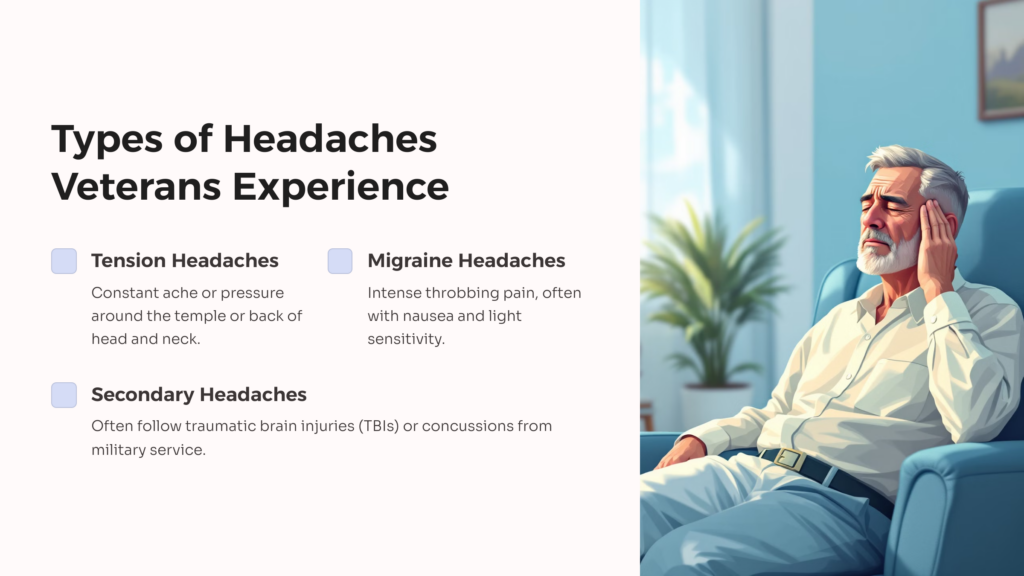
Veterans suffer from different types of headaches, ranging from tension headaches, migraine headaches, to other secondary headaches induced by conditions like a traumatic brain injury (TBI). Tension headaches, the common type, manifest as a constant ache or pressure around the temple or back of the head and neck.
A migraine episode, on the other hand, is an intense headache characterized by throbbing pain on one side of the head, often accompanied by nausea, vomiting, or sensitivity to light and sound. Prostrating migraine attacks force you to stop all activity and may render you incapacitated for hours or even days. Migraine headaches could emanate from service-linked factors such as stress or exposure to loud noises.
Secondary headaches, although less common, can follow TBIs or concussions suffered during military service, and can be persistent and severe. All of these headaches, with their debilitating impacts, manifest as a consequence or after-effect of active military service and thus have significant relevance to veterans’ healthcare.
Understanding VA Disability Ratings for Headaches
So, what exactly constitutes a ‘disability’ according to the VA? According to the VA, a veteran is disabled due to their military service if they have a condition that affects their body or mind to a degree that it impairs their ability to secure or follow a substantially gainful occupation. The VA employs a rating system for disabilities, with a range from 0% to 100%, where each disability rating translates to different levels of financial support.
For headaches, this rating is broken down into several levels, where a 0% rating acknowledges the presence of headaches but notes that they do not significantly impact the veteran’s life or ability to work. A 10% disability level signifies that headaches cause a mild level of interference to the veteran, while a 30% rating indicates more frequent, completely prostrating, and prolonged attacks. A 50% rating indicates severe economic inadaptability, and the headache condition is deemed very severe. A rating of 100% is given in rare cases where the veteran’s disability is extremely severe, and they cannot work.
Applying for a VA Disability Rating for Headaches
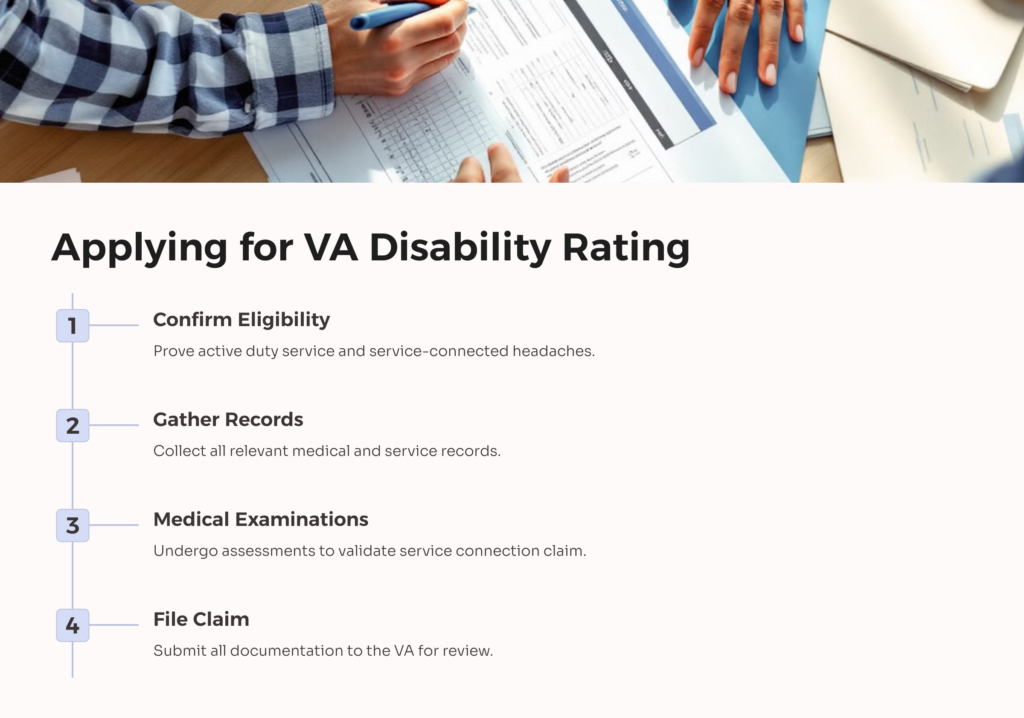
The process of applying for a VA disability rating for headaches involves filing a disability claim, which typically involves several steps. The first is confirming eligibility, i.e., proving that the veteran served in active duty, and the headaches are a result of that service. Following this, the veteran will need to gather all relevant medical and service records to prove the service connection. This can be a direct service connection, where a headache condition directly resulted from service, or an aggravated service connection, where a pre-existing headache got worse due to military service.
Medical examinations would also be required, offering an in-depth assessment of the veteran’s headache condition and validating their service connection claim. Documented evidence of frequency, severity, and duration of headaches, treatments sought, and treatments’ effectiveness are vital at this stage.
Tips for a Successful VA Disability Claim for Headaches

Ensuring a robust medical record and having the right documentation is crucial to a successful VA disability claim. The more medical evidence you have, the better link can be made between your headaches and your military service.
Compensation & Pension (C&P) exams play a critical role in VA disability claims. Veterans seeking disability benefits for conditions like headaches should thoroughly prepare for these appointments. Keeping a detailed record of headache frequency, severity, duration, triggers, and functional impact can help substantiate claims. Bringing a headache journal (medical evidence, remember?) with notes on pain levels, medication use, and effects on work/life to the exam is a great way to offer documentation. Being candid with the examiner about symptoms while also emphasizing headaches’ effects is necessary for accurate assessment.
Though stressful, honesty regarding disability level boosts claim success. Preparation equips veterans to convey headaches’ true impact, helping examiners fully capture limitations for fair rating decisions. Thorough medical record keeping and open communication in C&P exams are key for veterans establishing headache-related disability claims.
But what if the claim is denied or the rating seems too low? Veterans have the right to request a review of the VA’s decision, or submit new evidence, through the appeal process. An appeal might involve further medical examinations, legal advice, or appearing before a judge in a hearing. Every step might seem demanding, but it’s a path towards the benefits veterans deserve.
Example Scenario
A veteran served in a high-stress combat zone and developed chronic migraines following a concussive event. The migraines were often prostrating, forcing missed work several times a month. The veteran kept a detailed headache journal for over a year, documenting each attack’s severity, duration, and the activities that had to stop. This detailed evidence, combined with service medical records, supported the claim and helped establish an appropriate rating.
Frequently Asked Questions
What types of headaches can be service-connected for VA disability?
The VA considers various types, including migraine headaches, tension headaches, and secondary headaches (e.g., those resulting from a traumatic brain injury or other service-connected conditions).
How does the VA determine the disability rating for headaches?
The VA rates headaches based on their frequency, severity, duration, and the resulting economic inadaptability, specifically looking at how often prostrating attacks occur and their impact on a veteran’s ability to work.
What does ‘prostrating’ mean in the context of VA headache ratings?
‘Prostrating’ means headaches are so severe that they force the veteran to lie down, cease all activity, and often require medication or a dark, quiet environment to recover.
Do I need a specific diagnosis (e.g., ‘migraine’) to claim VA disability for headaches?
While a specific diagnosis helps, the VA focuses on the symptoms, frequency, and functional impact of your headaches. A clear medical record of treatment and symptoms is crucial, regardless of the exact diagnostic label.
Can headaches caused by stress or anxiety during service be service-connected?
Yes, if it can be proven that the stress or anxiety was directly related to military service and led to the development or aggravation of headaches, they can be considered service-connected.
What medical evidence is most important for a headache disability claim?
Key evidence includes a detailed headache journal, official medical records documenting diagnoses, treatment history, medication use, and physician notes describing the severity and impact of your headaches.
What should I emphasize during my C&P exam for headaches?
Be honest and thorough. Emphasize the frequency and severity of prostrating attacks, the duration of your pain, and how your headaches affect your daily life, work, and social activities.
Receiving the Disability Benefits You Need and Deserve
Headaches, though often shrugged off as common aches, carry significant weight in the lives of veterans, impacting their health and daily activities. It’s crucial that veterans facing these struggles recognize that help is available. VA disability ratings for headaches aim to provide financial and healthcare support, acknowledging the service-linked nature of these struggles.
It might be a grueling path towards getting that disability rating, but it’s a path filled with hope and well-deserved assistance. Be persistent, be patient, and above all, understand that your sacrifice is recognized, valued, and compensated for by the nation you served.
If you don’t know where to start getting help, you can always take our free medical evidence screening at AllVeteran.com. We’re here to help!
 AllVeteran.com Advisors
With expertise spanning local, state, and federal benefit programs, our team is dedicated to guiding individuals towards the perfect program tailored to their unique circumstances.