














Serving in the military requires sacrifice, discipline, and resilience. When service members return to civilian life, they deserve fair treatment and ongoing support. This is where the idea of a protected veteran matters. Knowing what is a protected veteran helps veterans claim the benefits they’ve earned and helps employers meet their legal responsibilities while building workplaces that welcome former service members.
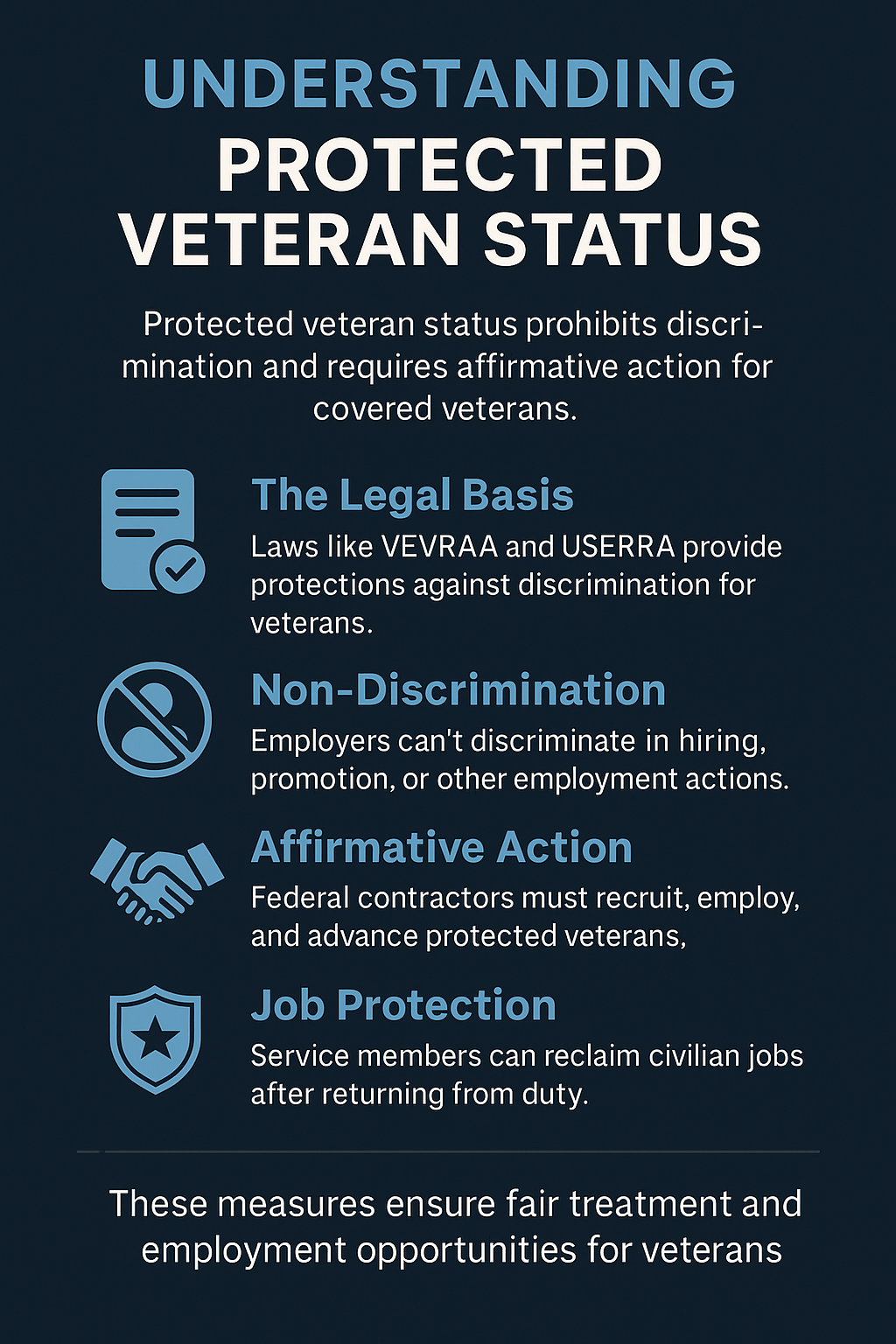
Whether you’re a veteran seeking clarity on your workplace rights or an employer wanting to better understand your responsibilities, this guide breaks down protected veteran status, from key legal foundations to the real-world benefits it provides.
The Legal Basis
The main law behind protected veteran status is the Vietnam Era Veterans’ Readjustment Assistance Act of 1974 (VEVRAA). Originally focused on Vietnam War veterans, it now covers a much wider group. VEVRAA does more than forbid discrimination. It obligates federal contractors and subcontractors to take affirmative action to recruit, hire, promote, and retain veterans who meet protected status criteria.
Another key law is the Uniformed Services Employment and Reemployment Rights Act (USERRA) of 1994. USERRA bans discrimination based on military service and guarantees that service members returning from duty can reclaim their civilian jobs. Together these laws form the backbone of workplace protections for veterans.
Who Counts as a Protected Veteran
Not everyone who served automatically qualifies. To be recognized, you must have served on active duty and received a discharge other than dishonorable. You also need to fit at least one of four categories:
- Disabled veterans – Those entitled to VA compensation for a service-connected disability or discharged due to that disability. They are entitled to workplace accommodations.
- Recently separated veterans – Those discharged within the past three years. This temporary status helps smooth the transition to civilian work.
- Active duty wartime or campaign badge veterans – Those who served during official war periods or campaigns, such as World War II, the Korean conflict, Vietnam, the Persian Gulf War, and other designated operations.
- Armed Forces Service Medal veterans – Those who took part in operations earning them an Armed Forces Service Medal while on active duty, including qualifying non-combat operations.
Rights and Benefits
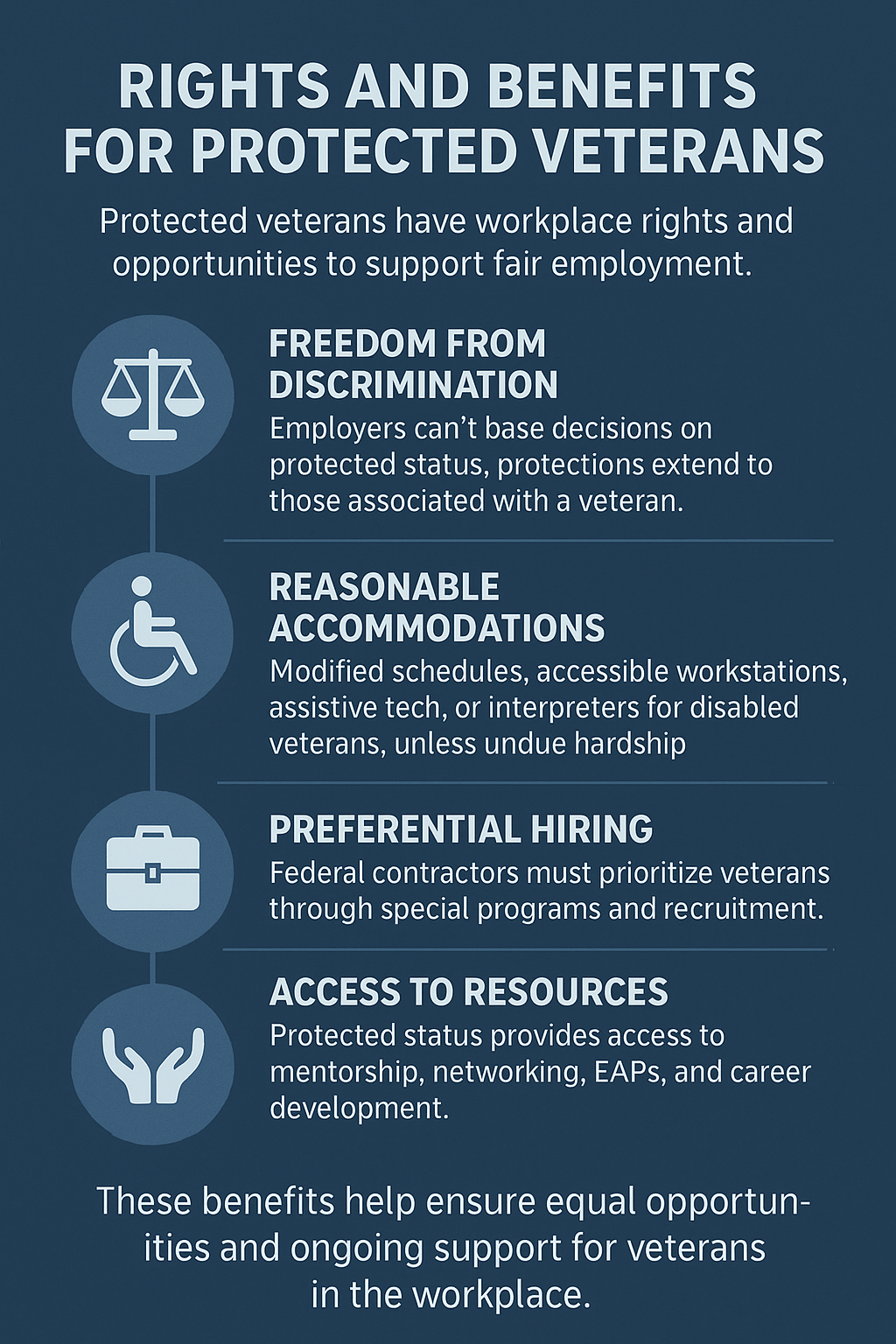
Protected veterans enjoy legal protections designed to level the playing field at work.
- Freedom from discrimination: Covered employers can’t base hiring, firing, pay, promotions, training, or job assignments on protected status. These protections also cover people associated with a protected veteran.
- Reasonable accommodations: Disabled veterans can request changes that let them perform their jobs, such as modified schedules, accessible workstations or technology, interpreters, or assistive devices, unless the employer can show the change would cause undue hardship.
- Preferential hiring: Federal contractors must give priority referrals and run recruitment efforts aimed at veterans. This can include special hiring programs or veteran-specific training.
- Access to resources: Identifying as a protected veteran can open doors to employee assistance programs, mentorship, networking, and career development opportunities.
Employer Obligations
Federal contractors and subcontractors have several responsibilities when it comes to supporting protected veterans in the workplace. They are required to establish affirmative action programs, which include measurable goals for recruiting, hiring, and advancing veterans, and these plans must be reviewed on a regular basis. Employers must also ensure that most job openings are listed with state or local employment services, clearly identifying their status as federal contractors and their commitment to referring and hiring protected veterans.
In addition to recruitment, contractors are expected to collect and report data on veteran applicants, hires, and job opportunities through the annual VETS-4212 report submitted to the Department of Labor. Internal audits should be conducted to evaluate the effectiveness of these efforts and address any shortcomings. To further reinforce these protections, employers must also display “Know Your Rights” notices in the workplace, ensuring both employees and applicants are informed of the benefits and safeguards in place for protected veterans.
Protected Veteran vs. General Veteran
Every protected veteran is a veteran, but not every veteran qualifies as protected under VEVRAA. The general term covers anyone who served and received a discharge other than dishonorable. Protected status requires meeting one of the four categories above. The distinction matters because only protected veterans receive the full set of legal safeguards and benefits described here.
Addressing Discrimination
Despite the laws, discrimination still happens. Examples include refusing to hire qualified veterans, denying accommodations, creating hostile work environments, or retaliating when someone asserts their rights.
Steps to take:
- Report the issue to your employer’s human resources department. They must investigate.
- File a complaint with the Office of Federal Contract Compliance Programs (OFCCP) within 300 days of the incident.
- Consult an attorney who handles veterans’ employment rights if the problem persists.
Possible remedies include reinstatement, back pay, promotions, policy changes, or in serious cases, penalties or loss of federal contracts for the employer.
Challenges Veterans Face
Protected veteran status exists to address common obstacles in the civilian job market. These include the following.
- Cultural adjustment: Moving from a structured military environment to a less formal civilian workplace can be tough.
- Translating skills: Veterans may struggle to show how their military experience fits civilian job descriptions.
- Health concerns: Service-connected conditions, including mental health issues like PTSD, can affect employment without proper support.
- Loss of support networks: The absence of military-style teamwork can make transitions harder without mentorship or veteran programs.
Making the Most of Protected Status
For veterans:
- Self-identify as a protected veteran when applying for jobs with federal contractors.
- Learn your rights to accommodations and equal treatment.
- Keep records of your service, VA ratings, and any workplace issues.
- Use veteran-focused career services and networking.
For employers:
- Ensure affirmative action plans meet VEVRAA requirements.
- Train HR and hiring managers on veterans’ rights and accommodations.
- Foster an inclusive culture where veterans feel valued.
- Track recruitment and retention results to measure progress.
Knowing the Rights and Resources You Have
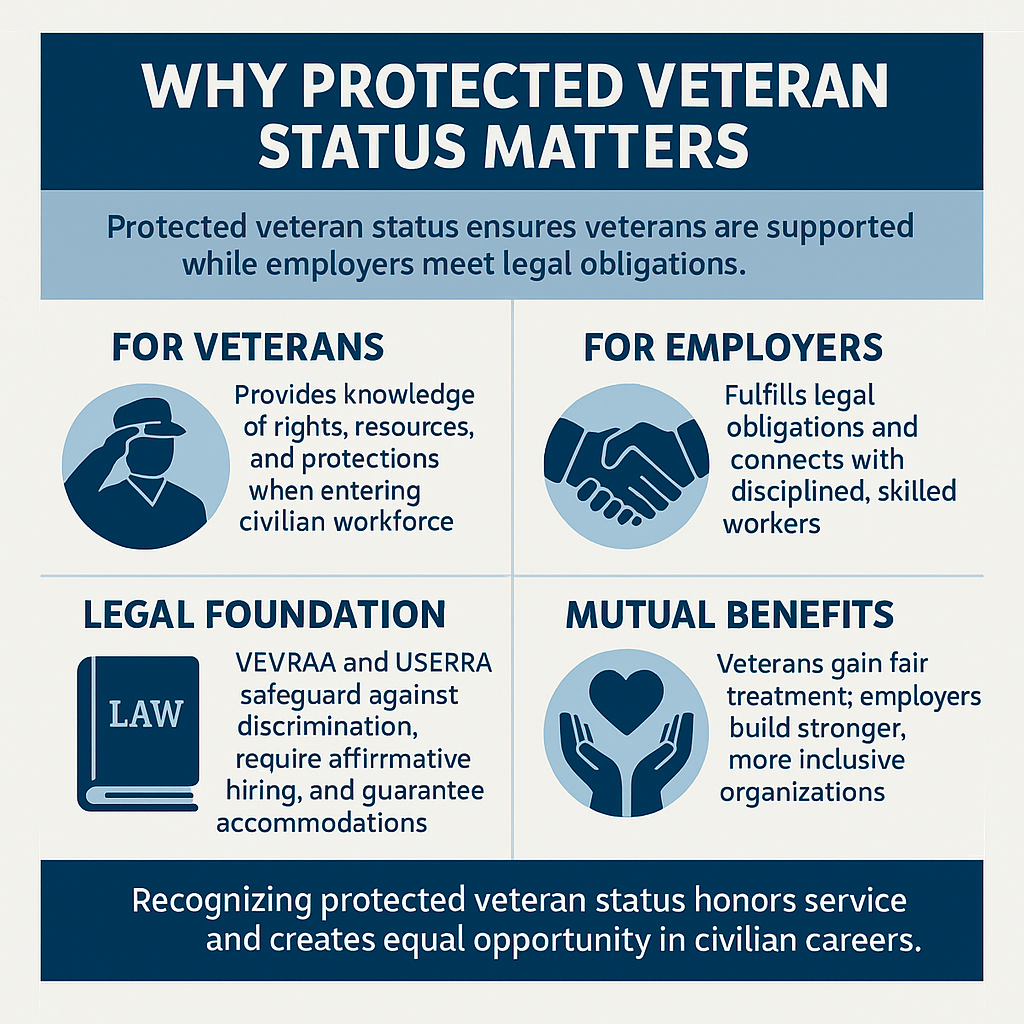
Recognizing what it means to be a protected veteran creates value for both sides of the workplace. For veterans, it ensures awareness of rights, resources, and career protections when stepping into civilian employment. For employers, it provides a framework to meet legal obligations while gaining access to a proven talent pool of disciplined and skilled professionals.
Protected veteran status goes beyond being a legal term. It represents a promise to honor military service through fair opportunities, safeguards against discrimination, and supportive workplace practices. By understanding and applying these protections, employers strengthen their organizations while veterans gain the respect and support they deserve.
At AllVeteran.com, we’re committed to helping veterans get the resources they’ve earned. Start today by taking our free medical evidence screening to learn your disability rating and open the door to benefits that can make a real difference.
 AllVeteran.com Advisors
With expertise spanning local, state, and federal benefit programs, our team is dedicated to guiding individuals towards the perfect program tailored to their unique circumstances.