













Fully understanding your disability benefits is important with you are dealing with the Department of Veterans Affairs (VA). Once you reach a certain age, you might be concerned about how your VA benefits will be impacted. The VA provides benefits to more than 1 million people annually, but what’s the 55-year rule, and how can it affect your benefits?
What Is the VA 55-Year Rule?
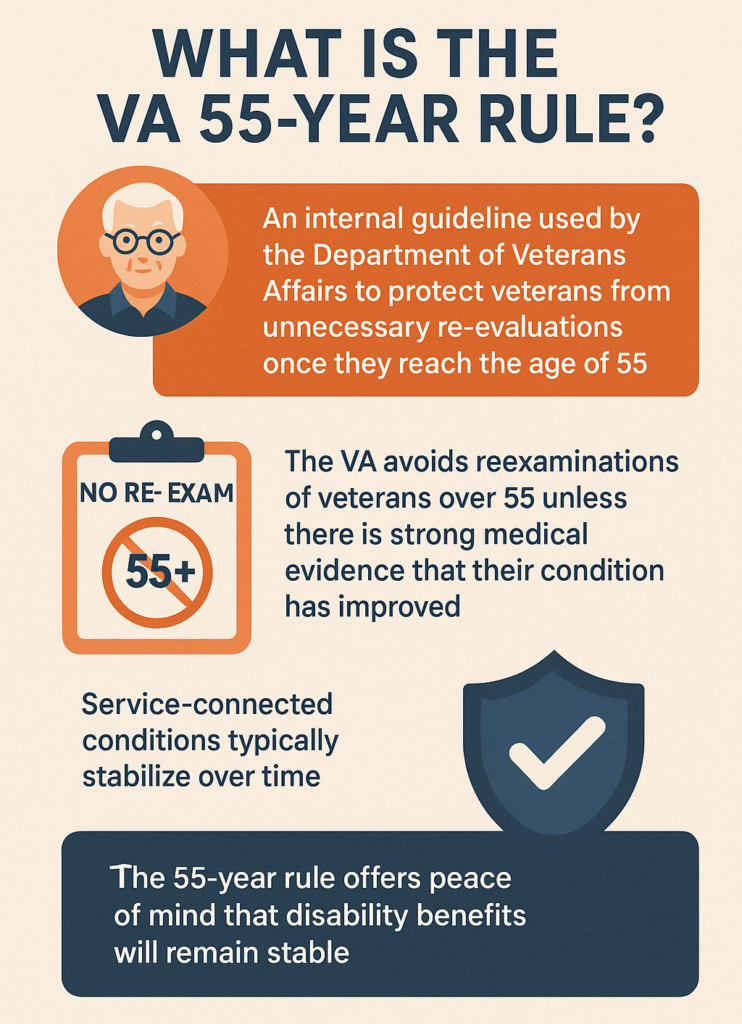
First, you need to know exactly what the 55-year rule entails. It is an internal guideline used by the Department of Veterans Affairs to protect veterans from unnecessary re-evaluations once they reach the age of 55. While the 55-year rule isn’t a law, per se, the VA tends to avoid reexamining any veterans who are over the age of 55 unless there is strong medical evidence their condition has improved.
The idea behind the VA 55-year rule is that many service-connected conditions typically stabilize over time. As vets age, the VA assumes that it is less likely that their condition will improve in a way that justifies a rating reduction. If you are someone who collects veterans’ disability benefits, the 55-year rule can offer you a little peace of mind because it’s more likely that your benefits will remain stable.
How Turning 55 Affects VA Disability Re-Evaluations
Once a veteran turns 55 years old, the frequency of re-evaluation drops significantly. Before a vet turns 55, the VA usually requires them to come in for regular exams to determine if a service-connected disability has improved. If it has improved, it could lead to a decrease in your benefits, or you might lose them altogether.
After veterans turn 55, however, the VA takes a different approach to these ratings and evaluations. Unless there is significant evidence that their condition is improving or has improved, the VA tends not to pursue any further reexaminations. For older vets, this can provide them with a little more security in knowing that their benefits shouldn’t be altered without good reason.
Does the VA Make Disability Ratings Permanent at Age 55?
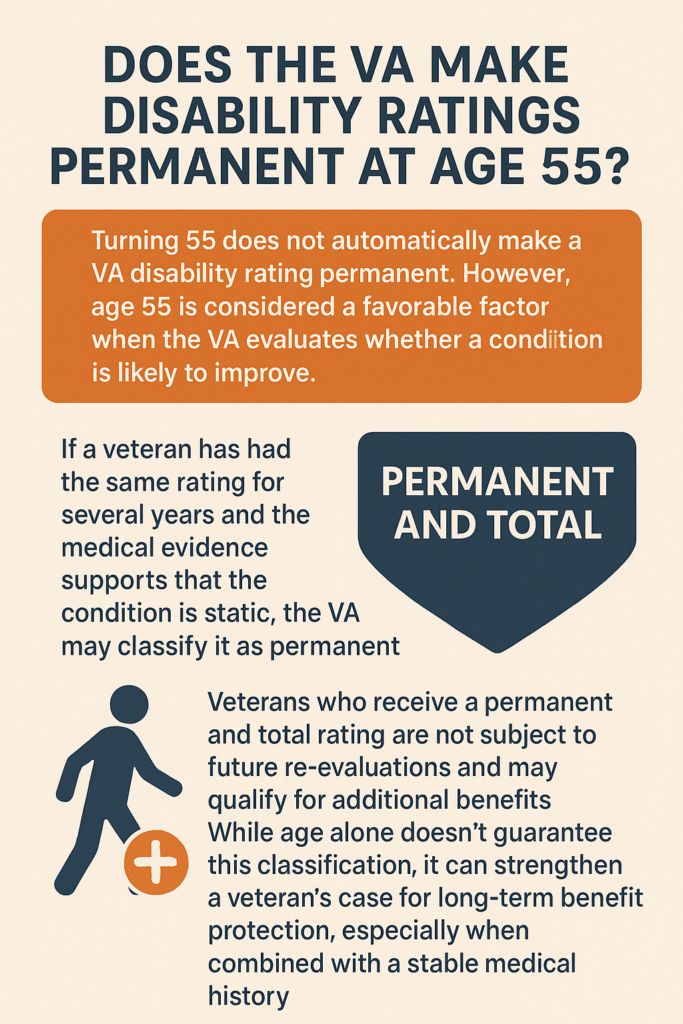
Turning 55 does not automatically make a VA disability rating permanent. However, age 55 is considered a favorable factor when the VA evaluates whether a condition is likely to improve. If a veteran has had the same rating for several years and the medical evidence supports that the condition is static, the VA may classify it as permanent.
Veterans who receive a permanent and total rating are not subject to future re-evaluations and may qualify for additional benefits. While age alone doesn’t guarantee this classification, it can strengthen a veteran’s case for long-term benefit protection, especially when combined with a stable medical history.
Protected VA Ratings and the Age 55 Threshold
Veterans with long-standing disability ratings may benefit from additional protection, especially once they pass age 55. Ratings that have been in place for five years or more are considered “stabilized” and can only be reduced if there’s clear evidence of sustained improvement. Ratings held for 20 years or longer are generally protected from reduction unless fraud is involved.
When combined with the age 55 rule, these protections give veterans greater assurance that their benefits won’t be changed unexpectedly. The VA is highly unlikely to pursue rating reductions in older veterans with long-term, stable conditions.
VA Unemployability (TDIU) and the 55-Year Rule
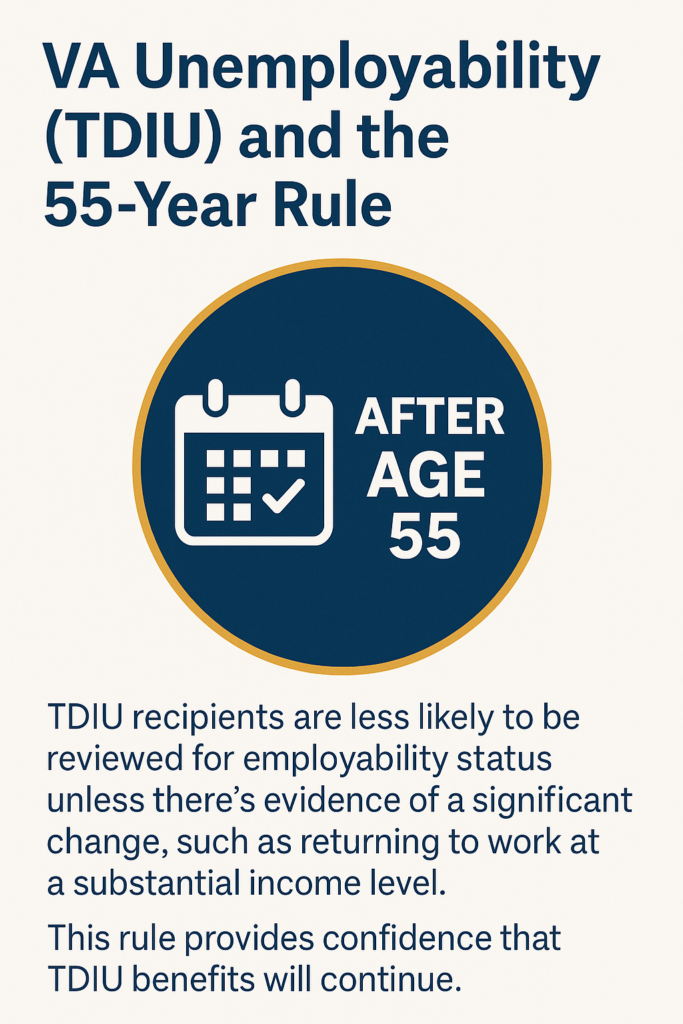
Veterans who receive Total Disability based on Individual Unemployability (TDIU) are also affected by the 55-year rule. After turning 55, TDIU recipients are less likely to be reviewed for employability status unless there’s evidence of a significant change, such as returning to work at a substantial income level.
For veterans who have been out of the workforce for many years and whose conditions remain unchanged, this rule provides additional confidence that their TDIU benefits will continue. Many veterans at this stage may also be eligible to apply for permanent unemployability status, which can eliminate the need for future earnings verification and reviews.
Common Myths About the VA 55-Year Rule
Despite its importance, the VA 55-year rule is often misunderstood. Some veterans believe that all ratings automatically become permanent or that benefits can never be reduced after age 55. While the rule offers protections, it’s not absolute.
It’s commonly believed that all disability ratings become permanent at age 55, but that’s not true. Ratings may still be temporary, unless the VA formally grants permanent status. Another myth about the VA 55-year rule is that the VA never reduces benefits after 55. While reductions are rare, they are possible if your medical records show clear improvement.
Taking the time to understand the actual scope of the rule helps prevent false assumptions and prepares veterans for what to expect as they age.
What Veterans Should Know as They Approach Age 55
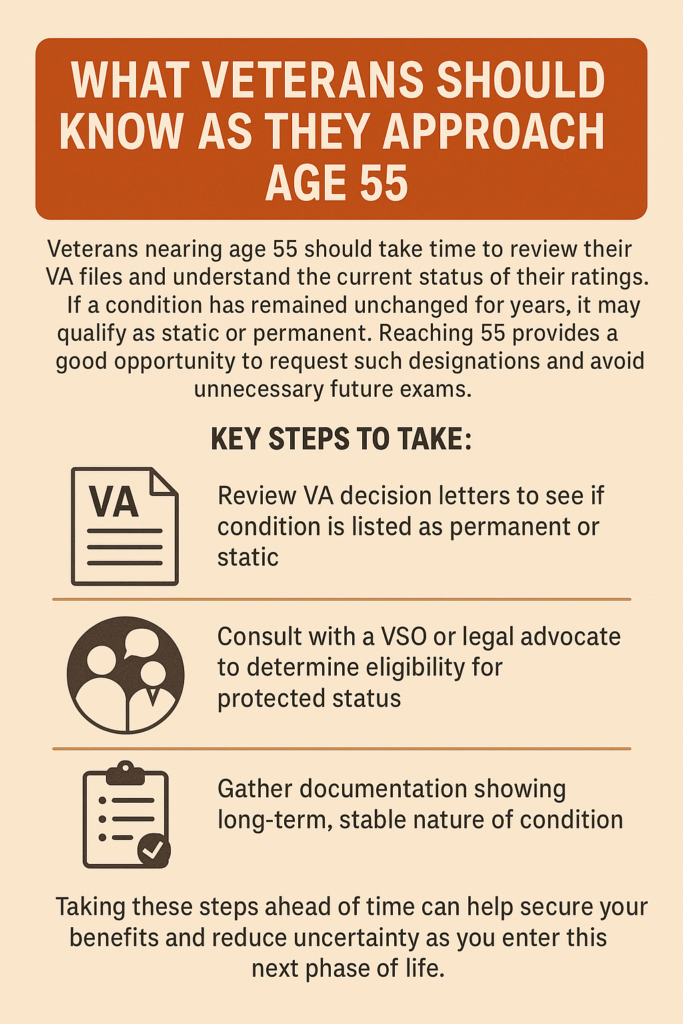
Veterans nearing age 55 should take time to review their VA files and understand the current status of their ratings. If a condition has remained unchanged for years, it may qualify as static or permanent. Reaching 55 provides a good opportunity to request such designations and avoid unnecessary future exams.
Some key steps to take include:
- Reviewing your VA decision letters to see if your condition is listed as permanent or static
- Consulting with a VSO or legal advocate to determine your eligibility for protected status
- Gathering documentation that shows the long-term, stable nature of your condition
Taking these steps ahead of time can help secure your benefits and reduce uncertainty as you enter this next phase of life.
How Will The VA 55-Year Rule Impact Your Benefits?
The VA 55-year rule gives veterans greater control and confidence over their disability benefits. While it doesn’t automatically guarantee permanent ratings or prevent all future reviews, it does reduce the likelihood of changes once a veteran reaches this age. Veterans over 55 with long-standing, stable conditions are less likely to be scheduled for re-evaluations, and their ratings enjoy an added layer of protection.
Knowing how the rule works—and combining it with existing rating protections—can help veterans better plan their financial future and protect the benefits they’ve earned. For those approaching this important milestone, now is the time to ensure your records are in order and your benefits are on solid ground.
Allow us to guide you through the process of receiving benefits you deserve. Begin today by taking our free medical evidence screening, at Allveteran.com.
 AllVeteran.com Advisors
With expertise spanning local, state, and federal benefit programs, our team is dedicated to guiding individuals towards the perfect program tailored to their unique circumstances.