












Veterans Affairs (VA) disability benefits are designed to support those who served our country and now live with service-connected disabilities. But in certain cases, these benefits can also provide crucial financial assistance to their spouses. Through programs like Dependency and Indemnity Compensation (DIC), eligible surviving spouses and dependent children of veterans who died in service, or from a service-connected condition, can receive monthly payments to help ease financial burdens. While spouses cannot claim VA disability benefits for their own non-service-related disabilities unless they are veterans themselves, these specific benefits exist to honor and support the families of those who served. Here is everything you need to know about who qualifies, how to apply, and what resources are available to help you through the process.
Eligibility Requirements for Spouses
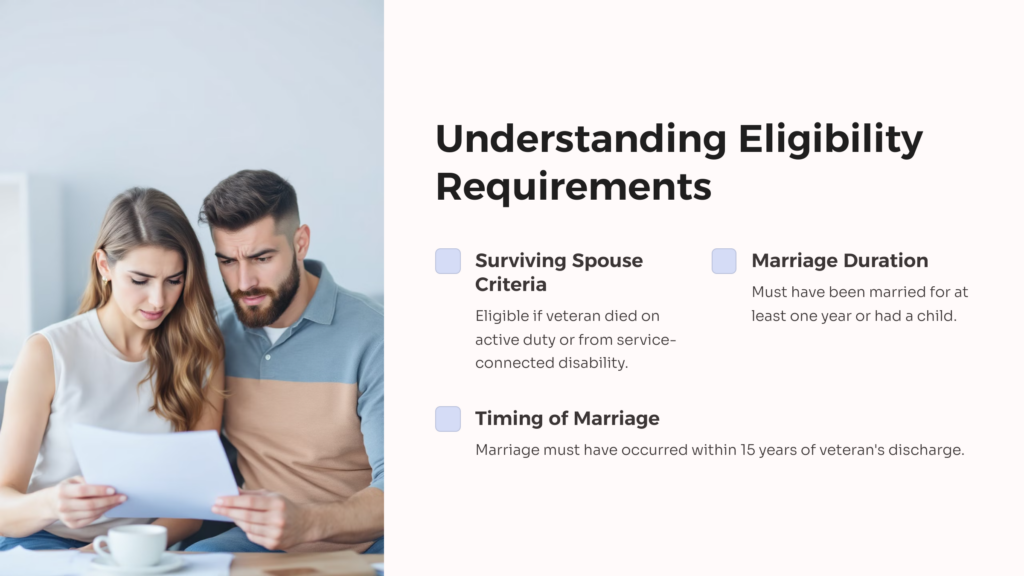
To qualify for VA disability benefits as a spouse, certain conditions must be met. These eligibility requirements ensure that the benefits reach those who truly need them.
The primary eligibility criteria for spouses include:
- Being the surviving spouse of a veteran who died while on active duty, active duty for training, or inactive duty training.
- Being the surviving spouse of a veteran who died from a service-connected disability.
- Being the surviving spouse of a veteran who was rated totally disabled due to service-connected conditions for a specified period before death.
- The marriage must have lasted for at least one year, or resulted in a child, or have occurred before or within 15 years of the veteran’s discharge from service.
Additionally, the marriage must have lasted for at least one year, or resulted in a child, or have occurred before or within 15 years of the veteran’s discharge from service.
It’s crucial to understand these requirements thoroughly, as they form the basis for any claim for VA disability benefits as a spouse.
Types of VA Disability Benefits Available to Spouses
The VA offers several types of benefits to eligible spouses. Understanding these options can help you determine which benefits you may be entitled to receive. Here are the benefits available for spouses.
- Dependency and Indemnity Compensation (DIC): This is a tax-free monthly payment to eligible surviving spouses.
- Survivors Pension: Also known as Death Pension, this is a needs-based benefit paid to surviving spouses of wartime veterans.
- Education and Training Benefits: Some spouses may be eligible for education benefits through programs like the Survivors’ and Dependents’ Educational Assistance (DEA) program.
- Home Loan Guaranty: Surviving spouses may be eligible for VA home loan benefits.
- Healthcare Benefits: CHAMPVA (Civilian Health and Medical Program of the Department of Veterans Affairs) provides health coverage to eligible spouses and children of veterans.
Each of these benefits has specific eligibility criteria and application processes. It’s important to review each option carefully to determine which ones apply to your situation.
How to Apply for VA Disability Benefits as a Spouse
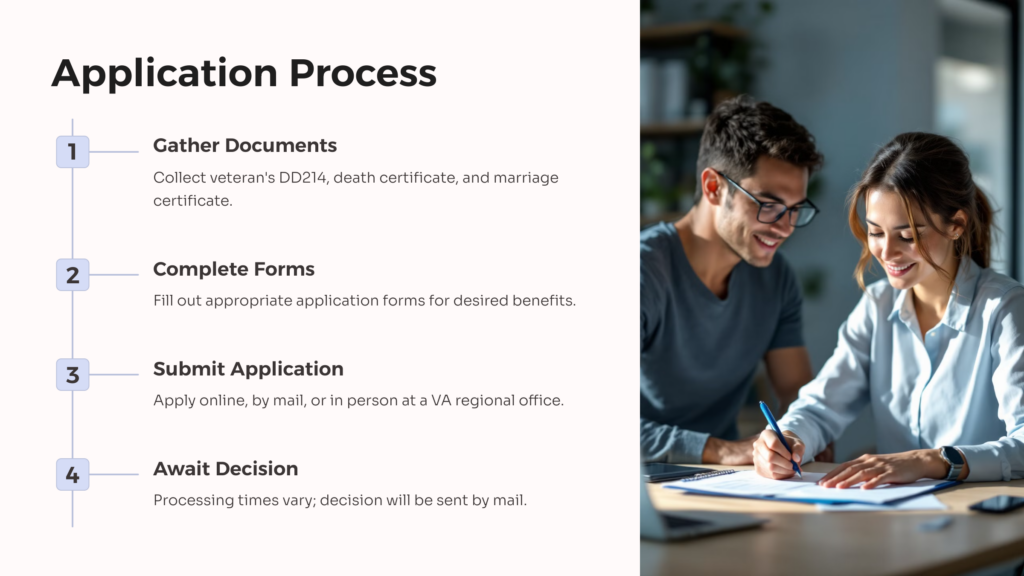
Applying for VA disability benefits as a spouse involves several steps. While the process may seem daunting, breaking it down into manageable tasks can make it easier to navigate. Below are five steps to take in your application process.
- Gather necessary documents: You’ll need the veteran’s discharge papers (DD214), death certificate, and marriage certificate. Additional documents may be required depending on the specific benefit you’re applying for.
- Complete the appropriate application form: For DIC, use VA Form 21-534EZ. For Survivors Pension, use VA Form 21P-534EZ.
- Submit your application: You can apply online through the VA.gov website, by mail, or in person at a VA regional office.
- Provide any additional information: The VA may request more information or documentation to support your claim.
- Wait for the VA’s decision: Processing times can vary, but you’ll receive a decision by mail.
Remember, you can seek assistance from a Veterans Service Organization (VSO) or a VA-accredited representative to help you with the application process.
Common Challenges and How to Overcome Them
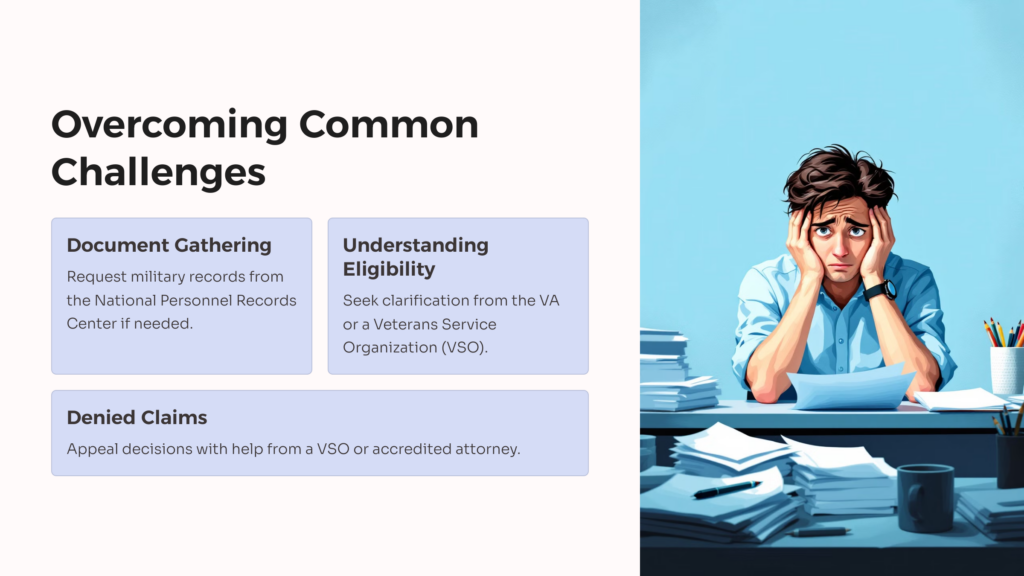
Applying for VA disability benefits as a spouse can present various challenges. Being aware of these potential obstacles can help you prepare and find solutions.
One common challenge is gathering all the necessary documentation, especially if the veteran’s service was many years ago. In such cases, you can request military records through the National Personnel Records Center.
Another challenge is understanding the complex eligibility criteria. If you’re unsure about your eligibility, don’t hesitate to seek clarification from the VA or a VSO.
Dealing with denied claims can also be difficult. If your claim is denied, you have the right to appeal. Consider seeking help from a VSO or an accredited attorney to navigate the appeals process.
Lastly, the waiting period for a decision can be stressful. Stay proactive by following up on your claim status and seeking support from veteran spouse support groups during this time.
Additional Resources and Support for Spouses
Navigating the VA benefits system doesn’t have to be a solitary journey. There are numerous resources and support systems available to help spouses of veterans. Here are several resources you can tap into while going through this process.
- VA.gov: The official website of the Department of Veterans Affairs provides comprehensive information on all VA benefits.
- Veterans Service Organizations (VSOs): Organizations like the American Legion, Veterans of Foreign Wars (VFW), and Disabled American Veterans (DAV) offer free assistance with VA claims.
- VA Regional Offices: These offices can provide in-person assistance and information about local resources.
- Vet Centers: These community-based centers offer counseling and support services to veterans and their families.
- Support Groups: Many organizations offer support groups specifically for spouses of veterans, providing emotional support and practical advice.
- VA Survivor’s and Dependents’ Education Assistance (DEA): This program offers education and training opportunities to eligible dependents of veterans.
Remember, you’re not alone in this process. Reach out to these resources for guidance, support, and assistance as you navigate the VA disability benefits system.
Maintaining and Updating Your Benefits
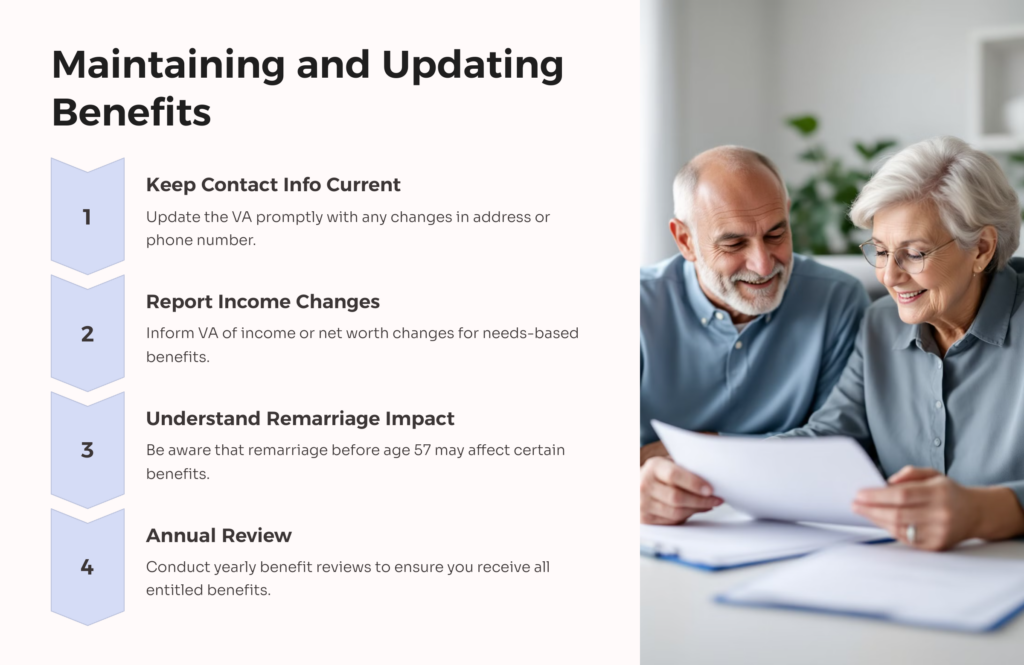
Once you’ve successfully obtained VA disability benefits as a spouse, it’s important to understand how to maintain and update these benefits as your circumstances change.
Keep your contact information up to date with the VA. If you move or change your phone number, inform the VA promptly to ensure you receive all important communications. You should also report any changes in your income or net worth if you’re receiving needs-based benefits like the Survivors Pension. Failure to report these changes could result in overpayments that you may have to repay.
If you remarry, be aware that this may affect your eligibility for certain benefits. Generally, remarriage before age 57 terminates eligibility for DIC, but there are exceptions.
Staying Informed is Your Best Resource
Staying informed about VA policy updates is essential, as new programs or expanded benefits could directly impact you. Make it a habit to review your benefits each year to confirm you’re receiving everything you’re entitled to—and to identify any new opportunities that fit your changing circumstances. Life events can open the door to additional support, so being proactive ensures you don’t miss out.
As the spouse of a veteran, your benefits are a vital part of your financial and emotional well-being. Take the first step toward securing your full entitlement by exploring our resources and completing the free medical evidence screening at AllVeteran.com today.
 AllVeteran.com Advisors
With expertise spanning local, state, and federal benefit programs, our team is dedicated to guiding individuals towards the perfect program tailored to their unique circumstances.