













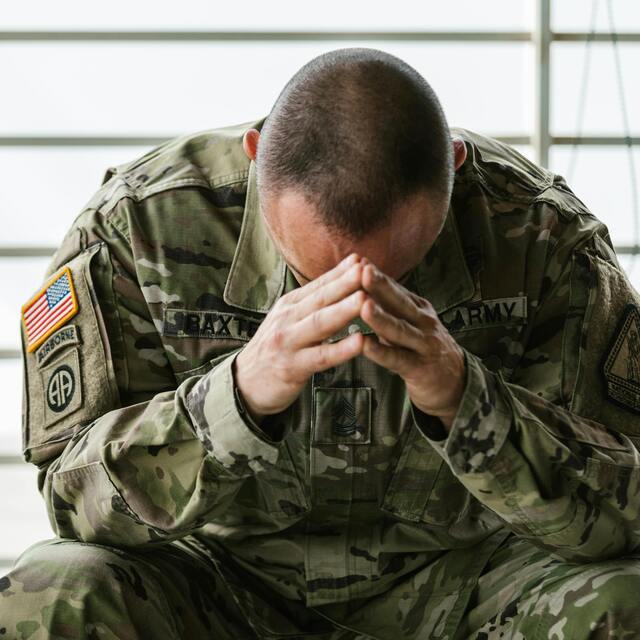
Military Sexual Trauma, or MST, is the term the Department of Veterans Affairs (VA) uses to describe sexual assault or repeated, threatening sexual harassment experienced during military service. It can range from unwanted sexual comments or touching to violent assault, and it can happen to anyone, regardless of gender, age, or rank.
While many assume it’s rare, MST is more common than most people realize. VA data shows that about 1 in 3 women and 1 in 50 men report experiencing it, though the real numbers may be higher because many incidents go unreported due to shame, stigma, or fear of retaliation. The impact of MST can last for years, affecting mental and physical health, relationships, and overall quality of life, which is why understanding, acknowledging, and addressing it is critical for helping veterans get the care and benefits they’ve earned. Here is everything you need to know about MST and VA ratings.
How the VA Defines and Recognizes MST
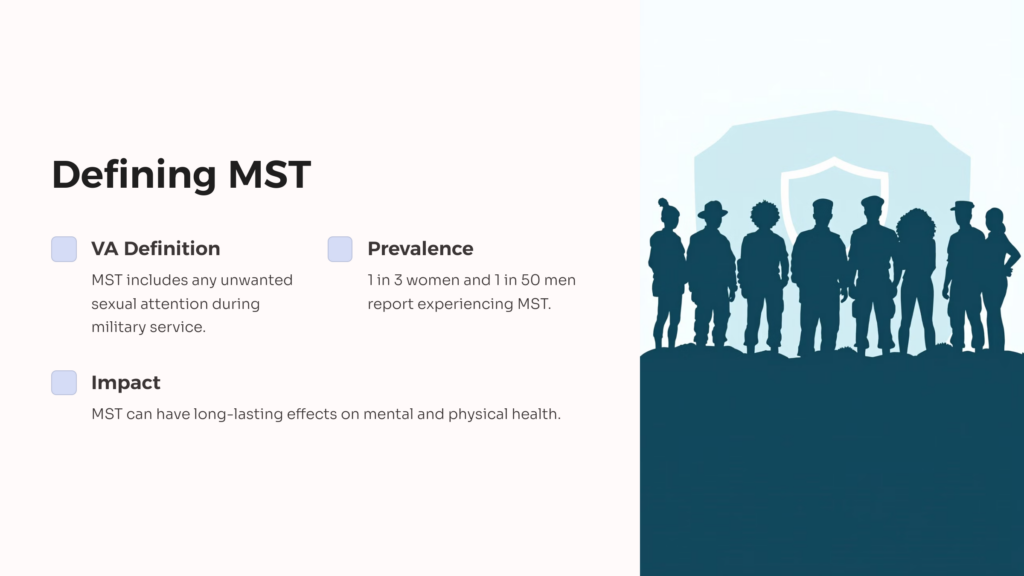
The VA has a specific definition of MST to ensure consistency in addressing these experiences. MST is defined as psychological trauma resulting from physical assault of a sexual nature, battery of a sexual nature, or sexual harassment that occurred while the veteran was serving on active duty, active duty for training, or inactive duty training.
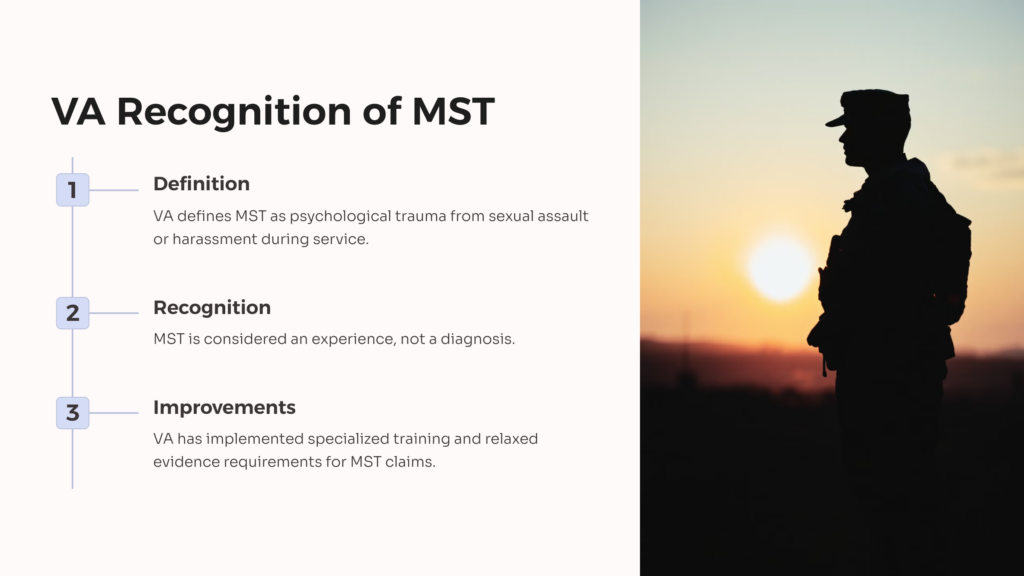
It’s important to note that the VA recognizes MST as an experience, not a diagnosis. This means that while MST itself is not a condition for which the VA assigns a disability rating, the VA does provide compensation for conditions that result from MST.
The VA has made efforts to improve its recognition and handling of MST cases. In recent years, they’ve implemented specialized training for claim processors and relaxed the evidence requirements for MST-related claims, acknowledging that these experiences are often not reported at the time they occur.
VA Disability Ratings for MST-Related Conditions
While MST itself doesn’t have a specific VA disability rating, veterans can receive ratings for conditions that result from their MST experiences. Common conditions related to MST include:
1. Post-Traumatic Stress Disorder (PTSD)
2. Depression
3. Anxiety disorders
4. Substance abuse disorders
5. Eating disorders
6. Sexual dysfunction
These conditions are rated based on their severity and impact on the veteran’s life. For example, PTSD, which is often associated with MST, can be rated from 0% to 100% depending on how it affects the veteran’s ability to function in work and social situations.
It’s possible for veterans to receive multiple ratings for different conditions related to their MST experience. The VA uses a combined ratings table to calculate the overall disability percentage when a veteran has multiple service-connected conditions.
The Process of Filing an MST Claim
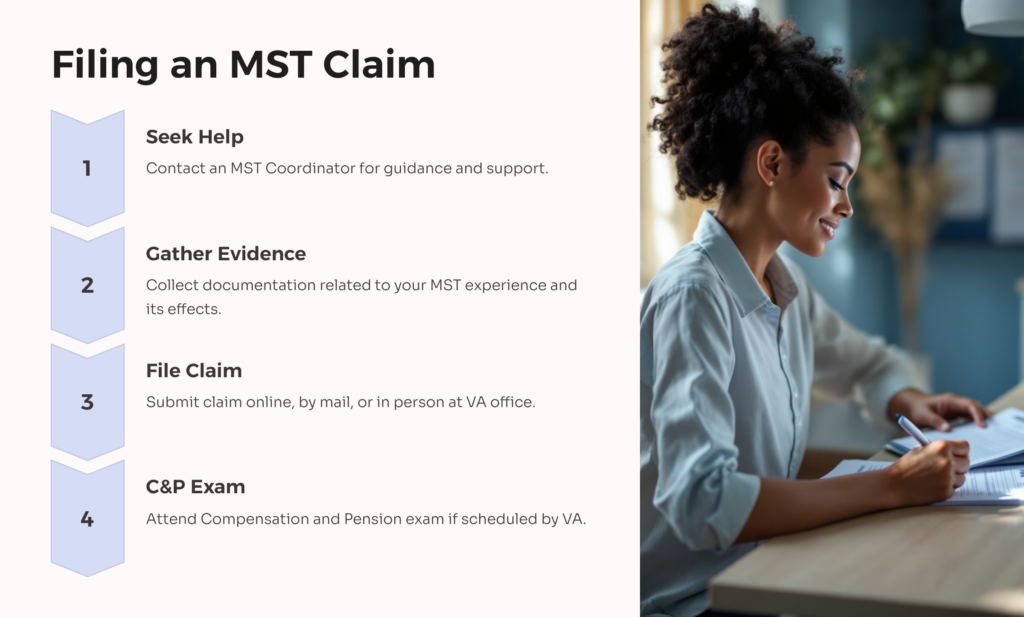
Filing a claim for MST-related conditions can seem daunting, but understanding the process can help. Here’s a step-by-step guide:
1. Seek help: Before filing, consider reaching out to an MST Coordinator at your local VA facility. They can provide support and guidance throughout the process.
2. Gather evidence: Collect any available documentation related to your MST experience and its effects on your life. This can include medical records, service records, and statements from friends or family.
3. File the claim: You can file a claim online through the VA’s eBenefits portal, by mail, or in person at a VA regional office. Use VA Form 21-526EZ for new claims or VA Form 20-0995 for supplemental claims.
4. Attend C&P exam: The VA may schedule you for a Compensation and Pension (C&P) exam to assess the severity of your condition(s).
5. Wait for decision: The VA will review your claim and send you a decision letter. This process can take several months.
Remember, you can seek assistance from a Veterans Service Organization (VSO) or a VA-accredited claims agent at any point in this process. They can provide valuable guidance and support.
Evidence Required for MST Claims
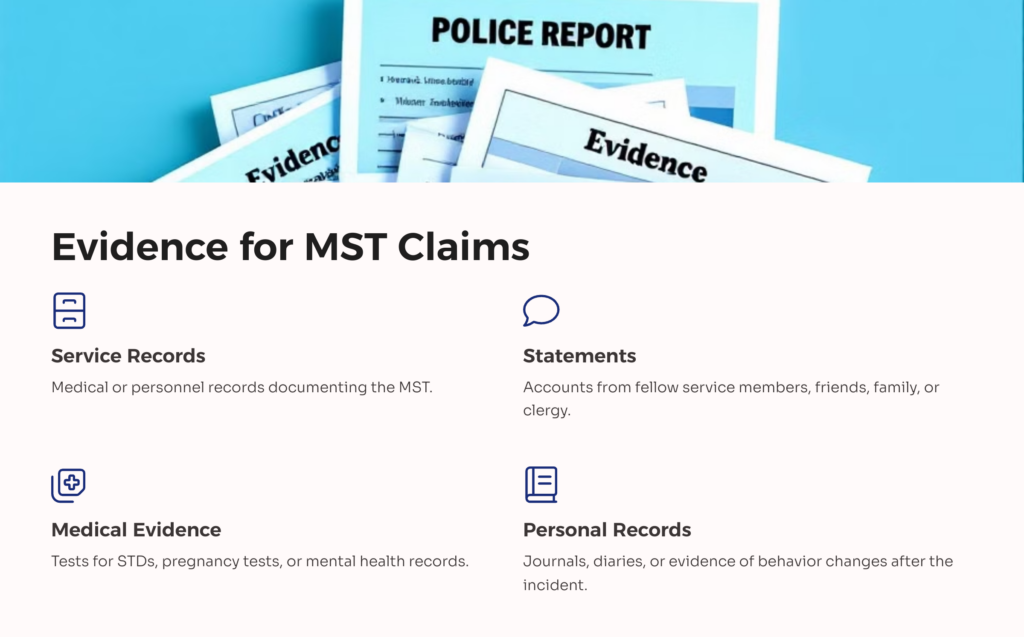
The VA understands that MST often goes unreported, so they allow for a broader range of evidence in these claims. Here are some types of evidence that can support an MST claim:
- Service medical or personnel records documenting the MST
- Department of Defense sexual assault or harassment reporting forms
- Statements from fellow service members, friends, family, or clergy
- Records from law enforcement authorities or rape crisis centers
- Tests for sexually transmitted diseases or pregnancy tests
- Journals or diaries from the time of the incident
The VA also looks for “markers” or signs that the MST occurred. These can include:
- Records of behavior changes, such as deterioration in work performance
- Substance abuse
- Depression, panic attacks, or anxiety without an identifiable cause
- Requests for transfer to another military duty assignment
- Relationship issues
It’s important to provide as much detail as possible when submitting your claim. Even if you don’t have direct evidence of the MST, these markers can help support your claim.
Understanding VA Compensation for MST
VA compensation for conditions related to MST comes as monthly, tax-free payments. The amount you receive depends on your combined disability rating. As of 2025, rates range from $175.51 per month for a 10% rating to $3,831.30 per month for a 100% rating for veterans without dependents.
In addition to monthly compensation, veterans with service-connected disabilities may be eligible for other VA benefits, including:
- Priority VA health care
- Vocational rehabilitation and employment services
- Housing grants for home modifications
- Vehicle allowances
- Education benefits for dependents
It’s important to note that receiving compensation for MST-related conditions does not affect your eligibility for VA health care or counseling services related to MST. These services are provided free of charge to all veterans who experienced MST, regardless of their disability status.
Support Services Available for MST Survivors
The VA offers a range of support services for survivors of MST. These include:
1. Free MST-related health care: The VA provides free treatment for physical and mental health conditions related to MST. This care is available even if you don’t have a VA disability rating.
2. MST Coordinators: Every VA health care system has a designated MST Coordinator who can help you access services and provide support.
3. Counseling services: The VA offers both individual and group counseling for MST survivors. These services are available at VA medical centers, community-based outpatient clinics, and Vet Centers.
4. Residential and inpatient programs: For those needing more intensive treatment, the VA offers specialized residential and inpatient programs for MST survivors.
5. Women Veterans Program: This program ensures that women veterans receive high-quality, comprehensive care in a sensitive and safe environment.
Remember, you’re not alone in this journey. The VA and numerous veterans’ organizations are committed to supporting MST survivors and helping them access the care and benefits they need.
Common Challenges in MST Claims and How to Overcome Them
While the VA has made improvements in handling MST claims, veterans may still face challenges. Here are some common issues and strategies to address them:
1. Lack of documentation: As mentioned earlier, the VA recognizes that MST often goes unreported. If you lack direct evidence, focus on providing “markers” or signs that the trauma occurred.
2. Delayed onset of symptoms: Some veterans may not experience or recognize symptoms until years after the MST occurred. The VA acknowledges this possibility, so don’t hesitate to file a claim even if time has passed.
3. Fear of retraumatization: The claims process can be emotionally difficult. Consider working with a therapist or counselor to develop coping strategies. You can also request a female examiner for your C&P exam if that would make you more comfortable.
4. Claim denials: If your claim is denied, don’t give up. You have the right to appeal the decision. Consider seeking help from a VSO or an accredited claims agent to strengthen your appeal.
5. Stigma: Unfortunately, stigma around MST still exists. Remember that seeking help is a sign of strength, not weakness. The VA has strict confidentiality policies to protect your privacy.
By being aware of these challenges and utilizing available resources, you can better navigate the claims process and advocate for yourself.
The Role of MST Coordinators in VA Facilities
MST Coordinators play a crucial role in supporting veterans who have experienced MST. These professionals are available at every VA health care system and can be an invaluable resource. Here’s what you need to know about MST Coordinators:
- They serve as a point of contact for issues related to MST
* They can help you access VA services and benefits related to MST - They provide information about MST and its effects
- They can connect you with appropriate care providers
- They advocate for MST-related issues within the VA system
To find the MST Coordinator at your local VA facility, you can use the VA’s MST Coordinator locator tool. Don’t hesitate to reach out to them – they are there to support you.
How MST Affects Veterans’ Mental Health
The impact of MST on a veteran’s mental health can be profound and long-lasting. Understanding these effects is crucial for both veterans and their support systems. Common mental health issues related to MST include:
1. Post-Traumatic Stress Disorder (PTSD): Symptoms may include flashbacks, nightmares, severe anxiety, and uncontrollable thoughts about the event.
2. Depression: This can manifest as persistent sadness, loss of interest in activities, and feelings of hopelessness.
3. Anxiety disorders: These may include generalized anxiety, panic attacks, or social anxiety.
4. Substance abuse: Some veterans may turn to alcohol or drugs as a way to cope with their trauma.
5. Eating disorders: MST can sometimes lead to disordered eating patterns as a form of control or coping mechanism.
These reactions are normal responses to an abnormal experience. Seeking help isn’t a sign of weakness; it’s a step toward healing and recovery. The VA provides several evidence-based treatments, including cognitive processing therapy, prolonged exposure therapy, and eye movement desensitization and reprocessing (EMDR). These therapies can help veterans work through their trauma and build healthy coping strategies.
You Deserve to Get The Help You Need
If you’re living with the effects of MST, you don’t have to face it alone. The VA offers confidential counseling and specialized support services designed for MST survivors. You deserve compassion, understanding, and the care needed to heal. Reaching out for help is a powerful step forward and it can be the beginning of real progress on your recovery journey.
Allow us to guide you through the process of receiving benefits you deserve. Begin today by taking our free medical evidence screening, at Allveteran.com.
 AllVeteran.com Advisors
With expertise spanning local, state, and federal benefit programs, our team is dedicated to guiding individuals towards the perfect program tailored to their unique circumstances.